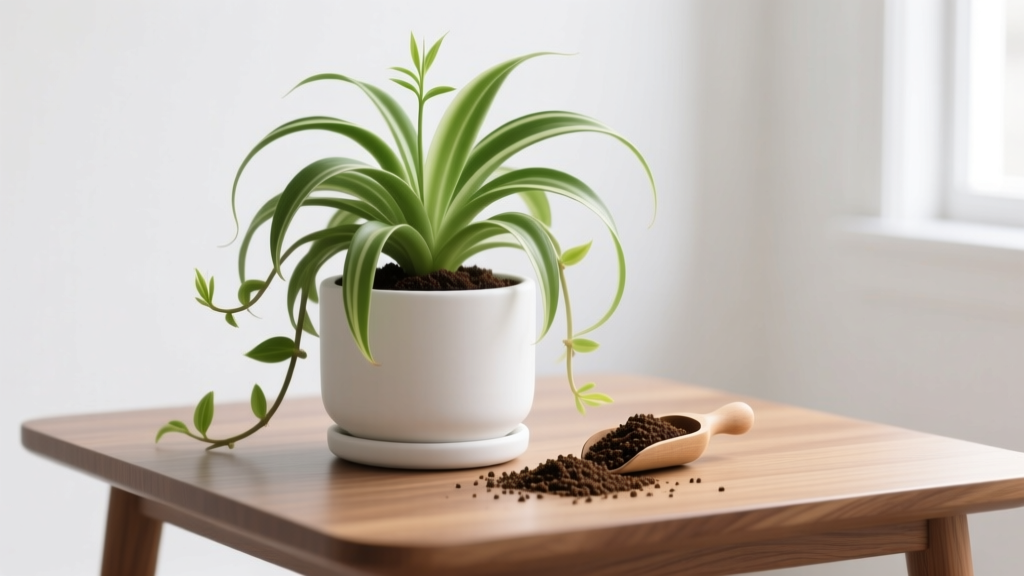
How to Use Kelp Meal on Spider Plants
You buy a spider plant because it’s “unkillable,” then a few months later the leaves start browning at the tips, the new growth looks pale, and the plant seems stuck—alive, but not thriving. I see this all the time in real homes: the plant isn’t starving for attention, it’s starving for the right kind of nutrition and consistency. Kelp meal can be a game-changer here, but only if you use it with a light hand and pair it with good watering habits.
Kelp meal is not a quick “green-up” fertilizer like a high-nitrogen synthetic. It’s more like a steady pantry staple: trace minerals, gentle potassium, and natural plant compounds that support root growth and stress tolerance. Done right, it helps spider plants push stronger new leaves, recover after repotting, and produce more babies (spiderettes). Done wrong, it can build up salts, attract fungus gnats, or encourage soggy soil if you treat it like compost.
This guide walks you through exactly how I use kelp meal on spider plants in real-life home conditions—apartments with low winter light, busy watering schedules, and tap water that isn’t always ideal.
Before You Feed: Get Watering Under Control
If your watering is inconsistent, kelp meal won’t “fix” the plant—it will just sit there. Spider plants (Chlorophytum comosum) like a rhythm: water thoroughly, then let the top layer dry before the next soak.
How often to water (with real numbers)
Use this as a starting point, then adjust based on pot size, light, and indoor temperature:
- Spring/summer: typically every 7–10 days
- Fall/winter: typically every 10–21 days
- Target indoor temps: spider plants are happiest around 65–80°F (18–27°C)
Instead of watering “a little,” water enough that 10–20% drains out the bottom. Then empty the saucer. Spider plants hate sitting in water, and kelp meal works best when roots get oxygen.
Quick moisture check you can trust
Stick a finger into the soil to the first knuckle (about 1 inch). If it feels dry at that depth, water. If it’s still cool and damp, wait.
Tap water and brown tips: a common real-world trigger
Spider plants are famous for brown tips from mineral buildup. The University of Florida notes spider plants can be sensitive to fluoride and salts in water and fertilizer (University of Florida IFAS Extension, 2021). If your tap water is hard or fluoridated:
- Use filtered or rainwater at least once every 2–3 waterings, or
- “Flush” the pot monthly: run water through the soil for 2–3 minutes to wash out salts
Soil and Pot Setup: Make Kelp Meal Work (Not Rot Roots)
Kelp meal is gentle, but it’s still organic matter. In a heavy, water-retentive mix, adding organics can push the soil toward staying wet too long. Spider plants want airy soil.
A practical spider plant mix
If you mix your own, aim for a blend that drains fast but holds some moisture:
- 2 parts quality potting mix
- 1 part perlite or pumice
- (Optional) 1/2 part orchid bark if you tend to overwater
If you’re using bagged potting soil straight, improve drainage by mixing in 20–30% perlite. This one adjustment makes kelp meal much safer to use because the pot dries on schedule.
Pot size matters more than most people think
Spider plants like being slightly snug. If you jump to a pot that’s too big, the soil stays wet longer and organic amendments break down slowly.
- When repotting, go up only 1–2 inches wider than the old pot.
- Make sure the pot has drainage holes—non-negotiable.
Light: The Hidden Reason Your Feeding “Does Nothing”
Kelp meal supports growth, but plants need enough light to use that nutrition. In low light, extra feeding often leads to weak, floppy growth or soil problems.
Best light range for spider plants
- Bright, indirect light is ideal (near an east window or a few feet back from a south/west window).
- They tolerate lower light, but growth slows dramatically.
- Avoid harsh direct sun for long periods; it can scorch leaves, especially behind glass.
If you’re growing in a dim corner and want better results from kelp meal, consider a small grow light set for 10–12 hours daily during winter.
Feeding Spider Plants with Kelp Meal (The Right Way)
Kelp meal is typically derived from seaweed (often Ascophyllum nodosum). It’s valued for micronutrients and naturally occurring compounds that support plant vigor. Research and extension materials commonly highlight seaweed extracts as biostimulants that can improve plant stress tolerance and root development (for example, Washington State University Extension discussions of seaweed products in horticulture, 2020). Kelp meal is slower than liquid extracts, which is perfect for houseplants if you apply modestly.
“Seaweed-based products are best used as supplements—think of them as supporting plant resilience and root function, not as a replacement for a complete fertility program.” — Extension horticulture guidance summarized from university outreach materials on seaweed amendments (WSU Extension, 2020)
What kelp meal actually provides (and what it doesn’t)
Kelp meal generally supplies:
- Micronutrients (trace minerals)
- Some potassium (K) and small amounts of nitrogen (N)
- Organic compounds that can support root growth and stress response
It usually does not supply enough nitrogen for fast, lush growth on its own. For spider plants, that’s fine—you want steady growth, not overly soft leaves.
Application methods (pick one)
1) Top-dressing (my go-to for established plants)
This is the simplest and safest method for most home gardeners.
- Scrape back the top 1/2 inch of soil (optional but helpful).
- Sprinkle kelp meal evenly on the surface:
- 4-inch pot: 1/4 teaspoon
- 6-inch pot: 1/2 teaspoon
- 8–10 inch pot: 1 teaspoon
- Gently scratch it into the top layer (don’t dig into roots).
- Water normally.
Timing: Apply every 6–8 weeks during active growth (roughly March through September in many homes). In winter, back off to every 10–12 weeks or skip entirely if the plant is not growing.
2) Mixing into potting soil (best for repotting)
If you’re repotting, kelp meal can be mixed into the soil for a slow, even feed.
- Use 1 teaspoon per gallon of potting mix for spider plants.
- Mix thoroughly so it’s evenly distributed (no concentrated pockets).
Tip from experience: Don’t mix heavy doses into a pot that’s already too big. That’s a recipe for wet soil that stays biologically active too long.
3) Kelp “tea” (fast response, but easy to overdo)
Kelp meal tea is useful when you want a quicker uptake than top-dressing—like after repotting or when a plant is recovering. Keep it weak.
- Add 1 teaspoon kelp meal to 1 gallon of water.
- Stir well and let it sit 12–24 hours.
- Pour off the liquid (or strain if you don’t want residue).
- Use as a normal watering once every 3–4 weeks during spring/summer.
If you notice fungus gnats after using tea, switch to top-dressing only and let the top inch of soil dry more between waterings.
Comparison: Kelp Meal vs Liquid Seaweed vs Balanced Houseplant Fertilizer
Here’s how the options stack up in real home conditions. These are practical differences you’ll actually notice.
| Feeding option | Typical application rate (houseplant scale) | Speed of response | Best use case | Main risk |
|---|---|---|---|---|
| Kelp meal (top-dress) | 1/2 tsp per 6-inch pot every 6–8 weeks | Slow (2–6 weeks) | Steady support, micronutrients, low-maintenance feeding | Overuse can contribute to salt buildup or keep soil too biologically “active” if mix is heavy |
| Liquid seaweed extract | Typically 1–2 tsp per gallon (follow label) every 2–4 weeks | Moderate (1–3 weeks) | Post-stress recovery, boosting resilience, quick supplementation | Easy to apply too frequently; can worsen tip burn if paired with hard water |
| Balanced houseplant fertilizer (e.g., 10-10-10 or similar) | Often 1/4 strength every 2–4 weeks in active growth | Fast (1–2 weeks) | Correcting clear nutrient deficiency, pushing growth in bright light | Overfertilization, salt buildup, limp growth in low light |
My practical take: For most spider plants in average indoor light, kelp meal plus occasional flushing gives you steady, clean growth without the “fertilizer rollercoaster.” If your plant is in very bright light and actively growing, you may pair kelp meal with a dilute balanced fertilizer (more on that below).
Real-World Scenarios: How I’d Use Kelp Meal in Common Home Situations
Scenario 1: Brown tips in a sunny kitchen (hard tap water)
Symptoms: Leaf tips turning crispy brown; plant otherwise growing.
What’s happening: Salt/mineral buildup from tap water and/or fertilizer. Spider plants are known to show tip burn readily under these conditions (University of Florida IFAS Extension, 2021).
What I do:
- Stop all fertilizers for 4 weeks.
- Flush the soil: run lukewarm water through for 2–3 minutes, let drain fully.
- Switch to filtered/rainwater at least 50% of the time.
- Restart kelp meal at half rate (e.g., 1/4 tsp on a 6-inch pot) every 8 weeks.
Scenario 2: Pale, slow growth in a north window apartment
Symptoms: New leaves thin and light green; plant not producing babies; soil stays damp for a long time.
What’s happening: Low light slows growth; feeding won’t help much until light and drying cycle improve.
What I do:
- Move the plant closer to the window or add a grow light for 10–12 hours/day.
- Increase drainage: mix in 20–30% perlite at next repot.
- Use kelp meal sparingly: 1/4–1/2 tsp every 8–10 weeks.
- If growth remains pale in brighter light, add a balanced fertilizer at 1/4 strength once a month during spring/summer.
Scenario 3: A stressed spider plant after repotting (droopy, stalled)
Symptoms: Leaves flop, plant looks tired, little to no new growth for weeks.
What’s happening: Root disturbance plus a new moisture pattern in fresh soil. Kelp can help here, but only if the soil is airy and you don’t keep it wet.
What I do:
- Keep it in bright, indirect light (no hot sun) for 10–14 days.
- Water only when the top 1 inch is dry.
- Use a weak kelp tea once: 1 tsp per gallon, steeped 12–24 hours.
- Then switch to top-dressing after 4–6 weeks if growth resumes.
Common Problems (and How Kelp Meal Fits In)
Spider plants are forgiving, but they’re honest—they show stress fast. Here are the problems I see most, with fixes that work in real homes.
Brown leaf tips
Likely causes: salts from fertilizer/tap water, inconsistent watering, very low humidity, or too much direct sun.
Fix:
- Flush soil monthly if you fertilize at all (2–3 minutes running water).
- Reduce kelp meal dose by 50% and extend interval to 8–12 weeks.
- Trim tips cosmetically with clean scissors, following the natural leaf shape.
Yellowing lower leaves
Likely causes: overwatering, poor drainage, or normal aging (a few older leaves now and then is fine).
Fix:
- Let the top 1–2 inches of soil dry before watering again.
- Confirm the pot drains freely; never leave water in the saucer.
- Hold kelp meal until you see new growth—feeding a stressed, wet plant can worsen issues.
Fungus gnats after feeding
Likely causes: soil staying too moist; organic top-dressing kept damp.
Fix:
- Allow the top 1–2 inches to dry between waterings.
- Use yellow sticky traps for adults.
- Switch from kelp tea to light top-dressing (or mix kelp into soil only at repotting).
- If the infestation is heavy, apply BTi (mosquito bits) as directed for 2–3 weeks.
Leaf curling or limp, soft foliage
Likely causes: underwatering, root crowding, or heat stress near a vent.
Fix:
- Deeply water until 10–20% drains out, then don’t water again until the top inch dries.
- Check roots: if they’re circling tightly, repot up just 1–2 inches.
- Move away from heating/cooling vents; aim for 65–80°F stability.
Troubleshooting Kelp Meal Use: Symptoms That Tell You to Adjust
Kelp meal is forgiving, but your spider plant will still “talk back” if the dose or timing is off.
Symptom: White crust on soil or pot rim
Meaning: Mineral/salt buildup from water and fertilizers (kelp included, especially if paired with other feeds).
Do this:
- Scrape off the crust and discard.
- Flush thoroughly (2–3 minutes running water).
- Pause feeding for 4–6 weeks, then restart at half dose.
Symptom: Soil smells musty or stays wet too long
Meaning: Drainage and airflow problem first; feeding is secondary.
Do this:
- Stop kelp meal immediately.
- Increase light and airflow; water less frequently.
- At next repot, add 20–30% perlite/pumice and size up only 1–2 inches.
Symptom: Growth is “fine” but not better after 2 months
Meaning: Likely light limitation, not a fertilizer problem.
Do this:
- Increase light exposure or add a grow light (10–12 hours/day).
- Keep kelp meal at the normal schedule (6–8 weeks) rather than increasing the dose.
A Simple Seasonal Routine (That Doesn’t Overfeed)
If you want a set-it-and-forget-it plan, this is the one I recommend for most homes.
Spring through early fall (active growth)
- Water when top 1 inch is dry.
- Top-dress kelp meal every 6–8 weeks:
- 1/2 tsp for a 6-inch pot
- Flush the pot once every 4 weeks if using tap water or any fertilizer.
Late fall and winter (slower growth)
- Water less often (often 10–21 days depending on your home).
- Reduce kelp meal to every 10–12 weeks, or skip if there’s little new growth.
- Prioritize light (window placement or 10–12 hours under a grow light).
One More Master-Gardener Tip: Kelp Meal Works Best as “Support,” Not the Whole Meal
If your spider plant is already healthy, kelp meal alone may be plenty—especially in decent potting mix that contains some nutrients. If your plant is pushing lots of growth (bright light, warm temps, frequent watering), it may want a little more nitrogen than kelp meal provides.
In that case, I’ll do this combination during spring/summer:
- Kelp meal top-dress at normal rate every 6–8 weeks
- Balanced liquid fertilizer at 1/4 strength once a month
Keep the doses low. Spider plants reward restraint more than intensity.
If you try kelp meal and your plant improves—deeper green, sturdier leaves, more spiderettes—stick with the schedule and don’t chase perfection. A spider plant that looks “pretty good” most of the year is usually being cared for correctly. The rest is just fine-tuning: light first, watering second, feeding third.
Sources: University of Florida IFAS Extension houseplant guidance on spider plant sensitivity and care considerations (UF/IFAS Extension, 2021). Seaweed/kelp product use in horticulture as discussed in university extension outreach materials (Washington State University Extension, 2020).