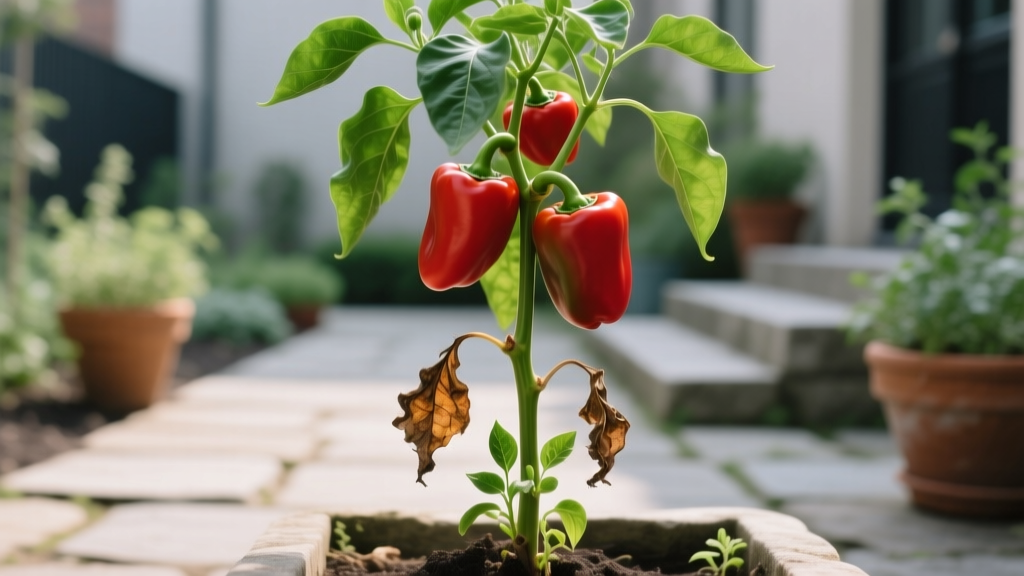
When to Remove Dead Growth from Peppers
You walk out to check your pepper plants after a hot week and spot it: a handful of pale leaves, a blackened stem tip, maybe a branch that snapped in the last windstorm. The plant is still blooming, but now you’re wondering if you should prune that dead stuff right away—or if touching it will make things worse. I’ve watched plenty of gardeners lose weeks of growth by pruning at the wrong moment, and I’ve also seen pepper plants rebound fast once the truly dead growth is removed correctly.
The trick is timing and intention. Dead growth removal isn’t the same as “shaping” or “cutting back.” It’s targeted sanitation: you’re removing tissue the plant can’t use anymore, which reduces disease risk and helps the plant spend energy on healthy stems, flowers, and fruit.
Below is how I decide when to remove dead growth from peppers—plus the care details (watering, soil, light, feeding) that determine whether that dead patch is a one-time hiccup or the start of bigger trouble.
What counts as “dead growth” on a pepper plant?
Not everything ugly is dead. Peppers naturally shed older leaves, especially low ones shaded by the canopy. Dead growth is tissue that will not recover, and it often becomes a landing pad for fungal spores and pests.
Quick tests to confirm it’s dead
- Scratch test (stems): Lightly scratch the surface with a fingernail. If it’s green underneath, it’s alive. If it’s tan/brown and dry, it’s dead.
- Leaf feel: Dead leaves are papery and crisp. Heat-stressed leaves often feel thin but still flexible.
- Bud/branch test: If a branch has no pliability and snaps cleanly like a dry twig, it’s done.
If you’re unsure, wait 48 hours and check again. True dead growth doesn’t “perk up” after a watering.
When to remove dead growth from peppers (timing that actually works)
There are three “right times,” and a couple of times to hold off.
1) Remove immediately when it’s clearly dead, diseased, or broken
If you see blackened stems, moldy leaves, or a branch that’s snapped and is hanging by a thread, take it off the same day. Dead, damaged tissue is a disease gateway, especially after rain or overhead watering.
Best practice: prune on a dry day, ideally late morning after dew dries. Wet pruning spreads spores.
2) Remove after a stress event—once the plant stabilizes
After transplanting, a cold night, hail, or heatwave, peppers can look rough. If you prune too aggressively while they’re still stressed, you slow recovery.
A good rule: wait until you see new growth (fresh leaves at tips or a new flush) before removing borderline tissue. For many gardens, that’s 3–7 days after the event.
3) Remove gradually during heavy fruit set
When peppers are loaded with fruit, they’re already allocating energy like crazy. Instead of stripping the plant, remove dead growth in small batches: no more than 10–15% of foliage in one session. Come back a week later if needed.
Times to hold off (yes, sometimes you should wait)
- During a heat spike: Above 90°F (32°C), peppers can drop leaves and scorch. Pruning reduces shade and can worsen sunscald. Wait until temperatures ease.
- Right before a cold night: If you’re expecting temps below 55°F (13°C), keep as much canopy as possible to buffer the plant.
- When the plant is wilting from underwatering: Water first, reassess the next day. A wilted pepper can look “done” and rebound overnight.
Three real-world scenarios (and what I’d do)
Scenario A: Bottom leaves yellowing and crisping in midsummer
This is common once plants get 18–30 inches tall and the lower canopy is shaded. If those leaves are crispy or spotty, remove them to improve airflow. If they’re just yellow and limp, check watering and nitrogen first, then prune after the plant rehydrates.
Scenario B: A branch broke under fruit weight
Remove the broken branch immediately with a clean cut back to a healthy node or the main stem. Leaving a torn break invites rot. If there’s fruit on the broken branch, harvest it (even if green) and let it finish indoors.
Scenario C: After a week of rain, you see leaf spots and dead patches
Remove the worst affected leaves right away, dispose of them (don’t compost if disease is suspected), then adjust watering practices and spacing. Consider a preventative copper or biofungicide only if the issue keeps spreading.
How to remove dead growth correctly (step-by-step)
Good pruning is less about courage and more about clean cuts and restraint.
- Choose the right time: Dry weather, no rain forecast for 24 hours if possible.
- Use sharp snips: Bypass pruners or scissors. Dull tools crush stems.
- Sanitize between plants: Wipe blades with 70% isopropyl alcohol or a disinfectant wipe, especially if you see spots or rot.
- Cut back to healthy tissue: Don’t leave long dead stubs. Make the cut just above a node or junction.
- Don’t over-strip: Limit removal to 10–15% of foliage per session during fruiting.
- Dispose smart: If it’s disease-free, compost is fine. If you suspect bacterial/fungal disease, bag it.
“Sanitation is one of the most effective tools for managing plant disease—removing infected tissue and avoiding work in wet foliage reduces spread.” — University of Minnesota Extension (2023)
Watering: dead growth often starts with uneven moisture
If you’re frequently seeing crispy leaf edges, random leaf drop, or branch dieback, inconsistent watering is a prime suspect. Peppers like steady moisture, not swings between drought and flood.
Actionable watering targets
- Deep watering: Aim for about 1–1.5 inches of water per week (rain + irrigation) in typical summer weather. In containers, it may be more frequent.
- Soak depth: Water so moisture reaches 6–8 inches deep in the root zone.
- Morning irrigation: Leaves dry faster, lowering disease pressure.
Method A vs Method B (comparison with real impact)
| Approach | How it’s done | Typical frequency | What you’ll notice on peppers | Risk level |
|---|---|---|---|---|
| Method A: Deep, infrequent watering | Soak root zone to 6–8" depth | Every 3–7 days (weather dependent) | Stronger stems, fewer crispy leaves, steadier fruit set | Low (if drainage is good) |
| Method B: Light, frequent watering | Quick surface watering | Daily or every other day | Shallow roots, midday wilting, more leaf drop after heat | Medium (higher disease + stress risk) |
In practice, Method B is how gardeners accidentally create dead growth: shallow roots + heat = leaf scorch and stem dieback. If you switch to deep watering, new growth often comes in cleaner within 7–14 days.
Troubleshooting watering-related symptoms
- Symptom: Leaves crisp at edges, lower leaves die first.
Fix: Mulch 2–3 inches (straw or shredded leaves), water deeply, avoid letting pots fully dry out. - Symptom: Soft, dark stem near soil line; plant collapses.
Fix: Improve drainage immediately, stop overhead watering, remove affected plant if stem rot is advanced (often not reversible). - Symptom: Midday wilt but recovers at night.
Fix: Check soil moisture 2–3 inches down. If dry, water deeply. If wet, you may have root stress—pause watering and improve aeration.
Soil: the foundation for healthy regrowth after pruning
Dead growth is often a symptom of roots that can’t keep up. Good soil helps peppers replace what you remove.
Soil targets that keep peppers steady
- pH: Roughly 6.0–6.8 is a sweet spot for nutrient availability.
- Drainage: Peppers hate waterlogged soil. If water stands longer than 2 hours after a soak, improve structure.
- Organic matter: Mix in compost (1–2 inches worked into the top layer before planting) for moisture buffering.
For containers, use a quality potting mix (not garden soil) and make sure the pot is at least 3–5 gallons per plant for full-size varieties. Small pots dry fast and trigger leaf drop and dead twigs.
Soil-related troubleshooting
- Symptom: Repeated dieback after watering, fungus gnats in pots.
Fix: Let mix dry slightly between waterings, increase airflow, consider repotting into a chunkier mix with added perlite. - Symptom: Pale plants, slow growth, frequent leaf shedding.
Fix: Test soil pH and fertility; adjust feeding (see below). Many “mystery problems” are nutrient lockout from pH being off.
Colorado State University Extension notes peppers prefer warm soils and can stall in cold, wet conditions, which sets the stage for leaf loss and dead patches (Colorado State University Extension, 2022).
Light and temperature: pruning can backfire if you expose fruit
Light drives growth, but too much direct sun on suddenly exposed fruit can cause sunscald—those pale, papery patches that later rot. Dead growth removal should preserve enough canopy to shade developing peppers.
Practical light guidelines
- Sun: Aim for 6–8 hours of direct sun for best production.
- Heat management: Above 95°F (35°C), flowers may drop and leaves may scorch. In those weeks, prune less and focus on consistent watering.
- Cold sensitivity: Growth slows under 60°F (16°C); damage can occur near frost. If cold is coming, remove only truly dead or diseased tissue.
Case: pruning right before a heatwave
I’ve seen gardeners clean up plants beautifully, then lose a chunk of the crop to sunscald two days later when temperatures jumped past 90°F. If extreme heat is forecast, remove only the dead leaves that are touching soil (disease risk) and leave the rest until conditions stabilize.
Feeding: how nutrition affects dead growth (and regrowth)
After you remove dead growth, peppers need enough nutrition to replace leaves while still filling fruit. But too much nitrogen late in the season can make a leafy plant with fewer peppers.
Feeding schedule that’s worked well for home gardens
- At planting: Mix compost in and consider a balanced fertilizer (example: 5-5-5) following label rates.
- Once flowering starts: Shift to a fertilizer with slightly lower nitrogen and adequate potassium (many “tomato/pepper” blends work well).
- Frequency: In-ground: often every 3–4 weeks is plenty. Containers: nutrients leach faster—light feeding every 10–14 days can be more consistent.
If you’re dealing with leaf drop and dead tips, don’t automatically pour on fertilizer. Confirm watering first. Overfertilizing in dry soil can burn roots and create more dead tissue.
Common nutrient-related symptoms
- Symptom: Yellowing older leaves, slow growth.
Fix: Mild nitrogen deficiency—apply a balanced feed and water in well. - Symptom: Blossom-end rot (dark, sunken spot on fruit bottom).
Fix: It’s usually inconsistent watering more than low calcium. Stabilize moisture; avoid heavy nitrogen spikes. University of Illinois Extension emphasizes steady soil moisture as a key factor in managing blossom-end rot (University of Illinois Extension, 2021). - Symptom: Leaf edges brown with a “burned” look after feeding.
Fix: Flush container soil with clean water once, then resume lighter feeding.
Common problems that create dead growth (and what to do about them)
Dead growth is a clue. If it keeps showing up, look for the underlying cause instead of treating pruning like a reset button.
1) Bacterial leaf spot
Symptoms: Small, dark, water-soaked spots; leaves yellow and drop; can spread fast in warm, wet weather.
What to do:
- Remove the worst affected leaves (sanitize tools between cuts).
- Avoid overhead watering; water at soil level.
- Increase spacing and airflow; don’t crowd plants.
- Dispose of diseased leaves (don’t compost if you suspect bacterial issues).
2) Fungal leaf spots (Cercospora, Alternaria, etc.)
Symptoms: Circular spots, sometimes with concentric rings; dead patches that crumble; often starts low on the plant.
What to do:
- Remove lower dead leaves that touch soil.
- Mulch 2–3 inches to reduce soil splash.
- Water in the morning at the base.
3) Sunscald (fruit and sometimes leaves)
Symptoms: Bleached, papery patches on fruit; exposed shoulders of peppers are most affected.
What to do:
- Don’t over-prune healthy foliage during hot, bright weeks.
- Use 30–40% shade cloth temporarily during extreme heat.
- Harvest fruits that are near mature to reduce stress on the plant.
4) Pest damage that turns into dead growth
Common culprits: Aphids, spider mites, hornworms.
Symptoms: Stippled leaves (mites), curled new growth (aphids), sudden defoliation (hornworms).
What to do:
- Blast aphids off with water early in the day.
- For spider mites, increase humidity around plants and use insecticidal soap thoroughly on leaf undersides.
- Hand-pick hornworms at dusk; check for droppings on leaves.
How much dead growth can you remove without setting the plant back?
If you take one guideline from this whole topic, make it this: peppers are productive but not eager re-sprouters like basil. They respond best to measured pruning.
- Routine cleanup: Remove dead leaves anytime, but stay under 10–15% of total foliage per week during fruiting.
- Major dieback event: If a plant has a lot of dead material after cold or disease, remove only what’s clearly dead first, then wait 7 days and reassess.
- End of season: When nights consistently dip below 55°F (13°C), focus on ripening fruit rather than pushing new growth. At that point, only remove diseased tissue and leaves touching soil.
Troubleshooting: symptom-to-solution quick hits
When gardeners ask me “Should I cut this off?”, they usually describe one of these situations.
Symptom: Blackened stem tip, plant otherwise healthy
- Likely cause: Physical damage, sunburn on tender growth, or early infection.
- Do this: Cut back to green tissue, sanitize tools, and watch for spread over the next 5–7 days.
Symptom: A few dead leaves inside the canopy, humidity high
- Likely cause: Poor airflow and leaf aging.
- Do this: Remove the dead leaves, thin only what’s necessary to improve airflow, and avoid wetting foliage.
Symptom: Lots of leaves dying rapidly after heavy rain
- Likely cause: Leaf spot disease plus saturated roots.
- Do this: Remove the worst leaves, mulch to stop splash, switch to base watering, and consider a labeled protectant if it continues spreading.
Symptom: Dieback on one side of plant, soil stays wet
- Likely cause: Root issue (poor drainage, root rot).
- Do this: Improve drainage immediately; if in a pot, check holes and consider repotting. Don’t fertilize until you see recovery.
A few habits that prevent dead growth from coming back
Removing dead growth is helpful, but preventing it is even better. These are the habits I rely on season after season.
- Mulch: Keep 2–3 inches of mulch under peppers to stabilize moisture and reduce soil splash.
- Stake or cage early: Support prevents fruit-laden breaks that create dead, dangling stems.
- Water at the base: Drip irrigation or a soaker hose reduces leaf disease compared to overhead watering.
- Don’t crowd plants: Give most peppers 18–24 inches of spacing for airflow (more for big varieties).
- Scout weekly: A 2-minute check catches a broken stem or spotted leaf before it becomes a bigger cleanup.
When you get the timing right, dead growth removal becomes a quick maintenance task instead of a stressful guessing game. Cut what’s truly dead or diseased, keep enough canopy to protect fruit, and let good watering and airflow do most of the heavy lifting. A pepper plant that’s cared for steadily can take a little pruning and keep right on producing—often right up until cool nights finally tell it the season is winding down.