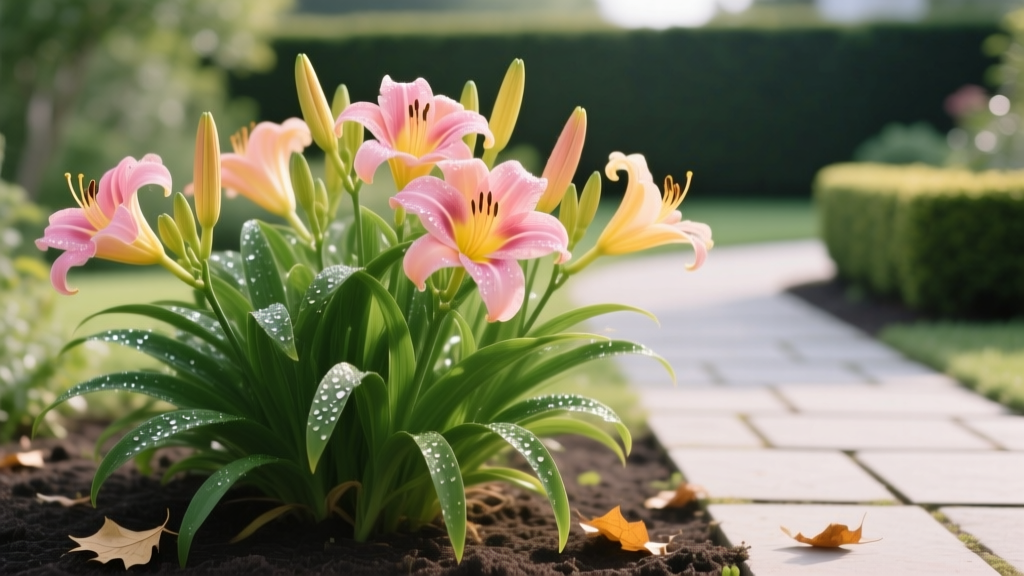
How to Prevent Nutrient Lockout in Daylilies
You feed your daylilies, you water them, and they still look… hungry. The leaves turn pale with green veins, the buds stall, and the clump that used to bloom like fireworks suddenly acts like it’s running on empty. That’s often not a lack of fertilizer at all—it’s nutrient lockout: the nutrients are in the soil, but the plant can’t take them up.
I’ve seen this most in “well-loved” beds: years of compost, a spring fertilizing habit, maybe hard water, and a little too much kindness with the hose. Daylilies (Hemerocallis) are tough, but they’re not immune to chemistry. The good news is lockout is usually fixable without ripping the bed apart—if you tackle the real causes: pH, moisture swings, salt buildup, and root stress.
What nutrient lockout looks like (and why it’s confusing)
Nutrient lockout happens when nutrients are present but unavailable due to soil pH extremes, excess salts, waterlogged roots, or damaged roots. It’s confusing because symptoms mimic true deficiency, and many gardeners respond by adding more fertilizer—which can tighten the knot.
Common “lockout look” symptoms in daylilies include:
- Yellowing leaves with green veins (often iron or manganese tied up by high pH)
- Stunted growth even after feeding (root stress, cold/wet soil, or salt buildup)
- Leaf tip burn (fertilizer salts, especially in dry spells)
- Weak bloom count despite big clumps (too much nitrogen, poor potassium uptake, or overcrowding)
- Patchy decline in parts of a clump (root rot beginning, or localized soil issues)
Here’s the practical target: most daylilies perform best in slightly acidic to neutral soil, roughly pH 6.0–7.0. Outside that band, several nutrients become harder to absorb. Penn State Extension notes that soil pH strongly affects nutrient availability and should be managed based on testing (Penn State Extension Soil Fertility guidance, 2023).
“A soil test is the only way to know what your soil needs. Guessing often leads to excesses that can reduce nutrient availability and plant performance.” — University of Minnesota Extension, Soil Testing and Fertilizer Guidelines (2022)
Start with a simple diagnosis: test before you treat
If you do just one thing this week, make it this: run a soil test. Not a guess, not a “my neighbor said add lime.” A basic lab soil test (or a reliable home pH test plus a lab nutrient panel if you can swing it) tells you whether you’re dealing with pH lockout, low potassium, high phosphorus, or salt accumulation from repeated fertilizing.
For daylily beds, I like this quick diagnostic sequence:
- Check moisture 4–6 inches down. If it’s soggy or bone-dry, correct that first—roots can’t uptake well at either extreme.
- Test pH. If it’s above 7.5 or below 5.5, lockout becomes much more likely.
- Review your fertilizer history (especially “bloom boosters” high in phosphorus). Excess phosphorus can interfere with micronutrient uptake, especially iron and zinc.
- Look at water source. Hard water and frequent overhead watering can slowly push pH upward and leave salts behind.
Watering: the fastest way to trigger (or fix) lockout
Daylilies tolerate drought better than many perennials, but nutrient uptake is tied directly to consistent soil moisture. Lockout often shows up after alternating extremes: a dry spell, then a heavy soaking, then another dry spell. Roots shut down in drought and suffocate in saturated soil.
How much to water (and how to tell if you’re doing it right)
A solid rule for established daylilies in the ground is about 1 inch of water per week from rain or irrigation. During bloom and hot spells, many gardens need closer to 1.5 inches per week, especially in sandy soil.
Practical method (no fancy tools required):
- Water deeply so moisture reaches 6–8 inches down.
- Water in the morning; avoid night watering that leaves foliage wet and encourages disease.
- Use a tuna can or rain gauge to measure. It’s surprisingly easy to under-water with sprinklers.
Scenario #1: “I water every day, and they still look deficient”
This is classic shallow watering. Frequent light watering keeps the top inch damp and the deeper root zone dry. Plants act deficient because roots are stressed and not absorbing nutrients consistently.
Fix:
- Switch to 2 deep waterings per week instead of daily sprinkles.
- Mulch with 2–3 inches of shredded bark or leaf mold, keeping mulch 2 inches away from the crown.
- After 10–14 days, look for improved leaf color and firmer scapes.
Scenario #2: “They’re yellowing after heavy rain”
In clay or compacted beds, rain can waterlog roots. When roots lack oxygen, nutrient uptake crashes—even if the soil is “rich.”
Fix:
- Stop fertilizing until soil drains and roots recover.
- Improve drainage: incorporate 2–4 inches of compost into the top 8–10 inches of soil (or lift the bed if standing water lingers more than 24 hours).
- If the bed is chronically wet, consider raising it by 6–8 inches or planting on a gentle berm.
Soil and pH: where most lockout begins
If you’ve ever fertilized faithfully and still seen pale leaves, pH is the first suspect. At high pH, iron and manganese become less available; at low pH, calcium and magnesium can become limiting and aluminum toxicity can stress roots. Many extension publications emphasize pH as the “master variable” for nutrient availability (Penn State Extension, 2023).
The pH sweet spot for daylilies
- Ideal target: pH 6.0–7.0
- Higher risk zone: pH >7.5 (micronutrient lockout more common)
- Lower risk zone: pH <5.5 (root stress, Ca/Mg issues)
How to adjust pH without making things worse
Adjusting pH is a “measure twice, cut once” job. Overcorrecting causes new problems. Use soil test recommendations whenever possible.
If pH is too high (alkaline):
- Use elemental sulfur at the soil-test rate (common garden rates range roughly 1–5 lb per 100 sq ft depending on texture and how much change you need).
- Favor acid-forming nitrogen sources (like ammonium sulfate) only if your soil test calls for nitrogen and you can water properly.
- Top-dress annually with compost; it buffers swings and supports microbes that improve nutrient cycling.
If pH is too low (acidic):
- Use garden lime per soil test results (often in the ballpark of 5–10 lb per 100 sq ft for modest correction, but follow your test).
- Recheck pH after 3–6 months (lime works gradually, especially in cool soils).
Light and temperature: hidden drivers of nutrient uptake
Daylilies bloom best with strong light, but nutrient uptake is also tied to temperature. Cool, wet soil slows root activity; hot afternoon sun increases water demand and can concentrate salts if the bed dries out.
Light targets that reduce stress
- Best bloom: 6+ hours of sun
- Hot climates: morning sun with light afternoon shade can reduce leaf scorch and moisture stress
Temperature reality check
When soil temperatures are below roughly 55°F (13°C), roots are slower to take up nutrients. If you fertilize hard early in spring while the soil is still chilly, you can build up salts and still see “deficiency” symptoms. Wait until you see steady growth and nighttime lows are consistently above 50°F (10°C) before applying stronger feedings.
Feeding daylilies without causing lockout
Most nutrient lockout cases I fix involve too much fertilizer, not too little—especially high-phosphorus “bloom booster” products applied repeatedly. Daylilies are moderate feeders. They want steady nutrition, not spikes.
A practical feeding schedule (ground-planted daylilies)
- Early spring (when shoots are 4–6 inches tall): apply a balanced granular fertilizer such as 10-10-10 at label rate (commonly around 1 lb per 100 sq ft, but follow your product).
- After first bloom flush: a light refeed (often half-rate) if plants are in average soil and you want stronger rebloom.
- Late summer/fall: skip nitrogen-heavy feeding; focus on compost top-dress instead to avoid tender growth going into cold weather.
Comparison: granular vs liquid feeding (with real-world numbers)
| Method | Typical application rate | How fast you’ll see response | Lockout risk factors | Best use case |
|---|---|---|---|---|
| Granular balanced fertilizer (e.g., 10-10-10) | Often ~1 lb per 100 sq ft (product-dependent) | 7–21 days as it breaks down | Salt buildup if overapplied; can worsen issues in dry soil | Routine feeding in established beds with decent moisture |
| Liquid fertilizer (balanced) | Commonly 1–2 tbsp per gallon (label-dependent) | 3–10 days | Easy to overdo frequency; can spike EC (salts) in containers | Quick correction when plants are actively growing and well-watered |
| Compost top-dress | 1/2–1 inch layer around clumps | Weeks to months | Low lockout risk; can raise pH slightly depending on compost source | Long-term soil health and buffering against pH/moisture swings |
Scenario #3: “I used bloom booster and now the leaves are pale”
This one’s common: repeated high-phosphorus feeding can push phosphorus levels beyond what the plant needs. In many soils, phosphorus doesn’t leach quickly, so it accumulates. High phosphorus can interfere with micronutrient uptake, and the plant shows chlorosis (yellowing), even though you’re “feeding.” University extension fertilizer guidance frequently warns against applying nutrients without a soil test because of accumulation and imbalance risk (University of Minnesota Extension, 2022).
Fix:
- Stop phosphorus-heavy fertilizer for the season.
- Water deeply to keep uptake steady (avoid drought stress that concentrates salts).
- If pH is high, correct pH first—iron won’t be available until you do.
- If symptoms are severe, apply a chelated iron drench or foliar spray per label to green plants up while you correct soil conditions.
Common lockout triggers (and how to avoid them)
Overcrowded clumps
Daylilies can handle being tight for a while, but old clumps can develop weak centers, uneven moisture access, and stressed roots. That stress reduces nutrient uptake and makes symptoms look like deficiency.
Prevent it: divide every 3–5 years (or sooner if bloom count drops sharply). Replant divisions with crowns set at soil level and water them in well.
Salt buildup (especially in containers or near concrete)
Fertilizer salts accumulate faster in pots, raised beds, and areas watered with hard municipal water. The first sign is often brown leaf tips and a “crispy edge” look after feeding.
Prevent it:
- In containers, leach monthly: run water through the pot so at least 10–20% drains out the bottom.
- Avoid fertilizing dry soil; water first, then feed.
- Use slow-release fertilizer at label rate rather than frequent high-dose liquid feeds.
Herbicide drift and root damage
Sometimes “lockout” is actually injured roots from weed-and-feed products, drift from lawn herbicides, or cultivation damage. Damaged roots can’t uptake nutrients normally.
Prevent it: keep lawn products away from ornamental beds, and don’t cultivate deeply around crowns—daylily roots are fleshy and easy to nick.
Troubleshooting: match the symptom to the fix
Symptom: Yellow leaves with green veins (interveinal chlorosis)
Likely causes: high soil pH (iron/manganese unavailable), excess phosphorus, waterlogged roots.
Do this:
- Test pH. If pH is >7.5, prioritize pH correction.
- Apply chelated iron as a short-term assist (follow label; don’t overdose).
- Stop high-phosphorus fertilizers unless a soil test specifically calls for it.
Symptom: Leaf tips brown, edges scorched after fertilizing
Likely causes: salt burn from fertilizer on dry soil, over-application, or container salt buildup.
Do this:
- Flush the root zone with a deep watering (in pots, leach until plenty drains).
- Remove severely burned leaves for appearance, but keep some foliage to fuel recovery.
- Resume feeding only after new growth looks normal—at half strength first.
Symptom: Lots of leaves, few blooms
Likely causes: too much nitrogen, too much shade, clumps overcrowded, or potassium not being taken up well.
Do this:
- Confirm sun exposure—aim for 6 hours or more of sun for best flowering.
- Back off nitrogen-heavy fertilizers; use balanced feed lightly.
- Divide if clumps are older than 3–5 years or have dead centers.
Symptom: Plants stall, look dull, soil stays wet
Likely causes: poor drainage and low oxygen causing uptake failure; early root rot.
Do this:
- Improve drainage (raise bed 6–8 inches if needed).
- Stop fertilizing until drainage is corrected; fertilizer won’t fix suffocation.
- If crowns feel soft or smell sour, lift the clump, trim rotted roots, and replant in improved soil.
A steadier routine that keeps lockout from coming back
Once you’ve corrected the immediate issue, prevention is mostly about consistency—especially with water and pH. Here’s the routine I recommend for most home beds.
- Test soil every