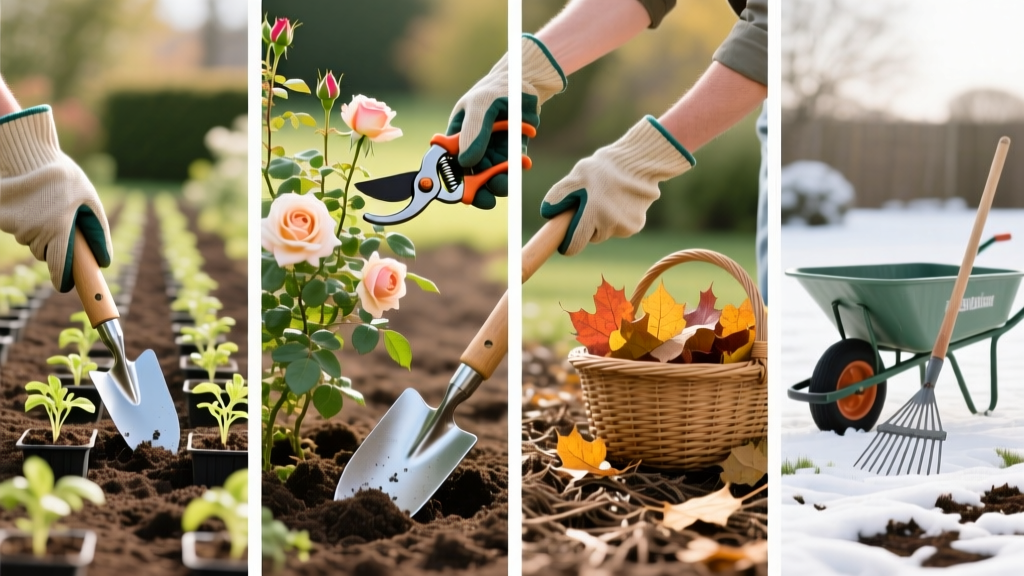
Building a Seasonal Garden Maintenance Routine
Right now is when small, repeatable tasks pay the biggest dividends. A missed frost warning can wipe out seedlings overnight; a skipped pruning window can cost you blooms for a year; a few days of soggy leaves can turn into a month of disease pressure. The goal of a seasonal garden maintenance routine isn’t perfection—it’s timing. When you attach the right jobs to temperature thresholds, frost dates, and daylight shifts, you stop guessing and start gardening with the calendar and the weather on your side.
Use this guide as a working routine you revisit every season. It’s organized by priority—what to plant, prune, protect, and prepare—so you always know what to do first when time is tight.
Start with your “timing anchors” (do this once, then reuse it every year)
Before you touch a shovel, set the anchors that drive every seasonal decision: your USDA hardiness zone, your average last spring frost date and first fall frost date, and your typical summer heat pattern. Most routine failures come from doing the right task at the wrong time.
- Find your USDA zone (e.g., Zone 5b, 7a, 9b). This determines winter survival, dormancy timing, and pruning windows.
- Write down your frost dates: average last spring frost and first fall frost. (Example anchors many gardeners use: April 15, May 15, October 15, November 1—yours will vary.)
- Track soil temperature with a $10 soil thermometer. Many seeds respond more to soil temp than air temp.
- Use these key thresholds as recurring triggers:
- 32°F (0°C): hard freeze risk—protect tender crops and disconnect hoses.
- 50°F (10°C) soil: peas, spinach, and many greens can go in.
- 60°F (16°C) soil: beans and sweet corn germinate more reliably.
- 65°F (18°C) nighttime lows: safe-ish for basil; peppers and tomatoes want it even warmer.
- 1–2 weeks after last frost: a common transplanting window for many annuals if soils are workable and nights are moderating.
Research-backed note: Soil temperature is a practical decision tool for seed germination and early growth; many extension planting calendars reference it because it predicts success better than a date on the calendar alone (University of Minnesota Extension, 2020; Iowa State University Extension and Outreach, 2018).
Priority #1: What to plant (and when)
Planting is high priority because it’s time-sensitive. Miss a window and you don’t just delay harvest—you lose it. Build your routine around “cool-season” and “warm-season” rotations, then fill in with perennials and soil-building cover crops.
Weeks 6–4 before your last frost: start seeds and prep early beds
If your average last frost is May 15, this is roughly late March to early April. Start indoors: tomatoes (6–8 weeks), peppers (8–10 weeks), and many flowers. Outdoors, as soon as beds can be worked, sow cold-hardy crops.
- Direct sow: peas, spinach, arugula, radishes, turnips (often when soil is 45–50°F).
- Transplant: broccoli, cabbage, kale starts 2–4 weeks before last frost with protection.
- Timing rule: if you can form a soil ball that crumbles when poked, soil is workable; if it smears, wait to avoid compaction.
Week 0 (last frost week): plant hardy, stage tender
Last frost week is not the finish line—it’s the starting bell for staged planting. Put hardy crops in first, keep tender transplants flexible, and watch the 10-day forecast.
- Plant now: potatoes, onion sets, carrots, beets, lettuce successions.
- Hold or protect: tomatoes and peppers if nights are still dipping below 50°F.
- Succession plan: sow a short row of lettuce every 10–14 days for steady harvest.
Weeks 1–3 after last frost: warm-season planting when soil is truly warm
Warm-season crops punish impatience. If your soil is below 60°F, beans may rot and squash may stall. Wait for warmth, then plant fast and mulch to keep growth steady.
- At 60°F soil: bush beans, sweet corn.
- At 65–70°F soil: cucumbers, squash, melons; transplant tomatoes when nights are trending above 50–55°F.
- At consistent 55–60°F nights: basil and other tender herbs.
Late summer into early fall: replant for the “second spring”
Fall gardens are built in summer. Count backward from your first fall frost date (for many Zone 5–6 gardens, around October 15; many Zone 7 gardens, around November 1). Add days to maturity plus a buffer (often 10–14 days) because growth slows as daylight decreases.
- 6–8 weeks before first frost: sow carrots, beets, kale, collards, fall lettuce.
- 10–12 weeks before first frost: broccoli and cabbage transplants for fall.
- At soil 50–55°F: consider overseeding lawns or patching cool-season turf for best germination.
“Fall is an excellent time to seed or renovate lawns because cooler temperatures and more consistent moisture reduce stress on young grass.” (Penn State Extension, 2022)
Priority #2: What to prune (do it at the right moment, not the convenient moment)
Pruning is about plant biology: buds, bloom timing, and disease movement. Your routine should prevent two common mistakes—pruning spring bloomers at the wrong time and shearing shrubs into stress right before heat or cold.
Late winter to early spring: structural pruning while plants are dormant
In many zones, this lands between February and early April (earlier in Zones 8–10, later in Zones 3–5). Aim for a day above 20°F so wood is less brittle, and sanitize tools between plants when disease is suspected.
- Prune now: apple and pear (dormant pruning), grapes, hardy shrubs that bloom on new wood (like butterfly bush).
- Do not prune now: lilac, forsythia, many hydrangeas that bloom on old wood—wait until after bloom.
- Remove: dead, damaged, or crossing branches first; then thin for airflow.
After spring flowering: prune bloomers immediately after they finish
This is the simplest rule that prevents most “why didn’t it bloom?” issues. If it blooms in early spring, it likely set buds the previous year.
- Prune after bloom: lilac, azalea, rhododendron, forsythia (light shaping; avoid hard cuts late in summer).
- Timing: within 2–3 weeks after flowering is a safe routine for many shrubs.
Summer: limit pruning to safety and light shaping
In hot weather, heavy pruning can trigger tender regrowth that scorches or invites pests. Keep summer pruning minimal unless you’re removing disease or hazards.
- Okay in summer: pinch basil tips, deadhead spent blooms, remove suckers/watersprouts, prune out fire blight strikes well below visible damage.
- Avoid: hard pruning of most shrubs during heatwaves; save structural work for dormancy.
Priority #3: What to protect (weather, pests, diseases)
Protection is the difference between “I planted it” and “I harvested it.” Your seasonal routine should include quick-response actions you can do in 10 minutes when the forecast shifts.
Frost and cold snaps: a 24-hour protection protocol
When a surprise cold front threatens, act the day before. The most useful number is still 32°F, but tender plants can be injured even at 36–40°F if conditions are windy or prolonged.
- Before sunset: water soil lightly (moist soil holds heat better than dry), then cover tender plants.
- Cover options: frost cloth, old sheets, buckets, cloches. Keep fabric off leaves if possible using hoops.
- Morning after: remove covers once air temp rises above 40°F to prevent overheating and humidity-related disease.
Heat and drought: protect roots and keep growth steady
In Zones 7–10, the summer stress season can be longer than the growing season. In Zones 3–6, heat spikes still cause blossom drop and pest surges.
- Mulch: 2–3 inches around vegetables and shrubs (keep mulch a few inches away from stems).
- Water timing: early morning is routine-friendly and reduces leaf wetness duration overnight (lower disease pressure).
- Heat thresholds: tomatoes often struggle with pollination when daytime highs push above 90–95°F; provide afternoon shade cloth if needed.
Seasonal pest and disease prevention you can schedule
Don’t wait for visible damage. Put scouting and sanitation on your weekly checklist, and you’ll catch issues early when control is easiest.
- Weekly (10 minutes): check undersides of leaves for aphids, mites, and whiteflies; look for hornworm frass on tomatoes; inspect brassicas for cabbage worms.
- After rains: remove lower tomato leaves touching soil; re-stake plants for airflow; avoid working in wet foliage to reduce disease spread.
- Sanitation routine: remove diseased leaves promptly; don’t compost plants with active blight or severe fungal issues unless you hot-compost correctly.
- Rotation: avoid planting the same family (tomatoes/peppers/eggplant; cucumbers/squash; brassicas) in the same bed year after year—rotation breaks pest and disease cycles.
Evidence-based reminder: Many university IPM programs emphasize that prevention hinges on scouting, sanitation, and correct identification before treatment (UC ANR Statewide IPM Program, 2021; Michigan State University Extension, 2019).
Priority #4: What to prepare (soil, tools, beds, and future-you)
Preparation is the quiet work that makes the rest easy. If your routine includes soil care, tool maintenance, and a simple record system, you’ll make better decisions each season with less effort.
Soil routine: feed soil first, then plants
Build these into your seasonal rhythm: one soil test cycle, consistent organic matter, and targeted fertility rather than random fertilizing.
- Soil test timing: every 2–3 years, ideally in fall or early spring when you can act on results. (Many extension services recommend periodic testing to manage pH and nutrients; University of Minnesota Extension, 2020.)
- Compost: add 1–2 inches to beds in spring or fall and lightly incorporate or top-dress.
- pH fixes: lime and sulfur take time—apply based on soil test, not guesses.
Tool and irrigation readiness: a 30-minute seasonal reset
- Spring: check hoses for leaks, flush drip lines, replace clogged emitters, sharpen pruners.
- Summer: keep a spare sprinkler washer kit; heat makes small leaks big problems.
- Fall: drain hoses and timers before first hard freeze (28–32°F nights); store pumps and sensitive parts.
- Winter: clean and oil tools; order seed early for better selection.
A simple monthly schedule you can actually follow
Use this as a baseline and slide it earlier/later based on your zone and frost dates. For example, Zone 5 will lag behind Zone 8 by several weeks in spring, while Zone 9 may plant warm-season crops much earlier but must plan around intense summer heat.
| Month | Top Planting Moves | Top Pruning Moves | Top Protection Moves | Top Preparation Moves |
|---|---|---|---|---|
| March | Start tomatoes/peppers indoors; sow peas/spinach if soil workable | Dormant prune fruit trees; remove winter-killed stems | Frost cloth ready for 32°F nights | Clean beds; compost top-dress |
| April | Plant potatoes/onions; sow carrots/lettuce successions | Finish dormant pruning; don’t prune spring bloomers yet | Slugs/snails scouting after rains | Set up drip irrigation; mulch pathways |
| May | Transplant after last frost; sow beans when soil hits 60°F | Prune spring bloomers right after flowering | Cutworm collars on seedlings; harden off transplants 7–10 days | Stake tomatoes early; label plantings |
| June | Succession sow beans; plant basil when nights stay above 55°F | Pinch herbs; remove suckers as needed | Mulch 2–3 inches; monitor for blight and mildew | Refresh mulch; check timers weekly |
| July | Start fall brassicas; sow carrots/beets for fall | Minimal pruning—focus on diseased wood removal | Shade cloth during 90–95°F spikes; consistent watering | Plan fall crops; inventory supplies |
| August | Sow fall greens; transplant fall broccoli/cabbage | Deadhead perennials; avoid hard shrub pruning | Watch for worms in brassicas; net if needed | Order cover crop seed; prep empty beds |
| September | Plant garlic in colder zones late month; cover crops after harvest | Light cleanup; leave some seedheads for wildlife if desired | Row cover for early frosts; reduce leaf wetness | Soil test; compost additions |
| October | Garlic planting (many zones); bulbs; cool-season lawn seeding | Avoid heavy pruning; remove diseased material | First hard frost plans; harvest tender crops before 32°F | Drain hoses; clean tools |
Regional reality checks: adjust your routine to match your climate
A seasonal routine only works when it respects your weather patterns. Here are common real-world scenarios and how to adapt without reinventing everything.
Scenario 1: Short-season northern gardens (USDA Zones 3–5)
If your last frost is around May 20 and first frost can hit by September 20, your routine must prioritize early starts and season extension.
- Planting: start more indoors; use row cover and low tunnels to gain 2–4 weeks of effective growing time.
- Protection: keep frost cloth accessible through June; fall protection starts early—have hoops ready by late August.
- Preparation: choose faster varieties and plan fall crops by mid-summer, not late summer.
Scenario 2: Humid summer climates (Midwest, Southeast; many USDA Zones 6–8)
Here, disease pressure can be the main season-defining challenge. Warm nights and frequent rain create ideal conditions for fungal issues.
- Planting: space plants wider than the tag suggests; prioritize airflow as a “planting task.”
- Protection: water at soil level; avoid evening overhead watering; prune lower tomato leaves to reduce splash-up.
- Disease routine: schedule a post-rain garden walk—remove spotted leaves immediately and sanitize pruners.
Scenario 3: Hot-summer, mild-winter gardens (USDA Zones 8–10)
Your spring comes early, but summer can stall production. Your routine should shift heavy planting to spring and fall while protecting plants through peak heat.
- Planting: plant tomatoes early enough to set fruit before prolonged 95°F stretches; plan a fall tomato crop too.
- Protection: use shade cloth (30–50%) during extreme heat; keep mulch consistent to stabilize soil temps.
- Preparation: focus on soil-building and irrigation efficiency—drip and deep mulching save time and water.
Seasonal checklists: print these as your routine
These lists are designed for real life: a quick weekly cadence, plus seasonal “big moves” that prevent emergencies.
Weekly “walk-and-fix” checklist (15–25 minutes)
- Check moisture at 2–3 inches deep; adjust watering before plants wilt
- Scout undersides of leaves; remove pest clusters early
- Harvest what’s ready (overripe produce attracts pests)
- Remove diseased leaves; don’t leave them under the plant
- Weed while small—especially before they seed
- Check ties/stakes; keep plants off the ground for airflow
Spring timeline (from 6 weeks before last frost to 3 weeks after)
- -6 to -4 weeks: start warm-season seedlings indoors; direct sow hardy greens as soil allows
- -2 weeks: harden off brassicas; set up drip/soaker systems
- Frost week: plant potatoes/onions; cover tender seedlings during cold nights
- +1 to +3 weeks: transplant tomatoes/peppers when nights trend above 50–55°F; sow beans at 60°F soil
Summer timeline (heat, harvest, and fall planning)
- Mulch refresh to maintain 2–3 inches
- Switch to early-morning watering; avoid wet foliage at night
- Begin fall sowing 10–12 weeks before first frost (or earlier if heat delays germination)
- Keep a standing “after rain” disease patrol
Fall timeline (4–10 weeks before first frost through shutdown)
- 8–10 weeks before first frost: start/plant fall brassicas and greens
- 4–6 weeks before first frost: row cover on standby; reduce nitrogen fertilizing on perennials
- At first 32°F forecast: harvest tender crops, cover what you want to extend
- Clean up diseased debris; compost healthy material; plant cover crops where beds are empty
Make it a routine: a simple system that sticks
A seasonal garden maintenance routine works best when you stop relying on memory. Keep a one-page note with your frost dates, your most common pest issues, and what worked last year. Add three repeating reminders to your calendar: two weeks before last frost (seedling hardening and bed prep), two weeks after last frost (warm-season planting check), and ten weeks before first frost (fall garden start).
If you do nothing else, keep your routine tied to the numbers: 32°F for frost protection, 50°F and 60°F for soil planting triggers, and a clear count backward from your first frost date (often October 15 or November 1, depending on region). That’s how you stay timely, avoid wasted effort, and keep the garden moving forward week by week.
Sources: University of Minnesota Extension (2020); Iowa State University Extension and Outreach (2018); UC ANR Statewide IPM Program (2021); Michigan State University Extension (2019); Penn State Extension (2022).