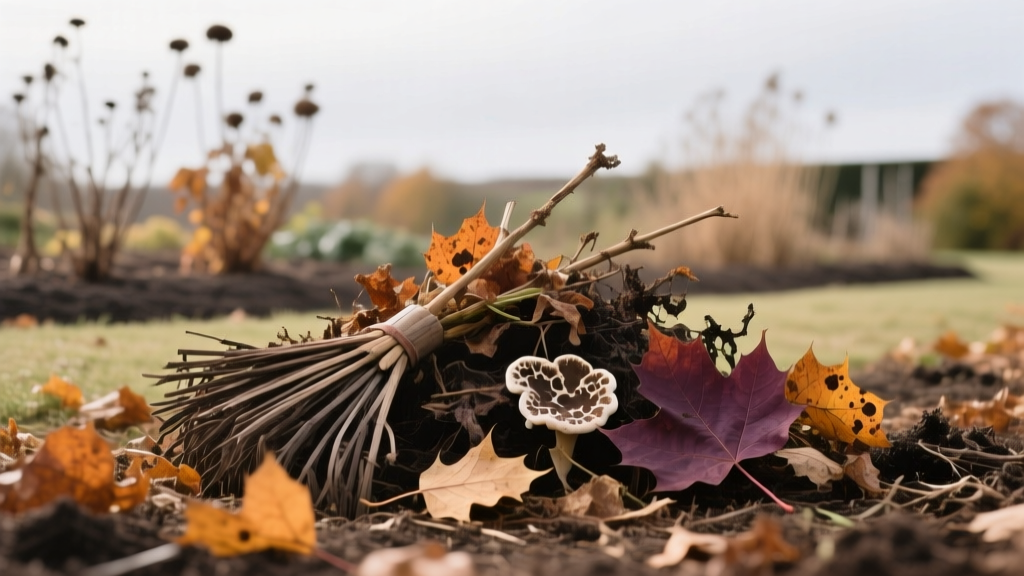
Fall Garden: Cleaning Up Disease-Infected Plant Debris
The best window to stop next year’s disease problems is closing fast. Once nights regularly dip into the 40–50°F range and the first hard frost is within a few weeks, pathogens shift into survival mode—tucking into fallen leaves, blighted stems, and mummified fruit. If you remove (or correctly destroy) infected debris now, you cut down the “starter culture” that splashes back onto new growth next spring.
This is also the season when gardeners accidentally spread disease while “tidying up”: composting the wrong material, saving contaminated seed, or pruning at the wrong time. Use the priorities below like a field checklist: first remove the worst sources of inoculum, then protect soil and perennials, then prep planting and pruning tasks that actually pay off in fall.
Priority 1: Remove and dispose of disease-infected debris (do this first)
What counts as “disease-infected” right now
Start with anything that shows active or recent symptoms, and anything known to overwinter on debris:
- Tomato/potato vines with early blight or late blight lesions; any blackened, water-soaked tissue.
- Cucurbit vines with powdery mildew, downy mildew, or gummy stem blight.
- Apple/pear leaves with scab; black knot prunings from plum/cherry.
- Roses with black spot defoliation; fallen infected leaves are a major source of reinfection.
- Peony leaves with blotch; iris leaves with leaf spot.
- Fruit “mummies” (shriveled fruit) under stone fruits or apples—key for brown rot and other fruit rots.
Timing targets: Aim to complete first-pass removal 2–3 weeks before your average first frost. In many Zone 5–6 gardens, that’s often between Sept 15 and Oct 15 depending on location; in Zone 3–4, it can be late Aug to mid-Sept. If you don’t know your average first frost date, look it up by ZIP code and mark it on your calendar.
Decide: compost, trash, bury, or burn?
This is where fall cleanup goes wrong. Many pathogens survive home composting temperatures.
- Send to trash (safest): late blight tomato/potato vines, heavily mildewed cucurbits, rose leaves with black spot, apple scab leaves, anything with “mummies.” Bag it so spores don’t shake loose across the yard.
- Hot compost only (if you truly run it hot): lightly diseased leaves can be composted if your pile reliably reaches 131–160°F for multiple days and is turned. Most backyard piles don’t sustain this.
- Bury only if allowed and deep enough: Some growers bury debris so it decomposes before spring splash. If you do, bury at least 8–12 inches deep and don’t bring it back up when you plant.
- Burn only where legal and safe: Some rural areas allow burning; follow local rules.
Extension guidance consistently emphasizes sanitation as a primary management tool for foliar and fruit diseases. For example, Cornell University Cooperative Extension (2019) highlights sanitation (removing infected leaves and fruit) as a key step for managing apple scab and reducing spring inoculum. University of Minnesota Extension (2020) similarly recommends removing and disposing of diseased plant material to prevent overwintering and reinfection.
“Sanitation—removing and destroying infected plant debris—is one of the most effective ways to reduce disease pressure the following season, especially for pathogens that overwinter on leaves and stems.” — Extension plant pathology guidance summarized from multiple university programs (e.g., Cornell Cooperative Extension, 2019; University of Minnesota Extension, 2020)
Fast triage: the 30-minute sweep that pays off
If you only have one short work session, do this:
- Pick up and bag all mummified fruit under trees and shrubs.
- Strip and bag diseased tomato and potato vines (don’t drag them across beds).
- Rake and remove rose leaves and any black spot–infected leaf litter.
- Cut down and bag peony foliage showing blotch.
That one sweep removes high-value overwintering sources before rain and wind distribute spores.
Cleaning tools so you don’t spread disease
Fall is when sap, soil, and spores coat tools. Disinfect between high-risk plants.
- Use 70% isopropyl alcohol wipes or spray for pruners between plants (fast, effective, no rinse).
- Or dip tools in a disinfectant labeled for this use; follow label contact time.
- Afterward: wash, dry, and oil metal parts before storage to prevent rust.
Priority 2: What to protect (soil, crowns, and overwintering plants)
Mulch and leaf management: reduce splash, protect soil structure
Once infected debris is removed, you can safely use clean organic matter to protect soil and reduce splash dispersal next spring.
Temperature and timing: Apply winter mulch after the ground begins to cool and perennials start to go dormant—often when nighttime lows are consistently below 45°F. In colder zones, mulch after a few light frosts; applying too early can keep soil warm and encourage rodents and rot.
- For vegetable beds: apply 2–4 inches of clean straw, shredded leaves (from healthy trees), or finished compost.
- For strawberries in cold zones (often Zones 3–5): apply 3–5 inches of clean straw after several freezes, typically when temps are hovering around 20–25°F at night.
- Keep mulch 1–2 inches away from crowns and trunks to avoid rot and vole damage.
Protect perennials that harbor disease
Some perennials are notorious for reinfection from leaf litter. Don’t just “leave it for habitat” if the plant was diseased—be selective.
- Roses: remove fallen leaves; consider a late-season cleanup and a mulch “collar” at the base (not touching canes).
- Peonies: cut stems to the ground and remove leaves if blotch was present.
- Bee balm (Monarda): if powdery mildew was severe, remove and dispose of foliage to reduce carryover.
Scenario: In a wet fall in the Northeast (Zones 5–7), leaf litter stays damp for weeks, which favors survival structures of many fungi. In that case, be extra strict about removing diseased leaves and avoid using them as mulch in the same bed.
Priority 3: What to prepare (beds, rotation, and disease prevention for next spring)
Map disease “hot spots” now (before you forget)
Walk your garden with a notebook and mark:
- Where tomatoes had blight, where squash mildewed first, where beans rusted.
- Where drip irrigation worked well (less leaf wetness) versus overhead watering.
- Where airflow was poor (crowding, fences, tall crops blocking wind).
Then plan rotation. A practical rule: don’t plant the same family in the same spot for 2–4 years when disease pressure was high (especially for tomatoes/potatoes/peppers/eggplant and for cucurbits).
Improve drainage and airflow before the ground freezes
Fall is ideal for structural fixes because you can see bed shape and compaction after a season of watering and foot traffic.
- Top-dress beds with 1–2 inches of finished compost (not raw manure) to improve soil structure.
- Consider widening paths or adding stepping stones to stop accidental compaction.
- Install or repair drip lines now so you aren’t forced into overhead watering next season.
Cover crops (and when not to use them)
Cover crops suppress erosion and improve soil biology, but they can complicate sanitation if you leave infected debris in place.
- Good fall choices: winter rye, oats (winter-kill in cold zones), crimson clover (milder zones).
- Timing: seed cover crops 4–6 weeks before your average first hard frost for meaningful growth. In many Zone 6 gardens, that’s often by mid-September; in Zone 4, often by late August.
- Skip or delay cover crops until after you remove diseased debris. Don’t “hide” infected leaves under green growth.
Priority 4: What to plant (smart fall planting that doesn’t invite disease)
Garlic and onions: plant when soil cools, not when you feel like it
Garlic is a classic fall plant, but timing matters for disease and winter survival.
- Plant garlic 2–4 weeks before the ground freezes. In many climates this lands around Oct 1–Nov 1.
- Ideal soil temperatures for planting are often around 50°F and falling (cool enough to discourage excessive top growth but warm enough for rooting).
- Use clean seed garlic; don’t plant cloves from a diseased crop.
Greens and quick crops: only if you can beat the clock
If your first frost is close, focus on short-maturity crops and protect them.
- Spinach and arugula can be seeded for fall if you have 30–45 days before hard freezes, plus row cover.
- In Zones 7–9, fall is prime time for cool-season crops because disease pressure from summer humidity drops as nights cool.
Perennials and shrubs: plant healthy stock, not discounted problems
Fall planting is excellent for roots—just avoid bringing disease home.
- Inspect for leaf spots, cankers, and crown issues before planting.
- Space for airflow. Crowding now becomes a mildew factory next summer.
- Water at the base; keep foliage dry going into cool nights.
What to prune (and what to leave alone until late winter)
Prune out obvious disease, but avoid stimulating tender growth
Fall pruning is a mix of “yes” and “wait.” The goal now is sanitation and safety, not shaping.
- Do now: remove dead, diseased, or broken branches any time you see them. Cut back to healthy tissue and dispose of the material.
- Wait until dormant season (late winter): major structural pruning of many fruit trees and summer-flowering shrubs is often best done when fully dormant to reduce disease risk and avoid winter injury.
Temperature cue: Once repeated frosts arrive and plants are dormant (often after several nights below 32°F), you can more safely assess structure. But if you’re dealing with active cankers or black knot, remove those as soon as you can and destroy the prunings.
Special case: black knot on plum and cherry
Black knot overwinters in galls and releases spores in wet spring weather. If you can see galls now (or after leaf drop), cut out branches at least 3–4 inches below the gall into healthy wood, and remove prunings from the site. Disinfect tools between cuts.
Monthly cleanup schedule (use it like a work order)
| Timeframe | What to do | Key numbers & triggers | What not to do |
|---|---|---|---|
| Late Aug–Mid Sept (Zones 3–5) | Remove diseased vegetable vines; bag mummies; seed cover crops early | Seed covers 4–6 weeks before hard frost; plan for first frosts as early as Sept 15 in some cold areas | Don’t compost late blight vines in a cool pile |
| Mid Sept–Mid Oct (Zones 5–7) | Rake and remove rose/fruit tree infected leaves; top-dress beds; map rotations | Finish major sanitation 2–3 weeks before average first frost (often Oct 1–20) | Don’t mulch thickly while soil is still warm |
| Oct–Nov (Zones 6–9) | Plant garlic; protect tender greens with row cover; final debris sweep after leaf drop | Plant garlic 2–4 weeks before ground freeze; aim near 50°F and falling soil temps | Don’t leave fruit mummies hanging into winter |
| After consistent freezes | Mulch strawberries/perennials; store tools clean and dry | Mulch after several freezes; strawberries often when nights hit 20–25°F | Don’t pile mulch against trunks/crowns |
3 regional scenarios: adjust your fall disease cleanup to your conditions
Scenario 1: Pacific Northwest (mild temps, long wet fall)
In Zones 8–9 west of the Cascades, fall often stays wet with mild nights. That means leaf litter decomposes slowly and stays damp—perfect for fungal survival.
- Be strict about removing infected leaves from roses, fruit trees, and ornamentals.
- Prioritize airflow: cut back overcrowded herbaceous growth (sanitation cuts) and remove weeds that block drying breezes.
- Use drip irrigation for fall greens; avoid overhead watering when nights are below 50°F to reduce leaf wetness duration.
Scenario 2: Upper Midwest / Northern Plains (early frosts, fast shutdown)
Zones 3–4 can go from warm to frozen quickly. You may have only a couple weekends to act.
- Do the high-risk sweep first: tomatoes/potatoes, cucurbits, fruit mummies, peony and rose leaves.
- Skip complex composting decisions—bag and remove diseased material to avoid spring surprises.
- Mulch timing matters: apply after dormancy and some freezes to reduce vole nesting.
Scenario 3: Southeast / Gulf Coast (long season, disease pressure shifts—not ends)
In Zones 8–10 with warm fall days and humid nights, diseases can keep cycling. Cleanup isn’t a single event—it’s a reset between crop successions.
- Remove spent summer crops promptly to reduce ongoing spore production.
- Replant with cool-season crops spaced for airflow; avoid crowding because dew can be heavy even when days are mild.
- Scout weekly for powdery mildew on fall squash or cucumbers; remove infected leaves early to slow spread.
Fall pest and disease prevention: what to watch as you clean
Rodents and voles under “messy mulch”
Thick mulch applied too early becomes habitat. Keep mulch pulled back from trunks and crowns, and avoid creating hidden runways near young trees.
Slugs in damp leaf layers
In rainy fall climates, slugs thrive under leaves and boards. As you remove diseased debris, also remove hiding spots and consider iron phosphate bait where appropriate.
Overwintering insects in debris
Not every insect is a problem, but if you had heavy pest pressure (squash bugs, tomato hornworms, bean beetles), reducing debris reduces sheltering sites. Combine cleanup with rotation and row cover planning.
Action checklists: take these outside
Immediate checklist (next 7 days)
- Bag and remove diseased vegetable vines (tomato, potato, squash, cucumber).
- Collect and discard fruit mummies and fallen diseased fruit.
- Rake out infected rose leaves and dispose.
- Disinfect pruners between diseased plants using 70% alcohol.
- Note disease hot spots on a simple garden map for rotation planning.
Before first frost checklist (next 2–3 weeks)
- Top-dress beds with 1–2 inches compost; avoid burying infected debris.
- Seed cover crops if you still have 4–6 weeks before hard frost.
- Remove peony and iris diseased foliage; discard.
- Do a final pass under fruit trees for fallen leaves with scab and any mummified fruit.
After dormancy checklist (after repeated nights below 32°F)
- Apply winter mulch after soil cools (nights consistently <45°F).
- Mulch strawberries after several freezes (often near 20–25°F nights in cold zones).
- Clean, dry, and oil tools before storage.
Notes backed by extension and research (useful when you’re deciding what’s “worth it”)
Sanitation is not busywork; it directly reduces initial inoculum. University extension programs repeatedly recommend removing and destroying infected leaves and fruit to lower disease pressure the next year, including for common problems like apple scab and foliar leaf spots (Cornell Cooperative Extension, 2019; University of Minnesota Extension, 2020). When you pair sanitation with rotation and reduced leaf wetness (drip irrigation, spacing), you’re stacking proven controls—without relying on sprays.
If you’re pressed for time, remember the highest return tasks are the ones that remove concentrated disease sources: mummified fruit, blighted vines, and infected leaf litter directly under susceptible plants.
One last walk through the garden after leaf drop is often the difference between “pretty clean” and genuinely sanitary. Put on gloves, bring a bag, and look for what the plants tried to hide all season: cankers, galls, and fruit mummies. Clear those now, and spring starts with fewer problems waiting for the first warm rain.