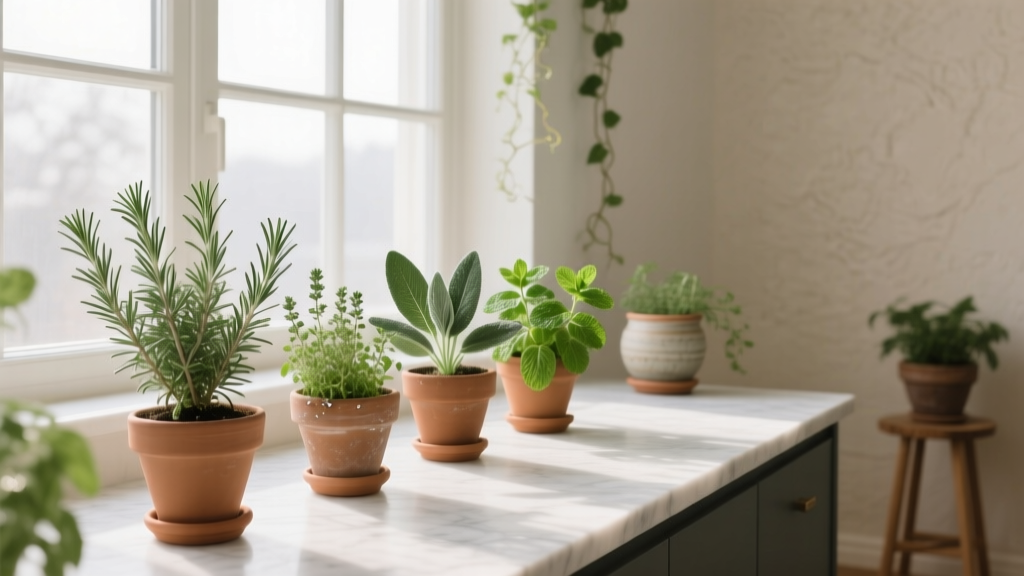
Fall Garden: Overwintering Herbs Indoors
First frost is the deadline you can’t renegotiate. Once nights start dipping into the mid-30s°F, tender herbs go from “still growing” to “blackened overnight” fast. The opportunity: with a few targeted moves this month, you can carry basil, rosemary, mint, parsley, chives, oregano, thyme, and even lemongrass through winter on a sunny windowsill—while also reducing pests and setting up a clean start for spring.
Use your local average first frost date as the anchor. If you don’t know it, look it up today and work backward 4–6 weeks. Most indoor overwintering success comes from acting early: plants transition better when they’re still actively growing outdoors and nights are still above about 45°F. Once outdoor lows regularly hit 40°F or colder, growth slows and transplant shock increases.
Quick timing targets (use at least five of these as checkpoints): bring basil inside before 50°F nights; bring rosemary and lemongrass inside before sustained 45°F nights; expect first light frost around 32°F; hold indoor temps 60–70°F for active growth; provide 12–14 hours of supplemental light if winter sun is weak; quarantine newcomers for 10–14 days.
Priority 1: Move or start the herbs you’ll actually want in winter (this week)
What to bring indoors now (and what to leave outside)
Not every herb deserves a spot under lights. Prioritize plants that are tender, high-value in winter cooking, and likely to survive the transition.
- Bring inside before nights hit 45–50°F: basil (dies with cold), lemongrass, rosemary (cold-hardy in some zones but hates freeze/thaw in containers), bay laurel, stevia, pineapple sage.
- Bring inside before hard frost (28°F or lower): parsley (biennial), chives (can be forced), oregano, thyme (often fine outdoors in-ground but good candidates for “kitchen pots”).
- Usually leave outside (in-ground) in zones where hardy: thyme, sage, oregano, chives, mint—unless you want winter harvest from a windowsill.
USDA zone reality check: Rosemary is often listed as hardy roughly in zones 8–10 (some cultivars to 7 with protection). In zones 3–6, treat it as a container plant and bring it indoors well before the first frost. Basil is a warm-season annual everywhere; treat 50°F as your “bring-it-in” alarm.
What to plant right now for indoor harvest
If you missed summer starts or don’t want to risk bugs hitchhiking indoors, fall is an excellent time to start fresh pots from seed or cuttings. Indoors, your goal is steady, manageable growth—not big lush plants that attract pests.
- Fast from seed (2–4 weeks to usable snips): cilantro, dill (best in deeper pots), chervil, arugula-mustard microgreens for “herby” garnish.
- Best from cuttings (reliable clones): basil (root in water 7–14 days), mint, oregano, thyme, sage (semi-hardwood), rosemary (can be slower, 3–6 weeks).
- Best from division: chives, lemon balm, oregano, mint (contain in pots—more on that below).
Timing tip: start seeds or root cuttings 4–6 weeks before your shortest days (mid-December in the Northern Hemisphere). Plants that establish roots in October–November hold up better through low-light winter.
Scenario-based choices (pick the path that fits your garden)
Scenario A: You’re in a cold-winter zone (USDA 3–5) with early frost. If your first frost commonly lands between Sept 20–Oct 10, plan to move tender herbs indoors by mid-September or when nights first flirt with 45°F. Consider taking cuttings instead of hauling big pots—smaller plants adapt to indoor humidity and light more easily.
Scenario B: You’re in a mild-winter zone (USDA 8–10) with wet winters. Your issue may be root rot outdoors more than cold. Bring rosemary, basil, and bay inside when extended rain and cool nights stall growth (often below 55°F at night). You can also overwinter herbs in a protected porch where temps stay above 40°F.
Scenario C: You garden in an apartment with limited sun. Skip trying to keep full-size outdoor basil alive. Root 2–3 small cuttings and grow them compact under a basic LED grow light set for 12–14 hours/day. Use smaller pots (4–6 inch) to avoid soggy soil.
Priority 2: Prune and “right-size” herbs for indoor life (next 7 days)
How much to cut back (by herb)
Indoor light is weaker and air is drier, so aim for a smaller canopy and a strong root system. Pruning before the move reduces transpiration and helps prevent pest explosions.
- Basil: cut back by 1/3, keeping at least 2–3 leaf nodes per stem. Remove flower spikes completely.
- Rosemary: light prune only—remove weak tips and any dead interior twigs. Avoid cutting into old, leafless wood.
- Mint/oregano: cut back hard to 3–5 inches tall; they rebound quickly indoors.
- Thyme: shear lightly; don’t scalp to bare stems.
- Parsley: harvest outer stems at the base; don’t remove the center crown.
- Chives: to force indoors, cut back to 2 inches and pot up; new growth follows with light and water.
A practical indoor size target
For windowsill pots, a good target is a plant that fits in a 6–8 inch pot, with foliage no wider than 10–12 inches. Anything larger becomes a low-light, high-pest magnet. If your herb is huge outdoors, take cuttings or divisions and compost the rest.
Checklist: pruning and prep before you move plants
- Harvest heavily for drying or freezing (especially basil, oregano, thyme) before the move.
- Remove all flowers and buds—indoors you want leaves, not seed.
- Cut back lanky stems and thin crowded centers for airflow.
- Discard yellowing leaves and any leaf litter on the soil surface.
Priority 3: Protect your indoor space—stop pests and disease before they cross the threshold (today through the first 2 weeks indoors)
Wash, quarantine, and inspect (don’t skip this)
Most “indoor herb failures” are really pest introductions. Aphids, spider mites, whiteflies, and fungus gnats love the stable temps and lack of predators inside.
Quarantine rule: isolate incoming plants for 10–14 days away from houseplants. During quarantine, inspect twice per week with a flashlight: look under leaves, along stems, and at new growth.
- Initial rinse: hose the plant off outdoors, including leaf undersides, to knock off aphids and mites.
- Soap wipe: for sturdy leaves (rosemary, bay), wipe stems and leaf undersides with a mild soap solution and rinse after 10 minutes.
- Soil surface cleanup: remove the top 1/2 inch of potting soil if it’s full of algae, debris, or fungus gnat larvae; replace with fresh mix.
“Most insect problems on herbs grown indoors are related to low light and overwatering—stressed plants are more susceptible.” — University of Minnesota Extension (2020)
Season-specific pest pressure and what to do
Spider mites: often flare when indoor heat turns on and humidity drops below about 40%. Prevent by keeping plants evenly watered (not soggy) and increasing humidity modestly (a pebble tray or a small humidifier). If mites appear, rinse foliage and treat with insecticidal soap labeled for edible plants, repeating at 5–7 day intervals as needed.
Aphids/whiteflies: common on basil, parsley, and mint. Pinch heavily infested tips and discard. Sticky traps help monitor adults. Keep nitrogen fertilizer light—lush, soft growth attracts them.
Fungus gnats: a fall/winter classic from moist soil and low evaporation. Let the top 1 inch of soil dry before watering again; bottom-water when possible. Yellow sticky cards reduce adults, but drying cycles break the life cycle.
Disease prevention: the fall/winter “indoor rot” trap
Low light + cool windows + wet soil causes root rot, damping-off (in seedlings), and gray mold. Aim for:
- Airflow: don’t crowd pots; a small fan on low helps.
- Temperature: keep most herbs in the 60–70°F range; avoid leaves touching cold glass at night.
- Watering discipline: water thoroughly, then wait—don’t “sip” water daily.
Extension-backed note: Penn State Extension (2019) emphasizes that proper watering and sanitation are key to reducing indoor insect and disease issues on herbs, especially when transitioning plants inside.
Priority 4: Prepare the right indoor setup (this weekend)
Light: the make-or-break factor
A south-facing window can work for many herbs, but late fall through winter sun is weak and day length is short. If your herbs get leggy, pale, or stop growing, add light.
- Target duration: provide 12–14 hours of light daily for active growth (timers are worth it).
- Distance: keep LEDs close enough to be effective (often 6–12 inches, follow manufacturer guidance).
- Rotate: turn pots 1/4 turn every 2–3 days in window light to prevent leaning.
Soil and pots: prevent winter waterlogging
If you’re potting up garden herbs, use a fresh, well-draining potting mix—not garden soil. Choose pots with drainage holes and saucers. For herbs that hate wet feet (rosemary, thyme), go slightly smaller on pot size so the mix dries at a reasonable pace.
- Rosemary/thyme: add extra perlite or fine bark for drainage.
- Mint/lemon balm: standard potting mix is fine, but keep contained—these spread aggressively.
- Parsley/cilantro: deeper pots (at least 8–10 inches) support taproots.
Temperature thresholds: where herbs struggle indoors
Most culinary herbs tolerate typical indoor temps, but window drafts matter.
- Below 50°F indoors: basil sulks, drops leaves, and becomes disease-prone.
- Below 55°F soil temps: growth slows; overwatering risk increases.
- Above 75°F with low humidity: spider mites become more likely, especially on rosemary.
Month-by-month schedule (use this to stay on track)
| Timing | Outdoor trigger | What to do | Herbs most affected |
|---|---|---|---|
| Late Aug–Mid Sept | Nights begin trending toward 55°F | Take cuttings; start seeds indoors; reduce fertilizer outdoors | Basil, mint, oregano, thyme |
| 2–4 weeks before first frost date | Forecast lows 45–50°F | Prune, rinse, inspect; pot up divisions; set up quarantine area | Basil, rosemary, lemongrass, bay |
| 1 week before first frost | Frost likely at 32°F | Move tender herbs indoors; harvest and preserve excess | Basil, pineapple sage, stevia |
| After first frost | Outdoor growth slows; damp weather | Monitor pests twice weekly; water less; add light to prevent legginess | All indoor herbs |
| Dec–Jan (lowest light) | Short days; indoor heat on | Maintain 12–14 hours light; manage humidity; avoid heavy feeding | Rosemary, basil, parsley |
High-impact herb-by-herb tactics (what works in real homes)
Basil: treat it like a houseplant, not a garden annual
Basil is the herb most people try—and most people lose. The fix is timing and restraint. Bring basil inside before nights drop below 50°F. Take cuttings as insurance: snip 4–6 inch tips, remove lower leaves, root in water, then pot into fresh mix.
- Keep at 65–75°F with steady light.
- Pinch weekly to prevent legginess.
- Water when the top inch is dry; don’t let it sit in a saucer of water.
Rosemary: bright light, lean watering, and patience
Rosemary survives winter indoors when it gets strong light and dries slightly between waterings. It’s also a spider-mite magnet in dry air. Give it the sunniest spot you have plus supplemental light if possible.
- Use a fast-draining mix; never let it stay soggy.
- Keep foliage off cold window glass.
- Inspect weekly for mites (fine stippling, webbing at tips).
Mint and lemon balm: easy indoors, but contain and reset
Mint is forgiving and productive, which makes it ideal for indoor overwintering. It also spreads aggressively, so pot it alone. Cut it back hard before bringing it in to reduce pests and encourage fresh indoor growth.
- Cut to 3–5 inches tall before moving indoors.
- Refresh the top layer of soil to reduce fungus gnat habitat.
- Harvest often to keep growth compact.
Parsley and chives: “cool-season” herbs that can carry you through
Parsley handles cool indoor conditions better than basil and can keep producing with decent light. Chives are one of the easiest “forced” herbs: divide a clump, pot it, water, and put it in bright light.
- Parsley prefers even moisture but not saturation; use deeper pots.
- Chives can be cut back and will regrow; harvest by snipping, not pulling.
Regional variations that change your game plan
Pacific Northwest (cool, dim, wet falls)
Light is your limiting factor. Plan on a grow light by October, especially west of the Cascades. Don’t overwater—evaporation slows in cool indoor corners. Fungus gnats and gray mold are common; prioritize airflow and sanitation. If outdoor containers are waterlogged, moving herbs inside can actually improve their root health—provided you don’t keep them equally wet indoors.
Upper Midwest / Interior Northeast (early freezes, dry indoor heat)
You may see first frosts in late September or early October, and indoor humidity can crash once heating starts. Bring tender herbs inside early (45–50°F nights), and expect spider mites by November if humidity is very low. A small fan plus a humidifier set to keep the room around 40–50% (not tropical) helps herbs hold leaves without inviting mold.
South / Lower elevations (long falls, sudden cold snaps)
Your herbs may be growing strongly into November, then a surprise cold front drops temps near 32°F for a night or two. Watch forecasts and be ready to shuttle pots into a garage or indoors for cold nights. In USDA zones 8–10, rosemary and thyme may overwinter outside in-ground, but container plants still face colder roots and should be protected during freezes.
Fall indoor herb timeline (printable-style checklist)
Today (30–45 minutes)
- Look up your average first frost date and mark it on the calendar.
- Check the 10-day forecast for lows approaching 50°F and 45°F.
- Choose your “indoor winners” (3–6 pots max for most homes).
This week
- Take cuttings of basil, mint, oregano (insurance plants).
- Harvest and preserve: dry oregano/thyme; freeze basil pesto.
- Set up a quarantine zone with a tray and sticky cards.
Next weekend
- Prune and rinse plants; remove debris from soil surface.
- Pot up divisions into fresh, well-draining mix.
- Install a simple grow light on a timer (12–14 hours).
First 2 weeks indoors
- Inspect leaves (especially undersides) twice weekly.
- Water less than you think; let the surface dry between waterings.
- Pinch tips to keep plants compact and productive.
Research-backed practices to keep herbs edible and safe
Indoors, you’re producing food. Use products labeled for edible plants, follow label directions, and prioritize non-chemical controls first (sanitation, pruning, washing, light, and watering discipline). Extension guidance consistently points to cultural controls as the foundation for indoor herb success.
Evidence to lean on: University of Minnesota Extension (2020) highlights that low light and overwatering drive many indoor herb pest problems and stresses. Penn State Extension (2019) emphasizes sanitation, proper watering, and monitoring to reduce indoor pest and disease issues on herbs during transitions.
What to do with the outdoor herb beds after you’ve moved plants inside
Overwintering indoors is only half the fall job. Clean outdoor beds now to reduce carryover pests and disease for next year.
- Remove spent basil and any diseased foliage—don’t compost plants with obvious mildew or heavy insect infestation.
- Top-dress perennial herb beds with 1–2 inches of compost after the soil cools, but before hard freeze.
- Mulch hardy perennials (thyme, sage in colder zones) after the ground begins to freeze to prevent heaving—often after several nights in the 20s°F.
- Label favorite varieties now while you remember what performed well.
If you handle the move before cold nights stall growth, keep plants clean through quarantine, and give them enough light to earn each watering, you’ll be snipping fresh herbs when the garden outside is locked up. The best part is the compounding payoff: the cuttings and compact plants you nurse through winter become your earliest, strongest starts when spring finally pushes past 50°F nights again.