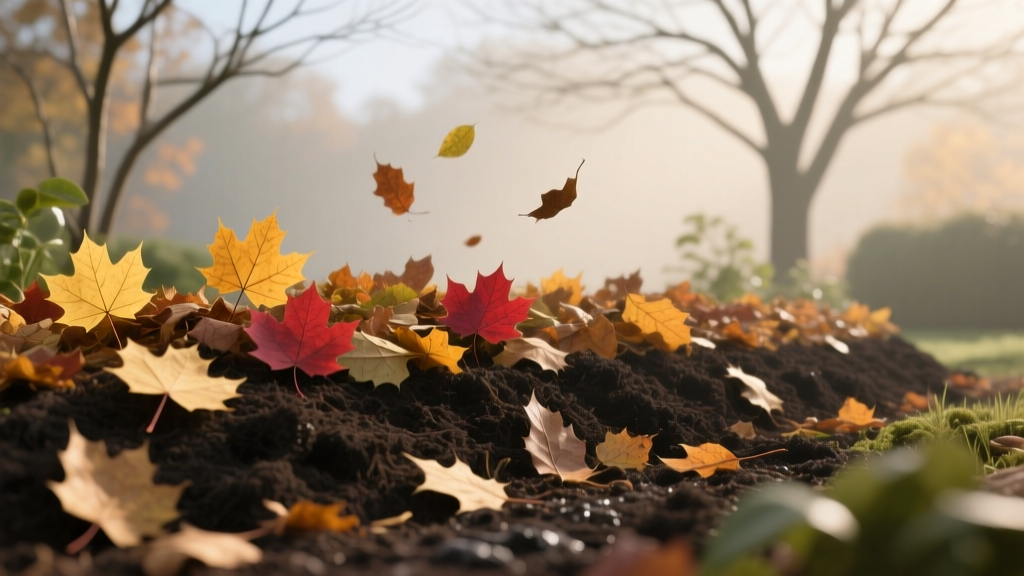
Fall Mulching with Leaves for Soil Health
The window for using fall leaves to build healthier soil is short: once hard freezes arrive, worms and microbes slow down, and wind can strip beds bare. But right now—between the first leaf drop and the ground freezing—you can turn what many people bag up and discard into a slow-release soil blanket that feeds your garden all next year.
Leaf mulch is not just “free cover.” Done correctly, it buffers temperature swings, reduces erosion from fall rains, protects overwintering beneficials, and converts into organic matter that improves aggregation and water-holding capacity. Done poorly (too thick, too matted, or placed over diseased debris), it can invite slugs, vole tunnels, and springtime fungal issues. This guide prioritizes what to do first, with timing you can act on this week.
Quick timing anchors (use your local average first frost date): aim to mulch 2–3 weeks before your soil freezes; apply after the first hard frost (28°F / -2°C) for tender perennials you want to keep dormant; stop adding thick mulch once daytime highs stay below 40°F for a week because decomposition slows dramatically. For many gardens, that’s Oct 15–Nov 30, depending on USDA zone.
Priority 1: What to prepare right now (leaf collection, shredding, and soil-smart placement)
Start with logistics. Leaf mulch works best when it’s shredded and applied at the right depth for the job. Whole leaves (especially maple and oak) can mat into a water-shedding layer; shredding makes a porous, faster-composting blanket.
Week-by-week leaf-mulch timeline (from first leaf drop to freeze-up)
| Timing | What to do | Target depth | Notes |
|---|---|---|---|
| Weeks 1–2 of leaf drop (often late Sep–mid Oct) | Collect & shred leaves; start a leaf-only pile or store bagged shredded leaves dry | n/a | Shred with mower; aim for pieces < 1 inch for fastest breakdown |
| 2–4 weeks before average first frost | Mulch empty vegetable beds; top-dress around established perennials | 1–2 inches on beds; 2–3 inches around plants | Keep mulch 2–3 inches away from crowns and stems |
| After first hard frost (28°F / -2°C) | Apply insulating layer to tender perennials (roses, strawberries, borderline shrubs) | 3–6 inches (shredded) | Apply after plants are dormant to prevent rot and rodents nesting early |
| Before ground freezes solid (often when soil temps approach 32°F) | Final check: re-fluff matted areas; secure with compost or a few pine boughs in windy sites | Maintain planned depth | Wind corridors and slopes need “anchors” |
| Late winter/early spring (when soil reaches ~50°F) | Pull back mulch from crowns; use remaining as paths or compost ingredient | Reduce to 1 inch or less near stems | Warm soil faster; reduce slug habitat |
Shred, don’t stack: the practical method that prevents matting
Fastest approach: mow leaves on the lawn with a bagging mower, or rake into windrows and mow over them. If you don’t have a mower, a string trimmer in a trash can works (wear eye protection). Shredded leaves knit together less, settle evenly, and start decomposing sooner.
Depth rules that work in real gardens:
- 1–2 inches on vegetable beds you’ll plant early in spring (keeps soil workable).
- 2–3 inches around established perennials and shrubs for moisture and soil protection.
- 3–6 inches only for winter insulation, applied after dormancy (after a hard frost).
Keep it off crowns: leave a 2–3 inch bare ring around the base of perennials, strawberries, and young trees to reduce rot and rodent chewing.
“Leaves are a valuable resource… shredded leaves are less likely to mat and can be used as mulch or added to compost.” — University of Minnesota Extension (2020)
That “less likely to mat” is not a small detail. Matting is the #1 reason leaf mulch gets blamed for poor plant performance: it can block oxygen exchange at the soil surface and keep spring soils colder and wetter than needed.
Leaf safety check: what not to mulch
Not all leaves should go straight onto beds. Use this quick screen before you shred and spread:
- Avoid leaves heavily spotted by fungal disease (common with apple scab, rose black spot, and some anthracnose infections). Compost hot, or bag and dispose if disease pressure was severe.
- Avoid walnut leaves and twigs where you plan to plant sensitive crops (tomatoes, peppers, potatoes) due to juglone risk in the root zone; compost separately for a full season.
- Use with caution thick, waxy leaves (magnolia) and long needles: they’re better as path mulch or mixed into compost.
For disease sanitation, extension services consistently recommend removing or composting infected leaf litter to reduce overwintering inoculum. The general principle is supported widely; for example, Cornell University’s IPM guidance emphasizes sanitation as a key step for managing many fungal diseases (Cornell Cooperative Extension/Cornell IPM, 2019).
Priority 2: What to protect (soil, roots, crowns, and overwintering beds)
Fall weather swings are hard on soil structure. Bare soil takes a pounding from heavy rains, then freezes and thaws, which breaks aggregates and can heave shallow-rooted plants. Leaf mulch is a shock absorber.
Protect perennials and bulbs (without smothering them)
Perennials: mulch after the first hard frost (28°F) so plants enter dormancy. Applying a thick layer too early can keep crowns wet and encourage rot. For borderline-hardy perennials in USDA Zone 5 and colder, aim for 3–4 inches of shredded leaf mulch; in Zone 3–4, 4–6 inches is more reliable, especially in low-snow winters.
Spring bulbs: if squirrels or temperature swings are a problem, a 1–2 inch layer after planting helps moderate moisture and temperature. Don’t bury bulb areas under 6 inches of dense leaves; bulbs can push through, but overly wet conditions increase rot risk.
Protect vegetable beds for next year’s planting
Leaf mulch is an excellent winter cover for beds you’ll plant after soil warms. Spread 1–2 inches of shredded leaves over cleared beds, then pin with a light dusting of compost or finished mulch if wind is an issue. This reduces erosion and keeps spring weeds from germinating as early.
If you plan to direct-seed early crops (peas, spinach, carrots) as soon as soil is workable, keep your leaf layer thin so you can rake it aside quickly. Plan to pull back mulch when soil reaches about 50°F in spring—warmth matters for germination.
Protect compost biology and build humus over winter
Leaves are carbon-rich. To avoid tying up nitrogen in the surface layer, pair leaf mulch with one of these:
- ½ inch compost under or over leaves (best all-around option).
- Light nitrogen sprinkle (e.g., alfalfa meal) if you’re mulching a bed you’ll plant heavy feeders into next spring.
- Chop-and-drop greens (disease-free) under leaves: spent bean vines, comfrey, grass clippings in thin layers.
Research and extension guidance consistently support leaves as a high-value organic input when managed to prevent matting and to balance carbon with nitrogen. Washington State University Extension notes that fall leaves are a useful mulch and compost ingredient and highlights shredding and mixing for best decomposition (WSU Extension, 2021).
Priority 3: What to plant (still worth planting while you mulch)
Leaf mulching pairs well with a few fall planting moves that pay off in spring. Use leaves to stabilize soil moisture around new plantings and reduce temperature shock.
Garlic (prime leaf-mulch partner)
Plant garlic 2–4 weeks before your ground freezes. In many regions that’s mid-October to mid-November. After planting, cover beds with 3–4 inches of shredded leaves once the soil cools (often after a few nights below 32°F). Too early and garlic may push too much top growth; too late and cloves can heave.
Zone notes:
- Zones 3–5: mulch garlic promptly after planting; winter protection is key.
- Zones 6–7: wait until consistent cool weather; garlic is less likely to heave but still benefits from weed suppression.
Late cover crops (if you have them) vs. leaf mulch
If you already seeded a cover crop, use leaves sparingly so you don’t smother seedlings. If you missed the cover crop window, leaf mulch is your fallback erosion control. As a rule, if your daytime highs are hovering near 45–50°F and dropping, many cover crops establish slowly; leaf mulch becomes the more reliable “plant-free cover.”
Trees and shrubs (last call in many regions)
In Zones 4–6, you can still plant hardy trees and shrubs until the ground freezes, but do it early enough to water them in well. Leaf mulch is ideal around new woody plants: apply 2–3 inches in a wide ring out to the drip line if possible, keeping mulch away from the trunk.
Temperature cue: when soil temperatures drop below about 40°F, root growth slows. If you’re planting late, prioritize watering and wind protection over fertilizer.
Priority 4: What to prune (and what not to touch yet)
Fall pruning mistakes can cost you spring blooms and increase winter injury. Coordinate pruning with leaf cleanup so you’re not trapping diseased material under mulch.
Do prune: dead, diseased, damaged wood (the “3 D’s”)
Remove broken branches, diseased canes, and storm damage promptly—especially anything that could tear further in wind or ice. Sanitize pruners between cuts when disease is present.
Roses with black spot: remove infected leaves from the plant and ground. Don’t bury those leaves under mulch. If black spot was severe, a clean surface (compost-free of infected leaves) lowers spring pressure.
Don’t prune: spring bloomers and most shrubs (yet)
Avoid pruning lilac, forsythia, azalea, rhododendron, and many hydrangeas now; you’ll remove next year’s flower buds. Also avoid heavy pruning of woody plants in late fall because it can stimulate tender growth that winter kills.
Perennials: cut back selectively
Cutting everything to the ground is tidy but not always smart. Use this decision rule:
- Cut back plants with known disease issues (powdery mildew-prone phlox, peonies with botrytis history) and dispose of infected debris.
- Leave standing sturdy stems (coneflower, ornamental grasses) for winter habitat and snow catch; mulch around, not over crowns.
- Cut and compost healthy annuals and vegetable plants, but remove tomato and squash vines if disease was present.
Pest and disease prevention: leaf mulch without inviting trouble
Leaf mulch changes the habitat at ground level. That can work for you—or against you—depending on how you manage moisture and hiding places.
Slugs and snails (common in wet falls and mild winters)
Thick, wet leaf layers are prime slug cover. If you’ve had slug damage, keep mulch to 1–2 inches near vulnerable crops and crowns, and pull mulch back earlier in spring. Avoid piling leaves against hostas and lettuce beds you intend to replant early.
Action this week: set simple monitoring boards (a scrap of wood) on moist soil. If you find multiple slugs under boards in the morning, reduce mulch thickness and improve drainage in those spots.
Voles and mice (especially under deep, fluffy mulch)
Rodents use deep mulch as winter runway cover. Prevent girdling and crown chewing:
- Keep mulch 3–6 inches away from young tree trunks; use hardware cloth guards if voles are common.
- Avoid creating continuous “mulch highways” from wild areas directly into beds; leave occasional breaks.
- Delay deep insulating mulch until after 28°F hard frost when food is reduced and plants are dormant.
Fungal disease carryover: sanitation beats blanket mulching
Leaves from diseased plants can overwinter spores. If you had serious issues with apple scab, rose black spot, or fungal leaf spots, treat those leaves as contaminated. Remove, hot compost (sustained heat), or dispose. This is one of the clearest cases where “free mulch” can cost you next year.
Extension recommendations commonly stress sanitation to reduce disease carryover; for example, University of Minnesota Extension notes the importance of managing fallen leaves and infected debris in disease-prone landscapes (University of Minnesota Extension, 2020).
Regional and real-world scenarios: adapt leaf mulching to your fall
Your best leaf-mulch strategy depends on your moisture pattern, winter lows, and how quickly your soil freezes. Use these scenarios to match what’s happening in your yard.
Scenario 1: Cold winter, fast freeze (Upper Midwest / Interior Northeast, USDA Zones 3–5)
What’s happening: leaves drop quickly, then temperatures can plunge. Soil may freeze hard by late November or earlier.
- Timing: shred and stockpile leaves by Oct 15–31 so you’re not scrambling after snow.
- Strategy: apply 1–2 inches to beds early, then add insulating mulch after 28°F hard frost for strawberries and tender perennials.
- Risk to manage: freeze-thaw heaving. A consistent mulch layer reduces temperature swings and helps keep crowns seated.
Scenario 2: Wet fall, mild winter (Pacific Northwest / Mid-Atlantic coastal, USDA Zones 7–9)
What’s happening: frequent rain and moderate temperatures keep leaves wet and decomposition active longer.
- Timing: mulch anytime from mid-October through December, but keep layers thinner to avoid soggy mats.
- Strategy: prioritize shredding and use 1–2 inches max in poorly drained beds. Consider mixing shredded leaves with coarse compost for airflow.
- Risk to manage: slugs and crown rot. Keep mulch pulled back from plant bases, and don’t bury damp crowns.
Scenario 3: Windy, dry autumn (High Plains / Front Range / exposed suburban sites, USDA Zones 4–6)
What’s happening: leaves blow away, and soils dry out quickly after cold fronts.
- Timing: mulch as soon as you have shredded leaves—waiting invites wind loss.
- Strategy: “cap” shredded leaves with a light layer of compost or use pine boughs, straw, or a few branches to hold them. Water once after mulching if soil is dusty-dry and temps are above 40°F.
- Risk to manage: uneven coverage. Check after the first major wind event and redistribute.
Scenario 4: Heavy clay soil that stays cold and wet (common in many regions, Zones 4–8)
What’s happening: clay compacts under rain, and spring warming is slow.
- Timing: keep fall leaf mulch modest (1–2 inches) on beds you’ll plant early.
- Strategy: use shredded leaves as a top dressing over compost, not as a thick blanket. In spring, pull back mulch earlier when soil hits about 50°F so beds warm up.
- Risk to manage: waterlogging. Avoid creating a wet, anaerobic layer that slows roots and soil life.
Leaf mulch checklists you can use this weekend
Leaf mulching supply checklist
- Rake and tarp (or leaf blower on vacuum/mulch setting if you have it)
- Mower with bagger (or a way to shred leaves)
- Compost (enough for a ½ inch dusting where needed)
- Gloves and pruners (for “3 D’s” pruning and sanitation)
- Tree guards (hardware cloth) if voles are common
- Storage bags or bins for dry shredded leaves (spring mulch reserve)
60-minute action plan (high impact, minimal fuss)
- Shred one mower-bag of leaves (or equivalent).
- Mulch one priority bed (garlic bed, strawberry bed, or an empty vegetable bed) to the correct depth.
- Pull mulch back from crowns/trunks (leave 2–3 inches bare).
- Remove diseased leaves from roses/fruit areas; do not mulch them in place.
- Mark the bed edge so you don’t accidentally rake mulch away later.
Common mistakes that cause spring problems (and the simple fixes)
Mistake: laying down 8–12 inches of whole leaves in one go.
Fix: shred and apply in measured layers. If you already piled it deep, rake off half and use the extra on paths or compost.
Mistake: mulching too early with a thick layer, keeping crowns warm and wet.
Fix: use 1–2 inches early for soil protection; wait until after 28°F hard frost for deep insulation.
Mistake: burying plant stems and tree trunks.
Fix: keep a clear ring around trunks and crowns; widen mulch outward instead of upward.
Mistake: using leaf mulch to “hide” disease cleanup.
Fix: remove infected debris first. Clean beds now means fewer sprays and less frustration next season.
What to watch for as fall turns to winter (and what to do when it happens)
As nights get colder, your leaf mulch will settle. That’s normal. After the first heavy rain or windstorm, take 10 minutes to walk beds and correct problems.
- If mulch is matted: fluff with a rake and add a thin layer of shredded leaves or compost to restore porosity.
- If mulch blew off: reapply and “pin” with compost or a few branches.
- If you see rodent activity (tunnels, droppings): pull mulch back from crowns and install trunk guards.
- If you’re approaching soil freeze and still haven’t protected tender crowns: apply insulating leaf mulch immediately after the next hard frost night.
One last practical note: save some shredded leaves in bags for spring. A dry stash is perfect for topping up mulched paths, balancing compost piles, or smothering early weeds before planting.
Fall leaves are already falling exactly where soil needs protection. Your job is to put them to work—shredded, measured, and timed to your frost and freeze pattern—so winter weather builds your garden instead of stripping it.
Sources: University of Minnesota Extension (2020); Washington State University Extension (2021); Cornell Cooperative Extension/Cornell IPM (2019).