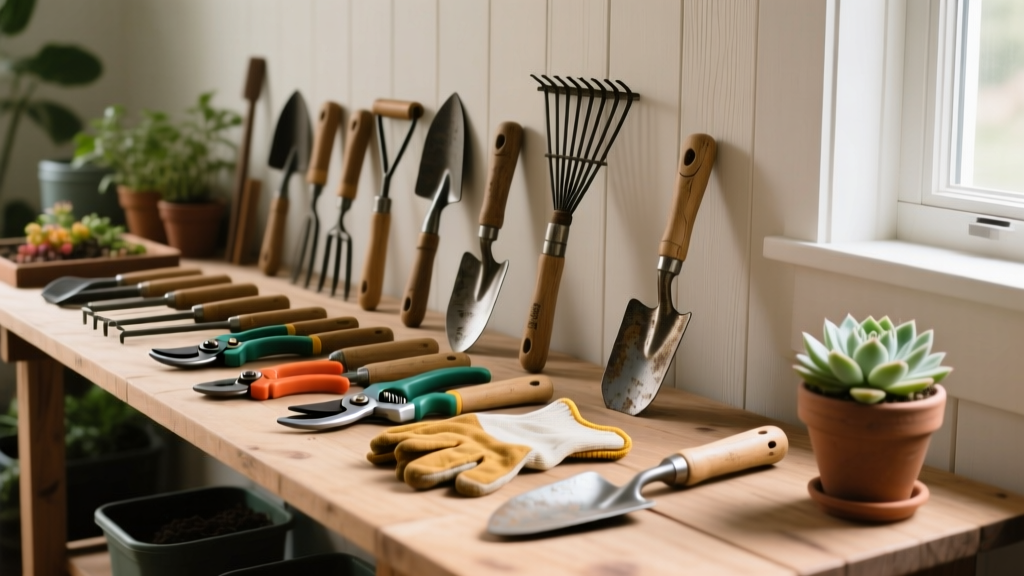
Seasonal Garden Tool Inventory and Replacement Plan
The next 4–6 weeks decide whether your garden runs smoothly or feels like you’re constantly behind—because the tools you reach for every day are either ready, missing, or failing at the worst moment. A dull pruner turns a 10-minute cleanup into a ragged, disease-prone mess. A cracked hose costs you a morning. A rusty shovel makes spring planting feel like digging through concrete. Use this seasonal plan to inventory what you own, replace what won’t last another season, and stage tools where you’ll need them—before peak planting and pruning windows hit.
This guide is written for “right now” in the active growing season (late winter through early summer), but the system works year-round. Use your local average last frost date and your USDA Hardiness Zone to match the timing. Concrete targets below assume most temperate U.S. gardens; adjust using your local extension frost-date tool.
Priority 1: What to plant (and the tools you must have ready first)
Planting is the first place tool failures show up. Seed-starting trays crack, soil blocks collapse, and you can’t find your dibber when you need it. Do the tool check before you buy plants or seed.
Timing targets (use these numbers)
- 6–8 weeks before your last frost date: Start warm-season seedlings indoors (tomato, pepper, eggplant).
- 2–4 weeks before last frost: Direct-sow peas, spinach, radish where soil is workable.
- At soil temperature 50–55°F: Potatoes can go in; many cool-season crops germinate well.
- After night lows stay above 50°F: Transplant tomatoes/peppers outdoors (variety dependent, but this threshold prevents stall).
- At soil temperature 65°F+: Beans, squash, and cucumbers germinate reliably.
Planting tool inventory (quick pass: 20 minutes)
Lay these out on a tarp and decide: keep, repair, replace, or upgrade.
- Hand tools: trowel (tight handle, no wobble), hand fork (tines not bent), hori-hori knife (edge intact), dibber.
- Digging tools: shovel/spade (no cracks at the socket), garden fork (tines straight), hoe (edge can be sharpened).
- Seed-starting: heat mat + thermostat (reads accurately), trays/cell packs (not brittle), labels that don’t fade, sterile seed-starting mix storage bin with lid.
- Measuring: soil thermometer, basic rain gauge, pH test kit or meter (calibrate if applicable).
- Bed prep: rake, wheelbarrow (tire holds air), soil sieve (optional but useful for carrots).
Replace now vs. later: planting-critical tools
Replace these immediately if they’re questionable—because the cost of delay is lost planting windows:
- Soil thermometer that’s off by 5°F or more (test in ice water: should read ~32°F).
- Hand pruners that crush instead of slice (ragged cuts increase disease entry).
- Seed trays that crack when flexed (they fail mid-season when you’re up-potting).
- Hoses with bulges, splits, or leaking couplers (water stress during transplant week is unforgiving).
Regional planting scenarios (adjust the tool staging)
Scenario A: USDA Zone 5–6 with a last frost around May 1–20. Stage row cover, hoops, and frost cloth near the garden by mid-April. You’ll be hardening off seedlings into volatile weather swings and need fast protection.
Scenario B: USDA Zone 8–9 with last frost in February–March. Your spring planting is earlier; shift tool inventory to late January. Add shade cloth clips and drip repair parts now—heat arrives fast and watering equipment becomes your limiting factor.
Scenario C: Coastal or high-humidity regions (Pacific Northwest, Gulf Coast, Mid-Atlantic). Plan for disease management at planting: sanitize seed-starting gear, replace rusty stakes, and prioritize airflow tools (tomato trellis hardware, twine, clips). Humid nights plus crowded plants equals early blight/mildew pressure.
Priority 2: What to prune (and a replacement plan for cutting tools)
Pruning season overlaps with planting, and it’s where sharp, clean tools matter most. Poor cuts heal slowly and invite pathogens. Before you prune anything, decide what you’re pruning this month and match the tool to the job.
Timing and thresholds for pruning work
- Late winter to early spring (before budbreak on many trees): structural pruning of deciduous trees and shrubs.
- After bloom: prune spring-flowering shrubs that bloom on old wood (lilac, forsythia), so you don’t remove next year’s flowers.
- When temperatures are above 40°F: many gardeners find tools and plant tissue cut more cleanly; also easier on hands and sap flow issues.
- Sanitize between plants when disease is suspected; don’t spread cankers or bacterial issues.
“Disinfesting pruning tools between plants can help prevent spread of certain diseases. Use a disinfectant such as 70% alcohol, or a 10% bleach solution, and allow adequate contact time.” — University of Minnesota Extension (2020)
Tool note: alcohol wipes or a spray bottle of 70% isopropyl is faster than bleach (and less corrosive), so it actually gets used.
Cutting-tool comparison (what lasts, what to replace)
| Tool | Best use | Replace/Service trigger | Typical service interval |
|---|---|---|---|
| Bypass hand pruners | Live stems up to ~3/4 inch | Crushing cuts, loose pivot, chipped blade | Sharpen every 2–4 weeks in heavy season; rebuild yearly |
| Anvil pruners | Dead wood, dry stems | Blade denting anvil, ragged cuts | Sharpen monthly; replace anvil as needed |
| Loppers | Branches 1–2 inches | Handles flex/crack, blade won’t align | Sharpen 1–2x per season; check bolts monthly |
| Pruning saw | Branches 2+ inches | Dulls quickly, missing teeth, bent blade | Replace blade every 1–3 seasons (depends on use) |
Pruning checklist (do this before your first big cut)
- Sharpen pruners, loppers, and hoe edges (one session saves hours).
- Tighten pivots, nuts, and handle bolts; oil moving parts.
- Clean sap: warm soapy water + scrub pad; dry fully.
- Sanitize: 70% alcohol spray or wipes in your pocket.
- Replace worn grips/gloves before blister season starts.
Replacement plan tip: If your pruners are mid-tier and you prune weekly, replacing with a rebuildable model is usually cheaper over 3–5 years than buying a new inexpensive pair annually.
Priority 3: What to protect (plants and tools from weather, pests, and disease)
Protection season is when you stop losing ground: late frosts, wind, rabbits, fungal outbreaks, and irrigation failures are predictable. Protecting plants means having protection tools staged, intact, and sized correctly.
Frost and temperature swings (gear to stage now)
If your area is still within 2–3 weeks of possible frost, keep this kit where you can grab it at dusk:
- Frost cloth/row cover (not plastic sheeting directly on leaves)
- Low hoops or wire supports
- Clamps/landscape staples
- Thermometer with min/max memory
Use row cover proactively when forecasts call for 32°F and tender transplants are outside. Even hardy seedlings can be set back by repeated 35–40°F nights, especially with wind.
Pest and disease prevention (tool-centered, season-specific)
Most seasonal outbreaks are accelerated by tool neglect: dirty stakes, last year’s cages, and clogged sprayers. Focus on prevention you can execute fast.
- Damping-off indoors: Wash and sanitize trays; avoid reusing unclean cell packs. North Carolina State Extension notes sanitation and environmental control are key to reducing damping-off in seedlings (NCSU Extension, 2019).
- Early fungal pressure outdoors: Clean tomato cages and stakes; remove old twine. Keep a dedicated bucket for bleach-free disinfectant (70% alcohol) so you actually use it.
- Aphids on tender growth: Ensure your hose nozzle can deliver a firm jet; water spray is a first response. Replace nozzles that leak or stick—when you need pressure, you need it now.
- Slugs/snails (cool, wet regions): Check headlamp batteries, refresh iron phosphate bait if you use it, and keep boards/traps ready.
- Rodents/rabbits: Inspect fencing, replace broken clips, and keep staple gun/staples handy for quick repairs.
Protect your tools (so they don’t fail mid-season)
- Stop rust before it starts: store tools off the ground; wipe metal with a light oil after wet days.
- Hose care: don’t leave hoses pressurized overnight; replace washers (cheap fix, big payoff).
- Battery tools: label batteries with purchase month/year; avoid storing at 100% charge in high heat.
Priority 4: What to prepare (inventory, maintenance, and a replacement calendar)
This is the part that makes the rest of the season easier: a written inventory, a maintenance rhythm, and a replacement plan that prevents emergency purchases.
30-minute seasonal inventory method (fast and realistic)
Pick a day this week. Set a timer for 30 minutes.
- Gather: pull every tool from shed/garage, plus watering parts and plant supports.
- Sort into 4 piles: Ready / Needs service / Replace now / Donate or discard.
- Note duplicates and gaps: duplicates are fine if staged (one in front yard, one in back), but not if both are broken.
- Make a “next store run” list: keep it short—only items that block planting, pruning, or watering this month.
Monthly schedule table (maintenance + replacement timing)
| Month | Primary garden pressure | Tool tasks (maintenance) | Replacement priorities |
|---|---|---|---|
| February | Seed-starting, late-winter pruning | Sanitize trays; sharpen pruners; check heat mat thermostat | Replace cracked trays; upgrade pruners if crushing |
| March | Cool-season sowing, bed prep | Sharpen hoe; inspect wheelbarrow tire; test soil thermometer | Replace worn gloves; repair rake handles |
| April | Transplanting, frost risk | Stage row cover; check hose washers; clean sprayer | Replace leaking hose/nozzle; buy clamps/staples |
| May | Warm-season planting, staking | Disinfect cages/stakes; tighten trellis hardware; oil shovel sockets | Replace brittle twine/clips; add a spare pruner blade |
| June | Rapid growth, pests, irrigation demand | Flush drip lines; clean mower/blower air filters; sharpen shears | Replace clogged emitters; upgrade to quick-connects if you’re swapping hoses daily |
Replacement plan: classify tools by lifespan
Use these three categories to decide what you replace proactively vs. when it breaks.
1) Replace proactively (high failure cost)
- Hose washers, repair ends, and quick-connects (keep spares; replace at first leak)
- Sprayer seals and gaskets (if you spray oils/soaps, seals fail sooner)
- Hand pruner blades/springs (if your model supports parts)
- Seed-starting lights (replace bulbs/fixtures before they flicker; seedlings don’t wait)
2) Service indefinitely (if quality tools)
- Forged shovel/spade and garden fork (clean, oil, tighten handles)
- Metal rakes and hoes (sharpen edges; replace handles if needed)
- Wheelbarrow frame (replace tire/tube; grease axle)
3) Replace when they waste time
- Cheap pruners that won’t hold an edge
- Brittle plastic watering cans or trays
- Kink-prone hoses that require constant fighting
Tool staging: stop walking back to the shed
Most gardeners lose more time to tool “mileage” than to actual work. Stage tools by the work zone for the next 2–3 weeks:
- Planting station: dibber, trowel, labels, measuring tape, soil thermometer
- Pruning station: pruners, loppers, saw, alcohol spray, rag
- Watering station: hose repair kit, washers, nozzle, timer batteries
- Protection station: row cover, clamps, hoops, slug supplies
Right-now timelines (choose the one that matches your season)
Use your local last frost date (LFD) to pick the timeline that fits. This is designed so you can act today without guessing.
If you are 6–8 weeks before LFD
- Start tomatoes/peppers indoors; verify heat mat holds steady temps (aim for crop-specific needs).
- Sharpen pruners and loppers; complete late-winter pruning before budbreak where appropriate.
- Sanitize seed-starting tools to prevent damping-off.
- Replace broken trays and flickering lights this week (don’t “make do”).
If you are 2–4 weeks before LFD
- Direct sow peas/spinach if soil is workable; confirm your rake/hoe edges are sharp enough to prep rows quickly.
- Stage frost cloth and clamps; keep them accessible for nights forecast near 32°F.
- Inspect hoses and repair leaks; set up drip or soaker lines now before planting fills beds.
- Clean and calibrate sprayers; replace seals if they seep.
If you are 0–2 weeks after LFD
- Transplant hardy seedlings; use row cover if nights dip below 40°F.
- Install stakes/cages early (less root damage than later).
- Begin weekly pest checks; keep a working nozzle for knockdown sprays.
- Replace any pruners that still crush—soft spring growth tears easily.
Three common real-world tool problems (and what to do this week)
Problem 1: You miss planting windows because setup takes too long. Fix it by staging: create a small tote that holds labels, marker, dibber, twine, and snips. Replace missing items immediately; they’re inexpensive but time-expensive when lost.
Problem 2: Your watering system is unreliable as temperatures rise. Do a pressure test on a day above 60°F: run hoses/drip for 10 minutes, inspect every junction, and replace washers. If you’re in Zones 8–10 where summer arrives fast, add a spare timer battery and at least two repair ends now.
Problem 3: Disease shows up after pruning or staking. Build sanitation into the tool kit. Keep alcohol wipes in the pruner holster and disinfect when moving between plants with visible issues. This is especially important in humid regions and in orchards/vineyards where tool spread is a known risk.
Extension-backed practices worth following this season
Two science-based habits that pay off quickly:
- Sanitize when disease is suspected. As noted by University of Minnesota Extension (2020), disinfecting tools between plants helps reduce spread of certain pathogens—especially when pruning out cankers or working among diseased plants.
- Use clean seed-starting practices to prevent damping-off. North Carolina State Extension (2019) emphasizes sanitation and controlled conditions to reduce damping-off risk in seedlings—meaning your trays, domes, and tools should be washed and disinfected before reuse.
Seasonal tool shopping list (keep it tight)
If you’re replacing tools right now, prioritize items that remove bottlenecks in the next month:
- One dependable bypass pruner (plus a small sharpener)
- Soil thermometer (for 50–65°F decision-making)
- Row cover + clamps (if frost risk remains)
- Hose repair kit + extra washers
- Staking supplies (clips, twine, soft ties) sized for tomatoes and vining crops
Buy fewer items, but buy ones you can maintain. For many gardeners, the best “upgrade” is choosing tools with replaceable blades, springs, and handles—then actually scheduling upkeep.
Set a calendar reminder for 14 days from today to do a 10-minute follow-up: re-tighten pruner pivots, check hose leaks, and confirm your frost cloth is still accessible. That small checkpoint is what keeps the season from slipping away right when the garden accelerates.