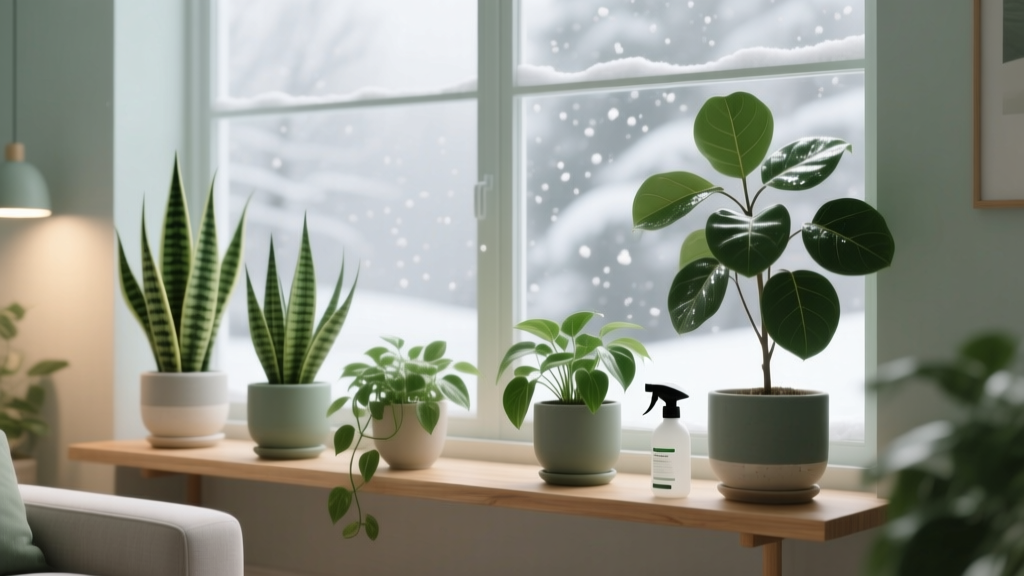
When and How to Fertilize Indoor Plants in Winter
Winter is when indoor plants quietly make (or lose) next season’s growth. The opportunity: fix nutrition without triggering weak, pest-prone growth. The risk: feeding “on schedule” while light and warmth are low, which can push soft shoots, invite fungus gnats, and leave salts building up in the pot. If your windows are dim, your heater is running, and your watering can has slowed down, your fertilizing plan should change right now—starting this week.
This seasonal guide is organized by priority—what to plant, what to prune, what to protect, and what to prepare—so you can make winter fertilizing decisions quickly and confidently. You’ll see clear timing cues (week-by-week, temperature and light thresholds), region-specific scenarios, and a monthly schedule you can follow through late winter.
Priority 1: What to Plant (and what to start) without forcing fertilizer
Winter is not a big “planting” season indoors, but it is a good time to start a few things that don’t demand heavy feeding. The rule is simple: start plants that will grow slowly under indoor light, and avoid fertilizer until you see active growth.
Week 1–2 of winter care: Start low-demand edibles and “practice pots”
If you want something fresh right now, start herbs and greens that tolerate lower light. Aim for a bright windowsill and cool nights.
- Start now (no fertilizer for the first 2–3 weeks): scallions from kitchen scraps, microgreens, pea shoots, lettuce mixes, mint cuttings, pothos cuttings (for houseplant propagation practice).
- Temperature target: 65–72°F daytime, 55–65°F night for best balance of growth and sturdiness. Above 75°F with low light tends to create leggy, hungry growth that pests love.
- Timing cue: begin diluted feeding only after you see 2–3 inches of new growth or new leaves that are smaller than normal (a sign nutrients are becoming limiting).
Propagation note: Cuttings in water don’t need fertilizer. Once potted (usually at 2–4 weeks when roots are 1–2 inches long), wait another 2 weeks before the first very dilute feeding.
Regional reality check: winter light, not the calendar, decides fertilizing
Indoor fertilizing in winter is more about light and indoor temperatures than outdoor climate, but your region still matters because winter sun angle and window exposure differ.
Scenario A: Northern states and Canada (short days, low sun angle). If you’re north of about the 40th parallel, December–January often brings the lowest indoor light. Most foliage plants should be on a near-rest program (more on that below). Consider a grow light set to 10–12 hours/day if you want to keep gentle growth going without etiolation.
Scenario B: Pacific Northwest and coastal Northeast (low light + high indoor humidity pockets). Overcast weeks plus cool windows can mean slower water use. Fertilizing into wet mix raises the risk of root stress and fungus gnat outbreaks. Wait for clear growth signals before feeding.
Scenario C: Desert Southwest and high-elevation interiors (bright sun + very dry air). You may have strong winter light but aggressive indoor drying from heat. Plants can keep growing, but salts can build faster because you water more often. Plan a midwinter “flush” and use lower-dose fertilizer.
Priority 2: What to Prune (and when pruning changes fertilizing)
Winter pruning indoors is mainly about removing demand, not stimulating it. Heavy pruning followed by feeding is a classic way to trigger weak regrowth when light is poor. Keep pruning tactical and let light dictate feeding.
Right now: Remove what the plant can’t support
- Snip yellowing leaves and spent flower stalks (especially on peace lily, anthurium, African violet).
- Pinch soft, pale tips on herbs grown in low light—this redirects energy to sturdier shoots.
- Remove dead stems on geraniums overwintering indoors; keep a compact frame.
Timing: Do a quick prune-and-clean every 10–14 days in winter. It prevents pests from gaining a foothold and reduces the urge to “fix” weak growth with fertilizer.
Hold fertilizer after major pruning (unless you have strong grow lights)
If you cut back more than 25% of the canopy, hold fertilizer for 2–3 weeks unless you’re providing high light. The plant’s reduced leaf area means reduced nutrient demand. Feeding too soon can lead to salt buildup in the pot and root stress.
“Fertilizer applied when plants are not actively growing can accumulate as soluble salts in the potting media and injure roots.” — Extension guidance summarized across houseplant care recommendations (e.g., University of Minnesota Extension, 2020; Purdue Extension, 2022)
Priority 3: What to Protect (the winter fertilizing rules that prevent pests and root problems)
If winter fertilizing goes wrong, it usually shows up as pests (fungus gnats, spider mites, mealybugs) or root decline (sour soil, edema, leaf drop). Protection starts with knowing when not to fertilize.
Use the “3 winter triggers” to decide if your plant should be fed
Feed indoor plants in winter only if at least two of these are true:
- Light is adequate: the plant receives bright indirect light for most of the day, or you run a grow light 10–12 hours/day.
- Temperature is stable: average room temps are 65–75°F and the pot is not sitting against a <55°F window at night.
- Growth is visible: new leaves are emerging, stems are extending, or flowering continues (common with orchids and African violets under good light).
If you only meet one trigger (for example, warmth from the heater but low light), hold fertilizer and focus on light, watering, and pest prevention.
Salt buildup: the hidden winter problem (and the fix)
Because many plants use less water in winter, fertilizer salts can accumulate. Watch for a white crust on the soil surface or pot rim, leaf tip browning, or a “stale” smell from the pot.
- Flush timing: once between mid-January and mid-February if you fertilize year-round or use hard tap water.
- How to flush: run room-temperature water through the pot until at least 20–30% of the volume drains out the bottom; repeat once. Let drain completely—do not leave the pot standing in water.
- Do not flush plants kept very dry (cacti/succulents) unless you suspect a real salt issue; instead, skip fertilizer and water normally when dry.
Pest and disease prevention tied to winter feeding
Fertilizer doesn’t cause pests, but soft, nitrogen-rich growth is easier for pests to exploit, and wet soils attract gnats. Keep winter feeding modest and pair it with these defenses:
- Fungus gnats: let the top 1–2 inches of mix dry before watering; use yellow sticky cards; consider BTi drenches if populations persist.
- Spider mites: common when indoor humidity drops below 35%. Raise humidity to 40–50% near plants (humidifier, pebble trays) and rinse foliage in the shower monthly.
- Powdery mildew on herbs: avoid overfeeding nitrogen; increase airflow; prune crowded growth.
- Root rot organisms: avoid fertilizing a pot that stays wet longer than 10–12 days in winter; that’s a red flag for low light, low temp, or overpotting.
Extension guidance commonly emphasizes reduced fertilizing during low-light months. For example, University of Minnesota Extension notes that most houseplants need less fertilizer in winter due to reduced growth (University of Minnesota Extension, 2020). Purdue Extension similarly advises fertilizing primarily during active growth and avoiding overfertilization that contributes to salt injury (Purdue Extension, 2022).
Priority 4: What to Prepare (the winter fertilizing plan, products, and schedule)
Preparation is where winter success happens: choose the right fertilizer type, set a conservative dose, and tie feeding to light and growth. This is also the time to plan repotting and stronger feeding for early spring.
Choose a winter-safe fertilizer strategy
In winter, simple and dilute beats “strong and occasional.” Use one of these approaches:
- Option 1 (best for most homes): Liquid balanced fertilizer (e.g., 10-10-10 or 20-20-20) at 1/4 strength every 4–6 weeks, only for actively growing plants.
- Option 2 (for heavy growers under grow lights): 1/2 strength every 2–4 weeks if you have steady growth and you’re flushing monthly or using low-mineral water.
- Option 3 (for “resting” plants): No fertilizer from roughly Nov 15–Feb 15 (adjust by region and light), then resume at 1/4 strength as days lengthen.
Avoid in winter: strong spikes or heavy slow-release topdressings for small pots on low light. They can release when you least want growth (warm indoor spells) and concentrate salts.
Comparison table: match fertilizer approach to plant type
| Plant group | Winter growth pattern | Fertilize in winter? | Rate & frequency | Extra winter note |
|---|---|---|---|---|
| Pothos, philodendron, monstera | Often slows in low light | Only if actively growing | 1/4 strength every 4–6 weeks | Rotate weekly; wipe leaves monthly for better light capture |
| Snake plant, ZZ plant | Near-dormant | Usually no | Skip Nov–Feb; tiny dose in March | Overwatering is the main winter killer |
| African violet, orchids (in bud/flower) | Can keep growing under bright light | Often yes | 1/4 strength every 2–4 weeks | Use urea-free formulas for violets if sensitive; avoid cold water |
| Cacti & succulents | Rest in cool/short days | Typically no | Skip until consistent spring growth | If kept warm & bright, minimal feeding may be okay |
| Citrus, rosemary overwintering indoors | May grow slowly, can drop leaves | Lightly, only with good light | 1/4 strength every 4 weeks | Watch for spider mites and scale; don’t overfeed to “stop leaf drop” |
Monthly schedule table (Dec–Mar): what to do, when
| Month | Week-by-week focus | Fertilizer action | Watering & environment check |
|---|---|---|---|
| December | Weeks 1–2: assess light, rotate plants; Weeks 3–4: prune dead/yellow leaves | Most plants: pause; Blooming violets/orchids: 1/4 strength once | Keep pots off cold glass; aim 65–72°F; humidity 40–50% |
| January | Weeks 1–2: inspect for mites/gnats; Weeks 3–4: clean leaves, refresh sticky traps | If growth is visible: 1/4 strength once; otherwise none | Flush salts once mid-month if fertilizing year-round; let top 1–2 inches dry |
| February | Weeks 1–2: plan repotting supplies; Weeks 3–4: start seeds under lights if desired | Resume light feeding after Feb 15 if days brighten and growth starts | Increase light exposure; watch warm-air vents that dry foliage |
| March | Weeks 1–2: repot fast growers; Weeks 3–4: begin spring fertilizing ramp-up | Most plants: 1/2 strength every 3–4 weeks (or 1/4 every 2 weeks) | As watering increases, recheck drainage and gnat pressure |
Timing anchors you can actually use (numbers that matter)
Use these concrete triggers instead of guessing by month:
- After the winter solstice (around Dec 21): days begin lengthening, but light intensity remains low for weeks—keep feeding conservative through at least late January.
- Hold fertilizer if night window temps are <55°F: cold roots don’t use nutrients well.
- Resume broader feeding around Feb 15–Mar 15: many homes see noticeable growth pickup then (especially Zones 6–8 with improving sun).
- Frost-date connection: if your average last spring frost is April 15 (common in parts of Zones 7), start ramping indoor feeding in early March; if your last frost is May 15 (many Zone 5 areas), ramp up closer to late March.
- Water-use test: if a pot that used to dry in 7 days now takes 12+ days, treat the plant as resting—skip fertilizer and adjust light/watering.
Winter fertilizing checklist (do this before you feed)
- Confirm the plant is actively growing (new leaf, new root tips, bud development).
- Check soil moisture: never fertilize bone-dry mix; water lightly first, then fertilize.
- Confirm drainage: pot has a hole; saucer is emptied within 10 minutes.
- Inspect pests: look under leaves and at soil surface; treat first, fertilize later.
- Mix correctly: measure; use 1/4 strength as the default winter dose.
How to Fertilize Indoor Plants in Winter (step-by-step)
When a plant meets the “two of three triggers,” fertilize carefully to avoid root burn and salt concentration.
Step 1: Water first (or pre-moisten)
If the mix is dry, water with plain room-temperature water. Wait 30–60 minutes, then fertilize. This prevents fertilizer solution from racing through dry channels and concentrating against roots.
Step 2: Mix a winter dose
Use liquid fertilizer at 1/4 of the label rate. If you’re using a product measured per gallon, mix a smaller batch so you’re not tempted to “use it up.” If you keep plants under strong grow lights and they are pushing growth, move up to 1/2 strength, but only if you flush periodically.
Step 3: Apply evenly and let it drain
Apply until a small amount drains out the bottom (aim for roughly 10–20% runoff). Empty the saucer. In winter, sitting in runoff is a fast track to root issues.