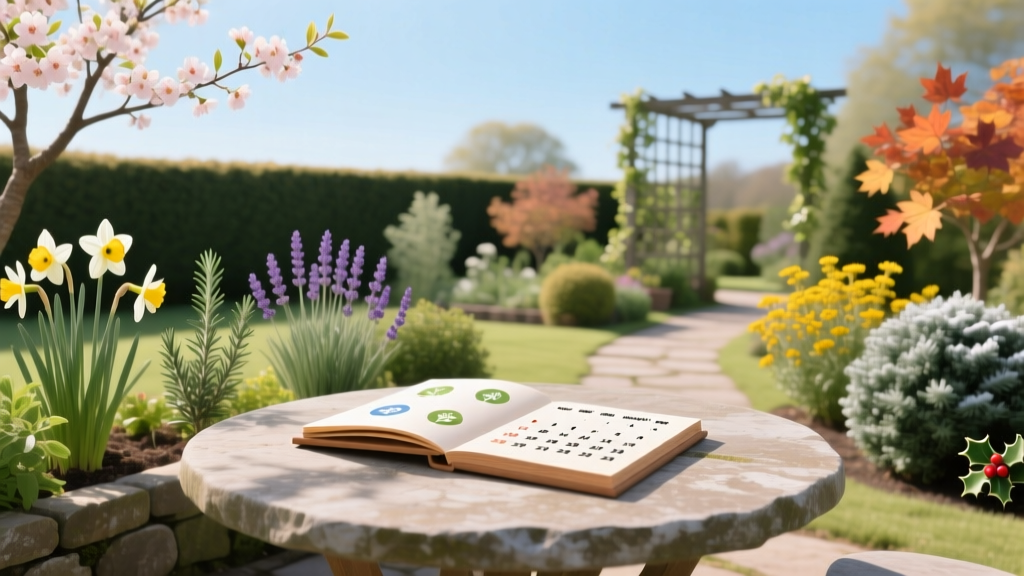
Year-Round Garden Calendar Template
Right now is when gardens either get easier—or spiral into weeds, pests, and missed planting windows. The opportunity is simple: if you match your tasks to temperature, frost dates, and growth stages (not the calendar alone), your garden becomes predictable. Use this year-round calendar template as a working checklist: print it, add your local frost dates, and run it every year with small adjustments for your USDA hardiness zone and microclimate.
Before you start: write down two numbers for your location: your average last spring frost date and average first fall frost date. Then count backward/forward from those anchors. Example targets used below include common thresholds like soil at 50°F for many seeds, air temps above 45°F at night for tender transplants, and planning windows such as 6–8 weeks before last frost and 10–12 weeks before first fall frost.
Use this template first: plug in your local dates and thresholds
Fill these blanks once, then follow the monthly schedule further down.
- USDA zone: ________
- Average last spring frost: ________ (example: April 15)
- Average first fall frost: ________ (example: October 15)
- Soil reaches 50°F: ________ (approximate; track with a soil thermometer)
- Hot season starts (regular highs 85–90°F): ________
Concrete timing anchors you’ll see throughout the calendar:
- 10–12 weeks before last frost: start long-season seedlings indoors (onion, leek, some flowers).
- 6–8 weeks before last frost: start tomatoes/peppers/eggplant indoors (variety-dependent).
- 2–4 weeks before last frost: direct-sow peas and greens where soil is workable; transplant hardened-off brassicas.
- After last frost + nights above 50°F: transplant warm-season crops (tomatoes, basil); sow beans.
- 10–12 weeks before first fall frost: begin fall crop starts and schedule successive sowings.
“Most vegetable seeds germinate best within specific soil temperature ranges; using a soil thermometer improves timing more than relying on air temperature alone.” — Extension guidance summarized from multiple land-grant resources (e.g., University of Minnesota Extension, 2020; Iowa State University Extension and Outreach, 2021)
Monthly garden calendar (editable schedule)
| Month | Top priority tasks | Planting focus | Protection & prevention |
|---|---|---|---|
| January | Order seed, clean tools, plan rotations | Start slow growers indoors (zones 8–10) | Check stored produce; rodent patrol |
| February | Start seedlings; prune dormant trees (many regions) | Onion/leek starts; early brassicas (zones 7–10) | Sanitize seed-starting gear; watch damping-off |
| March | Bed prep; cool-season sowing begins | Peas, spinach, lettuce; potatoes (when soil workable) | Row cover for wind/frost; slug monitoring |
| April | Transplant hardy crops; succession sowing | Brassicas, beets, carrots; herbs | Frost cloth ready; start disease prevention sprays if needed |
| May | Warm-season planting; mulch pathways | Tomatoes/peppers after frost; beans after soil warms | Harden off plants; protect from cutworms |
| June | Train, stake, thin; water consistency | Succession beans, basil; second sowing carrots | Scout weekly for aphids, mites; mulch for moisture |
| July | Heat management; start fall seedlings | Fall brassicas indoors; short-season crops | Powdery mildew watch; irrigate mornings |
| August | Fall sowing; tidy spent crops | Direct-sow carrots, beets, greens (timed to frost) | Shade cloth for seedlings; hornworm patrol |
| September | Harvest & preserve; plant cover crops | Garlic prep; cool-season greens | Row cover for early frosts; remove disease debris |
| October | First-frost response; compost and leaf mold | Garlic; bulbs; late cover crops | Protect citrus (zones 8–10); clean up blight sources |
| November | Mulch, protect perennials, drain hoses | Overwintering onions (mild zones) | Rodent guards on trees; winterize irrigation |
| December | Review notes; plan improvements | Microgreens indoors; forced bulbs | Tool maintenance; monitor freeze/thaw heaving |
Winter (December–February): set up the season before it starts
Winter is when you buy time. An hour of planning and sanitation now prevents weeks of pest pressure and disease later. Prioritize tasks that are hard to do once growth explodes.
What to plant (highest priority if you’re behind on starts)
- 10–12 weeks before last frost: start onions, leeks, and slow herbs indoors under lights. Maintain 65–75°F for steady germination.
- Zones 8–10: sow peas, fava beans, and greens in mild winter windows when daytime highs stay above 50–55°F.
- Indoors anytime: microgreens; they’re a morale boost and keep you practicing consistent watering and airflow.
What to prune (do this on the right day)
- Prune most deciduous fruit trees during dormancy, choosing a dry day above 20°F to reduce brittle wood breakage.
- Remove dead, damaged, or crossing branches first; sanitize tools between trees if you suspect canker.
- Don’t prune spring-flowering shrubs (like lilac, forsythia) in winter if they bloom on old wood—wait until right after flowering.
What to protect (prevent winter losses)
- Wrap young fruit trees with hardware cloth guards to prevent vole/rabbit girdling; keep mulch pulled back 3–6 inches from trunks.
- In freeze/thaw climates (Zones 4–6), watch for heaving: gently firm perennials back after warm spells, then re-mulch.
- After heavy snow, shake evergreens lightly to prevent limb splitting.
What to prepare (the payoff tasks)
- Clean seed trays and pots with soap and water, then disinfect. This reduces damping-off risk; North Carolina State Extension notes sanitation is key in greenhouse and propagation disease prevention (NCSU Extension, 2019).
- Run a simple soil test every 2–3 years; adjust pH before spring planting, especially for blueberries (acidic) and brassicas (neutral-ish).
- Draft a rotation: don’t follow tomatoes/peppers/eggplant/potatoes with each other in the same bed next year (soilborne disease pressure).
Spring (March–May): hit the narrow windows
Spring is a race between warming soils and surprise cold snaps. Your wins come from planting cold-tolerant crops early, then waiting for temperature thresholds for tender crops. Work in weeks relative to your last frost date rather than guessing.
What to plant (by soil temperature and frost timing)
As soon as the soil is workable (not soggy; a squeezed handful should crumble):
- Direct-sow peas, spinach, radish, and turnips.
- Plant seed potatoes when soil is above 45°F and beds aren’t waterlogged.
2–4 weeks before your last frost date (example: if last frost is April 15, aim March 18–April 1):
- Transplant hardened-off broccoli, cabbage, and kale; these handle light frosts with protection.
- Direct-sow carrots and beets; keep the top 1 inch evenly moist until germination.
After last frost date + night lows above 50°F:
- Transplant tomatoes and basil; sow beans when soil is consistently 60°F for faster emergence.
- Set squash/cucumber/melon transplants only when nights are reliably mild; cold soil stalls them and invites rot.
For seed germination temperature guidance, Iowa State University Extension and Outreach emphasizes matching crop sowing to soil temperature for uniform germination (ISU Extension and Outreach, 2021).
What to prune (spring pruning without sacrificing blooms)
- Prune roses when buds swell and you see new growth; remove winter-killed canes to green tissue.
- Shear back ornamental grasses before new growth reaches 2–4 inches.
- Delay pruning spring bloomers until right after flowering to keep this year’s blossoms.
What to protect (frost, wind, and transplant shock)
- Keep row cover or frost cloth ready for nights forecast at 28–32°F. Cover before sunset; uncover mid-morning to prevent overheating.
- Harden off seedlings for 7–10 days: increase outdoor time daily; avoid the first day being windy or full sun.
- Use cutworm collars (paper or plastic) around tomato and pepper transplants at planting time.
What to prepare (beds, mulch, irrigation)
- Top-dress beds with 1–2 inches of compost, then mulch pathways (not seed rows) to reduce mud and compaction.
- Install drip irrigation before plants sprawl; aim for deep watering that wets soil 6–8 inches.
- Start a weekly scouting habit now; pests are easier at low numbers.
Spring pest and disease prevention (do this before you see problems)
- Sanitation: remove last year’s diseased leaves and mummified fruit; compost only if hot composting.
- Airflow: space transplants properly; crowded plants stay wet and invite fungal disease.
- Early blight and leaf spot: mulch around tomatoes to prevent soil splash; avoid overhead watering.
Summer (June–August): protect yield with consistency
Summer gardens don’t fail from lack of effort—they fail from inconsistent water, late staking, and skipping pest checks during busy weeks. Your calendar now is about maintaining momentum and planning fall before the heat breaks.
What to plant (keep the pipeline full)
- Every 2–3 weeks: succession sow lettuce (heat-tolerant types), bush beans, and small carrots for steady harvest.
- 10–12 weeks before first fall frost (example: if first frost is October 15, start late July): start broccoli, cabbage, and kale for fall transplanting.
- Late summer: direct-sow beets and carrots when nights begin to cool; use shade cloth during establishment if highs exceed 90°F.
What to prune (train, pinch, and remove strategically)
- Stake and tie tomatoes early; remove the lowest leaves once plants are established to reduce soil splash.
- Pinch basil tips weekly to delay flowering and keep leaves tender.
- Summer-prune suckers and water sprouts on fruit trees lightly if needed for airflow—avoid heavy pruning during extreme heat.
What to protect (heat, storms, and water stress)
- Mulch 2–4 inches deep around established plants to stabilize moisture; keep mulch a few inches away from stems.
- Water in the morning; aim for steady moisture rather than “feast or famine,” which triggers blossom-end rot in tomatoes and peppers.
- Use shade cloth (30–40%) for lettuce, spinach, and new seedlings when highs run 88–95°F.
What to prepare (fall crop runway)
- As early crops finish, replant the same week—don’t leave bare soil.
- Start a fall map: where will garlic go, and which beds will be cover-cropped?
- Collect leaves early for future compost; shred if possible for faster breakdown.
Summer pest and disease prevention (weekly checks that matter)
- Tomato hornworm: check at dusk; hand-pick. If you see white rice-like cocoons, leave that worm—parasitic wasps are working.
- Powdery mildew: improve airflow, avoid overhead watering, remove heavily infected leaves. Treat early if you use labeled products.
- Spider mites (hot/dry weather): check leaf undersides for stippling; hose off with a strong spray and reduce plant stress.
Fall (September–November): harvest smart and set up next year
Fall is your chance to “buy” next spring’s success. Soil is still warm, roots grow well, and cleanup now prevents overwintering pests and disease inoculum. This is also prime time for cover crops and garlic.
What to plant (time it to first frost)
- 6–8 weeks before first frost: sow spinach and fast greens for fall harvest (use row cover as nights cool).
- Garlic: plant in many regions about 2–4 weeks after first frost or when soil temps drop near 50°F but before the ground freezes. Mulch after planting.
- Cover crops: sow as beds open—rye, oats, clover mixes depending on winter severity and goals.
What to prune (mostly wait, but do targeted work)
- Remove diseased canes and broken branches anytime.
- Avoid heavy pruning of woody plants late in fall; it can stimulate tender growth that winter-kills.
- Cut back perennials only if disease was present; otherwise, leave stems for winter habitat and cut in spring.
What to protect (frost, rodents, and wet-cold damage)
- Have row cover ready when nights threaten 32°F; it can extend greens and root crops for weeks.
- Protect carrots and beets in-ground with deep mulch; harvest through early winter where soil doesn’t freeze solid.
- Install trunk guards for young trees before snowfall; mulch after the first hard frost to reduce vole habitat right against bark.
What to prepare (cleanup that prevents spring problems)
- Remove tomato and squash vines if disease was present; don’t leave them to overwinter pathogens.
- Compost fallen leaves; create a leaf mold pile for next year’s mulching and soil improvement.
- Drain hoses, shut off irrigation, and store stakes and cages after cleaning.
Fall pest and disease prevention (end-of-season actions)
- Sanitation: remove mummified fruit and fallen apples to reduce pest cycles.
- Weed control: don’t let winter annual weeds set seed; a fall weed seedbank becomes a spring headache.
- Tool hygiene: clean pruners and loppers; disinfect if you cut diseased wood.
Regional variations: adjust the template to your reality
Use your frost dates and temperature thresholds to personalize timing. Here are three common scenarios that change the calendar dramatically.
Scenario 1: Short-season, cold-winter gardens (USDA zones 3–5)
If you have a last frost around May 15 and first frost near September 15, your planting windows are tight. Start more indoors (tomatoes often 6–8 weeks before last frost), prioritize fast-maturing varieties, and plan fall crops early—often by mid-July. Use row cover aggressively in spring and fall, and consider low tunnels for season extension.
Scenario 2: Maritime/coastal gardens with cool summers (parts of the Pacific Northwest, coastal New England)
You may have fewer hard frosts but cooler soil and slower heat accumulation. Focus on soil temperature: wait to direct-sow beans until soil is near 60°F. Favor brassicas, peas, and greens, and choose early tomatoes with protection (walls of water, cloches). Fungal pressure can be higher—space plants wider and water early in the day.
Scenario 3: Hot-summer, mild-winter gardens (USDA zones 8–10)
Your best growing season may be fall through spring. Plan two peaks: cool-season crops from October through March, then heat-tolerant crops as temperatures rise. Start tomatoes early enough to set fruit before nights stay above 75°F, which can reduce pollination. Use shade cloth and mulch heavily, and schedule fall plantings beginning 10–12 weeks before the first expected cool-down rather than waiting for “fall” on the calendar.
Printable priority checklists (use these every month)
Priority 1 (today): 20-minute garden walk
- Check soil moisture 2–3 inches down (dry, moist, saturated).
- Scan undersides of leaves for aphids/mites/eggs.
- Look for new disease spots; remove the worst leaves immediately.
- Identify one bed to replant or cover-crop this week.
Priority 2 (this week): plant, prune, and stabilize
- Plant the next succession sowing (greens/beans/carrots as season allows).
- Tie up sprawling plants; add supports before stems snap.
- Mulch or refresh mulch to maintain 2–4 inches where appropriate.
- Weed while small; target weeds before they flower.
Priority 3 (this month): prevention and infrastructure
- Calibrate watering (drip timers, rain gauge, soaker hose checks).
- Refresh labels and notes: variety, sowing date, first harvest.
- Clean tools; disinfect after diseased plants.
- Plan next month’s starts based on frost windows.
Timeline prompts: when you’re not sure what’s next
Use these triggers to decide the next move without guessing.
- If soil is 45–50°F and workable: focus on peas, spinach, radish, potatoes, and bed prep.
- If nights are still below 45°F: hold tender transplants; keep hardening off on mild days only.
- If you’re 6–8 weeks from last frost: start tomatoes/peppers indoors; prepare trellises and cages.
- If highs are consistently 85–90°F: shift to heat management, deep watering, and fall crop starts.
- If you’re 10–12 weeks from first fall frost: start fall brassicas and map out fall succession sowings.
Keep this calendar flexible: your “right now” is defined by soil temperature, day length, and frost risk. Once you’ve filled in your frost dates and matched tasks to thresholds like 50°F soil for many sowings and 28–32°F freeze alerts for protection, you’ll stop missing windows—and the garden will start cooperating.
Sources: Iowa State University Extension and Outreach (2021) crop germination/soil temperature timing guidance; North Carolina State Extension (2019) sanitation and disease prevention principles for propagation/greenhouse systems; University of Minnesota Extension (2020) seasonal planting timing and cold-hardy crop considerations.