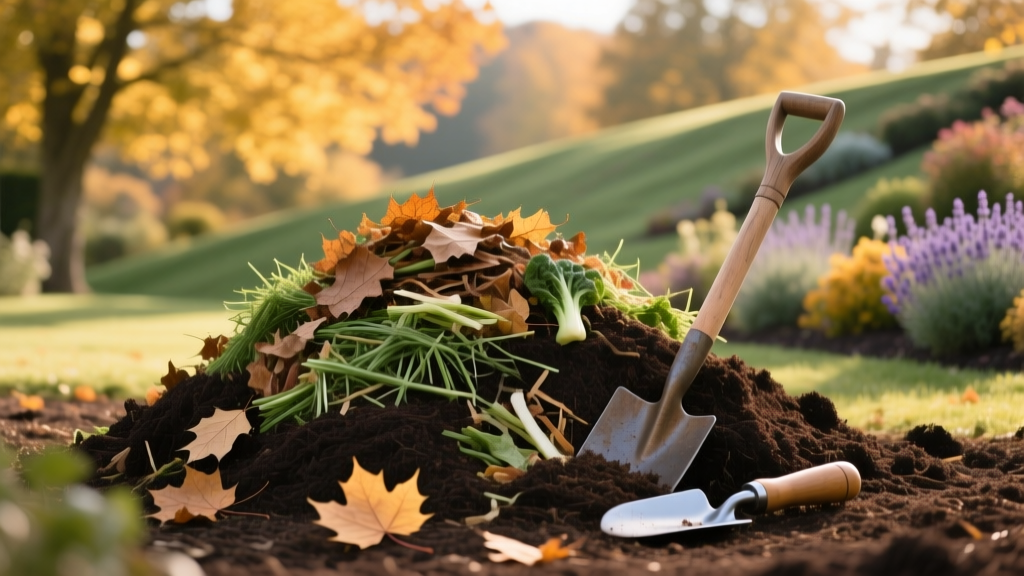
Fall Garden: Final Compost Pile Building
The window is closing: once daytime highs slide below 55°F and nights regularly dip into the 30s, compost biology slows down fast. That’s exactly why the next 2–4 weeks are prime time to build (or rebuild) your final fall compost pile—while you still have abundant carbon from leaves and clean garden residues, and while microbes can still bank heat before winter. Get the pile built before your first hard freeze (28°F) and you’ll be rewarded with a warmer, steadier pile that breaks down through late fall and is ready to finish early spring.
Use this as your seasonal checklist: what to plant, what to prune, what to protect, and what to prepare—ranked by what matters most right now, with temperature triggers and timing tied to frost dates and USDA hardiness zones.
Priority 1: Build the final compost pile (do this first)
If you do one big job in the fall garden, do this. Leaves, spent annuals, crop residues, and kitchen scraps are all arriving at once. A well-built fall pile prevents pests, reduces disease carryover, and turns “garden cleanup” into fertility for next season.
Timing triggers (use these numbers)
- 2–4 weeks before your average first frost date: best time to assemble a large, hot pile (microbes are still active).
- When nights drop below 40°F: expect slower heating; build bigger and insulate.
- At 55°F daytime highs: decomposition rate declines; prioritize a correct mix and moisture.
- At 28°F (hard freeze): pile may crust or stall; protect with a cover and keep it moist (not wet).
- Target compost temperature: 131–160°F for hot composting (pathogen/weed seed reduction). Avoid sustained temps above 170°F (risk of killing beneficial microbes and drying out the pile).
Gather materials: what goes in, what stays out
Fall cleanup creates both “greens” (nitrogen) and “browns” (carbon). The most common mistake is building a leaf-only pile that sits cold all winter. Balance it.
- Browns (carbon): dry leaves, straw (not hay), shredded cardboard, wood chips (as a minor portion), dried corn stalks chopped small.
- Greens (nitrogen): fresh grass clippings (thin layers), coffee grounds, kitchen scraps, green weeds without seeds, fresh garden trimmings.
- Keep out: meat/dairy/oils (pests), pet waste (pathogens), glossy paper, invasive weed roots (bindweed, quackgrass) unless you hot compost reliably, and diseased plant material unless you can hold a hot pile at 131–160°F and turn it properly.
Extension guidance emphasizes temperatures and turning to reduce pathogens and weed seeds. For example, USDA composting standards often cite hot composting at 131°F or higher for multiple days with turning for pathogen reduction; state extension programs echo the same thresholds for home composters (e.g., Cornell Cooperative Extension, 2020; University of Minnesota Extension, 2019).
Size, layering, and moisture: build for heat
For a fall pile, bigger is better—up to a point. Aim for a pile that’s large enough to hold heat but not so large it goes anaerobic.
- Minimum hot-compost size: about 3 ft × 3 ft × 3 ft.
- Ideal fall build: 4–5 feet wide and tall if you have enough material (especially in cold zones).
- Moisture target: damp like a wrung-out sponge. If you squeeze a handful, you should feel moisture but not see water dripping.
- Particle size: shred leaves and chop stalks. Smaller pieces heat faster and settle better.
Practical build method: Make alternating 3–6 inch layers of browns and greens, watering each brown layer lightly. Finish with a thick brown cap (2–4 inches of leaves or straw) to reduce odors, deter flies, and prevent nitrogen loss.
“Compost piles that reach 131°F (55°C) and are managed with turning are more likely to reduce weed seeds and plant pathogens than cold piles.”
— Extension-based composting guidance summarized from Cornell Cooperative Extension (2020) and University of Minnesota Extension (2019)
Turning schedule (fast compost vs. winter-hold)
Your turning plan depends on your region and how soon deep cold arrives.
- Fast fall compost (mild to moderate fall): Turn the pile every 7–10 days for the first month, keeping it between 131–160°F.
- Cold-climate “banked” compost (early winter): Turn once after 7–14 days to mix and reheat, then stop turning when daytime highs stay under 45–50°F. Insulate and let it coast.
Use a compost thermometer if you can. If the pile never climbs above 110–120°F after a week, it’s usually too dry, too carbon-heavy, too small, or too compacted.
Insulate and cover (especially Zones 3–6)
Once nights are near freezing, a cover becomes a performance tool—not just tidiness.
- Cover options: tarp (leave some airflow), old carpet (not treated), or a thick leaf blanket.
- Wind protection: build near a fence or on the lee side of a shed.
- Base layer: coarse sticks or straw at the bottom can help airflow if your site is wet.
Compost safety: pest and disease prevention
Fall is when rodents look for winter calories and shelter. Don’t offer both.
- Rodent-proofing: avoid exposed kitchen scraps; bury them in the pile’s hot center and cap with browns. Consider a bin with a lid and 1/2-inch hardware cloth on the bottom in areas with rats.
- Late blight, powdery mildew, and fungal leaf spots: don’t toss heavily infected tomato/potato foliage into a cold pile. Bag it for municipal composting (hot) or dispose of it.
- Weed seed control: seed heads (pigweed, lambsquarters) should only go into a reliably hot pile (131–160°F) that you will turn.
Priority 2: What to prepare (soil, beds, and leaf management)
Once the pile is built, direct the rest of your fall biomass to the right place: compost, mulch, or removal. Your goal is to go into winter with protected soil and fewer disease reservoirs.
Leaf strategy: compost some, mulch some
Leaves are not “waste”—they’re carbon. The key is matching use to your time and climate.
- Compost: shred leaves (mower works) and stockpile in bags for winter browns.
- Mulch: apply 2–4 inches of shredded leaves around perennials after the ground begins to cool (soil temps near 40°F), which helps prevent freeze-thaw heaving.
- Don’t smother lawns: mulch-mow thin layers weekly rather than letting thick mats form.
Bed cleanup with restraint
Remove diseased debris and spent annuals, but don’t over-sanitize. Some beneficial insects overwinter in hollow stems and leaf litter.
- Pull and discard plants with clear disease issues (especially tomato/potato blights).
- Leave a portion of clean stems (8–18 inches) in pollinator beds if disease pressure was low.
- Keep fallen fruit picked up—rotting fruit attracts wasps and can harbor pests.
Soil testing and amendments: time it for action
If you’re adding lime or planning major nutrient corrections, fall is efficient. Many labs recommend fall sampling so you can amend before spring planting rush.
- When: any time before the ground freezes; aim for 4–6 weeks before freeze-up so you can apply amendments.
- Compost application: spread finished compost 1–2 inches on beds and lightly incorporate or leave as a topdress for worms to pull in (depending on your no-till approach).
Priority 3: What to plant (last chances and smart fall starts)
Planting now is about two things: crops that can finish before hard freezes, and perennial investments that establish roots before winter.
Vegetables to plant now (by frost window)
Count backward from your first frost date. Use row cover if temperatures drop suddenly.
- 4–6 weeks before first frost: spinach, arugula, mustard greens, radishes, turnips.
- 2–4 weeks before first frost: lettuce (under cover), baby greens, scallions.
- At 32°F light frost: many greens tolerate it, especially under fabric.
- At 28°F hard freeze: protect with low tunnels; harvest what's exposed.
Garlic: the big fall plant (Zones 3–8)
Garlic timing is regional but follows soil temperature more than the calendar. Plant when soil cools to about 50°F and you’re roughly 2–4 weeks before the ground freezes.
- Plant cloves 2–3 inches deep (deeper in cold zones), spacing 4–6 inches.
- Mulch with 4–6 inches of straw or shredded leaves after the first cold snap.
Cover crops: feed your compost, protect your soil
Cover crops reduce erosion and keep nutrients from leaching. They also generate spring biomass—future compost material.
- Winter rye: reliable in colder zones; sow 2–4 weeks before first frost for best establishment.
- Crimson clover: better in milder areas; aim for 6–8 weeks before first frost.
Priority 4: What to prune (and what not to prune)
Fall pruning is where gardeners often create winter damage. The rule: remove what’s broken, diseased, or hazardous—save structural pruning for dormancy or late winter when appropriate.
Prune now: safety and sanitation cuts
- Remove dead, diseased, or crossing branches any time you see them.
- Cut out cankered twigs and dispose of them (do not compost cold).
- Cut back herbaceous perennials only if disease was present; otherwise consider leaving stems for wildlife.
Hold off: shrubs and trees that resent fall pruning
- Don’t heavily prune in fall: it can trigger tender new growth that’s hit by early freezes.
- Wait until late winter/early spring for major pruning on many flowering shrubs (timing depends on bloom habit).
What to protect (cold, pests, and disease carryover)
Protection now is less about coddling plants and more about preventing avoidable losses: root heaving, sunscald, rodent girdling, and overwintering disease.
Protect roots from freeze-thaw
Freeze-thaw cycles are often worse than steady cold—especially in Zones 4–6. Mulch after the soil cools (not while it’s warm).
- Perennial beds: add 2–4 inches mulch when soil is trending toward 40°F.
- Strawberries: cover when nights are consistently below 20–25°F (varies by region).
- New plantings: water deeply before freeze-up; hydrated roots tolerate cold better than drought-stressed ones.
Protect trunks and stems (rodents and sunscald)
- Install trunk guards on young fruit trees before snow cover—voles and rabbits girdle bark in winter.
- In areas with bright winter sun and cold nights, consider white tree wraps on thin-barked species to reduce sunscald.
Seasonal pest and disease prevention
Your fall compost and cleanup choices influence next year’s pest pressure.
- Apple scab / black spot on roses: rake and remove heavily infected leaves (or hot compost only). Some extension programs recommend sanitation as a key part of reducing inoculum (e.g., University of Wisconsin Extension, 2018).
- Squash vine borer and cucumber beetles: remove and destroy old cucurbit vines; don’t leave them to overwinter in place.
- Slugs: pull boards, dense debris, and thick wet mulch away from tender fall greens; water in the morning, not evening.
- Powdery mildew: compost only lightly infected leaves in a hot pile; otherwise remove to reduce carryover.
Regional scenarios: adjust the plan to your fall reality
Fall doesn’t behave the same everywhere. Use these scenarios to tune your compost build and garden priorities.
Scenario 1: Short fall, early freezes (Upper Midwest, Interior Northeast, Zones 3–5)
If your first frost often lands in late September to early October, you’re building compost in a sprint.
- Build a 4–5 ft pile immediately; smaller piles chill too fast.
- Shred leaves to accelerate heating, and add nitrogen (coffee grounds, a little alfalfa meal, or fresh greens).
- After one turn at 7–10 days, cover and bank heat; don’t keep turning once daytime highs stay below 45°F.
- Mulch garlic and perennials early; winter arrives abruptly in these zones.
Scenario 2: Long fall with warm spells (Mid-Atlantic, Pacific Northwest lowlands, Zones 6–8)
You can actually finish composting further into the season, but rain management becomes critical.
- Cover the pile to prevent saturation; soggy piles turn anaerobic and smelly.
- Turn every 7–10 days as long as the pile stays above 131°F and you can work it.
- Keep planting: spinach and lettuce can run deep into fall under row cover when nights are cool but not severe.
- Watch for fungal diseases in damp weather—remove infected debris promptly.
Scenario 3: Dry fall, big temperature swings (Intermountain West, High Plains, Zones 4–7)
Here the pile often fails for one reason: it’s too dry.
- Pre-wet dry leaves in a wheelbarrow or on a tarp before adding them.
- Use a thicker brown cap to reduce moisture loss from wind.
- Water the pile during warm afternoons when temps are above 50°F, then cover to hold moisture.
- Protect plants from early radiational frosts—use frost cloth on clear nights even when forecasts look mild.
Monthly schedule: what to do when (late summer into late fall)
| Time window | Compost actions | Garden actions | Temperature/frost cue |
|---|---|---|---|
| 6–8 weeks before first frost | Stockpile browns (shredded leaves); start collecting greens | Sow cover crops; plant fall greens | Days still warm; nights cooling |
| 4–6 weeks before first frost | Build main pile at 3–5 ft size; target moisture “wrung sponge” | Clean up diseased plants; continue fall planting | Day highs trending toward 60s°F |
| 2–4 weeks before first frost | First turn; correct mix if pile is <120°F after a week | Plant garlic as soil nears ~50°F; set low tunnels | Nights often <40°F |
| First frost to hard freeze (32°F to 28°F) | Cover and insulate; turn only if pile is active and workable | Mulch perennials after soil cools; harvest tender crops | Light frost (32°F) and hard freeze (28°F) |
| After hard freeze | Let pile “hold” through winter; add materials only if you can bury them well | Rodent guards on trees; final cleanup of fruit and debris | Day highs often <45–50°F |
Right-now checklists
Compost pile build checklist (60–90 minutes once materials are ready)
- Pick a site with drainage and winter access (you’ll want to add browns/greens later).
- Gather browns: at least 2–3× the volume of greens.
- Shred leaves (mow, string trimmer in a bin, or run through a chipper).
- Layer browns/greens; water browns lightly as you build.
- Add a brown cap and cover (tarp or leaf blanket).
- Insert thermometer (optional but useful); check in 48–72 hours.
- Plan first turn at 7–10 days if temps rise.
Fall garden sanitation checklist (target: 2 afternoons)
- Remove and discard heavily diseased foliage (don’t cold compost).
- Pull weeds before they set seed; hot compost only if you can keep 131–160°F.
- Harvest remaining fruits/veg to reduce pest shelter.
- Rake leaves off crowns of perennials prone to rot; use shredded leaves as mulch instead.
- Clean tools: a quick wipe-down and disinfect pruners if you cut disease.
Protection checklist before deep cold
- Mulch garlic and perennials after soil cools (near 40°F).
- Install trunk guards on young trees before snow cover.
- Set slug traps or reduce damp hiding spots near fall greens.
- Cover compost pile to prevent saturation or excessive drying.
A practical 14-day timeline (use it starting this weekend)
Day 1–2: Collect and shred leaves; separate diseased plant debris for disposal. Chop stalks and vines (smaller pieces heat faster).
Day 3: Build the compost pile to at least 3×3×3 ft (bigger if your fall is short). Water as you build; cap with browns and cover.
Day 4–6: Prep beds: topdress finished compost, sow cover crops, and set aside clean plant residues for the pile’s next turn.
Day 7–10: Check pile temperature. If it’s under 120°F, add greens (or a nitrogen source), water lightly, and fluff to improve airflow.
Day 10–14: Turn the pile if it’s hot and workable; re-cover. Plant garlic if soil is near 50°F and freeze-up is 2–4 weeks away. Put row cover on greens if a 32°F night is forecast.
Build the pile while the biology still wants to work, then let winter do what it does. A well-made fall compost pile is one of the few garden tasks that pays you back while you’re not even outside—quietly shrinking, mellowing, and turning this season’s mess into next season’s momentum.