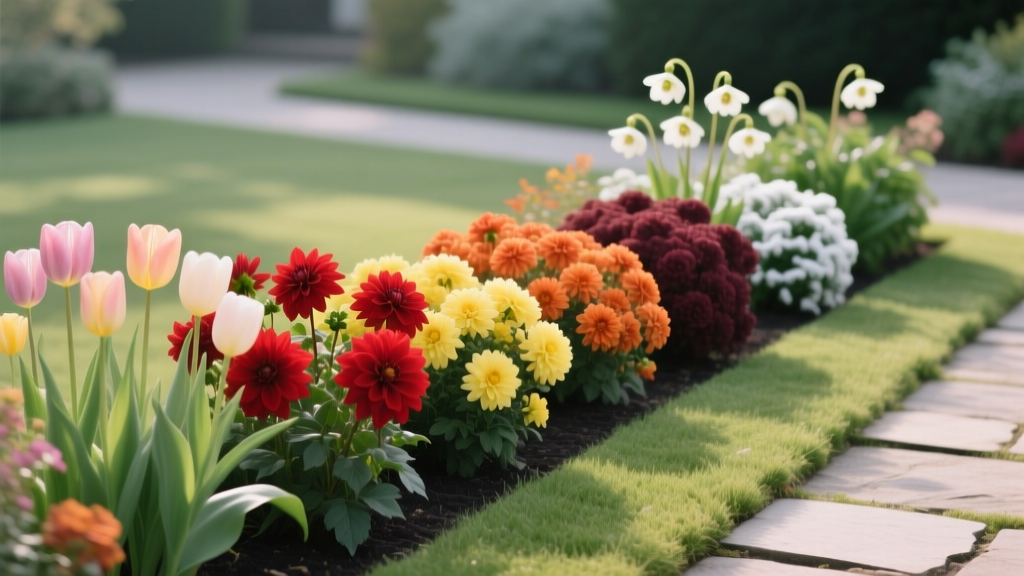
How to Plan Seasonal Color Succession
The window for nonstop garden color is shorter than most people think: miss two key planting weeks in spring or a single deadheading cycle in midsummer, and you’ll get a “gap season” where beds look tired for a month. This is the moment to plan (and act) like an almanac: use your last frost date, your heat curve, and your first frost date to stack bloom periods so something is always peaking—and something else is ready to take over.
Seasonal color succession isn’t complicated, but it is time-sensitive. Start by picking your “anchor” plants (shrubs, bulbs, long-blooming perennials), then weave in quick annuals and short-season perennials to bridge the gaps. You’ll prune at the right moment to force rebloom, protect buds from late freezes and heat spikes, and prepare the next wave while the current one is still flowering.
Priority 1: What to plant (right now) for the next wave of color
Planting for succession works best when you think in two horizons: what flowers in the next 2–6 weeks, and what you’re setting up for 8–16 weeks from now. Use your local frost dates and soil temperatures—calendar dates alone can mislead.
Step 1: Lock in your timing numbers (use these five concrete triggers)
- Last spring frost date: common benchmarks are April 15 (many Zone 7 areas), May 15 (many Zone 5 areas), and June 1 (cold pockets/Zone 3–4). Use your local average, then watch forecasts.
- Soil temperature for direct-sowing warm-season annuals: aim for 60°F soil for zinnia, cosmos, basil; 65°F for marigold and many summer annuals.
- “Two-week rule” after last frost: if nights stay above 50°F for 10–14 days, most tender annuals can go in without stalling.
- Heat threshold: sustained highs above 90°F often pause flowering in pansies, snapdragons, and many cool-season annuals—plan the handoff before this hits.
- First fall frost date: common benchmarks are October 15 (many Zone 6 areas) and November 1 (many Zone 7–8 areas). Count backward: many fall color plants need 6–10 weeks to size up.
For temperature-based planning, Extension programs emphasize timing by conditions, not just dates. For example, the University of Minnesota Extension notes that soil temperature strongly influences seed germination and early growth (University of Minnesota Extension, 2020). That’s succession planning in practice: sow when the plant can move quickly, not when the calendar says “spring.”
Build your “color ladder” (anchors + bridges + finishers)
Use this three-part mix to avoid bloom gaps:
- Anchors (reliable, longer bloom or seasonal structure): daffodils/tulips, peonies, daylilies, coneflowers, black-eyed Susans, salvia, hydrangeas, roses, ornamental grasses.
- Bridges (fast or repeat bloomers that connect peaks): snapdragons, alyssum, calendula, coreopsis, catmint, gaura, verbena, scabiosa.
- Finishers (late-season color and pollinator fuel): asters, goldenrod cultivars, sedum ‘Autumn Joy’, mums, ornamental kale, pansies/violas (cool weather).
Planting checklist by the next 6 weeks
- Fill spring gaps now with cool-season color: pansies/violas, calendula, snapdragons, sweet alyssum (best when nights are 35–55°F).
- Start warm-season succession sowings as soon as soil is 60°F: zinnias, cosmos, sunflowers (single-stem or branching), basil as a color/edible filler.
- Plant summer bulbs after danger of frost: dahlias, cannas, gladiolus (stake early). In many areas, that’s 1–2 weeks after last frost.
- Add late-summer/fall perennials now (or in early fall): asters, sedum, ornamental grasses—perennials planted earlier establish deeper roots and flower better in their first year.
A simple monthly succession schedule (adjust by your frost dates)
| Month | Plant/Do Now (Color Payoff) | Timing Trigger | What It Prevents |
|---|---|---|---|
| March | Direct-sow calendula, peas/edible flowers; plant pansies (April color) | Soil workable; nights above 25–30°F | Early spring bare beds |
| April | Plant cool-season annuals; divide fall-blooming perennials (May–June bridge) | 2–4 weeks before last frost | Late May “green gap” |
| May | Plant tender annuals; start first zinnia/cosmos sowing (June–July color) | After last frost; soil 60°F | Stalled growth, disease-prone seedlings |
| June | Second sowing of zinnia/cosmos; deadhead spring perennials; stake dahlias (July–Aug peak) | Nights consistently above 50°F | Midsummer lull, flopping flowers |
| July | Start fall color plants (asters/mums) in ground; sow quick annuals (Sept color) | Count 10–12 weeks before first frost | Fall beds that never fill in |
| August | Plant pansies/violas in cooler regions; refresh containers (Oct–Nov color) | When nights dip to 55–60°F | Heat-stressed cool-season blooms |
| September | Plant spring-blooming bulbs; overseed or repair lawn (spring display) | Soil 50–60°F; 4–6 weeks before hard freeze | Weak bulb rooting, patchy spring color |
Priority 2: What to prune (to force rebloom and prevent “color crashes”)
Pruning for succession is less about shaping and more about timed resets. You’re either redirecting energy to new buds or preventing diseases that shut flowering down.
Deadheading timeline (quick, high impact)
- Weekly (10 minutes per bed): snapdragons, zinnias, marigolds, cosmos, dahlias—cut to a leaf node, not just the flower head.
- Every 10–14 days: roses (remove spent blooms to the first 5-leaflet leaf), geraniums, petunias (or shear lightly).
- Right after the main flush: catmint (Nepeta) can be sheared by one-third to trigger a second bloom cycle in 3–4 weeks; many salvias respond similarly.
“Deadheading encourages many annuals and perennials to continue flowering by preventing seed formation and redirecting energy into new buds.”
—Penn State Extension (2019)
Prune spring bloomers at the only correct time
If you want flowers next year, prune shrubs that bloom on old wood right after they finish flowering—typically within 2–3 weeks of peak bloom. That includes lilac, forsythia, and many early hydrangeas depending on type. Waiting until late summer can remove next year’s flower buds, creating a dead zone in your succession plan.
- Old wood bloomers: prune immediately after bloom (aim within 21 days).
- New wood bloomers: many panicle and smooth hydrangeas can be pruned in late winter/early spring before growth starts (timing varies by cultivar and region).
Midseason “Chelsea chop” for later blooms (perennials)
In many climates, cutting back certain perennials by one-third in late spring delays bloom and increases branching—useful for staggered color. Try it on mums, tall sedum, some asters, and phlox. Timing: roughly late May to early June in many Zone 5–7 gardens, or when stems are 8–12 inches tall.
Priority 3: What to protect (buds, roots, and foliage that keep color going)
Succession color fails most often from preventable stress: a late frost nips buds, a heat wave stalls growth, or disease defoliates plants right before their peak. Protection is proactive.
Late frost and surprise cold snaps
If you’re planting tender color, protect it when forecasts call for 32°F or lower, especially during the first 10–14 days after transplanting.
- Cover: frost cloth is better than plastic (plastic can freeze foliage where it touches).
- Water ahead of cold: moist soil holds more heat than dry soil, moderating overnight swings.
- Hold off on fertilizer after cold damage: wait for new growth; forcing soft growth can backfire if cold returns.
Heat waves and “flower shutoff” prevention
When highs push past 90°F for several days, cool-season color fades and some plants pause blooming. Plan your handoff:
- Shift beds from pansies/snapdragons to heat lovers (zinnia, vinca, lantana, portulaca) 2–3 weeks before typical heat peaks.
- Mulch to 2–3 inches to stabilize moisture and reduce root stress.
- Water deeply early morning; avoid frequent shallow watering that keeps roots near the surface.
Pest and disease prevention that protects flowering
Healthy leaves equal steady bloom. These seasonal problems commonly interrupt color succession:
- Powdery mildew (phlox, zinnia, bee balm): increase spacing, water at soil level, avoid excess nitrogen. Many Extension programs emphasize airflow and avoiding overhead irrigation to reduce foliar disease pressure (Cornell Cooperative Extension, 2018).
- Botrytis blight (peonies, dahlias, bedding plants): remove spent flowers promptly, don’t leave petals on foliage, improve airflow.
- Aphids and thrips (roses, snapdragons, dahlias): scout weekly; blast with water first; encourage beneficial insects by keeping small flowers like alyssum blooming nearby.
- Spider mites (hot, dry spells): check undersides of leaves; increase humidity with deep watering and mulch; avoid drought stress.
Priority 4: What to prepare (so the next season starts before this one ends)
The most effective succession gardeners are always “planting ahead.” While one wave blooms, you’re starting plugs, prepping empty pockets, and setting reminders for the next sowing.
Create a repeatable succession map (30 minutes that pays off all year)
Walk your garden and label each area by its peak season and its gap. A simple method:
- Mark spring peak zones (bulbs, early shrubs).
- Mark early summer peak zones (peonies, iris, early roses).
- Mark midsummer peak zones (coneflowers, daylilies, zinnias).
- Mark late summer/fall peak zones (asters, sedum, grasses, mums).
- Write a “bridge plant” for each gap (example: after tulips fade, underplant with later annuals or perennials that leaf out to hide bulb foliage).
Succession sowing timeline (easy wins)
For continuous annual color, don’t plant everything at once. Stagger sowings:
- Zinnias: sow every 2–3 weeks from soil 60°F until about 8–10 weeks before first frost.
- Cosmos: sow every 3–4 weeks for a steady parade rather than a single peak.
- Sunflowers: sow every 10–14 days for continuous cuts and bed color (choose branching types for longer display).
Soil preparation that directly affects bloom timing
Succession plantings only work if new plants establish fast. Focus on these prep steps:
- Top-dress compost: 1 inch over beds, then lightly incorporate where you’re replanting.
- Targeted fertilizer: for containers and annual beds, use a balanced slow-release at planting and a liquid feed every 2–4 weeks during heavy bloom (follow label rates; more is not better).
- Irrigation check: a clogged emitter can cause “mystery gaps” where the next wave never takes off.
Three real-world succession scenarios (adjust your plan to your region)
Color succession changes dramatically by frost dates, summer nights, and humidity. Use these scenarios to match your reality instead of copying a generic calendar.
Scenario 1: Short-season, cool summer (USDA Zones 3–5; late last frost, early first frost)
If your last frost is near May 15 and your first frost can hit by September 15–30, you need plants that move fast and don’t require long heat to bloom.
- Plant now/soon: pansies, snapdragons, calendula early; then shift to zinnias (early varieties), rudbeckia, coreopsis, hardy geraniums.
- Bulb strategy: go heavy on spring bulbs for guaranteed early color; underplant with cold-tolerant annuals to cover fading foliage.
- Fall color: asters and sedum are reliable; start mums early (aim 8–10 weeks before first frost) so they size up.
- Disease note: cool nights + humidity can push mildew—space plants and avoid overhead watering.
Scenario 2: Hot-summer, humid (USDA Zones 6–8; mildew and leaf disease pressure)
Here, the challenge is keeping foliage clean so plants can keep blooming through July and August. If highs routinely exceed 90°F, plan a heat-proof middle act.
- Plant for summer endurance: vinca, lantana, salvia, zinnia (disease-resistant cultivars), ornamental peppers, angelonia.
- Bridge spring to summer: as snapdragons and pansies fade, swap in heat lovers by early June (often 2–4 weeks after last frost).
- Prune for airflow: thin dense growth; stake to keep leaves off the soil; sanitize pruners when disease is active.
- Pest note: thrips and mites flare in heat—scout weekly and act early before blooms distort.
Scenario 3: Mild winter, long growing season (USDA Zones 8–10; winter and shoulder-season opportunities)
In mild climates, you can run two peak seasons: a cool-season color season and a warm-season color season, with a planned summer “rest” for some plants.
- Cool-season color (fall through spring): pansies, violas, snapdragons, calendula, alyssum can carry beds when nights are 40–60°F.
- Warm-season color (late spring through fall): lantana, pentas, vinca, portulaca, salvias thrive as heat builds.
- Key handoff: replace cool-season annuals before sustained highs reach 85–90°F to avoid a tired, leggy phase.
- Disease note: watch root rots in irrigated beds—improve drainage and avoid overwatering during warm nights.
Quick planning method: the 12-month color succession checklist
Use this to plan your plant list and your weekly actions. Print it and keep it near your seed box.
Right now (this week)
- Record last frost date and first frost date; set calendar reminders 10 weeks before first frost for fall planting.
- Walk beds and mark any 2–4 week “dead zones” after major blooms fade.
- Deadhead anything currently flowering; remove diseased leaves and fallen petals.
- Check irrigation coverage and mulch depth (target 2–3 inches).
Next 2 weeks
- Direct-sow the first round of warm-season annuals when soil hits 60°F.
- Plant or pot up “bridge” plants to plug gaps as spring bloomers finish.
- Prune old-wood spring shrubs within 2–3 weeks after flowering ends.
Next 4–6 weeks
- Start the second succession sowing (zinnias/cosmos/sunflowers) to extend peak into late summer.
- Shear catmint/salvia after the first flush to trigger rebloom in 3–4 weeks.
- Scout weekly for aphids, thrips, mites; correct stress (water/mulch/spacing) before using controls.
Make your color handoffs look intentional (not like replacements)
Succession beds look best when the transitions are planned. Use these tricks so the garden never looks “in between.”
Underplant anchors with bridges. Example: let spring bulbs do their show, but have later-emerging perennials (hosta, daylily, hardy geranium) and a few tucked-in annuals ready to cover fading bulb foliage.
Repeat colors in each season. Choose two or three signature colors and repeat them with different plants across the year (yellow in spring bulbs, yellow coreopsis in summer, yellow rudbeckia and goldenrod cultivars in fall). Your eye reads it as continuous design, not a series of unrelated plantings.
Use foliage as “color.” Silver (dusty miller), burgundy (heuchera, coleus), chartreuse (sweet potato vine, some heucheras) keeps beds vibrant even between bloom peaks.
Pest and disease “gap prevention” for succession plantings
When you’re constantly planting and replanting, sanitation and scouting matter more than perfect spraying schedules. The goal is to keep the next wave from inheriting problems from the last one.
- Swap plant families when replanting. If you pull out petunias with disease issues, don’t replace with close relatives in the same spot; rotate to reduce carryover.
- Remove tired annuals promptly. Spent plants harbor pests and shade new transplants. Compost only if disease-free; otherwise discard.
- Water the soil, not the leaves. Wet foliage at night drives disease, especially in humid regions.
- Don’t overfertilize. Excess nitrogen creates lush, disease-prone growth and fewer flowers.
For gardeners who rely on local guidance, Extension recommendations consistently stress proper plant spacing, sanitation, and appropriate watering as first-line disease prevention (Penn State Extension, 2019; Cornell Cooperative Extension, 2018).
Your next step: a 20-minute succession plan you can execute today
Do this in one focused session, then you’ll only need small weekly adjustments.
- Write three dates: last frost, typical first 90°F stretch, first frost.
- Pick four anchors: one each for spring, early summer, midsummer, fall.
- Pick three bridges: fast annuals or repeat-bloom perennials that can be planted in batches.
- Schedule two sowings: set reminders for today and 21 days from now for your main summer annuals.
- Assign one weekly habit: a 10-minute deadhead and scout loop every 7 days.
When you plan color as a sequence of overlaps—not isolated “pretty moments”—the garden stops having off weeks. You’ll always have something coming into peak, something holding steady, and something being prepared for its turn, timed to real temperature thresholds and your own USDA zone conditions.