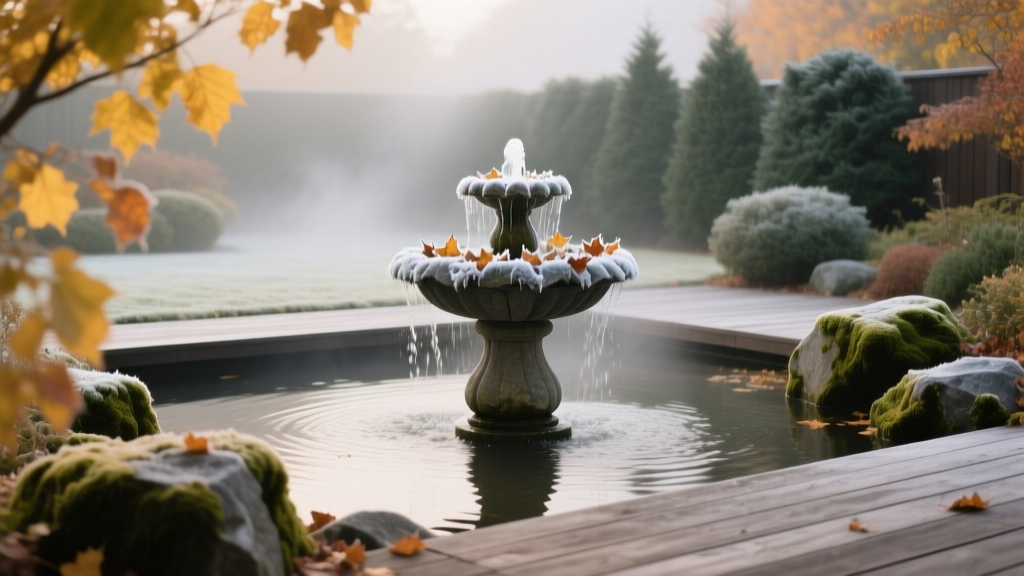
Fall Garden: Winterizing Outdoor Water Features
The first hard freeze doesn’t just “pause” your garden—it can crack pumps, split rigid plumbing, and turn a beautiful pond edge into a heaving, ice-jacked mess. The window is short: once nighttime lows start dipping to 32°F and below, damage can happen in a single cold snap. Use this fall to shut down, clean, protect, and (where appropriate) keep water moving safely through winter—so spring startup is quick instead of expensive.
Below are the fall tasks organized by priority—what to plant, what to prune, what to protect, and what to prepare—focused on outdoor water features: ponds, fountains, waterfalls, birdbaths, container water gardens, and irrigation-fed features. Timing assumes an average first frost date between Sept 25–Nov 15 depending on region; adjust using your local frost date and USDA hardiness zone.
Right-now priorities (this week): stop freeze damage before it starts
Timeline triggers you can trust (use these numbers)
Mark these thresholds on your calendar and weather app:
- 6–8 weeks before your average first frost date: start leaf management; plan pump shutdown or de-icing approach.
- 3–4 weeks before first frost: deep clean, thin plants, order netting and de-icer.
- When water temp drops to ~55°F: reduce fish feeding significantly; many pond-keepers stop wheat-germ feeding near this point.
- When water temp hits ~50°F: stop feeding most pond fish; begin final equipment decisions for winter.
- Before the first night at 32°F: drain, blow out, or remove equipment that can freeze (pumps, filters, fountain basins, hoses).
These temperature-based actions align with common pond management practice and extension-backed winter preparation principles for landscape water systems. For irrigation winterization guidance and freezing risk, see extension recommendations emphasizing draining and preventing trapped water from freezing in lines (University of Minnesota Extension, 2021; Iowa State University Extension and Outreach, 2020).
What to plant (small moves now that pay off in winter)
Fall planting around water features isn’t about pretty blooms—it’s about stabilizing edges, filtering runoff, and reducing winter erosion. Prioritize plants that hold soil and tolerate wet feet (or seasonal saturation) so your pond margins and streambeds don’t slump during freeze–thaw cycles.
Plant for erosion control and cleaner runoff (best done 4–6 weeks before frost)
- Sedges and rushes (Carex, Juncus): strong root mats for bog shelves and damp margins.
- Hardy marginal natives suited to your region: examples include blue flag iris (Iris versicolor) in the Northeast/Upper Midwest, or soft rush (Juncus effusus) in many temperate regions.
- Groundcovers for splash zones: creeping jenny (where noninvasive locally), ajuga, or native alternatives that knit soil along the edge.
Zone note: In USDA Zones 3–5, plant margins early—aim for mid-September to early October—so roots establish before the ground cools. In Zones 7–9, you can often plant into November if soil is still workable and daytime highs remain above 55–60°F.
Container water gardens: plant “insurance” pots now
If you grow marginal plants in pots (canna, taro, papyrus), pot up divisions now so you can overwinter them in a garage, basement, or greenhouse. The goal is to keep a backup alive even if the outdoor container freezes solid.
What to prune (and what not to touch yet)
Pruning around water features is less about shaping and more about preventing decay from loading the water with nutrients. Rotting plant material feeds algae next spring and can depress oxygen under ice.
Cut back pond and bog plants after the first light frost
A good rule: wait until the first light frost blackens tender tops, then cut back—usually 1–2 weeks before your typical hard freeze. Cut stems to a few inches above the waterline so you don’t leave hollow stalks that funnel cold into crowns.
- Hardy water lilies: remove yellowing leaves; leave healthy ones until they naturally decline. Move pots to the deepest part of the pond where water won’t freeze solid (often 18–24 inches deep minimum, region-dependent).
- Marginals: trim dead foliage; remove floating debris immediately.
- Do not hard-prune woody shrubs right at the water’s edge late in fall in cold zones; it can stimulate tender growth. Save structural pruning for late winter/early spring unless you’re removing broken or hazardous limbs.
Tree and shrub management: prioritize leaf drop zones
If a deciduous tree drops directly into your pond or fountain basin, fall is the time to reduce future mess:
- Prune deadwood and crossing branches any time for safety.
- Thin lightly (not a heavy rejuvenation prune) if it will meaningfully reduce leaf load over water.
- Plan a pond net install before peak leaf fall—often late September through October in Zones 4–6; October–November in Zones 7–8.
What to protect (equipment, plumbing, fish, and stonework)
This is where most winter losses happen: water left where it can freeze. Ice expands about 9%—enough to crack rigid housings, split fittings, and spall stone.
Protect pumps, filters, and UV units (priority #1)
Use this decision point: Will you run the feature all winter? The answer depends on climate, design, and safety.
- In cold climates (USDA Zones 3–6): plan to shut down most waterfalls and fountains before sustained freezes. Remove and store submersible pumps if possible.
- In milder climates (Zones 7–9): you may run a waterfall or fountain through winter if you can keep water moving and protect from rare freezes. Have a freeze plan for unusual cold events (cover, shutoff, drain).
Critical step: If you remove a pump, rinse it, clear the impeller, and store it submerged in a bucket of water in a frost-free place if the manufacturer recommends it (many do, to protect seals). If you store it dry, ensure it’s fully drained and the impeller cavity is dry—no trapped water.
“Frozen water left in hoses, backflow preventers, valves, and irrigation components is a primary cause of winter damage; draining and/or blowing out lines before freezing temperatures arrive is the standard prevention.” — University of Minnesota Extension, 2021
Protect plumbing: drain, blow out, or isolate (do this before 32°F nights)
For any feature with supply lines (auto-fill, fountain feed, waterfall plumbing), choose one:
- Drain by gravity: open low-point drains; disconnect unions; tip flexible lines to empty.
- Blow out: use compressed air at low pressure appropriate for your system (common guidance for irrigation emphasizes careful, staged blowouts and not exceeding safe PSI for components). If you’re not experienced, hire a pro—over-pressurizing can crack fittings.
- Isolate: shut off upstream, drain the exposed run, and cap/plug lines to keep water out all winter.
Extension sources consistently stress that winterizing is about removing water from components that can freeze (Iowa State University Extension and Outreach, 2020; University of Minnesota Extension, 2021).
Protect stone, concrete, and liners from freeze–thaw stress
Fall is also when you prevent edge failures:
- Lower water level only if needed to prevent overflow into soil that could freeze and heave. Don’t drop pond water below skimmer or liner requirements.
- Fix leaks now: freeze–thaw will widen small gaps. Sealant and patching products need curing time; aim for 7–10 days of mild weather before hard freezes.
- Remove loose stones from spillways and edges that may shift when ice forms.
Protect fish and beneficial bacteria (pond scenario)
If you keep koi or goldfish, winter prep is about oxygen and gas exchange, not “warm water.”
- Stop feeding at ~50°F water temperature (fish metabolism slows; uneaten food fouls water).
- Keep a small opening in ice using an aerator or pond de-icer—do not hammer ice (shock waves can harm fish).
- Move aeration stones to mid-depth in very cold zones so you don’t super-cool the deepest water where fish overwinter.
Protect fountains and birdbaths (small feature scenario)
These crack easily because they’re shallow and exposed. If you do only one thing, do this:
- Unplug, drain, and dry the basin before the first 32°F night.
- Remove small pumps and store indoors.
- Flip lightweight basins upside down or move them into a shed/garage.
If you want winter bird water, switch to a heated birdbath or heater insert rather than trying to keep a decorative fountain running through freezes.
What to prepare (cleaning, netting, pest prevention, and spring-proofing)
Preparation is where experienced gardeners save time. A clean, well-managed water feature in fall starts up faster, smells better, and grows less algae in spring.
Leaf and sludge control: remove nutrients now to prevent spring algae
As trees drop leaves, your pond becomes a nutrient trap. Every week you delay removal increases organic load that breaks down under ice.
- Install pond netting before peak leaf drop. Anchor tightly so it doesn’t sag into the water under wet leaves.
- Skim weekly during leaf season; in heavy drop areas, skim every 2–3 days.
- Vacuum or net sludge once after most leaves fall but before freezing—often late October in Zones 5–6, November in Zones 7–8.
Pest and disease prevention specific to fall water features
Fall is prime time for problems that overwinter:
- Mosquito control: keep water moving or use Bacillus thuringiensis israelensis (Bti) dunks in standing water until freezes stop activity. Tip and drain any “extra” containers that hold water.
- Algae management: avoid late-season overfeeding of fish and don’t leave decaying plant matter in the water. Nutrient reduction is your best fall strategy.
- Fungal and bacterial issues in fountains: scrub basins with a brush and a cleaner labeled safe for your materials; rinse thoroughly. Organic buildup is what you’re removing, not just “green film.”
- Rodent sheltering: stacked rocks and warm pump vaults can attract rodents. Clear weeds, remove nesting material, and seal access points to electrical boxes.
Electrical safety and freeze readiness
- Check GFCI outlets before winter storms arrive.
- Lift and secure extension connections off the ground to prevent ice-water intrusion.
- Label plugs (“pump,” “UV,” “lights”) so spring restart is fast.
Priority task list by feature type (choose your scenario)
Use the scenario that matches what you have in the yard. Many gardens have more than one—pond plus fountain, or a waterfall plus irrigation-fed rill.
Scenario 1: Cold-winter pond with fish (USDA Zones 3–6)
Best approach: Shut down waterfalls; keep gas exchange with aeration or de-icer.
- 6–8 weeks before frost: order netting and a de-icer; inspect aerator tubing.
- At ~55°F water temp: reduce feeding; start removing dying plant growth.
- At ~50°F water temp: stop feeding; remove tropicals; trim hardy plants.
- Before first 32°F night: remove and store external pumps/filters/UV; drain plumbing lines and waterfall boxes.
- After leaf drop: final skim; sludge clean if needed; install de-icer when nights approach 25–28°F consistently.
Scenario 2: Mild-winter pond or waterfall (USDA Zones 7–9)
Best approach: Keep water moving if freezes are brief; be ready to shut down quickly for cold snaps.
- Maintain flow to prevent stagnant water, but reduce splash that can create ice dams on rare freezes.
- Keep a freeze kit: spare fittings, a cap/plug set, and a plan to drain exposed lines within 30–60 minutes if a hard freeze warning hits.
- Netting still matters—organic load drives winter algae in mild climates.
Scenario 3: Decorative fountain, birdbath, or container water garden (all zones)
Best approach: Drain, dry, store. Replace with heated bird water if desired.
- Remove pump and tubing; clean impeller.
- Drain basin completely; towel dry to eliminate trapped water in seams.
- Store statuary in a protected spot (garage, shed). If it must remain outdoors, cover to reduce water entry and freeze expansion.
Scenario 4: Irrigation-fed water feature, rill, or auto-fill line
Best approach: Treat it like irrigation: shutoff, drain, blow out, and protect backflow components.
- Shut off supply at the source.
- Open drain points; blow out lines if designed for it.
- Remove and store backflow preventers if recommended for your setup, or insulate where removal isn’t possible.
Monthly schedule (adjust to your frost date)
| Month / Timing | Top tasks (do these first) | Signals to watch |
|---|---|---|
| Early–Mid September (or 6–8 weeks before first frost) | Inspect pumps/hoses; order netting & de-icer; start weekly skimming | Night temps regularly < 50°F; early leaf drop begins |
| Late September–October (or 3–4 weeks before first frost) | Install netting; cut back dying marginals; prep storage bins; clean filters | Water temp trending toward 55°F; heavy leaf fall windows |
| 1–2 weeks before first hard freeze | Drain removable fountains; remove UV units; disconnect and drain plumbing; final sludge pass | Forecast lows near 32°F; first light frost hits |
| After first hard freeze (and before ice locks in) | Shut down waterfalls in cold zones; install de-icer/aeration; secure cords and covers | Daytime highs < 40–45°F; water temp near 50°F |
| Mid-winter maintenance (as needed) | Check ice opening; clear snow over pond area for light (if safe); inspect cords | Extended cold spells < 25°F; heavy snow cover |
Checklist: one afternoon that prevents most winter damage
Print this and work from the top down:
- Skim out leaves and seed pods; empty skimmer basket.
- Rinse mechanical filters; don’t leave them full of debris to rot.
- Unplug and remove UV clarifier; drain and store.
- Disconnect hoses; drain completely; coil and store.
- Remove submersible pump (if shutting down); clean impeller; store frost-free.
- Open any drain ports; verify water is out of lines (no low spots holding water).
- Trim dead aquatic foliage; remove floating plants that will die back.
- Install netting (if leaf drop ongoing) and anchor tight.
- Set up aeration/de-icer plan (ponds with fish in freezing climates).
- Secure electrical connections above ground; test GFCI.
Regional timing notes (use the one that matches your fall)
Upper Midwest / Interior Northeast (Zones 3–5): Frost can arrive early—often late September to mid-October in colder pockets. Plan shutdown earlier than you think. If you wait for “real winter,” you’ll already be dealing with frozen fittings. Aim to have pumps and lines winterized by Oct 15 in many Zone 4–5 locations, sooner in Zone 3.
Mid-Atlantic / Ohio Valley (Zones 6–7): You often get a long leaf season with fluctuating temps. Netting is your biggest payoff. Many gardeners winterize hard-plumbed features by Nov 1, but watch forecasts—an early cold front can drop to 28–30°F overnight even if days rebound.
Pacific Northwest / Coastal climates (Zones 8–9): Hard freezes are less common, but heavy rain and organic buildup are your enemies. Keep drains clear, reduce leaf rot, and prevent pump clogging. Prepare for a rare arctic blast: if forecasts call for 20–25°F in an area that usually stays above freezing, be ready to drain exposed runs and protect backflow components.
Spring-proofing moves you’ll be glad you did
Fall is the best time to make spring easier. These tasks take minutes now and save hours later:
- Label everything: pumps, cords, valves, unions. Add a simple “startup order” tag.
- Photograph plumbing and wiring before disassembly. Next spring, you won’t guess which line goes where.
- Store parts together: keep pump fittings, hose clamps, and O-rings in a labeled bin.
- Order replacement consumables now: filter pads, beneficial bacteria (if you use them), net anchors, and spare check valves.
Sources you can cite (and use to justify your timing)
Winterizing water systems follows the same core principle across landscape infrastructure: water expands when it freezes, so remove water from vulnerable components and protect exposed fixtures.
- University of Minnesota Extension. 2021. Guidance on irrigation winterization emphasizing draining/blowing out to prevent freeze damage.
- Iowa State University Extension and Outreach. 2020. Recommendations for winterizing irrigation systems and protecting components from freezing.
Once you’ve drained what can crack, removed what can clog, and netted what can rot, your water feature is effectively “parked” for winter. The payoff shows up on the first warm weekend of spring: you’ll be restarting a clean system with intact equipment instead of pricing a new pump and chasing mystery leaks under thawing stone.