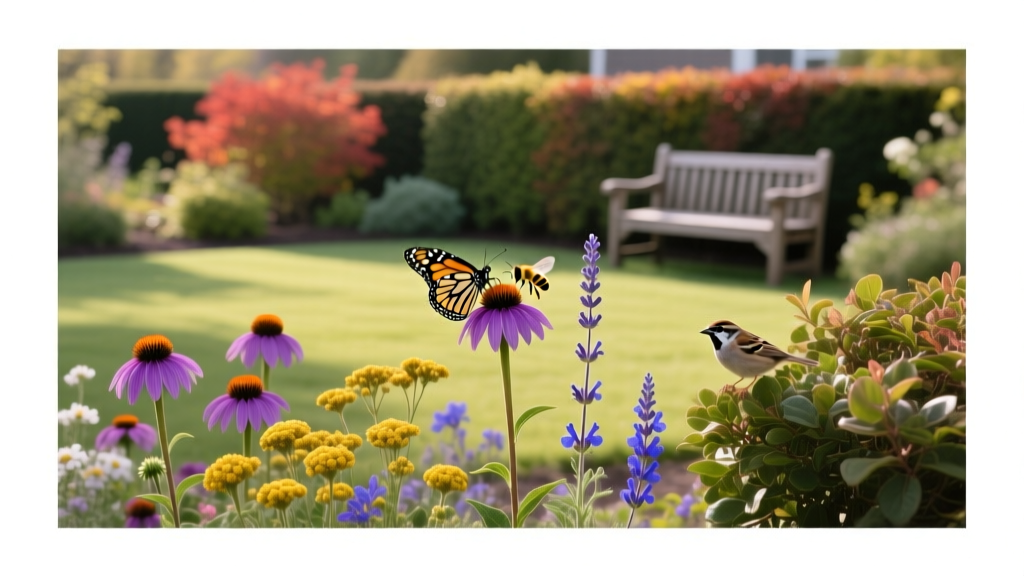
Seasonal Wildlife Support: Birds, Bees, and Butterflies
Right now is the make-or-break window for wildlife in the garden: nesting birds are choosing territories, queen bumble bees are hunting for new homes, and the first butterflies are searching for nectar and host plants. If your yard is quiet, it’s usually not because “nature is gone”—it’s because food, water, and shelter aren’t available at the exact moment they’re needed. Use this season to stack the deck for birds, bees, and butterflies with a few high-impact tasks done on time.
This guide is organized by priority—what to plant, what to prune, what to protect, and what to prepare—so you can act this week. Timing and thresholds are included so you can match your work to your weather (and your USDA hardiness zone).
Priority 1: What to plant now (fast wins for nectar, seed, and host plants)
Planting is the quickest way to increase wildlife activity, but timing matters. Aim to plant when soil is workable and daytime highs are consistently above 50°F for good root growth. In most regions, that’s 2–4 weeks before your average last frost date for cold-tolerant perennials, or 1–2 weeks after last frost for most annuals and tender natives.
Week-by-week planting timeline (adjust by frost date)
- Weeks -4 to -2 before last frost: plant bare-root natives, hardy shrubs, and early-blooming perennials (good for queens and early bees).
- Weeks -2 to 0 (last frost window): sow cool-season annuals; install trees/shrubs if the ground isn’t waterlogged.
- Weeks +1 to +4 after last frost: plant milkweeds, warm-season nectar plants, and finish wildflower seeding where irrigation is available.
Concrete timing examples to anchor your calendar:
- If your last frost is around April 15 (common in parts of Zones 6–7), start planting woody natives by March 15–April 1.
- If your last frost is around May 15 (many Zone 5 locations), target woody planting by April 15–May 1.
- Delay milkweed planting until nights stay above 45°F and soils are warming (often 10–14 days after last frost).
- Hold off on most butterfly-attracting annuals until lows are reliably above 50°F.
- Set a “no insecticide” rule from bud break through at least 8 weeks after last frost—this is peak bloom overlap with pollinator emergence.
Plant these first: early-season nectar + nesting structure
Early flowers are the bottleneck. If you plant only one set of plants this season, prioritize early bloomers and shrubs that feed pollinators when lawns and most beds are still bare.
- Native willows (Salix spp.): critical early pollen; also supports butterfly/moth larvae. Plant as shrubs or small trees where soils stay moist.
- Redbud (Cercis canadensis) (Zones 4–9): early blooms; compact tree for small yards.
- Serviceberry (Amelanchier spp.) (Zones 3–9): early flowers + summer berries for birds.
- Wild geranium (Geranium maculatum), Virginia bluebells (Mertensia virginica), golden alexanders (Zizia aurea) (varies by region): spring nectar without needing coddling.
- Clumping grasses/sedges (Carex spp.): nest material and cover for ground-feeding birds; great in shade.
Plant these next: butterfly host plants (larvae food, not just nectar)
If you want butterflies, you need caterpillars—and caterpillars need specific host plants. Add hosts in patches (3–7 plants together) so females can find them.
- Milkweeds (Asclepias spp.) for monarchs: choose region-appropriate species (e.g., A. syriaca in the Northeast/Midwest, A. incarnata for wetter sites, A. speciosa in parts of the West). Avoid tropical milkweed in frost-free areas where it can disrupt migration and increase disease pressure.
- Dill/fennel/parsley (in pots if needed) for swallowtails.
- Violets (Viola spp.) for fritillaries: let a patch naturalize in a corner.
- Oaks (Quercus spp.) where space allows: powerhouse host trees for hundreds of Lepidoptera species, translating into more baby-bird food.
“Most terrestrial birds rely on insects to feed their young; even seed-eating species typically raise nestlings on insects.” — Cornell Lab of Ornithology (research-based guidance, widely cited in bird ecology)
Plant for birds: fruit, seed, and shelter that pays off this year
For immediate bird value, mix a berrying shrub with a seed-producing perennial patch. Target plants that hold structure through winter and offer cover from predators.
- Blueberry (Vaccinium spp.) (Zones vary): flowers for bees, berries for birds, fiery fall color; needs acidic soil.
- Dogwoods (Cornus spp.): berries for birds; choose native species for your region.
- Sunflowers (Helianthus spp.): sow after frost; leave heads standing for finches.
- Bee balm (Monarda spp.): hummingbird magnet; also supports bumble bees.
- Coneflowers (Echinacea spp.): summer nectar; winter seed heads for goldfinches.
Regional variation scenarios: plant choices that match real gardens
Scenario 1: Cold spring, short season (Upper Midwest, New England, Zones 3–5). Plant woody natives and early perennials as soon as soil is workable, but keep milkweed and tender starts inside until after your last frost (often May 10–June 5). Focus on willows, serviceberry, and golden alexanders now; direct-sow sunflowers once soil reaches about 55°F.
Scenario 2: Warm spring and early bloom (Mid-Atlantic, Zones 6–7). Your risk is “false spring” followed by a freeze. Plant shrubs early, but protect blooms during cold snaps below 28°F with frost cloth (remove by mid-morning). Stagger plantings: install early bloomers now, then add milkweed and heat lovers 1–2 weeks after April 15–30 frost dates.
Scenario 3: Mediterranean West/coastal (parts of CA/PNW, Zones 8–10 with dry summers). Plant now while soils are moist and roots can establish before summer drought. Prioritize drought-adapted natives, add a drip line, and plan a deep watering every 7–14 days through the first dry season. Create a summer “nectar bridge” with long-bloomers so butterflies don’t disappear when rains stop.
Priority 2: What to prune (and what not to cut if you want pollinators)
Pruning can either protect nests and overwintering beneficials—or wipe them out. Your goal this season: remove hazards and stimulate healthy growth without erasing habitat.
Do this now: safety and plant health pruning
- Remove dead, broken, or rubbing branches on trees/shrubs any time temperatures are above 25–30°F (so wood isn’t brittle).
- Thin congested growth on berrying shrubs so flowers get light—more flowers means more insect activity, which means more bird food.
- Delay hard pruning on spring-flowering shrubs until right after bloom, or you’ll remove this year’s nectar.
Wait before “cleaning up” perennial stems
Many native bees overwinter in hollow stems and plant litter. If you must cut, leave structure.
- Delay cutting last year’s stems until you’ve had 7 consecutive days with highs above 50°F (a practical cue that more insects are active and can relocate).
- When you cut, leave 12–18 inches of stem standing in some areas for cavity-nesting bees.
- Rake leaves off crowns only where rot is a problem; otherwise keep a thin leaf layer under shrubs as beneficial habitat.
Research-backed note: Extension guidance consistently emphasizes reducing pesticide exposure and preserving habitat during bloom to protect pollinators. Penn State Extension highlights that pollinators are exposed to pesticides through residues on blooms and contaminated water sources (Penn State Extension, 2019).
Priority 3: What to protect (nests, blooms, and beneficial insects)
This is the season when well-meaning “tidying” and routine sprays cause the most damage. Protecting wildlife is mostly about changing timing and technique.
Protect nesting birds (and avoid accidental nest destruction)
From early spring through midsummer, shrubs become nurseries. In many areas, peak nesting runs from roughly April 1 to July 31, but it varies by region and species. Before pruning or hedge trimming, do a 60-second nest check: watch for repeated trips into the same shrub and listen for alarm calls.
- Hold off on major hedge trimming once nesting activity starts; do light shaping only if needed for safety.
- Keep cats indoors during nesting season—cat predation is a leading cause of songbird mortality.
- Offer clean water in a shallow dish (1–2 inches deep) with stones for perching; refresh daily when temps exceed 80°F.
Protect pollinators by changing how you manage pests
If you spray broad-spectrum insecticides during bloom, you’re removing the food web that supports birds and beneficial insects. The University of Minnesota Extension notes that insecticides can harm pollinators directly and indirectly, recommending application timing and product choice to reduce exposure (University of Minnesota Extension, 2020).
- Never apply insecticides to open blooms (including weeds like dandelions if bees are working them).
- Use soap-and-water scouting first: check undersides of leaves twice weekly for aphids and eggs before you treat.
- Targeted controls: hand-squish aphid clusters, blast with water, or use insecticidal soap at dusk when bees are not foraging (and only on affected plants).
- Avoid “preventative” systemic insecticides on flowering plants; residues can show up in pollen/nectar.
Seasonal pest and disease prevention (specific to this window)
Aphids on new growth: Expect them as soon as days warm above 60°F. Ants “farm” aphids—control ants (sticky barriers on non-flowering woody stems) to reduce aphid pressure. Encourage lady beetles and lacewings by keeping a small patch of flowering herbs (cilantro, dill) going.
Powdery mildew on bee balm and phlox: Prevent now by spacing plants for airflow, watering at soil level, and avoiding high-nitrogen quick-release fertilizer. Choose resistant cultivars if your summers are humid.
Slugs/snails on seedlings: In cool, wet springs, protect emerging seedlings with collars, iron phosphate baits used sparingly, and morning watering (so surfaces dry by night).
Mosquitoes in water features: If you add water for wildlife, keep it moving (solar bubbler) or refresh every 2–3 days. For ponds, use mosquito dunks (Bt israelensis) as needed—targeted and compatible with many wildlife-support goals when used per label.
Priority 4: What to prepare (habitat infrastructure that multiplies your results)
Planting helps, but habitat structure keeps wildlife on-site. Use this season to set up the “systems”: water, nesting sites, and continuous bloom.
Build a continuous-bloom plan (so wildlife doesn’t hit a food gap)
Aim for 3 blooming plants per season (spring/summer/fall) in each sunny area. That’s enough to keep pollinators cycling through your garden instead of leaving when one patch finishes.
| Month | Wildlife priority | What to do now | Plant targets (examples) |
|---|---|---|---|
| March | Early nectar + nesting setup | Plant woody natives; set water source; delay stem cleanup | Willow, serviceberry, native currants (region-dependent) |
| April | Peak spring bloom protection | Weed without disturbing ground nests; avoid sprays on blooms | Redbud, bluebells, golden alexanders |
| May | Host plants + baby bird food | Plant milkweed after frost; leave leaf litter under shrubs | Milkweed, penstemon, salvia (regional natives) |
| June | Summer nectar bridge | Deadhead selectively; stake tall plants; watch for mildew | Bee balm, coneflower, yarrow, mountain mint |
Set up water the right way (so it helps more than it hurts)
- Birdbath placement: 10–15 feet from dense cover (so birds can flee), but not right next to shrubs where cats hide.
- Cleaning: scrub and refresh 2–3 times per week; daily during heat waves.
- Bee water: a shallow saucer with pebbles; keep it topped up during dry spells.
Install nesting and shelter—without creating traps
Birdhouses can help, but only if they’re species-appropriate and predator-aware. If you’re adding one now, place it before peak nesting for your area (often by late March to mid-April in many Zones 5–7 regions).
- Use correct hole size for target species (e.g., chickadees/wrens vs. larger birds).
- Add a predator guard and mount on a pole, not a tree trunk.
- Skip perches on birdhouses; they can help predators.
For bees, focus less on “bee hotels” and more on natural nesting options:
- Leave a small patch of bare, well-drained soil for ground-nesting bees (south-facing is best).
- Keep some hollow stems standing until summer, then cut and bundle for habitat in a dry spot.
Do-this-now checklists (printable logic for the next 14 days)
Next 48 hours
- Walk your garden at mid-day; note which areas get 6+ hours of sun.
- Choose one “wildlife anchor” shrub/tree to plant this week (serviceberry, dogwood, willow, redbud—region appropriate).
- Set out a water source; add stones for perches; start a cleaning schedule.
- Stop any bloom-time spraying; mow less often if flowering weeds are feeding bees (or mow after dusk and only when needed).
Next 7 days
- Plant early bloomers and shrubs if soil is workable and not saturated.
- Mark a 2x3-foot “no-mulch, no-till” patch for ground-nesting bees.
- Inspect shrubs for nesting activity before pruning.
- Scout for aphids twice (undersides of leaves); wash off with water if localized.
Next 14 days
- Stagger blooms: add at least two perennials for summer and one for fall (e.g., coneflower + mountain mint + aster).
- Plan host plant patches: milkweed cluster (after frost), violet patch, or dill pot.
- Thin overcrowded stems (selectively) to reduce mildew later—especially monarda/phlox.
- Refresh mulch thoughtfully: keep it off stems/crowns and leave some leaf litter under shrubs.
Timing notes by USDA zone (so you don’t jump too early)
Zones 3–4: Expect late freezes. Treat May 15–June 5 as a common last-frost window. Plant woody natives early, but delay warm-season nectar plants until soils warm. Keep row cover handy for surprise dips below 28°F.
Zones 5–6: Many gardens hit last frost around April 20–May 15. Use the 50°F daytime high rule for beginning stem cleanup and early planting. Start host plants after frost; build your bloom sequence now so summer doesn’t become a nectar gap.
Zones 7–8: You may already be in active bloom and nesting season by March. Prioritize protection: reduce pruning, avoid bloom-time treatments, and irrigate new plantings so they establish before heat arrives. Plan for heat: more water stations and afternoon shade can keep butterflies feeding longer.
Small-yard, HOA, and container scenarios (real constraints, real options)
Scenario: You only have a patio or balcony. You can still support wildlife: use a 12–18 inch pot for nectar plants (salvia, native penstemon where available), a second pot for host plants (dill/parsley), and a shallow bee-water dish. Keep blooms coming by deadheading weekly and feeding lightly. If nights drop below 40°F, pull pots closer to the house for a few degrees of protection.
Scenario: HOA rules require “tidy.” Keep edges crisp and habitat in the middle. Define a bed border, add mulch on paths, and cluster natives in intentional-looking drifts. Leave seed heads standing in the back and trim only the front edge. A neat frame buys you freedom to keep stems and leaf litter where it matters.
Scenario: You’re dealing with deer or rabbits. Protect young plants with cages for the first 6–8 weeks after planting. Choose tougher natives (many mints and mountain mints are less favored). Use repellents consistently after rain, and don’t rely on “deer-resistant” labels alone—pressure varies year to year.
Sources to keep you on the research-backed path
Pesticide and pollinator exposure risks and best practices are widely documented by land-grant extensions; see Penn State Extension (2019) and University of Minnesota Extension (2020) guidance on pollinator protection and pesticide timing. For region-specific plant lists, check your state’s extension native plant resources and your local conservation district—those lists are typically matched to local ecotypes and rainfall patterns.
Keep your focus tight: plant for continuous bloom, preserve stems and leaf litter until conditions warm, avoid bloom-time sprays, and add water with a cleaning plan. In a matter of weeks, you’ll notice the shift—more insect activity on flowers, more birds hunting in shrubs, and butterflies staying in your yard instead of passing through.