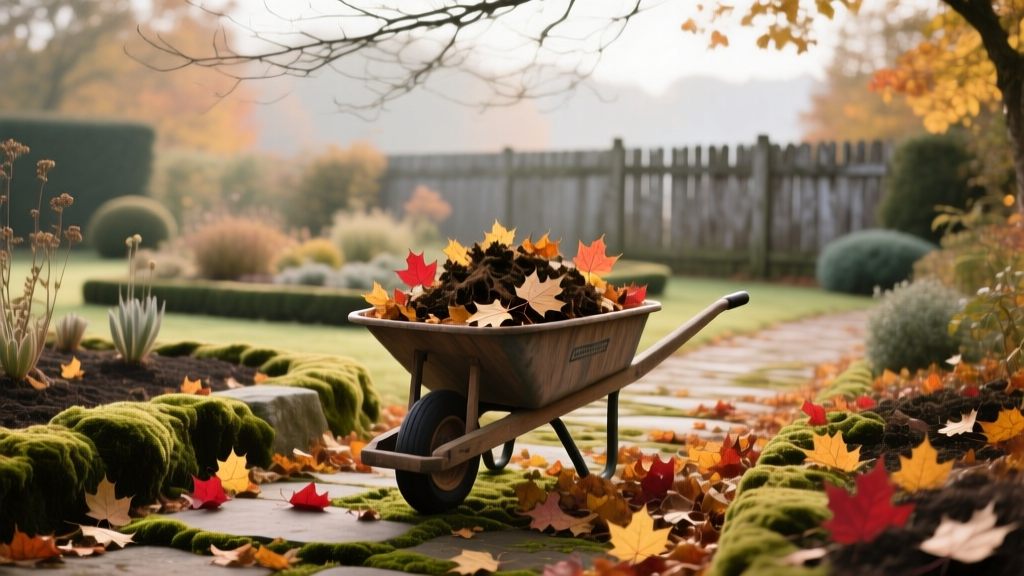
Fall Garden: Creating Leaf Mold for Spring Soil
The best soil upgrade you’ll make next spring starts right now—while leaves are falling faster than you can rake. If you wait until winter, those leaves turn into soggy mats on the lawn, shred into unmanageable clumps, or get hauled away as “waste.” In fall, you can convert that free carbon into leaf mold: a dark, crumbly soil conditioner that improves water-holding, reduces compaction, and feeds soil life without the saltiness or burn risk of fresh manures.
Your window is practical and short: from peak leaf drop until the first hard freeze locks everything into place. Aim to start your leaf mold pile 4–6 weeks before your average first frost date, and you’ll have it settled and contained before winter storms. Below is a priority-based plan—what to plant, what to prune, what to protect, and what to prepare—organized for immediate action.
Top priority: Prepare leaf mold now (the single best fall soil task)
What leaf mold is—and what it isn’t
Leaf mold is leaf litter decomposed primarily by fungi over time. It’s not the same as hot compost. It won’t be high in nitrogen, but it excels at improving soil structure and moisture retention—especially in sandy soils and raised beds that dry quickly.
“Leaves can be composted, but they also can be used to make leaf mold…a valuable soil amendment that improves soil structure and water-holding capacity.” — University of Wisconsin–Madison Division of Extension (2019)
Extension services consistently recommend using fallen leaves as a soil resource instead of sending them off-site. For example, Michigan State University Extension notes that shredding leaves speeds decomposition and improves their usefulness in garden soils (MSU Extension, 2020). And UW–Madison Extension describes leaf mold as a distinct product from compost and highlights its soil-conditioning value (UW–Madison Extension, 2019).
Timing targets (use these numbers)
Use these concrete thresholds to plan your fall workflow:
- Start collection: when nightly lows begin regularly dipping below 45°F (leaf drop accelerates).
- Build your pile: ideally 4–6 weeks before first frost (gives time to settle and moisten).
- Stop turning water hoses on: when temperatures approach 32°F at night—moisten the pile before hoses freeze.
- First hard freeze: around 28°F for several hours; get your pile contained before this if winds are common.
- Application window next spring: spread finished leaf mold 2–3 weeks before planting beds, when soil is workable (not sticky, not frozen).
Choose your method: bags, bins, or a simple ring
You can make leaf mold with almost no equipment. Pick the method that fits your space and your neighborhood’s wind and wildlife pressure.
| Method | Best for | Setup | Speed | Notes |
|---|---|---|---|---|
| Leaf mold “ring” (wire cylinder) | Backyard gardens, large leaf volume | 3–4 ft diameter ring of hardware cloth or welded wire | 6–18 months | Most forgiving; easy to add leaves all season |
| Black contractor bags (punched for air) | Small yards, patios, HOA visibility | Stuff bags with damp shredded leaves; punch 10–20 holes | 9–18 months | Neat and contained; check moisture mid-winter thaw |
| Compost bin (cold) | Gardeners with existing bins | Fill mostly with shredded leaves; keep moist | 6–12 months | Faster if mixed with some greens, but you’ll get more “compost” than true leaf mold |
Step-by-step: build a leaf mold pile that actually breaks down
Leaf mold fails for two reasons: leaves are left whole and dry, or they’re packed into a slimy mat with no air. Fix both.
1) Shred first (or at least crush)
Run leaves over with a mower (bagging or mulching), or use a leaf shredder. Shredded leaves decompose significantly faster and settle more evenly. MSU Extension (2020) highlights shredding as a key step for efficient breakdown.
2) Aim for “wrung-out sponge” moisture
Leaves should be damp, not dripping. If you squeeze a handful and it holds shape but doesn’t drip, you’re close. If your fall is dry, moisten in layers as you build.
3) Build thickness, then cap it
Make a pile at least 3 feet tall so it holds moisture and resists drying winds. Cap with a thin layer of finished compost or soil (optional) to reduce blow-off and seed invasion.
4) Turn only if it compacts or goes anaerobic
Leaf mold is mostly fungal and doesn’t require frequent turning. Turn once in late fall if it’s matted or smelly. Otherwise, leave it and let winter do the work.
5) Mark it and forget it—then check at thaw
Label the pile with the start date. During a January thaw or early spring warm-up, check moisture. Add water if it’s dusty-dry and temps are above 40°F for a few days.
Quick checklist: leaf mold setup (this weekend)
- Rake or blow leaves onto a tarp for easy moving
- Shred leaves (mower pass) and collect
- Build a 3–4 ft diameter ring or fill vented bags
- Moisten in layers to “wrung-out sponge”
- Secure the top (tarp, cardboard, or a light cap of compost)
- Label start date and location
Next priority: What to plant right now (while soil is still warm)
Fall planting pairs perfectly with leaf mold prep: you’re already moving organic matter, and the soil is still biologically active. In many regions, roots grow until soil temperatures drop below about 40°F. Use that remaining warmth.
Plant garlic and spring bulbs (timed to frost)
Garlic and many bulbs do best when planted after a light frost but before the ground freezes hard.
- Garlic: plant 2–4 weeks after first frost but 3–4 weeks before the ground freezes. In many zone 5–7 gardens, that’s often mid-October to early November.
- Depth: garlic cloves 2–3 inches deep; mulch after the first hard freeze to prevent heaving.
- Bulbs: tulips/daffodils generally go in when soil cools to about 55°F or below at 4-inch depth.
Sow cover crops for spring soil structure
If your beds are coming out of summer crops, cover crops protect soil and help manage disease splash. Choose based on your frost schedule:
- Cold-hardy: winter rye in zones 3–7; sow 2–4 weeks before first hard freeze.
- Quick fall growth: oats or field peas where you still have 6–8 weeks before hard freeze (often zones 5–8 early fall).
- Legume option: crimson clover in zones 6–9 where winters are moderate.
Regional timing scenarios (use the one that matches you)
Scenario 1: Upper Midwest / Northern New England (USDA zones 3–4)
You may see first frost as early as late September to early October. Prioritize leaf collection immediately at peak drop, build piles before consistent nights below 32°F, and focus fall planting on garlic and hardy cover crops (winter rye). Use bags or a bin if snow load collapses open rings.
Scenario 2: Mid-Atlantic / Lower Midwest (USDA zones 5–7)
Often you have a longer runway: first frost commonly October to early November. Build leaf mold piles in October, plant garlic late October into November, and consider a fall sowing of cover crops after summer vegetables. This is the sweet spot for mowing-and-bagging leaves for easy shredding.
Scenario 3: Pacific Northwest / Coastal climates (USDA zones 7–9, wet winters)
Your challenge is too much water, not too little. Build leaf mold under cover (tarped ring, lidded bin) to prevent saturation and anaerobic rot. Add a few handfuls of coarse material (dry straw or small twigs) between layers for airflow. Planting can continue later, but avoid working wet soil—wait until it passes the “squeeze test” (crumbly, not shiny or sticky).
What to prune (and what not to touch yet)
Fall pruning mistakes can set you up for winter damage and spring disease. Your goal now is sanitation and safety, not shaping.
Prune only for three reasons: damage, disease, or danger
- Remove dead, broken, or rubbing branches any time you see them.
- Cut out diseased plant material from vegetables and annuals (especially anything with fungal leaf spots).
- Reduce hazards (limbs over walkways) before ice/snow season.
Hold off on these until late winter or early spring
- Spring-flowering shrubs (lilac, forsythia, many hydrangeas that bloom on old wood): pruning now removes next year’s buds.
- Fruit trees: major pruning in fall can encourage tender growth; do structural pruning in late winter when fully dormant.
- Roses: in colder zones, save hard pruning for spring; in fall, only shorten extra-tall canes to prevent wind rock.
Sanitation rules that protect spring crops
Fall cleanup is pest and disease prevention. Many common garden diseases overwinter on debris.
- Remove tomato, squash, and bean vines with heavy disease pressure; don’t add them to leaf mold piles.
- Keep leaf mold “clean”: use mostly tree leaves, not blighted foliage.
- Solarize questionable material by bagging and letting it sit in sun (where feasible), or dispose according to local guidance.
What to protect (soil, perennials, and your leaf mold pile)
Protection now prevents winter loss and spring setbacks. Focus on moisture management, temperature swings, and overwintering pests.
Mulch after the ground cools—don’t smother warm soil
Mulching too early can keep soil warm and encourage pests. Wait until nighttime temps are consistently near 25–35°F and the top inch of soil is cool. Then apply:
- 2–4 inches of shredded leaves around perennials (avoid burying crowns)
- 4–6 inches over garlic after the first hard freeze (prevents heaving)
Protect tender plants based on USDA zones
Zones 3–5: prioritize winter protection for strawberries (straw mulch after hard freeze), young perennials, and newly planted trees (trunk guards against sunscald and rodents).
Zones 6–7: focus on preventing freeze-thaw cycles: mulch, water deeply once before the ground freezes if fall is dry, and protect borderline shrubs with windbreak burlap on exposed sites.
Zones 8–10: frost may be brief but damaging. Keep frost cloth ready when forecasts dip to 32°F or below; protect citrus and tender ornamentals; keep leaf mold piles from drying out in warm spells.
Pest and disease prevention that matters in fall
- Rodents: tall grass and thick mulch near trunks create habitat. Keep mulch pulled back 3–6 inches from tree and shrub bases. Use trunk guards where voles are common.
- Slugs/snails: leaf piles can shelter them in wet regions. Keep leaf mold piles away from tender winter greens; use boards as traps and remove pests on mild mornings.
- Overwintering insects: clean up fallen fruit under trees to reduce codling moth and other pests; don’t leave “mummy fruit” hanging.
- Fungal carryover: avoid using diseased leaves (apple scab, severe leaf spot) as mulch in the same area. Bag or hot-compost if you have a reliably hot compost system.
What to prepare (beds, tools, and a fall-to-spring schedule)
Leaf mold is a long game, but your fall preparation determines how useful it is in spring. Treat this like a seasonal project with checkpoints.
Monthly schedule: from leaf drop to spring bed prep
| Timeframe | Leaf Mold Tasks | Garden Tasks That Pair Well |
|---|---|---|
| Late Sep–Oct (or peak leaf drop) | Collect and shred leaves; build pile/ring; moisten | Remove summer crops; sow cover crops; plant early bulbs |
| 2–4 weeks before first frost | Finish filling pile; cap and secure; label date | Pull weeds before they seed; protect soil with mulch/cover |
| After first hard freeze (around 28°F) | Leave pile mostly alone; ensure it won’t blow apart | Mulch garlic; wrap young tree trunks; store hoses |
| Mid-winter thaw (temps above 40°F) | Check moisture; add water if dusty; re-cover | Inspect for vole damage; re-set guards and barriers |
| Early spring (soil workable) | Harvest finished leaf mold from bottom; screen if desired | Top-dress beds 1–2 inches; prep seedbeds; refresh mulches |
Bed prep: where leaf mold shines in spring
Plan ahead for the best use cases:
- Clay soils: leaf mold improves aggregation and reduces crusting. Top-dress 1–2 inches and lightly incorporate the top few inches, or leave as a surface dressing under mulch.
- Sandy soils: leaf mold increases water-holding capacity. Use 2 inches as a spring top-dress before planting.
- Raised beds: mix leaf mold with compost (about 1:1) for a balanced amendment—structure plus nutrition.
Timeline: how long until it’s ready?
Expect leaf mold to take time. Shredded leaves in a managed pile can become usable in 6–12 months; whole leaves often take 12–24 months. The “ready” test is simple: it’s dark brown, earthy-smelling, and you can’t easily identify leaf pieces.
Fall tool and workflow prep (saves you hours)
- Sharpen mower blades before mowing leaves—clean cuts shred better
- Stage tarps, twine, and wire before peak leaf drop
- Set a dedicated leaf mold location that won’t be in the way of snow shoveling
- Keep a compost thermometer if you’re mixing greens; leaf mold itself won’t “heat” much
What to plant, prune, protect, and prepare: a one-page action checklist
Plant (this week)
- Garlic (time it 2–4 weeks after first frost)
- Spring bulbs when soil is near 55°F and cooling
- Cover crops 2–8 weeks before hard freeze (match species to your region)
Prune (selectively)
- Dead/damaged wood; hazards near paths and structures
- Remove diseased annual vegetable debris; keep it out of leaf mold piles
- Hold off on major pruning of fruit trees and spring bloomers
Protect (before hard freeze around 28°F)
- Mulch perennials after soil cools (avoid burying crowns)
- Mulch garlic after first hard freeze to prevent heaving
- Guard trunks against rodents; keep mulch back 3–6 inches from bark
Prepare (leaf mold + spring soil)
- Shred leaves and build a 3-foot-tall pile in a ring/bin/bags
- Moisten to wrung-out sponge; cap and secure for wind
- Label start date; check moisture during winter thaws above 40°F
Once your leaf mold system is in place, fall cleanup feels different: leaves stop being a chore and become inventory. By the time crocuses push up and you’re itching to plant, you’ll have a homegrown, soil-friendly amendment ready to top-dress beds, revive tired containers, and buffer moisture through spring’s windy days.
Sources: University of Wisconsin–Madison Division of Extension (2019), leaf composting/leaf mold guidance; Michigan State University Extension (2020), recommendations on shredding and managing fall leaves for decomposition and soil use.