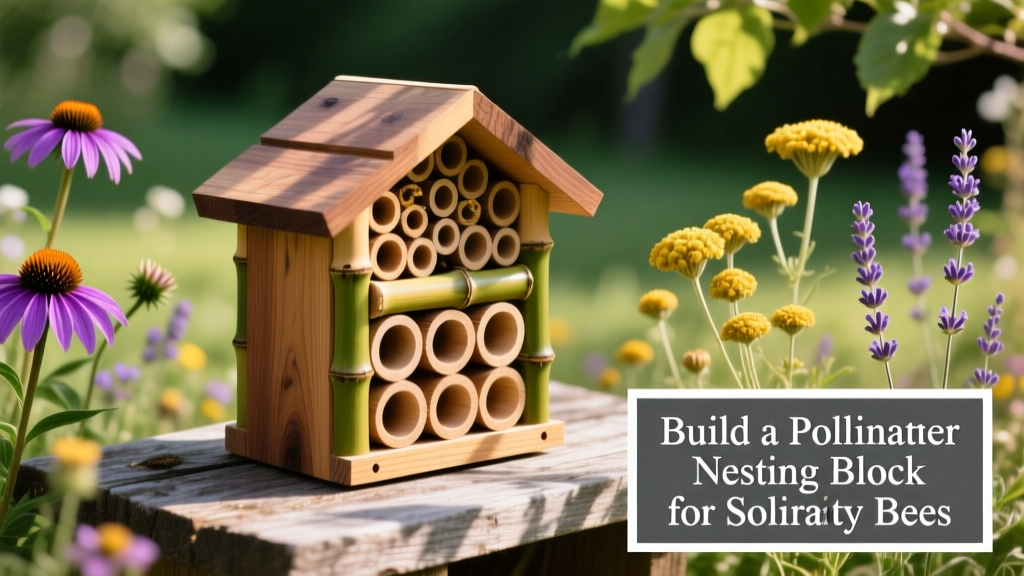
Native Bee Hotel DIY: Build a Pollinator Nesting Block for Solitary Bees
Why Native Bees Need Hotels
Most native bees (90% of species) are solitary — they don't live in hives. Instead, they nest in hollow stems, beetle burrows, and holes in dead wood. Modern gardens with tidy landscaping remove these natural nesting sites. A bee hotel replaces lost habitat and attracts pollinators that are 100x more efficient than honeybees at pollinating native plants.
Native Bee Species That Use Hotels
| Species | Hole Diameter | Depth | Season |
|---|---|---|---|
| Mason bees (Osmia) | 5/16 inch (8mm) | 6 inches | Spring |
| Leafcutter bees | 1/4 inch (6mm) | 4-6 inches | Summer |
| Small carpenter bees | 3/8 inch (10mm) | 6-8 inches | Spring-summer |
| Sweat bees | 3/16 inch (5mm) | 3-4 inches | Summer |
Materials
- Untreated hardwood block (6x6x8 inches minimum) — oak, maple, or pine
- Drill bits: 5/16, 1/4, 3/8 inch brad-point bits
- Roof material: cedar shingle, metal flashing, or angled wood
- Paper straws or reed inserts (for easy cleaning)
- Mounting hardware (hook or bracket)
Construction Steps
- Cut hardwood block to 6x6x8 inches
- Drill holes 4-6 inches deep (NOT all the way through — bees need a closed end)
- Space holes 3/4 inch apart (center to center)
- Mix hole sizes: alternate rows of 5/16 and 1/4 inch
- Smooth the front face with sandpaper (rough edges deter bees)
- Attach roof with 2-3 inch overhang (protects from rain)
- Insert paper straws into each hole (for annual cleaning)
- Mount on a post or wall, facing southeast
Placement
- Height: 3-6 feet above ground
- Orientation: Southeast (morning sun warms bees for early flight)
- Protected from rain (under eaves or with a good roof)
- Near flowers (within 300 feet of pollen sources)
- Stable mounting (bees won't use a swinging hotel)
Mud Source (Critical for Mason Bees)
Mason bees need clay-rich mud to seal their nests. Provide a mud source:
- Small tray of clay soil kept moist
- Bare, unpaved ground near the hotel
- Commercial mason bee mud (available at garden centers)
Annual Maintenance (Prevents Disease)
- October: Remove paper straws with cocoons inside
- Store cocoons in ventilated container in unheated garage/shed (35-40F ideal)
- Inspect cocoons: discard any with holes (parasites) or that feel light
- Clean empty hotel block with 5% bleach solution, dry thoroughly
- February: Insert fresh paper straws, return cocoons to hotel vicinity
Final Thoughts
A bee hotel takes one afternoon to build and provides pollination for years. Mason bees alone can pollinate an entire fruit tree in a single season. Start with one hotel, observe which hole sizes get used most, and expand your setup the following year.