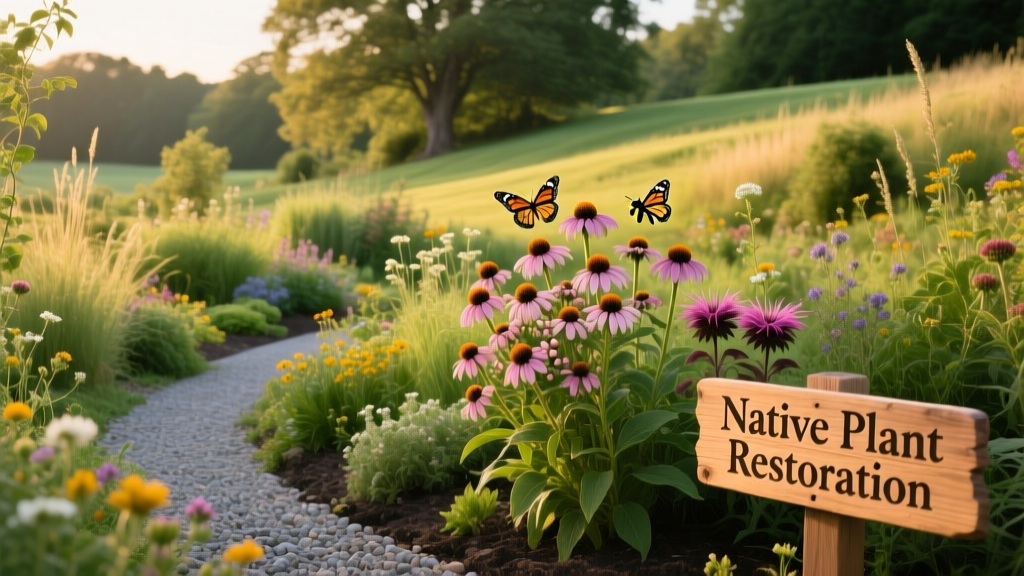
Native Plant Restoration: Convert Your Lawn to a Backyard Ecosystem
Why Replace Your Lawn?
American lawns cover 40 million acres and consume 3 trillion gallons of water per year. A native plant garden uses 80% less water, eliminates mowing, supports 4x more wildlife, and increases property value.
3 Methods to Remove Lawn
Method 1: Sheet Mulching (Best, 4-6 Months)
- Mow grass as short as possible
- Cover with overlapping cardboard
- Layer 4-6 inches of compost on top
- Top with 2-3 inches of wood chip mulch
- Wait 4-6 months, then plant
Method 2: Solarization (6-8 Weeks)
- Mow and water deeply
- Cover with clear plastic, seal edges
- Leave 6-8 weeks in summer sun
Method 3: Sod Cutting (Instant)
Rent a sod cutter ($80/day), strip grass in hours.
Native Plant Selection by Region
| Region | Key Species | Wildlife Supported |
|---|---|---|
| Northeast | Milkweed, goldenrod, aster, serviceberry | Monarchs, songbirds |
| Southeast | Magnolia, beautyberry, muhly grass | Hummingbirds, cardinals |
| Midwest | Coneflower, switchgrass, wild indigo | Monarchs, goldfinches |
| Southwest | Penstemon, desert marigold, agave | Hummingbirds, lizards |
| Pacific NW | Salal, Oregon grape, sword fern | Songbirds, native bees |
First-Year Maintenance
- Watering: Weekly deep watering for first season
- Weeding: Remove invasives (decrease each year)
- No fertilizer: Natives are adapted to your soil
- Patience: Year 1 = roots, Year 2 = growth, Year 3 = full display
Final Thoughts
Start with sheet mulching this fall — by next spring you'll have a ready-to-plant native garden that saves water, eliminates mowing, and brings wildlife to your doorstep.