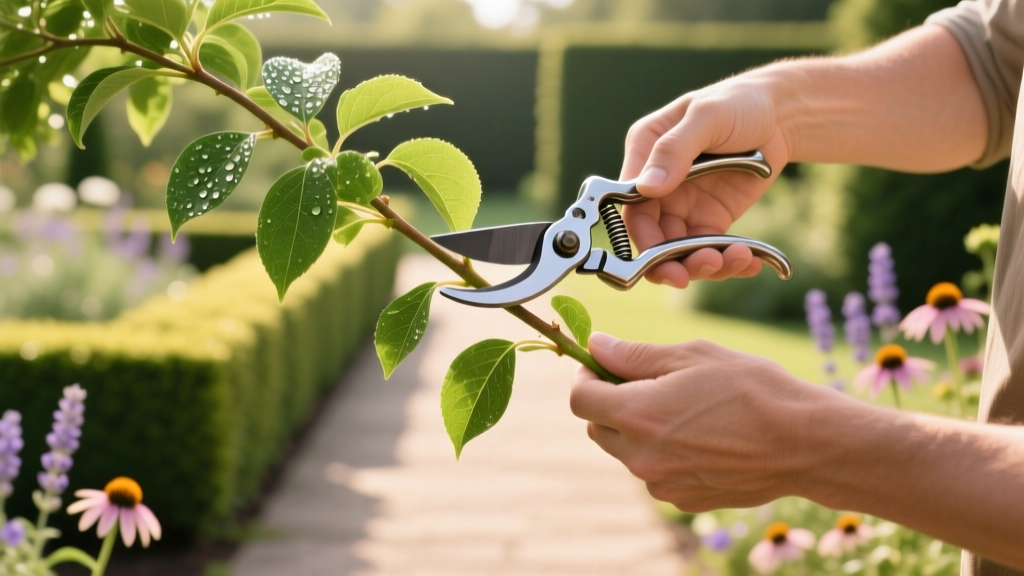
What to Prune in Summer
Summer pruning is one of the fastest ways to change how your garden performs this year—not next year. Done at the right moment, it redirects energy into fruit, flowers, airflow, and manageable size. Done too late (or too hard), it can trigger weak regrowth, sunscald, and winter injury. Use this guide like an almanac: prioritize what matters this week, then circle back monthly as heat, storms, and pests shift the pressure points.
Keep these anchors in mind as you read: most summer pruning happens from mid-June through late August; avoid heavy pruning when daytime highs sit above 90°F for several days; and stop stimulating tender new growth about 6–8 weeks before your average first frost (for many Zone 5 gardens that’s roughly late August to early September, but check your local date). For warm-winter climates (Zones 9–11), your “stop date” is less about frost and more about the last stretch of peak heat and hurricane season.
Right-now priorities (use this order)
- 1) Prune for safety and plant health: dead/diseased wood, storm damage, and rubbing branches.
- 2) Prune for yield: tomatoes, cucurbits, berries, and fruit trees where summer pruning improves light and airflow.
- 3) Prune for timing: shrubs that bloom on old wood (right after flowering), hedges before late-summer slowdown, and perennials for rebloom.
- 4) Protect and prepare: manage sunscald, irrigate correctly after pruning, sanitize tools, and plan fall structure.
What to plant (so your pruning work pays off)
Plant quick crops to fill gaps created by summer pruning
When pruning opens space and light, use it. In many regions, July and August are ideal for short-season successions—especially if you can water consistently and shade young seedlings during heat spikes.
- 6–8 weeks before first frost: direct-sow bush beans, beets, and carrots (carrots prefer cooler nights; mulch helps).
- 8–10 weeks before first frost: transplant broccoli, cabbage, and kale starts for fall harvest (shade cloth during the first week helps in hot spells).
- Soil temp thresholds: sow beans when soil stays above 60°F; start fall brassicas once daytime highs begin trending below 85°F for better establishment.
Regional scenario: In the Pacific Northwest (Zones 7–8), summer nights are cooler and disease pressure can be high—succession lettuce and spinach can work by late August. In the Deep South (Zones 8–9), heat-tolerant varieties and afternoon shade are essential; focus on okra, southern peas, and Malabar spinach while you wait for fall brassica weather.
Checklist: summer planting that pairs well with pruning
- After pruning a tomato row, sow basil or dill at the edge for airflow and pollinator draw.
- After deadheading perennials, sow zinnias/cosmos in gaps for late color.
- After thinning fruit tree water sprouts, underplant with white clover or a low cover crop (keep it away from the trunk flare).
What to prune (the summer hit list)
Start with “must-prune” cuts: dead, diseased, damaged
These cuts are season-agnostic and should happen as soon as you see the problem. Remove broken limbs after storms, limbs rubbing each other, and any wood with cankers, ooze, or dieback. Make clean cuts just outside the branch collar; don’t leave long stubs.
Tool rule: sanitize pruners between plants when disease is present. A quick dip/wipe with 70% isopropyl alcohol is practical in the garden.
Tomatoes: prune for airflow and disease control (especially in humid summers)
In much of the U.S., the highest disease pressure (early blight, septoria leaf spot) ramps up from late June through August. Summer pruning is less about “making a perfect plant” and more about keeping leaves dry and fruit accessible.
- Indeterminate tomatoes: remove suckers below the first flower cluster if you want fewer, larger fruit and better airflow. In very hot climates, keep more foliage to reduce sunscald.
- Determinates: prune lightly—mostly remove lower leaves touching soil and any diseased foliage. Heavy pruning can reduce yield.
- Immediate action: strip leaves that touch the ground and any yellowing, spotted leaves. Aim for 8–12 inches of clear stem at the base once the plant is established and mulched.
Pest/disease note: After pruning, mulch (2–3 inches) to reduce soil splash. Water at the base early in the day; wet leaves at night are an invitation to foliar disease.
Fruit trees: summer prune to slow vigor and improve light
Summer pruning on apples, pears, plums, and cherries is about managing canopy density and controlling overly vigorous shoots. The most common summer targets are water sprouts (vertical shoots) and suckers at the base.
Timing: prune once the current season’s shoots begin to firm up—often late July through mid-August. Avoid heavy cuts during extreme heat (sustained highs over 90°F) to reduce sunburn risk on newly exposed bark and fruit.
“Summer pruning can reduce vegetative growth and improve light penetration, which benefits fruit color and bud development—provided it’s not so severe that it exposes bark and fruit to sunburn.”
—Extension horticulture guidance summarized from multiple university orchard management publications
Citation: Washington State University Extension notes that summer pruning can help manage vigorous growth and improve light distribution in tree fruit canopies (WSU Extension, 2020).
How to do it:
- Rub off or snip water sprouts when they are still small; small wounds heal faster.
- Thin crowded interior shoots to improve airflow (especially important for apple scab regions).
- Keep some leaf cover on the southwest side of trunks/limbs in hot climates to prevent sunscald.
Regional scenario: In the Intermountain West (Zones 5–7, high sun/low humidity), sunscald is a bigger risk than fungal disease. Prune fruit trees more conservatively and consider trunk protection (diluted white latex paint or wraps) on young trees.
Spring-flowering shrubs: prune right after bloom (not in late summer)
Many classic shrubs set flower buds for next year soon after flowering. If you wait until late summer, you’ll cut off next spring’s display.
- Prune soon after flowering ends: lilac, forsythia, mockorange, weigela, deutzia.
- Summer-prune lightly: remove spent flower clusters, dead wood, and a few of the oldest stems at ground level to renew.
- Avoid shearing lilacs into balls; it increases weak twiggy growth and reduces flowers.
Citation: Clemson University Extension emphasizes pruning spring-flowering shrubs soon after bloom to avoid removing next season’s flower buds (Clemson Cooperative Extension, 2019).
Roses: deadhead, thin, and watch for disease
Summer rose pruning is mostly deadheading and selective thinning for airflow. In black spot regions, airflow and sanitation matter as much as fungicides.
- Deadhead to an outward-facing leaflet, but in high heat you can deadhead less aggressively to keep more leaf cover.
- Remove crossing canes and any shoots growing into the center.
- Strip diseased leaves from the plant and the ground—don’t compost infected foliage unless your compost reliably heats.
Hydrangeas: prune only the right types, at the right time
Hydrangea pruning mistakes are a top cause of “no blooms.” In summer, the safest move is to deadhead and remove dead wood—unless you know your type.
- Panicle (H. paniculata) and smooth (H. arborescens): bloom on new wood; light shaping can be done in summer, but major pruning is better in late winter/early spring.
- Bigleaf and oakleaf (H. macrophylla, H. quercifolia): many bloom on old wood; avoid major summer pruning. Deadhead only, and only to the first healthy bud pair.
Perennials: cut back strategically for rebloom and less flop
Summer is the season of “reset pruning.” Many perennials respond to a midseason cut with fresh foliage and a second flush of flowers.
- After first bloom: cut back catmint (Nepeta), hardy geranium, and salvia by 1/3 to 1/2 to trigger rebloom.
- For tall floppy plants (phlox, asters, mums): pinch back by early July in cooler zones to reduce lodging and delay bloom slightly.
- Remove spent daylily scapes promptly to tidy beds and reduce hiding spots for pests.
Herbs: harvest-prune before flowering for best flavor
Once basil, mint, oregano, and cilantro bolt, leaf quality changes fast. Weekly snipping is both pruning and harvest.
- Pinch basil above a leaf node every 7–10 days once it’s growing strongly.
- Cut mint hard (even to 4–6 inches) to refresh growth; keep it contained.
- Let dill/cilantro flower only if you want seed and beneficial insect habitat.
Hedges and evergreens: prune earlier than you think
Hedges often look like a “whenever” task, but timing matters for winter hardiness. In cold-winter zones, avoid stimulating late tender growth.
- Zones 3–6: finish major hedge shaping by about mid-August, or 6–8 weeks before first frost.
- Zones 7–9: you can go later, but avoid shearing during extreme heat waves to prevent burn on exposed inner foliage.
- Shape hedges slightly wider at the base than the top so light hits lower branches.
Monthly pruning schedule (quick reference)
| Month | Highest-priority pruning | What to avoid | Key trigger |
|---|---|---|---|
| June | Remove storm damage; start tomato lower-leaf cleanup; deadhead perennials after first flush | Heavy pruning in early heat spikes | After first big growth surge; nights consistently above 55–60°F |
| July | Thin fruit tree watersprouts; prune suckers; cut back nepeta/salvia; manage rose airflow | Overexposing fruit/tree bark in hot climates | When highs approach 85–95°F, prune early morning |
| August | Light canopy thinning; hedge touch-ups early month; remove diseased foliage promptly | Stimulating late soft growth in cold-winter zones | Stop major pruning 6–8 weeks before first frost |
What to protect (because summer pruning changes microclimate)
Sunscald prevention after pruning
Pruning opens the canopy; that’s the point—but exposed fruit and bark can burn in hot, sunny regions.
- In Zones 8–10 or high-altitude sun: avoid removing too much shade on the southwest side of trees.
- Don’t strip tomatoes aggressively during a heat wave. Fruit can sunburn in a single afternoon when highs exceed 95°F.
- Water consistently: drought-stressed plants are more likely to scorch after pruning.
Disease prevention: prune when foliage will dry fast
Summer pathogens spread in humidity and splashing water. Prune when leaves are dry, and aim for faster drying after rain or irrigation.
- Prune in the morning after dew dries—avoid evening pruning when humidity rises.
- Collect and discard infected leaves (especially on roses and tomatoes).
- Disinfect tools between infected plants (alcohol wipes are fast).
Citation: Purdue University Extension highlights sanitation and canopy management as key components of reducing foliar disease pressure in home gardens (Purdue Extension, 2021).
Pest pressure after pruning: what to watch
Fresh cuts can attract pests, and open canopies can shift insect behavior.
- Tomato hornworm: after pruning, inspect stems and undersides of leaves every 3–4 days.
- Scale insects on shrubs/trees: summer is crawler season for many scales; thinning can help spray coverage if treatment is needed.
- Spider mites: hot, dusty weather (often above 90°F) favors outbreaks; avoid stressing plants with severe pruning and irregular watering.
What to prepare (set up late summer and fall success)
Timeline: the “6–8 weeks before frost” rule
For gardeners in Zones 3–6, late summer pruning is less about looks and more about hardening off. Once you’re within 6–8 weeks of your average first frost date, shift from stimulating growth to maintaining health.
- 8 weeks before frost: finish major hedge shaping; stop heavy pruning on woody ornamentals.
- 6 weeks before frost: focus only on dead/diseased wood and light deadheading.
- 2–4 weeks before frost: stop fertilizing most ornamentals; keep watering trees/shrubs if rainfall is low.
After-pruning care: water, mulch, and staking
Pruning is a stress. Pair it with support so plants rebound quickly.
- Water deeply the day before pruning if soil is dry; water again within 24–48 hours if heat is intense and the plant is wilting.
- Refresh mulch to a 2–3 inch layer, keeping it a few inches away from stems/trunks.
- Stake or trellis tomatoes and tall perennials after pruning—new growth is often top-heavy.
Make a “winter damage” note now
Summer is when you can still see structure clearly. If a shrub or small tree is crowded, rubbing, or leaning, tag it with flagging tape and a note on what to do in late winter (when structural pruning is best for many species). This prevents you from making big cuts impulsively during August heat.
Three common regional summer scenarios (and how pruning changes)
Scenario 1: Hot, humid summers (Southeast, Zones 7–9)
Here, the goal is airflow and rapid drying. Prune tomatoes for ventilation, thin interior growth on susceptible ornamentals, and stay aggressive about removing diseased leaves. Prune early in the day and avoid leaving piles of foliage nearby—disease cycles fast.
Scenario 2: Hot, dry, high-sun summers (Southwest/Intermountain West, Zones 5–9)
Here, sunburn and drought stress are bigger risks than fungal leaf spots. Prune lightly, keep more leaf cover, and water consistently. For fruit trees, avoid exposing scaffold limbs suddenly. If you must open the canopy, do it gradually over 2–3 sessions spaced 10–14 days apart.
Scenario 3: Short summers and early frost (Northern Plains/Upper Midwest, Zones 3–5)
In these gardens, the calendar matters. Treat mid-August as a common “stop line” for major pruning unless your first frost is later. Prioritize removing diseased foliage and finishing perennials that benefit from a cutback. Avoid late shearing of hedges; tender regrowth can be winterkilled.
Summer pruning checklists (printable style)
This week’s 30-minute sweep
- Remove dead, damaged, or rubbing branches on shrubs and young trees.
- Clip tomato leaves touching soil; discard diseased leaves.
- Deadhead 2–3 perennials that are finished (leave seedheads you want for birds).
- Inspect roses for black spot; thin for airflow if needed.
- Check fruit trees for water sprouts; rub off small shoots.
Heat-wave rules (when highs exceed 90°F)
- Prune at dawn or early morning; avoid afternoon cuts.
- Reduce severity—do “less, more often.”
- Keep more shade leaf area on fruiting plants to prevent sunscald.
- Water deeply and mulch; don’t prune drought-stressed plants hard.
Tool and sanitation kit
- Sharp hand pruners + small loppers
- 70% isopropyl alcohol wipes/spray for quick disinfection
- Gloves and a bucket for diseased foliage
- Twine/clips for tying after pruning
Summer pruning is a series of small, high-impact decisions: open plants enough to dry quickly, keep enough leaf to prevent sunburn, and stop pushing growth as your frost window closes. If you do one thing today, make it the health cuts—then prune for airflow and light in short sessions timed to your weather. Your plants will look better within a week, and they’ll carry fewer problems into late summer and fall.