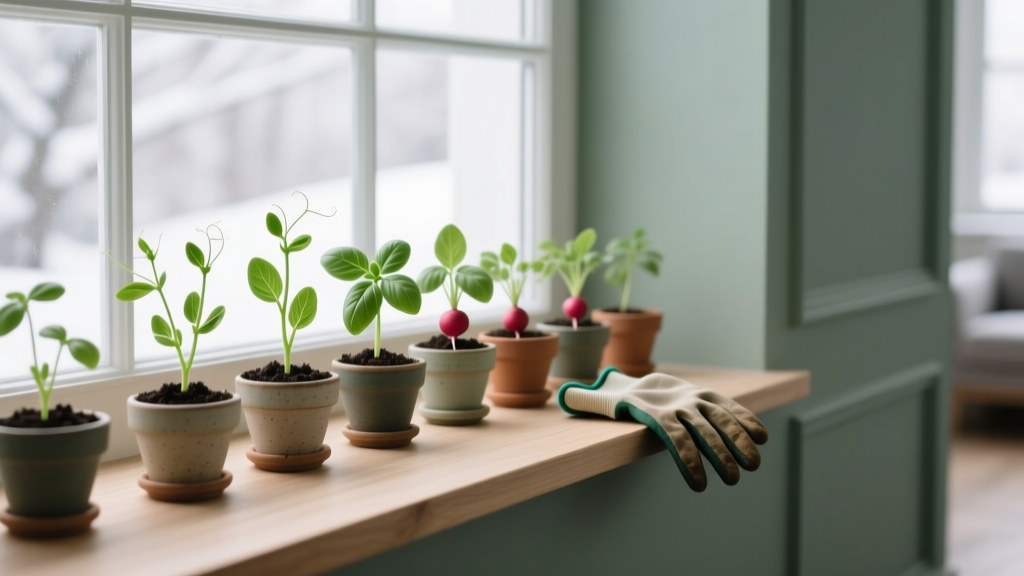
Winter Garden: Creating a Seed Starting Schedule
Winter is the season that decides whether your spring garden starts strong or limps along behind schedule. If you wait until the first warm weekend to think about seedlings, you’ll miss the narrow indoor-start window that produces sturdy transplants right when the soil is ready. The opportunity right now: build a seed-starting schedule tied to your last frost date, your USDA hardiness zone, and the real limits of winter light and indoor space—then act on it weekly.
This guide is organized by priority: what to plant (indoors), what to prune (strategic winter cuts only), what to protect (seedlings and overwintering crops), and what to prepare (tools, supplies, soil blocks, and a calendar you’ll actually follow). You’ll also find timing triggers—weeks before last frost, temperature thresholds, and several concrete “do it by this date” examples.
Priority 1: What to plant now (indoors) — build your schedule backward from last frost
Your seed-starting schedule should start with one number: your average last spring frost date. Then you work backward in weeks based on each crop’s lead time. If you don’t know your date, use a reliable local source (state extension or NOAA station normals) and write it on the top of your calendar.
Step 1: Lock in 5 timing numbers you’ll actually use
- Average last frost date (example: April 15, May 1, May 15—use your local date)
- “Start indoors” windows: common benchmarks are 12 weeks, 10 weeks, 8 weeks, 6 weeks, and 4 weeks before last frost
- Seedling day length: plan for 14–16 hours/day of supplemental light for compact growth
- Seed-starting soil temperature: many warm-season crops germinate best at 70–85°F; cool-season crops often germinate well at 60–70°F
- Hardening-off window: 7–14 days before transplanting outdoors
These five numbers create a workable “winter → spring runway.” If you only write down one thing today, write: Last frost date + 8 weeks = start tomatoes/peppers (depending on your region).
Step 2: Match crops to a realistic indoor timeline (and avoid the classic winter mistakes)
Winter seed-starting fails for three predictable reasons: starting too early (leggy plants), too little light, and poor airflow that invites damping-off. Schedule is your prevention tool—tight windows create healthier plants than “starting everything in January.”
Use this quick crop timing as a baseline. Adjust by a week or two for your conditions and variety:
- 12–10 weeks before last frost: onions from seed, leeks, celery/celeriac (slow growers)
- 10–8 weeks: peppers, eggplant, artichoke (long season; warmth dependent)
- 8–6 weeks: tomatoes, basil, brassicas (broccoli, cabbage, kale), lettuce for early transplants
- 6–4 weeks: cucumbers and squash (only if you can transplant quickly), marigolds, zinnias
- Direct sow later (often better than indoor): carrots, beets, peas, beans (timing depends on soil temperature)
Monthly seed-starting schedule table (example framework)
Use this as a template and swap in your own last frost date. This table assumes a May 15 last frost (common in colder USDA zones). If your last frost is earlier, shift everything earlier by the same number of weeks.
| Month/Week | Indoor sowing focus | Key temperature/lighting targets | Notes for success |
|---|---|---|---|
| Late Jan (16–14 weeks before May 15) | Inventory seeds; order slow growers; optional onions/leeks in cold regions | Lights ready for 14–16 hrs/day | Only start if you can provide strong light and cool finishing temps |
| Feb (13–10 weeks) | Onions, leeks, celery/celeriac; early herbs | Germination: 65–75°F | Thin early; run a small fan to reduce damping-off risk |
| Early–Mid Mar (10–8 weeks) | Peppers, eggplant; brassicas in colder zones | Warm crops: 75–85°F soil temp | Use heat mats for peppers/eggplant; remove once sprouted |
| Late Mar–Early Apr (8–6 weeks) | Tomatoes; more brassicas; lettuce for early beds | After sprout: keep ~65–70°F to prevent legginess | Pot up tomatoes when first true leaves appear |
| Late Apr (4–3 weeks) | Short-window flowers; cucurbits only if transplanting soon | Keep seedlings compact: bright light + airflow | Start hardening off on mild days |
| Early–Mid May (2–0 weeks) | Succession sowing indoors (basil, lettuce) or direct sow outdoors | Transplant when nights are consistently above 50°F for warm crops | Watch the 10-day forecast; protect transplants from late cold snaps |
Expert rule worth printing: schedule by frost date, not by the calendar
“Starting seeds too early is one of the most common mistakes; seedlings can become tall and weak if they outgrow the available light and space before outdoor conditions are suitable.” — Extension seed-starting guidance summarized from university extension recommendations (e.g., Purdue Extension, 2020; University of Maryland Extension, 2023)
Multiple extension programs emphasize the same core idea: seedlings should be at the right size when transplant conditions are right, not simply “as early as possible.” (See citations below.)
Priority 2: What to prune in winter (and what to leave alone)
Winter pruning is powerful—and easy to misuse. In many areas, winter is the safest time to make structural cuts while plants are dormant, but certain species can be damaged by ill-timed pruning.
Prune now: dormant structural work on hardy trees and shrubs
- Fruit trees (apple/pear): prune on a dry day when temperatures are above 20°F to reduce brittle wood breakage and improve visibility of structure.
- Grapes (in many regions): dormant pruning in late winter is standard; delay slightly in very cold zones to avoid cold-injury on freshly cut canes.
- Summer-flowering shrubs (that bloom on new wood): late winter pruning can encourage strong new shoots.
Do not prune now (common winter regrets)
- Spring-blooming shrubs like lilac, forsythia, and many hydrangeas that bloom on old wood—winter pruning often removes flower buds.
- Stone fruits (peach, cherry, plum) in wet climates—many growers prefer late winter/early spring timing aligned with lower disease risk and local guidance.
Keep winter pruning focused: remove dead/diseased wood, crossing branches, and obvious structural problems. Save fine shaping for the appropriate bloom window.
Priority 3: What to protect — seedlings, overwintering crops, and your future soil
Protection in winter is about preventing losses from cold swings, dry indoor air, and disease pressure that builds when ventilation is poor.
Seedling protection: prevent damping-off and weak growth
Damping-off is the winter seed-starting disease that breaks schedules. It thrives in cool, wet, still air. Your prevention plan is environmental, not chemical.
- Airflow: run a small fan on low for several hours/day to keep stems strong and surfaces dry.
- Watering: water from the bottom when possible; let the surface dry slightly between waterings.
- Sanitation: wash trays and pots; start with clean media. University of Minnesota Extension emphasizes sanitation and proper watering as key to reducing damping-off (University of Minnesota Extension, 2021).
- Light distance: keep LED or fluorescent lights about 2–4 inches above seedlings (adjust to your fixture output) to prevent stretch.
Outdoor protection: winter greens, garlic, perennials
- Mulch swings, not just cold: in zones with freeze-thaw cycles (USDA zones 5–7), a consistent mulch layer helps prevent heaving of perennials and garlic.
- Row cover readiness: keep frost cloth handy for late cold snaps when seedlings harden off.
- Water on warm spells: evergreens and overwintering crops can desiccate when the ground isn’t frozen but winds are dry.
Rodent and pest prevention that matters in winter
Winter pests aren’t always visible until damage is done. Act before you start trays and before you uncover garden beds.
- Rodents in sheds/greenhouses: store seed in sealed containers; clean up spilled potting mix and birdseed.
- Fungus gnats indoors: avoid constantly wet media; use yellow sticky cards as early detection; consider a thin layer of coarse sand on the surface of pots if gnats persist.
- Scale insects on houseplants: check overwintering peppers and herbs weekly—scale and aphids often explode under indoor conditions. Isolate and treat early with physical removal and targeted controls.
Priority 4: What to prepare — the schedule, the setup, and the supplies that prevent last-minute chaos
If you want a schedule you’ll follow, build it around weekly habits. Winter is the right time to stage your seed-starting station, test germination, and plan transplant dates.
Build your seed-starting calendar in 30 minutes
Do this today with a notebook or spreadsheet:
- Write your last frost date at the top (example dates: April 15, May 1, May 15).
- List crops you want to grow and label each as direct sow or transplant.
- Assign a start window: 12, 10, 8, 6, 4 weeks before last frost.
- Add a hardening-off start date at 14 days before transplanting.
- Reserve space: count trays and light shelves so you don’t start more than you can grow well.
Checklist: seed-starting station essentials (set up before sowing week)
- Lights with adjustable height (target 14–16 hrs/day)
- Heat mat + thermostat for warm-season germination (75–85°F)
- Timer for lights
- Clean trays/cells or soil-blocking setup
- Fresh seed-starting mix
- Labels that won’t fade + waterproof marker
- Small fan for airflow
- Sticky cards for monitoring fungus gnats
- Notebook for dates: sowing, emergence, pot-up, first feeding, hardening off
Timeline: a weekly rhythm that keeps seedlings on track
Once sowing begins, winter success is mostly consistency:
- Weekly (same day): check moisture, rotate trays, adjust light height, remove weak seedlings.
- At emergence: remove humidity domes promptly to reduce disease risk.
- At first true leaves: begin light feeding if using an inert mix; avoid overfertilizing in low light.
- When roots fill cells: pot up tomatoes/peppers before they stall.
- 14 days before transplant: start hardening off; gradually introduce wind and full sun.
Regional scenarios: adjust your schedule to real winter conditions
Seed-starting isn’t one-size-fits-all. These three scenarios cover most winter realities and show how to adjust without guesswork.
Scenario 1: Cold-climate gardeners (USDA zones 3–5) with late frosts
If your average last frost is around May 15 (or later), winter seed-starting is essential—but starting too early is the trap. Your indoor light must carry seedlings for longer, and you’ll likely need to pot up.
- Start onions/leeks at 12–10 weeks before last frost (or earlier only if you have strong lights and cool finishing space).
- Start peppers/eggplant at 10–8 weeks with a heat mat set near 80°F for germination.
- Start tomatoes at 8–6 weeks to avoid oversized plants by transplant time.
- Plan row cover for transplant season; late cold snaps are common even after “average” last frost.
Cold regions also benefit from succession sowing: start a second, smaller round of lettuce and brassicas 2–3 weeks after the first to hedge against weather delays.
Scenario 2: Mild-winter gardeners (USDA zones 8–10) where “last frost” is early or irrelevant
In zones 9–10, the constraint is often not frost but heat arriving early. Your schedule may need to push cool-season transplants earlier and treat summer crops as a race to fruit before extreme heat.
- Use a soil temperature trigger rather than last frost for warm crops: transplant tomatoes when nights are reliably above 50–55°F and soil is warming.
- Start tomatoes earlier than cold zones, but don’t ignore light—leggy seedlings still happen in January without adequate lighting.
- Keep cool-season starts (lettuce, brassicas) moving quickly; they may bolt if spring warms abruptly.
In mild climates, winter is also prime time for direct sowing in the garden—so your indoor schedule can be smaller and more targeted.
Scenario 3: Short-season, high-altitude, or windy sites (even in moderate zones)
High altitude and wind create a “colder than the map” garden. Even in USDA zone 6, exposure can delay transplanting and beat up tender seedlings.
- Keep transplants compact: slightly cooler grow-out temps (around 65–70°F) and strong light reduce stretch.
- Extend hardening off to 14 days with extra focus on wind exposure.
- Plan physical protection: low tunnels, cloches, windbreak fabric, and heavier row cover.
In exposed sites, your schedule should include a “buffer week” so you’re not forced to plant into dangerous weather just because seedlings are ready.
Seed-starting timing examples you can copy (plug in your date)
If you like concrete dates, here are three examples. Replace the last frost date with yours and keep the week offsets the same.
Example A: Last frost April 15 (common in parts of USDA zones 7–8)
- Jan 18 (12 weeks before): onions/leeks, celery
- Feb 1 (10 weeks): peppers/eggplant
- Feb 15 (8 weeks): tomatoes, brassicas
- Mar 1 (6 weeks): lettuce transplants, herbs
- Apr 1 (2 weeks): begin hardening off hardy transplants
Example B: Last frost May 1 (common in parts of USDA zones 5–7)
- Feb 6 (12 weeks): onions/leeks, celery
- Feb 20 (10 weeks): peppers/eggplant
- Mar 6 (8 weeks): tomatoes, brassicas
- Mar 20 (6 weeks): lettuce transplants, basil
- Apr 17 (2 weeks): hardening off begins
Example C: Last frost May 15 (common in parts of USDA zones 3–5)
- Feb 17 (12 weeks): onions/leeks, celery
- Mar 3 (10 weeks): peppers/eggplant
- Mar 17 (8 weeks): tomatoes, brassicas
- Mar 31 (6 weeks): lettuce transplants, herbs
- May 1 (2 weeks): hardening off begins
Pest and disease prevention in winter seed-starting (the quiet problems that ruin schedules)
Most winter failures look like “bad luck,” but they’re predictable. Build prevention into your schedule so you don’t lose weeks.
Damping-off: prevent it before it appears
University extension guidance consistently recommends sanitation, well-drained media, and careful watering to reduce damping-off risk (University of Minnesota Extension, 2021). Add airflow and don’t keep seedlings under domes longer than necessary.
Botrytis and mold on soil surfaces
- Increase airflow and reduce humidity.
- Water early in the day so surfaces dry.
- Remove dead leaves immediately—winter indoor setups don’t “self-clean” like outdoor beds.
Aphids and whiteflies on overwintered plants
If you overwinter peppers, rosemary, or geraniums indoors, treat them as pest reservoirs. Inspect weekly and isolate any plant with sticky residue or curling growth. Winter is when populations quietly build and then explode right when you set up seed trays.
Citations you can trust (extension/research)
These winter seed-starting principles—right timing, sanitation, and environmental control—are echoed across land-grant university extension systems:
- Purdue Extension (2020), indoor seed starting guidance emphasizing proper timing and avoiding overly early starts that lead to weak seedlings.
- University of Maryland Extension (2023), seed starting recommendations including scheduling transplants by weeks before last frost and providing sufficient light.
- University of Minnesota Extension (2021), damping-off prevention emphasizing sanitation, watering practices, and clean growing conditions.
Print-and-follow winter seed-starting checklist (do this in order)
This week:
- Find your average last frost date and write it down.
- Inventory seed; discard or reorder anything old or questionable.
- Clean trays and pots; set up lights and timers.
- Decide how many trays you can grow well (space is a limiting factor).
Next week:
- Create your crop-by-crop schedule (12/10/8/6/4 weeks).
- Buy fresh seed-starting mix and labels.
- Set up heat mat and confirm it holds 75–85°F where needed.
Sowing weeks:
- Sow only what fits your light shelf.
- Record sowing date and expected germination window on every tray.
- Remove domes at emergence; start airflow immediately.
Two weeks before transplanting:
- Start hardening off (7–14 days depending on wind and sun intensity).
- Watch the forecast; prepare row cover for surprise cold.
Winter gardening isn’t quiet if you’re doing it right: it’s the planning season that turns into weekly action. Set your frost date, start only what you can grow well under lights, and let the schedule—not impatience—decide when each seed goes into its tray. By the time outdoor soil is workable and nights stabilize, you’ll have compact, healthy transplants ready to grow without setbacks.