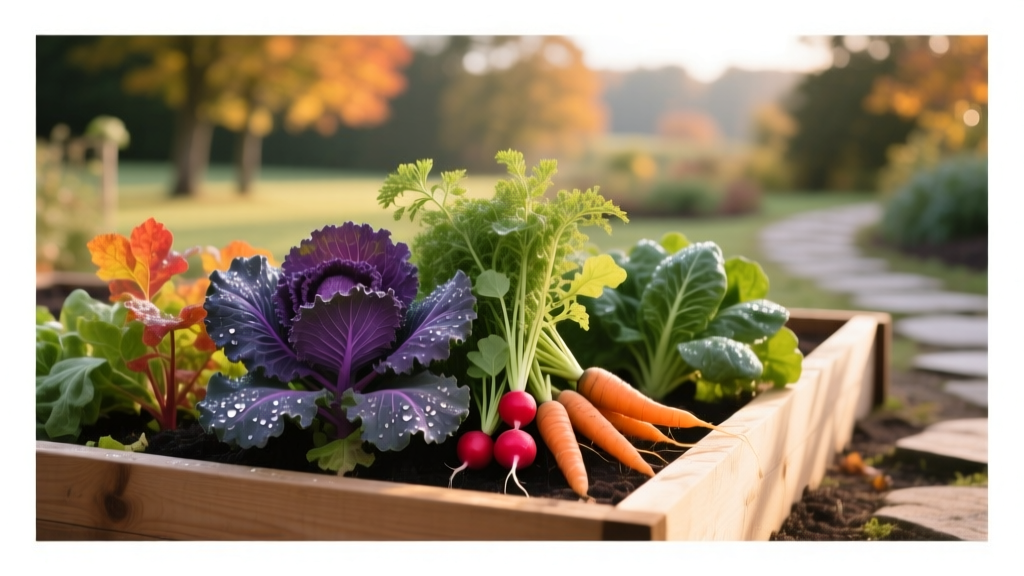
What to Plant in Fall for Winter Harvests
Fall is your last high-leverage window: soil is still warm enough for fast root growth, pest pressure is easing, and cooler nights sweeten greens. Wait too long and seedlings stall under short days; start now and you can keep harvesting through early winter—and in many areas, straight through to spring with simple protection. Use your average first frost date as the anchor, then count backward for planting and forward for protection.
Before you plant anything, pull up your local frost data (zip-code level is best). As a working reference: many Zone 5 gardens hit first frost around Oct 10–20, Zone 7 around Nov 1–15, and mild coastal Zone 9 can be Dec–Jan (or effectively frost-free). If you don’t know your date, use a safe estimate and be ready to cover when nights drop below 32°F.
Priority #1: What to Plant (and Exactly When)
Fall planting succeeds when you match crop speed to remaining light and heat. Aim to get seedlings established 4–6 weeks before your average first frost, then plan to protect them as temps approach freezing. Many cool-season crops tolerate light frost, and several get noticeably sweeter after nights in the 25–28°F range.
Fast wins (plant 6–8 weeks before first frost)
If you’re reading this and your first frost is within two months, focus on these. They germinate quickly in warm fall soil and size up fast.
- Arugula: sow every 10–14 days for steady harvests; cover with insect netting if flea beetles persist.
- Spinach: plant thickly for baby leaves; germination improves as soil cools below 75°F.
- Radishes: 25–40 days; keep evenly moist to prevent pithy roots.
- Turnips (salad types): quick roots plus edible greens.
- Asian greens (mizuna, tatsoi, komatsuna): excellent cold tolerance and fast regrowth.
Reliable staples (plant 8–12 weeks before first frost)
These benefit from earlier fall starts because they grow more slowly as day length drops.
- Kale: transplant starts 6–8 weeks old; sweeter after frost.
- Collards: very cold-hardy with row cover.
- Carrots: choose shorter varieties in colder zones; keep seedbed consistently damp until germination.
- Beets: roots and greens; mulch as temps cool to prevent soil crusting and splitting.
- Green onions/scallions: direct sow or transplant clumps for quick winter pulls.
Overwinter for spring (plant 4–6 weeks before first frost, then protect)
These crops are less about big winter harvests and more about surviving the cold so they take off early next year.
- Garlic: plant cloves when soil cools to about 50°F (often 2–4 weeks before hard freeze). Mulch 4–6 inches.
- Shallots: similar timing to garlic in many regions.
- Onion sets (mild winter areas): can overwinter for early spring bulbing in Zones 7–9.
- Fava beans (Zones 7–10): fall-sown for early spring pods; also improve soil nitrogen.
“Low tunnels can raise daytime temperatures by several degrees and help protect crops from light frosts, extending the harvest season.” — University of Minnesota Extension, 2020
What to plant by crop category (quick comparison)
| Crop | Best fall sowing window (relative to first frost) | Cold tolerance (unprotected) | Notes for winter harvests |
|---|---|---|---|
| Radish | 6–8 weeks before | To ~28°F | Cover at 26–28°F for better texture |
| Spinach | 6–10 weeks before | To ~20°F (variety-dependent) | Row cover dramatically improves winter picking |
| Arugula | 6–8 weeks before | To ~25°F | Succession sow; harvest young for best flavor |
| Carrots | 10–12 weeks before | To ~25°F | Mulch heavily; harvest through winter where soil doesn’t freeze solid |
| Kale | 8–12 weeks before | To ~10–15°F | Transplants outperform late direct seeding in cold zones |
| Garlic | 2–4 weeks before hard freeze; soil ~50°F | Overwinters | Mulch after planting; remove some mulch in early spring if soggy |
Timing rules you can use today
Use these concrete thresholds to decide what’s still worth planting:
- If your first frost is 8+ weeks away: you can still sow carrots, beets, kale transplants, and most Asian greens.
- If your first frost is 6–8 weeks away: prioritize arugula, spinach, radishes, salad turnips, cilantro, and transplants of kale/collards.
- If your first frost is 4–6 weeks away: plant only “baby leaf” goals (spinach, arugula, mustards) and start focusing on protection.
- When nighttime lows hit 35°F consistently: install hoops/low tunnel frames so covers go on fast.
- When a forecast calls for 32°F or below: cover tender greens and newly established seedlings that haven’t hardened off.
Extension guidance supports the fall window as a prime time for cool-season crops. For example, University of Maryland Extension (2019) notes that many leafy greens tolerate frost and can be grown into winter with protection, and University of Minnesota Extension (2020) emphasizes season-extension structures like low tunnels for late harvests.
Priority #2: What to Prune (and What to Leave Alone)
Fall pruning is one of the easiest ways to accidentally reduce next year’s blooms or invite winter damage. Be selective: remove what’s diseased or hazardous, but postpone major shaping unless you know the plant’s flowering habit.
Prune now
- Dead, diseased, damaged wood on shrubs and small trees (sanitize pruners between cuts).
- Tomatoes, cucumbers, squash vines once they finish—remove and discard if disease was present.
- Raspberry canes: for summer-bearing types, remove canes that fruited (floricanes) after harvest; keep new canes (primocanes) for next year.
- Perennials with known disease issues (e.g., peony leaves with blotch): cut back and trash foliage to reduce inoculum.
Hold off (common fall mistakes)
- Spring-flowering shrubs (lilac, forsythia, many hydrangeas): pruning now can remove next spring’s flower buds.
- Roses (many types): hard pruning in fall can trigger tender growth; instead, do light cleanup and wait for late winter/early spring.
- Lavender and woody herbs: avoid heavy fall cuts in cold zones; winter dieback risk increases.
As a general rule in Zones 3–6, wait until late winter for major pruning unless a branch is broken or diseased. In milder Zones 8–10, you can do more shaping in fall, but avoid stimulating a flush of tender growth just before a cold snap.
Priority #3: What to Protect (So Fall Plantings Actually Pay Off)
Planting is only half the job. Winter harvests depend on keeping leaves intact, roots unfrozen (or harvestable), and plants dry enough to avoid rot. Protection is more about wind and moisture management than heat alone.
Row cover and low tunnels: your highest ROI tools
Keep these three items ready before the first hard freeze:
- Floating row cover (lightweight): for insect protection and a few degrees of frost buffering.
- Heavier frost cloth: for nights that dip below 28°F.
- Hoops + clips (low tunnel): prevents fabric from rubbing leaves and improves insulation.
Install hoops when nighttime lows start hitting 35–40°F so you’re not wrestling frozen ground later. Vent covers on sunny days when the tunnel exceeds about 50–60°F to prevent condensation-driven disease.
Mulch strategy by crop
- Garlic: 4–6 inches of straw/leaves after planting; in windy sites, top with a light mesh or evergreen boughs to hold it.
- Carrots and beets: 2–4 inches once soil cools; add more after the first 28°F nights to keep ground from freezing hard.
- Brassicas (kale/collards): mulch helps stabilize soil temps; avoid piling against stems to reduce rot.
Moisture management to prevent fall disease
Cool nights + longer dew periods create prime conditions for leaf spots and mildew. Reduce the odds with these fall-specific habits:
- Water early (morning), not late afternoon.
- Water at the base (drip/soaker), not overhead, especially for spinach and brassicas.
- Increase spacing slightly for fall sowings so leaves dry faster.
- Remove yellowing lower leaves on kale and collards to improve airflow.
Pest prevention that matters in fall
Don’t assume pests disappear. Fall often brings a second wave of brassica pressure and rodent activity as fields are harvested.
- Cabbage worms and loopers: cover brassicas with insect netting immediately after transplanting; scout weekly and handpick.
- Flea beetles on arugula and mustards: use row cover for the first 2–3 weeks; keep plants growing steadily with even moisture.
- Slugs: remove boards/debris, water in the morning, and use iron phosphate bait if damage is severe.
- Rodents/voles: keep thick mulch pulled back slightly from crowns; set snap traps in covered boxes where activity is seen.
Priority #4: What to Prepare (So Next Spring Starts Now)
Fall work saves spring time, and it improves winter survival for your crops. The goal: build soil, reduce disease carryover, and set up infrastructure before the weather turns.
Soil: feed the microbes while the soil is still warm
Soil biology stays active well into fall. If daytime highs are still above 55°F, you can get real breakdown and root growth.
- Add compost: spread 1–2 inches on empty beds; lightly incorporate or leave as topdress depending on your system.
- Cover crops: in Zones 6–9, consider oats/peas for quick fall biomass; in milder zones, cereal rye can overwinter. In Zones 3–5, sow early (often late August to mid-September) for establishment.
- Soil test planning: if you haven’t tested in 2–3 years, plan one now or early spring; fall is a great time to correct pH slowly.
Research-backed guidance supports fall sanitation and rotation to reduce disease carryover; removing infected debris and rotating crop families interrupts pathogen cycles (see Cornell Cooperative Extension, 2018, crop rotation and disease management guidance).
Bed prep for fall sowing (do this before you seed)
- Clear summer crop residue and remove weeds (they still set seed in fall).
- Rake to a fine tilth for small seeds like carrots and spinach.
- Pre-moisten the bed to a depth of 2–3 inches, then sow.
- Label rows with date and variety—fall success hinges on timing.
Storage and harvest readiness
Winter harvests fail when you can’t access beds after rain, snow, or freeze. Prepare now:
- Lay down stepping boards to prevent compaction in muddy weather.
- Stage harvesting tools (knife, scissors) in a shed or bin near the garden.
- Keep spare cover material folded and weighted (sandbags or boards) so wind doesn’t undo your work.
Regional and Real-World Scenarios (Adjust Your Plan)
Two gardens in the same USDA zone can perform very differently depending on elevation, wind exposure, and soil type. Use these scenarios to adjust timing and crop choices immediately.
Scenario 1: Cold-winter inland garden (USDA Zones 3–5)
If your first frost commonly arrives by Oct 1–15, you need speed and protection. Treat winter harvest as “late fall harvest” unless you’re committed to low tunnels.
- Plant by early September for carrots, beets, kale transplants, and spinach.
- Shift to baby leaf targets after mid-September—full-size heads often stall.
- Plan for soil freeze: mulch carrots heavily and harvest before ground locks up, or use a low tunnel plus deep mulch to keep soil workable.
- Best bets: kale, spinach (cold-hardy varieties), tatsoi, scallions, radishes.
Scenario 2: Temperate garden with variable fall (USDA Zones 6–7)
With first frost often around Oct 20–Nov 15, you can get true winter harvests with modest protection.
- Direct sow spinach, arugula, and Asian greens through early October (later in Zone 7).
- Transplant brassicas by mid-September for strong plants before cold nights.
- Start covering when nights regularly drop below 35°F; double-cover (plastic over fabric) only for short extreme cold events, venting on sunny days.
Scenario 3: Mild-winter/coastal garden (USDA Zones 8–10)
If your first frost is late (Dec or later) or light, fall is prime growing season—not shutdown season. The bigger risks are fungal disease from humidity and pest carryover.
- Stagger sowings every 2–3 weeks from September into November.
- Grow fuller crops: cabbage relatives, carrots, beets, lettuce, cilantro, and even peas in late fall.
- Prioritize airflow and morning irrigation to prevent mildew and leaf spots.
- Watch for aphids and caterpillars well into winter; use insect netting and strong water sprays.
Scenario 4: High elevation or windy sites (any zone)
Wind strips heat and tears covers loose. Even in Zone 7, a windy ridge can behave like Zone 6.
- Use sandbags/boards along row-cover edges—pins alone often fail in gusts.
- Choose compact crops (spinach, tatsoi) over tall ones (broccoli side shoots can suffer wind burn).
- Mulch and windbreak with temporary fencing or straw bales on the windward side.
Fall Planting Timeline: A Practical Month-by-Month Schedule
Use this schedule as a template, then shift dates earlier or later based on your first frost date and USDA zone.
| Month / Window | Plant Now | Protect / Maintain | Prepare |
|---|---|---|---|
| Late Aug–Mid Sep | Carrots, beets, kale/collard transplants, early spinach, Asian greens | Net brassicas against caterpillars; consistent moisture for carrot germination | Clear summer crops; topdress compost; set hoop anchors while soil is soft |
| Mid Sep–Early Oct | Arugula, radish successions, spinach, salad turnips, scallions | Scout weekly; start hardening plants to cooler nights | Mulch pathways; stage row covers and weights |
| 2–4 weeks before hard freeze (often Oct) | Garlic, shallots (soil ~50°F) | Water in cloves; mulch after planting; label beds | Remove diseased foliage; sanitize stakes and cages |
| When nights hit 35–40°F | Last baby-leaf sowings in mild zones | Install row covers/low tunnels; vent on warm days | Leaf collection for mulch; prep compost area for winter inputs |
| When forecasts hit 32°F or below | Pause most sowing (except mild zones) | Cover tender beds; harvest before freezes; add mulch to roots | Drain hoses; store irrigation parts; protect tools |
Action Checklists (Use These This Week)
This weekend: planting checklist
- Find your average first frost date; count back 6, 8, and 12 weeks and write those dates on a tag or calendar.
- Pick 3–5 crops that match your window (fast greens if frost is close).
- Prep one bed thoroughly: weed, rake fine, moisten, sow, label.
- Set up hoops now if nights are already dipping below 45°F.
Next 10 days: protection checklist
- Keep row cover and clips staged; add weights for wind.
- Mulch garlic and root crops after seedlings emerge or after the first 28–30°F nights.
- Switch to morning watering; avoid wet foliage at night.
- Scout brassicas for caterpillars weekly; net or treat early before plants slow down.
Before the first hard freeze: garden shutdown checklist (without stopping harvest)
- Remove and discard disease-infected plant debris; don’t compost if it’s heavily infected.
- Pull stakes, cages, and trellises; scrub and sanitize for next season.
- Drain hoses and timers; store nozzles and emitters.
- Topdress empty beds with compost or sow a cover crop if timing allows.
If you focus on the priority order—plant what can still size up, prune only what’s necessary, protect early, and prepare beds and tools—fall becomes a productive season instead of a scramble. The payoff is steady greens when grocery prices climb, sweeter flavors after cold nights, and a spring garden that wakes up running.
Sources: University of Minnesota Extension (2020), season extension/low tunnels guidance; University of Maryland Extension (2019), fall and winter vegetable gardening recommendations; Cornell Cooperative Extension (2018), crop rotation and disease management principles.