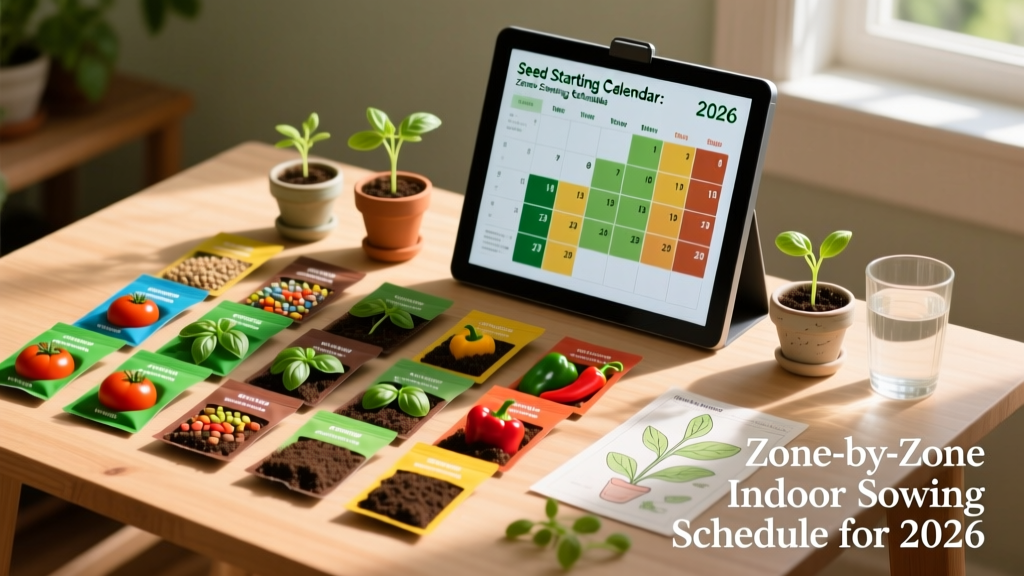
Seed Starting Calendar: Zone-by-Zone Indoor Sowing Schedule for 2026
Why Start Seeds Indoors?
Starting seeds indoors gives you a 6-10 week head start on the growing season. You grow stronger plants, save money (one packet produces 50+ plants vs $4 per transplant), and access varieties that nurseries never stock.
When to Start: The Formula
Count backward from your last frost date. Each vegetable has a specific number of weeks before last frost for indoor sowing.
Find Your Last Frost Date
| USDA Zone | Last Frost (Spring) | First Frost (Fall) |
|---|---|---|
| 3 | May 15 - June 1 | Sept 8-15 |
| 4 | May 1-15 | Sept 22 - Oct 4 |
| 5 | April 15 - May 1 | Oct 8-20 |
| 6 | April 1-15 | Oct 25 - Nov 5 |
| 7 | March 15 - April 1 | Nov 8-20 |
| 8 | Feb 15 - March 15 | Nov 25 - Dec 10 |
| 9 | Jan 30 - Feb 15 | Dec 15-30 |
| 10 | Rarely freezes | Rarely freezes |
Master Seed Starting Schedule
10-12 Weeks Before Last Frost (January-February)
- Onions, leeks, celery, celeriac
- Pansies, snapdragons (flowers)
8-10 Weeks Before Last Frost (February-March)
- Peppers (hot and sweet), eggplant
- Broccoli, cabbage, cauliflower, Brussels sprouts
- Lettuce, kale, Swiss chard
6-8 Weeks Before Last Frost (March-April)
- Tomatoes (all varieties)
- Basil, parsley, cilantro
- Marigolds, zinnias, cosmos
4-6 Weeks Before Last Frost (April-May)
- Cucumbers, squash, pumpkins, melons
- Sunflowers, morning glories
2-4 Weeks Before Last Frost (Direct Sow Outdoors)
- Peas, spinach, radishes, carrots
- Beets, turnips, parsnips
Seed Starting Setup
- Seed trays with clear humidity domes
- Seed starting mix (not potting soil — too heavy)
- Heat mat (75-80F for germination)
- Grow lights (14-16 hours/day, 2-4 inches above seedlings)
- Fan for air circulation (prevents damping off disease)
Hardening Off (1 Week Before Transplant)
- Day 1-2: Place outdoors in full shade for 2 hours
- Day 3-4: Morning sun for 3-4 hours, afternoon shade
- Day 5-6: Full sun for 6-8 hours
- Day 7: Leave out overnight (if no frost risk)
- Day 8: Transplant into garden
Final Thoughts
Print this calendar and pin it to your wall. Mark your last frost date, then calculate all sowing dates backward. One afternoon of seed starting in February produces a full summer garden worth hundreds of dollars in transplants.