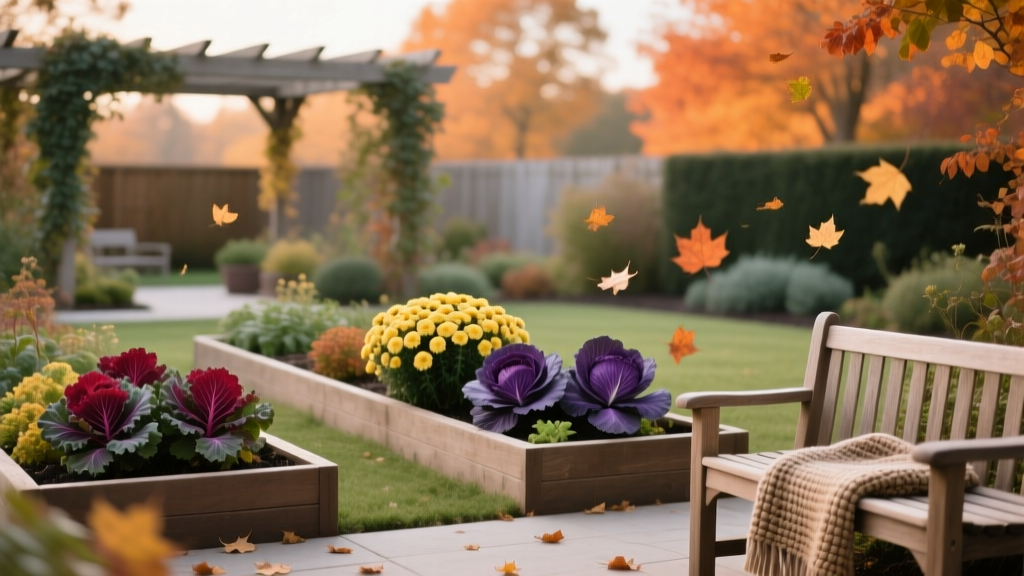
Your Fall Garden To-Do List
The clock is ticking in fall gardening—and that’s good news. Soil is still warm enough to root plants quickly, weeds are slowing down, and your work now directly determines how your garden performs next spring. The trick is prioritizing: plant what needs root time, prune only what’s safe, protect what’s vulnerable, and prepare beds before the weather locks you out. Use this list as your weekly playbook from late summer through first hard frost and into early winter.
Before you start, note two numbers that drive nearly every decision: your average first fall frost date and your USDA hardiness zone. Once nighttime lows regularly hit 40–45°F, many warm-season plants stall; when you see forecasts near 32°F, tender crops and container plants need action. If you don’t know your frost date, pull it from a local extension office or the National Weather Service climate normals, then work backward.
Priority 1 (This Week): What to Plant While Soil Is Still Warm
Fall planting is about roots, not tops. Aim to plant trees, shrubs, perennials, and spring-blooming bulbs early enough to establish before the ground freezes. In many regions, that window is 6–8 weeks before your ground typically freezes (often later than first frost).
Plant spring-blooming bulbs (the earlier you buy, the better you pick)
Most spring bulbs root best when soil temperatures drop but aren’t frigid. A practical target: plant when the soil is 60°F or cooler, and ideally before it drops below 50°F for extended periods. In many areas, that’s late September through November.
- Tulips, daffodils, hyacinths: Plant 2–3 times as deep as the bulb is tall. In heavy clay, plant slightly shallower and improve drainage.
- Alliums, crocus, muscari: Great for naturalizing; plant in drifts for impact.
- Rodent pressure? Favor daffodils and alliums (less palatable), and consider bulb cages.
Timing numbers to use: Plant bulbs 4–6 weeks before the ground freezes; in cold-winter areas (USDA Zones 3–5), aim by mid-October; in milder Zones 7–9, you can often plant into November and even December depending on soil conditions.
Install trees and shrubs for a faster start next year
Fall is prime time for woody plants because roots keep growing until soil temperatures fall into the low 40s. Focus on container-grown or balled-and-burlapped plants, and water consistently until freeze-up.
“Roots of many woody plants grow whenever soil temperatures are above about 40°F, even after shoots stop growing.”
—Extension horticulture guidance commonly summarized across land-grant universities (see references below)
- Dig a wide hole (2–3x root ball width), keep the root flare at grade, and backfill with native soil.
- Water deeply: roughly 1 inch per week from rain/irrigation until the ground freezes.
- Mulch 2–3 inches deep, but keep mulch a few inches away from trunks to prevent rot and vole damage.
Regional reality check: In Zones 3–4, prioritize planting by late September so roots have time. In Zones 6–7, October is often excellent. In Zones 8–9, fall planting is often easier than spring because heat stress is lower—just watch for dry spells.
Seed and renovate lawns (or start a “no-mow” conversion patch)
Cool-season grasses (tall fescue, Kentucky bluegrass, perennial rye) establish best in fall. Many extensions recommend seeding around 45 days before the average first frost to allow rooting and mowing before winter.
- Best window: Often late August through late September in colder regions; September through October in many temperate areas.
- Keep seedbed consistently moist until germination, then taper watering to encourage deep roots.
- Apply starter fertilizer if a soil test indicates need; avoid heavy nitrogen late if it pushes tender growth.
Plant fall vegetables (if you still have 30–60 days)
Work backward from frost date using “days to maturity,” then add a buffer for slower growth in cooler weather. A simple fall rule: when average daytime temps fall below 70°F, many crops take longer than the seed packet says.
- Fast crops (30–45 days): Radishes, arugula, mustard greens, baby spinach, lettuce mixes.
- Medium crops (45–60 days): Turnips, beets (for roots and greens), napa cabbage in mild areas.
- Overwinter candidates: Garlic (plant 2–4 weeks before ground freezes), multiplier onions/shallots in suitable zones.
Priority 2 (Next 1–2 Weeks): What to Prune (and What Not to Touch)
Fall pruning is where gardeners often create problems they won’t see until spring. The goal now is sanitation and safety, not shaping. Save most structural pruning for late winter when plants are dormant and you can see branch structure clearly.
Do prune now: dead, diseased, dangerous
- Remove dead or broken branches any time you notice them.
- Cut out diseased wood (sanitize tools between cuts with alcohol or a disinfectant).
- Reduce storm risk: remove weakly attached limbs that could tear out in snow/ice.
Don’t prune now: spring bloomers and “bleeders”
Avoid pruning spring-flowering shrubs (lilac, forsythia, azalea, rhododendron) in fall—you’ll remove next year’s flower buds. Also avoid heavy pruning of maples, birches, and walnuts in fall/late winter because they can “bleed” sap.
Perennials: cut back selectively, not automatically
Leaving some perennial stems standing provides winter habitat for beneficial insects and helps trap insulating snow. Cut back only what’s disease-prone or floppy.
- Cut back: Peonies (to reduce botrytis), bee balm/monarda (powdery mildew), anything with obvious leaf spot or rust.
- Leave standing: Coneflower, sedum, ornamental grasses (cut grasses in late winter to avoid crown damage).
Priority 3 (Before the First 32°F Night): What to Protect
Protection isn’t about wrapping everything—it’s about preventing the specific type of damage your region is likely to get: early frosts, freeze-thaw cycles, drying winds, sunscald, rodents, or wet soils.
Frost plan for vegetables and late flowers
If forecasts call for 36°F or lower, assume low spots will freeze. Prepare covers now so you’re not scrambling at dusk.
- Row cover/frost cloth: Can add ~2–6°F of protection depending on weight and wind. Secure edges to trap ground heat.
- Harvest triggers: Pick basil and tomatoes before a 32°F freeze; harvest winter squash before hard frost and cure at 80–85°F for ~10 days if possible.
- Watering before frost: Moist soil holds more heat than dry soil; water earlier in the day if soil is dry.
Mulch strategically—timing matters
Mulch is not a “first frost” job; it’s a “soil is cooling and plants are going dormant” job. Apply after several nights in the 20s if you’re aiming to prevent heaving in cold climates, or after consistent cool weather in milder zones.
- Perennials: Wait until after a hard frost (28°F range) to reduce vole habitat while still protecting crowns.
- Strawberries: In cold-winter areas (Zones 3–6), cover when temps are consistently below 20°F and plants are dormant to prevent winter kill and heaving.
- Newly planted trees/shrubs: Mulch immediately for moisture conservation, but don’t mound against trunks.
Protect trunks from sunscald and rodents
In regions with bright winter sun and cold nights (common in the Upper Midwest, High Plains, and mountain valleys), south- and southwest-facing bark can warm during the day and crack at night. Add rodents and you can lose young trees quickly.
- Tree guards: Install in late fall, remove or loosen in spring. Ensure airflow to reduce moisture buildup.
- Hardware cloth: For rabbits/voles, use 1/4-inch mesh around trunks, extending a couple inches into soil and 18–24 inches above expected snow line.
- White trunk wrap/paint: Consider for young, thin-barked trees (apple, maple) in high-sun winter areas to reduce temperature swings.
Container plants: don’t let roots freeze solid
Container roots are far less insulated than in-ground roots. A plant hardy to Zone 6 in the ground may need Zone 7–8 protection in a pot.
- Move pots against a north wall out of wind; cluster together.
- Insulate pots with burlap, straw, or foam, or sink them into the ground temporarily.
- Water before freezes when soil is dry—desiccation is a major winter killer.
Priority 4 (Over the Next Month): What to Prepare for a Cleaner, Healthier Spring
Fall prep is mostly about reducing overwintering pests/diseases, improving soil, and setting up systems so spring is easier. Do the messy work now while you still have daylight and tolerable temperatures.
Garden cleanup with pest and disease prevention in mind
Not all “cleanup” is beneficial—some supports pollinators—but diseased material should not overwinter in place.
- Remove and trash (don’t compost at home): Tomato/potato foliage with blight, rose leaves with black spot, powdery mildew–covered squash vines if severe, peony foliage with botrytis symptoms.
- Sanitize stakes and cages: Soak or spray with a disinfectant, rinse, dry, and store. This breaks disease cycles.
- Collect fallen fruit: Especially apples/pears—removing “mummy fruit” reduces codling moth and disease carryover.
Extension sources consistently emphasize sanitation as a cornerstone of integrated pest management. For example, University of Minnesota Extension notes the importance of removing diseased plant debris to reduce inoculum for next year (University of Minnesota Extension, 2019).
Soil testing and targeted amendments
Fall is one of the best times to sample soil because you can act on results before spring rush. If your pH is off, lime applications take time to react.
- Soil test: Sample now; apply lime/sulfur based on results, not guesswork.
- Compost: Add 1–2 inches to beds and lightly incorporate or leave as a topdress under mulch.
- Leaves: Shred and use as mulch or compost feedstock—shredded leaves break down faster and mat less.
Penn State Extension highlights that fall is a suitable time for lime applications because it has time to adjust soil pH before spring planting (Penn State Extension, 2020).
Cover crops for empty beds (weed control + soil structure)
If a bed will sit empty for more than a month, a cover crop is often better than bare soil. Match the cover crop to your climate and schedule.
- Cold-hardy options: Cereal rye (very hardy), hairy vetch (legume, slower to establish), winter wheat.
- Quick fall cover: Oats (winter-kills in cold climates), field peas (often winter-kill), which makes spring termination easier.
- Planting window: Many areas aim for 4–8 weeks before first frost for good establishment.
Tool, hose, and irrigation shutdown (avoid expensive surprises)
- Drain hoses and store them before hard freezes.
- Blow out or drain irrigation lines if your system requires it.
- Clean and oil pruners, sharpen spades, and store tools dry to prevent rust.
Fall Timeline: A Month-by-Month Schedule You Can Follow
Use this as a baseline, then adjust by your frost date and USDA zone. “Early fall” could be late August in Zone 3 and October in Zone 9.
| Month / Window | Top Priorities | Temperature / Timing Triggers |
|---|---|---|
| Late Aug–Sept |
|
|
| Late Sept–Oct |
|
|
| Oct–Nov |
|
|
| Nov–Dec (or after dormancy) |
|
|
Three Real-World Scenarios (Adjust Your To-Do List by Region)
Fall looks different depending on your winter pattern. Use these scenarios to prioritize the tasks that actually matter where you garden.
Scenario 1: Cold winters, early freezes (USDA Zones 3–5)
If your first frost can arrive in late September to mid-October, front-load planting. Your biggest threats are shallow-root heaving, winter desiccation, and animal damage under snow.
- Planting: Get trees/shrubs in by late September when possible; plant garlic and bulbs by mid-October or before the ground chills hard.
- Protection: Plan mulch timing to prevent heaving; use hardware cloth for rodents.
- Prep: Prioritize leaf cleanup around disease-prone plants; clean up fallen apples/fruits before snow.
Scenario 2: Temperate four-season gardens (USDA Zones 6–7)
This is the classic “long fall” where you can do almost everything—if you keep a weekly schedule. Your biggest threat is procrastination: warm days make it easy to wait until the first hard freeze hits.
- Planting: October is prime for shrubs, perennials, bulbs, and garlic.
- Protection: Keep frost cloth handy for surprise cold snaps; protect late peppers and basil early.
- Prep: Cover crops fit well here; you can establish rye or vetch reliably if planted on time.
Scenario 3: Mild winters and warm falls (USDA Zones 8–10)
In warm zones, fall can be your best growing season. The emphasis shifts from “beat the freeze” to “manage heat, pests, and rainfall.” You may be planting while northern gardens are cleaning up.
- Planting: Sow lettuces, brassicas, carrots, and herbs as temperatures trend down; many gardeners start in October and keep planting through November.
- Protection: Frost is occasional, but when it comes it can surprise—know your microclimates and keep covers ready.
- Pest focus: Watch for caterpillars on brassicas (loopers, diamondback moth) and manage with scouting and targeted controls (hand-pick, Bt if needed).
Fast Checklists: Take These Outside and Work Top-Down
This weekend (highest impact)
- Look up your average first frost date; mark 6 weeks before it on your calendar.
- Plant or order bulbs; prep bulb beds with drainage in mind.
- Plant trees/shrubs/perennials you want established by spring.
- Set up frost cloth/hoops so you can cover in under 5 minutes.
- Walk the garden and flag diseased plants for targeted cleanup.
Next 7–14 days
- Seed or renovate cool-season lawn areas (if in the right window).
- Plant garlic 2–4 weeks before the ground freezes.
- Sanitize stakes, cages, and pruners.
- Start leaf collection; shred and stockpile for mulch/compost.
Before consistent hard freezes
- Deep-water newly planted trees/shrubs and evergreens if rainfall is low.
- Install rodent guards and trunk protection on young trees.
- Drain hoses; shut down irrigation as needed.
- Mulch strawberries and tender perennials at the correct temperature trigger for your region.
Common Fall Pests and Diseases: What to Watch and What to Do Now
Fall is when many problems set up shop for next year. A few targeted habits now can reduce spring outbreaks without spraying.
Powdery mildew, leaf spot, and blights
- Remove heavily infected foliage from susceptible plants (monarda, phlox, peony, tomatoes).
- Don’t compost diseased leaves unless your compost reliably reaches hot-compost temperatures.
- Improve airflow next season by spacing and staking—make notes now while you remember where crowding occurred.
Overwintering insect hotspots
- Squash bugs: Clean up cucurbit vines and debris; adults overwinter in sheltered places.
- Codling moth / apple pests: Pick up fallen fruit weekly; remove “mummies.”
- Slugs: Remove boards, pots, and dense groundcover mats where slugs hide; reduce heavy mulching right up against crowns if slugs were severe.
Weeds that seed now become next year’s headache
Pull or cut down seedheads before they mature. If you only do one weed task in fall, do this one—because it prevents thousands of seeds from entering your soil bank.
A practical 30-minute fall garden routine
If your schedule is tight, repeat this once a week until hard frost:
- 10 minutes: Harvest and remove spent plants that are clearly done; collect fallen fruit.
- 10 minutes: Scout brassicas and late crops for caterpillars/eggs; remove by hand.
- 5 minutes: Water any new plantings if rainfall was under ~1 inch that week.
- 5 minutes: Pull any weeds with seedheads; bag if seeds are mature.
Fall gardening rewards decisive action. Plant the things that need rooting time, prune only for sanitation and safety, protect what can’t handle the next 32°F night, and clean up disease sources before they overwinter. By the time your first hard frost arrives, you’ll have already done the work that makes spring feel easy.
References: University of Minnesota Extension (2019) guidance on sanitation and managing plant disease inoculum; Penn State Extension (2020) recommendations on timing lime applications and soil improvement practices. Additional fall planting and woody plant establishment principles are widely supported across land-grant extension horticulture resources.