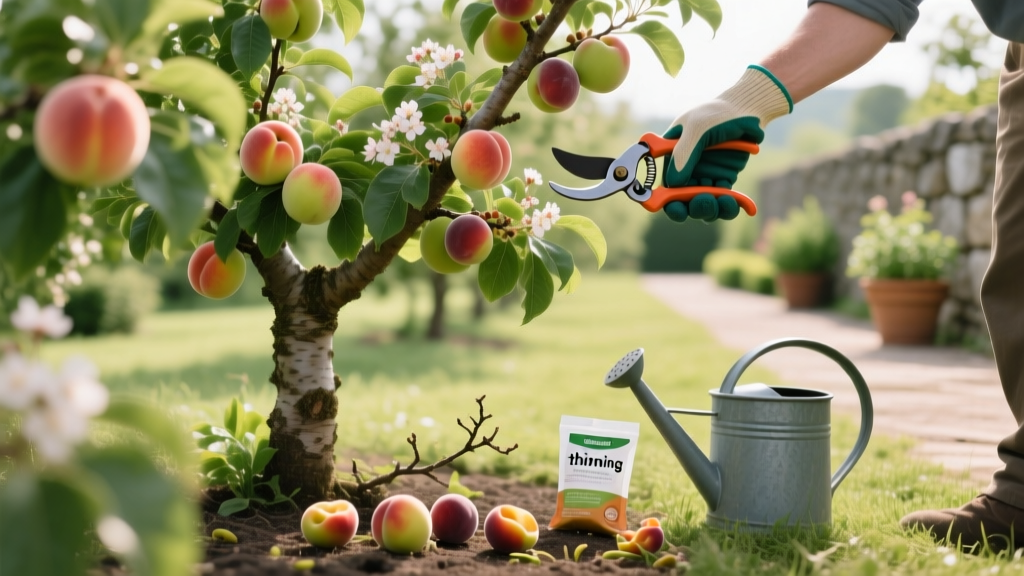
Summer Fruit Tree Care: Thinning and Feeding
If your fruit trees look “busy” right now—loads of small apples, peaches sizing up fast, branches bending, sticky leaves, and sudden pest pressure—this is the make-or-break window. The next 4–8 weeks decide fruit size, branch health, next year’s flower buds, and whether you’ll be picking clean fruit or tossing wormy, cracked, or bitter harvests. Summer care is not a long list, but it is time-sensitive: thin at the right stage, feed only when it will be used, and protect fruit before insects and disease lock in damage.
Use this guide as a seasonal checklist you can work through in order of payoff: thin first, then feed (if warranted), then prune strategically, then protect, then prep for late summer and fall. Timing varies by region, so you’ll see specific thresholds and zone notes throughout.
Priority 1 (Do This First): Thin Fruit While the Tree Still Has Options
Thinning is the single most effective summer task for larger fruit, reduced limb breakage, and improved return bloom. Most fruit trees set far more fruit than they can size. If you wait too long, the tree has already spent energy and fruit size won’t rebound as much.
Best timing by fruit type (and what to look for)
- Apples and pears: thin within 2–6 weeks after bloom, ideally by 35–45 days after full bloom (often after the “June drop”). A practical cue: fruit are about 3/4–1 inch diameter.
- Peaches/nectarines: thin when fruit are 3/4–1 inch diameter, commonly 30–40 days after bloom. Don’t wait until pits harden—size gains drop.
- Plums/apricots: thin once you can see which fruit are well-shaped and growing; usually 3–5 weeks after bloom.
- Cherries: typically not thinned in home gardens unless clusters are extreme; focus more on bird protection and disease prevention.
“Thinning improves fruit size and quality and helps prevent limb breakage. It also reduces the tendency toward biennial bearing.” (University of Minnesota Extension, 2023)
How much to thin (spacing rules that work)
Use spacing, not “percentage removed,” because spacing maps to leaf area and sunlight. Thin to:
- Apples: leave one fruit every 6–8 inches of branch, favoring the biggest, healthiest fruit in each cluster.
- Pears: leave one fruit every 6 inches; pears can size surprisingly well but are prone to limb strain if overloaded.
- Peaches/nectarines: leave fruit 6 inches apart (sometimes 4–6 inches for very vigorous trees); remove doubles and misshapen fruit first.
- Plums/apricots: aim for 3–6 inches apart depending on variety and branch strength.
When thinning clusters (apples/pears), keep the “king fruit” only if it’s well-formed; otherwise keep the best side fruit and remove the rest. Always remove damaged, scabby, cracked, or insect-stung fruit first—those are pest magnets.
Three real-world thinning scenarios
Scenario A: You missed thinning and fruit are already 2 inches. Still thin, but be realistic: you’re mostly protecting branches and reducing biennial bearing. Remove fruit to reduce clusters to singles and relieve heavily loaded limbs. If you can only do one pass, thin the outer canopy first where fruit size benefits most from light.
Scenario B: A young tree (years 1–3) set fruit heavily. Strip most or all fruit off young apples/pears/stone fruit so the tree builds structure. A common rule: if the trunk is under 1.5 inches diameter at 6 inches above the graft, keep fruiting minimal.
Scenario C: Heat wave hits and fruit start dropping. If daytime highs exceed 95°F for several days and the tree is water-stressed, some drop is the tree self-thinning. Don’t assume it has “handled it.” Check spacing after the heat breaks and thin again if clusters remain.
Thinning checklist (one quick pass per tree)
- Remove all damaged, cracked, scabby, or insect-stung fruit first.
- Reduce clusters to single fruit (apples/pears) and space remaining fruit.
- Support or relieve limbs already bending below horizontal.
- Pick up and discard thinned fruit promptly (don’t compost if you suspect worms or rot).
Priority 2: Feed and Water for Growth You Actually Want
Summer feeding is not automatic. The goal is steady leaf function and fruit sizing—not pushing lush, late growth that attracts pests or winter-kills. Always start with water, then evaluate whether fertilizer is needed.
Water first: the “silent fertilizer”
Fruit sizing is largely a water-driven process. In most gardens, fruit trees need roughly 1–2 inches of water per week from rain and irrigation combined during hot, dry spells. If you’re in USDA zones 8–10 with long dry summers, plan on irrigation through harvest.
- Water deeply, wetting soil 12–18 inches down.
- Use a soaker hose or drip line under the canopy edge (the dripline), not tight to the trunk.
- Mulch 2–4 inches deep (keep mulch 6 inches away from the trunk).
When summer fertilizer helps—and when it backfires
Feed only if you see weak shoot growth, pale leaves, or you know soil fertility is low. As a practical benchmark: apples often do well with 8–12 inches of new shoot growth per year; peaches can be more vigorous (12–18 inches). If growth is far below that and leaves are light green, a modest nitrogen boost can help.
Stop nitrogen early enough that new growth hardens before cold weather. In colder regions (USDA zones 3–5), avoid nitrogen after about July 1–15. In zones 6–7, many gardeners cut off nitrogen by late July. In zones 8–10, timing is more flexible, but late nitrogen can still increase pests and reduce fruit quality.
Extension guidance consistently warns against excessive nitrogen in mid-to-late summer. For example, Penn State Extension notes that too much nitrogen can increase susceptibility and delay hardening (Penn State Extension, 2022).
Quick feeding options (choose one)
- Compost: spread 1–2 inches over the root zone (not touching trunk) and re-mulch.
- Balanced granular fertilizer: if growth is poor, apply a light dose around the dripline and water in. Follow label rates; half-rate is often enough in summer.
- Foliar micronutrients (only if diagnosed): if you suspect iron chlorosis (yellow leaves with green veins) in high pH soils, correct pH and use chelated iron as directed.
Feeding and watering timeline (use this as your summer rhythm)
| Time window | What to do | What to watch for |
|---|---|---|
| Weeks 2–6 after bloom | Thin fruit; begin consistent irrigation if rainfall is light | Clusters staying too dense; early pest stings |
| Mid-June to early July | Mulch; adjust irrigation to heat; light feed only if growth is weak | Leaf color; shoot growth under 6–8 inches on apples |
| Late July (zones 3–7) | Stop nitrogen; continue deep watering | Late flush of tender shoots; aphid outbreaks |
| August (most regions) | Maintain even moisture for fruit finish; reduce water slightly right before harvest for some fruits if cracking is an issue | Fruit cracking after heavy watering/rain; sunscald on exposed fruit |
| 2–4 weeks before first fall frost | Focus on tree hardening: no nitrogen; keep soil moderately moist | New soft growth; canker development on stressed trees |
Concrete frost-date anchor: if your average first fall frost is October 15, stop nitrogen by late July to early August and avoid heavy pruning after mid-August to limit tender regrowth.
Priority 3: Prune With Restraint—Summer Cuts Are Surgical
Summer pruning is best used to control vigor, improve light, and remove immediate problems. It’s not the same as dormant pruning. In summer, each cut reduces leaf area—so keep it targeted.
What to prune now
- Water sprouts (vertical, fast shoots) on apples/pears: rub off when 6–10 inches long, or prune back to their origin.
- Broken or cracked limbs: cut cleanly back to the branch collar; don’t leave splinters.
- Diseased shoots: remove promptly (see disease notes below). Disinfect tools when cutting bacterial diseases.
- Shading shoots around fruit clusters: selectively remove to improve color and reduce rot—but avoid sudden overexposure (sunscald risk).
Temperature and timing thresholds that matter
- Avoid heavy pruning during extreme heat: if afternoons are consistently above 90–95°F, delay non-urgent pruning to prevent sunburned bark and stressed trees.
- In cool-summer coastal regions (often zones 8–9 marine climates), light summer pruning can improve color where sun is limited.
- In continental climates (zones 4–6), avoid stimulating late growth after mid-August.
Priority 4: Protect Fruit and Leaves From Summer’s Pest and Disease Spike
Summer protection is about prevention and interruption. Once larvae are inside fruit or rot is established, control shifts to sanitation and damage limitation.
Codling moth, apple maggot, and “worms in fruit” (apples/pears)
If you’ve ever cut an apple and found a tunnel, summer is when it happens. Use monitoring and timely control.
- Bagging fruit: After thinning, bag individual apples/pears when they are about 3/4–1 inch diameter using paper bags or specialty fruit bags. Bagging is one of the most reliable home-garden tactics.
- Sanitation: Pick up dropped fruit weekly; larvae often exit fallen fruit to pupate.
- Traps: Hang codling moth pheromone traps by late May to early June in many regions; apple maggot traps often start by late June (timing varies with local emergence).
Washington State University Extension highlights that codling moth management hinges on proper timing and monitoring, not guesswork (WSU Extension, 2021).
Stone fruit pests (peaches, plums, cherries)
- Peach tree borer: Keep trunk base clear of weeds/mulch piled against bark; inspect for gum and frass at soil line in mid-to-late summer.
- Oriental fruit moth: Can strike shoots and fruit; remove flagged shoot tips promptly and destroy.
- Spotted wing drosophila (berries and some cherries): More of a late-summer issue; harvest frequently and refrigerate fruit quickly.
Summer diseases: what to prevent right now
Apple scab and foliar diseases: In many regions, primary scab season peaks earlier, but summer leaf spotting still weakens trees. Rake up and remove heavily infected leaves and fallen fruit. Keep the canopy open for fast drying.
Fire blight (apples/pears): In warm, humid spells, strikes can show up as blackened, shepherd’s-crook tips. Prune strikes on a dry day. Make cuts well below visible symptoms (commonly 8–12 inches or more into healthy wood), and disinfect tools between cuts when infection is active. (Cut distance recommendations vary by severity and guidance; follow your local extension’s current direction.)
Brown rot (peaches, plums, cherries): This is the classic “fruit turns brown and fuzzy” disease, often exploding near ripening—especially after rain or heavy overhead watering. Remove and destroy mummified fruit immediately. Thin to improve airflow and avoid wetting fruit when watering.
Sunscald and heat stress (often overlooked)
Sunscald is common after aggressive thinning or pruning exposes fruit that developed in shade. In hot inland areas (zones 7–10 interior valleys/deserts), keep some leaf cover on the south/west sides. If a heat dome pushes temps above 100°F, prioritize deep watering and avoid pruning for several days.
Protection checklist for the next 7 days
- Pick up dropped fruit (every 3–7 days during peak drop).
- Inspect 10 random fruit per tree for stings, frass, or entry holes.
- Remove any mummified fruit from tree and ground.
- Check irrigation coverage at the dripline (not just near the trunk).
- Refresh mulch to 2–4 inches where thin.
What to Plant (Yes, Even in Summer): Support Plants and Succession Helpers
Summer is not prime time to plant new fruit trees in most climates, but you can plant support plants and set up your orchard floor to reduce pest issues and watering workload.
Plant under-tree support (choose low-competition options)
- In zones 3–7: sow a light understory of white clover or a managed mow strip outside the trunk zone to improve soil structure—keep a weed-free ring 2–3 feet around young trees.
- In dry zones 8–10: prioritize mulch and drip irrigation over cover crops (cover crops compete for water).
- Herbary strips: yarrow, dill, and alyssum near (not under) trees can support beneficial insects—place them at the orchard edge to avoid trunk moisture and rodent habitat.
Container fruit and summer planting (regional exception)
If you’re in a mild-summer coastal climate (parts of USDA zone 9–10 marine influence) where highs often stay below 85°F, you can plant container-grown citrus/figs with careful watering. In hot inland areas, postpone planting until early fall when highs drop below 90°F consistently.
What to Prepare: Set Up for Harvest, Limb Support, and Next Spring’s Buds
Summer care is also about preventing “future you” problems: broken limbs, biennial bearing, and disappointing flavor. Preparation now is fast and pays off.
Branch support before storms and heavy fruit finish
Thin first, then support. Use:
- Y-props for heavy apple/pear limbs
- Soft ties to distribute load to sturdier branches
- Remove fruit from the ends of long, whippy branches to reduce leverage
If thunderstorms are common in your region (Midwest/East), get supports in place by mid-July—a single wind event can undo years of structure training.
Fruit quality prep: light, spacing, and consistent moisture
For best flavor (not just size), aim for consistent moisture. Big swings—dry soil followed by heavy irrigation or a 2-inch rain—often cause cracking (plums, cherries) and can dilute flavor. If cracking is a chronic issue, reduce irrigation slightly as fruit nears maturity, but don’t let trees wilt.
Plan ahead for next year’s bloom
Overcropped trees often “rest” next year. Thinning is the main lever, but also:
- Avoid late nitrogen after late July (zones 3–7).
- Keep leaves healthy through late summer (disease control and irrigation).
- Maintain a weed-free zone around young trees to reduce competition.
Regional Variations: Adjust the Same Tasks to Your Summer Reality
Cool-summer coastal (Pacific Northwest coast, parts of New England coast; zones 7–9 maritime): Disease pressure can be higher due to dew and cool nights. Focus on airflow (selective summer pruning), scab/leaf spot sanitation, and keeping fruit uncovered enough to dry quickly. Fruit color may lag—light exposure around clusters helps, but don’t over-strip leaves.
Hot interior valleys/deserts (parts of CA, AZ, NM, TX; zones 8–10): Sunburn and water stress outrank most diseases. Maintain mulch, deep irrigation, and avoid heavy pruning during heat. Consider leaving more canopy shade on the southwest side. Thin early to reduce water demand and prevent limb failure when fruit rapidly swells under irrigation.
Humid East/Southeast (zones 7–9): Brown rot, peach diseases, and insect pressure ramp up fast after rains. Keep fruit spaced, remove mummies weekly, and avoid wet foliage at night. In this region, sanitation plus timely protection is often the difference between a full harvest and near-total loss on stone fruit.
Right-Now Timeline (Print This and Work It)
Next 48 hours:
- Walk every fruit tree and identify the heaviest limbs and densest clusters.
- Thin the worst overloads first (outer canopy and bending limbs).
- Remove any mummified or rotting fruit from tree and ground.
Next 7 days:
- Finish thinning to target spacing (6–8 inches apples, 6 inches pears, 4–6 inches peaches).
- Mulch to 2–4 inches; keep 6-inch gap from trunk.
- Set traps or check existing traps; record catches weekly.
Next 2–4 weeks:
- Adjust irrigation to heat: aim for 1–2 inches/week equivalent.
- Do surgical summer pruning: remove water sprouts and broken wood; avoid heavy cuts during >90–95°F stretches.
- Install limb supports before late-summer storms or heavy fruit finish.
By late July (zones 3–7):
- Stop nitrogen fertilization to prevent tender late growth.
- Keep up sanitation: dropped fruit every 3–7 days.
Handled in this order—thin, then water/feed wisely, then prune lightly, then protect—you’ll see immediate improvement this season and a steadier crop next year. Summer fruit tree care isn’t about doing everything; it’s about doing the few time-sensitive actions while the tree can still respond.
Sources: University of Minnesota Extension (2023) fruit thinning guidance; Washington State University Extension (2021) codling moth timing/monitoring principles; Penn State Extension (2022) cautions on nitrogen management and growth timing.