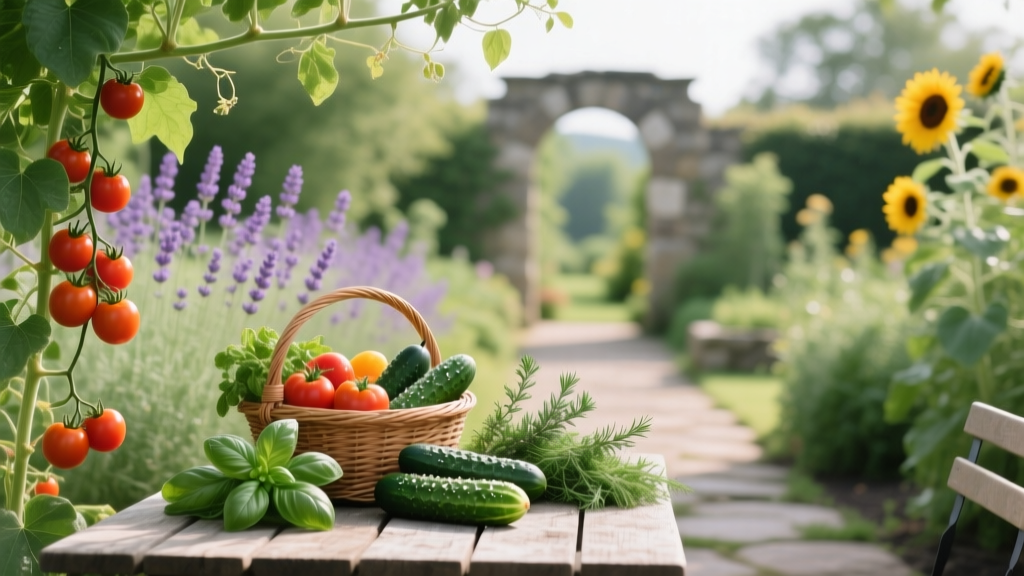
Summer Garden: Harvesting and Preserving Summer Abundance
Summer doesn’t wait. One hot week can turn cucumbers from perfect to seedy, basil from lush to flowering, and tomatoes from green to a countertop full of ripening fruit. The opportunity right now is simple: harvest on time, keep plants producing, and preserve the surplus while quality is at its peak. Use this guide as your week-by-week field plan—prioritizing what matters most before heat, pests, and late-summer storms take their toll.
If you do only three things this week: (1) harvest daily what’s ready, (2) water deeply and consistently, and (3) scout for pests twice a week. Those actions alone protect yield more than any “miracle” product.
Priority #1: Harvest now (and keep plants producing)
Harvest timing that prevents waste
Pick early in the day when produce is cool (before 10 a.m.) for best texture and storage life. In temperatures above 90°F, many crops go from tender to overmature fast—plan to harvest every 24–48 hours for fast producers.
- Zucchini/summer squash: harvest at 6–8 inches long, usually every 1–2 days. Leaving large fruit on the plant slows new production.
- Cucumbers: harvest when uniformly green and firm; slicers often at 6–8 inches, picklers at 3–5 inches. Check vines daily in peak heat.
- Green beans: pick when pods “snap” cleanly; harvest every 2–3 days to keep plants flowering.
- Okra: pick at 2–4 inches long; pods turn woody quickly in hot weather.
- Tomatoes: for best flavor, pick at full color; for cracking risk during storms, pick at “breaker stage” (first blush of color) and ripen indoors.
- Sweet corn: harvest when silks are brown and dry and kernels exude a milky juice—often 18–24 days after silks appear, depending on variety and weather.
“Rapid cooling after harvest is one of the most important steps in maintaining quality.” — UC ANR Postharvest Center (research-based guidance, 2016)
Heat-smart harvest handling (so it lasts long enough to preserve)
Summer abundance disappears fastest on the kitchen counter. Get harvested produce out of sun immediately. If you can’t process the same day, prioritize quick cooling and humidity control.
- Leafy herbs and greens: cool fast; store wrapped in a damp towel in a vented bag.
- Tomatoes: store at room temperature (never below 55°F for best flavor). Refrigerate only fully ripe fruit if you must slow spoilage.
- Cucumbers: keep around 50–55°F if possible; they can be injured by cold in typical refrigerators.
- Beans and corn: refrigerate promptly; sugars convert to starch quickly, especially in corn.
Weekly “keep it coming” checklist
- Harvest: cucumbers, squash, beans, okra—every 1–2 days in peak heat.
- Harvest: tomatoes/peppers/eggplant—every 2–4 days.
- Deadhead flowers you want to keep blooming (zinnias, marigolds, cosmos) 2x weekly.
- Remove overmature fruit immediately (it signals the plant to slow down).
- Wash harvest bins daily; don’t stack wet produce in deep piles (rot spreads fast in summer humidity).
Priority #2: Preserve the surplus while quality is peak
Choose the right preservation method for the crop
Match crop to method. The “best” preservation is the one you’ll actually complete on a hot day—so plan around your time, equipment, and freezer space.
- Freeze: berries, sweet corn (cut kernels), green beans (blanched), pesto, chopped peppers, shredded zucchini.
- Water-bath can: pickles, jams, tomato products that meet tested acidity guidelines.
- Pressure can: low-acid vegetables (green beans, corn, plain sauces) using tested recipes and processing times.
- Dehydrate: herbs, cherry tomatoes, hot peppers, apple rings.
- Ferment: cucumbers (dill pickles), cabbage (kraut), beans (short ferments for flavor, not long storage unless properly managed).
Use only tested canning recipes and processing times. The USDA and extension services emphasize that safe canning depends on correct acidity and heat processing—not family tradition.
Citation: USDA Complete Guide to Home Canning (2015) provides tested processes for water-bath and pressure canning, including jar size, headspace, and processing time standards.
Citation: University of Georgia Extension’s National Center for Home Food Preservation (updated guidance widely cited; research-based recommendations maintained by UGA, including 2019 revisions) emphasizes using tested recipes and appropriate canning methods for low-acid foods.
Preservation timeline: process in batches, not in panic
Plan “preservation windows” around harvest peaks. If you wait until everything is ripe at once, you’ll lose quality and motivation. Use this simple rhythm:
- Every 2–3 days: quick freezer prep (blanch beans, freeze berries, portion pesto).
- Once weekly: pickle day (cucumbers, okra, mixed veg) or sauce day (tomatoes).
- Every 2 weeks: dehydration session (herbs, peppers) when humidity is lower.
Summer preservation comparison table (choose your tool)
| Method | Best for | Time & equipment | Quality notes | Safety notes |
|---|---|---|---|---|
| Freezing | Berries, beans, corn, pesto, peppers | Fast; freezer bags/containers; blanching pot for some veg | Excellent color; texture softens in high-water crops | Low risk when handled cleanly; cool foods quickly before freezing |
| Water-bath canning | High-acid foods: pickles, jams, tomatoes with tested acidification | Large pot, rack, jars; moderate time | Shelf-stable; heat can soften texture | Use tested recipes; correct acidity is critical (USDA 2015) |
| Pressure canning | Low-acid veg: beans, corn, plain soups | Pressure canner; longer processing time | Shelf-stable; “cooked” texture | Required for low-acid foods to prevent botulism (USDA 2015) |
| Dehydrating | Herbs, peppers, thin-sliced fruit | Dehydrator preferred; hours to dry | Concentrated flavor; great storage density | Dry thoroughly; store airtight to prevent mold |
| Fermenting | Cukes, kraut, hot sauces | Jars/crocks; days to weeks | Flavor improves; crispness depends on salt and temperature | Use correct salt ratios; keep produce submerged to reduce spoilage |
Priority #3: What to plant right now (for late summer and fall payback)
Use your frost date to back-schedule
Count backward from your average first fall frost date. If your first frost is October 15, and you want carrots that take 70 days, sow by about August 6 (and earlier if nights stay hot). For many gardens, the sweet spot for fall crops is 6–10 weeks before first frost.
Temperature matters more than the calendar. Many cool-season seeds germinate best when soil temperatures are below 85°F. When soil is hotter, use shade cloth (30–40%), water the seedbed in late afternoon, and consider starting seedlings indoors.
Planting list by crop type (mid-summer through early fall)
- Fast turnaround (30–45 days): bush beans, beets, baby greens, radishes (heat-tolerant types).
- Heat-to-cool transition (45–70 days): carrots, chard, cilantro (as nights cool), scallions.
- Fall staples (60–90+ days): broccoli, cabbage, cauliflower (transplants often do best), Brussels sprouts in long-season areas.
- Succession sowing: basil (for pesto batches), dill (for pickles), more cucumbers if your season allows and disease pressure is low.
USDA zone and regional timing scenarios (real-world adjustments)
Scenario 1: Hot-summer South (USDA Zones 8–10). When daytime highs hold above 95°F, many crops stall. Shift strategy: keep heat lovers going (okra, sweet potatoes, Southern peas), and delay brassicas until nights trend below 70°F. Start broccoli/cabbage transplants indoors in AC or under lights to avoid poor germination outdoors. Watch for fall armyworms and aphids as you transition into late summer.
Scenario 2: Short-season North/High elevation (USDA Zones 3–5). If your first frost is near September 15, you can still plant quick crops now (beans, leafy greens) and use row cover at 28–32°F nights to extend harvest. Prioritize varieties with shorter days-to-maturity and consider frost-tolerant greens (kale, spinach) for late-season picking.
Scenario 3: Coastal/marine climates (Pacific Northwest, parts of New England coast; USDA Zones 7–9 but cooler summers). Mild nights reduce heat stress but increase fungal disease risk. You can keep lettuce and cilantro going longer, but you must manage airflow and leaf wetness. Tomatoes may need extra pruning for ventilation and protection from late blight when wet weather returns.
Priority #4: What to prune, pinch, and pull (to redirect energy)
Tomatoes: prune for airflow, not punishment
Remove leaves that touch the soil and thin congested interior growth to improve airflow—especially when humidity rises and nights are warm. Aim for a clear stem zone of 8–12 inches above soil to reduce splash-borne disease. Avoid heavy pruning during heat waves above 90°F; fruit can sunscald when suddenly exposed.
Herbs: prevent flowering if you want leaves
Basil, cilantro, dill, and mint will bolt in summer. Pinch basil tips weekly and harvest aggressively before buds open. If basil is flowering, cut it back by one-third and water well; you’ll often get a flush of tender regrowth for pesto within 10–14 days.
Berry canes and fruiting shrubs (after harvest)
After summer-bearing raspberries finish, remove spent floricanes at ground level (they won’t fruit again). For blueberries, prune lightly in summer only if needed for access and airflow—save major pruning for dormancy.
Pull and replant: know when a crop is done
When powdery mildew, bacterial wilt, or severe beetle damage overwhelms cucurbits, remove vines and replant a fall crop rather than nursing a failing patch. The fastest way to increase total seasonal harvest is often a timely crop swap.
Priority #5: What to protect (heat, water stress, pests, and disease)
Water: deep, consistent, and morning-timed
Erratic watering is the engine behind blossom end rot, cracked tomatoes, and bitter cucumbers. Water early so foliage dries fast. Most gardens do better with fewer, deeper irrigations than daily sprinkles.
- Vegetable beds: target roughly 1–1.5 inches of water per week total (rain + irrigation), more in sandy soil or during extreme heat.
- Containers: may need daily watering in 90°F+ weather; use saucers cautiously (standing water invites root issues).
- Mulch: keep 2–3 inches of straw, shredded leaves, or untreated grass clippings (thin layers) to reduce evaporation and soil splash.
Heat protection thresholds (what to do when the forecast spikes)
When forecasts call for 3+ days above 95°F, shift into heat protocol:
- Install 30–40% shade cloth over tomatoes/peppers if blossoms are dropping.
- Water deeply the day before the heat wave, not just during it.
- Pause fertilizing; pushing growth in extreme heat can backfire.
- Harvest everything near-ready before the spike to prevent sunscald and rapid overripening.
Summer pest and disease scouting (twice-weekly, no exceptions)
Walk the garden every 3–4 days. Flip leaves. Check new growth. Summer problems explode fast—early detection is the difference between handpicking and a full crop loss.
- Squash vine borer: look for sudden wilt on squash; check stems for entry holes and frass. Use row cover early; in midsummer, remove damaged plants and replant with fast varieties if time remains.
- Cucumber beetles: vectors bacterial wilt. Use floating row cover on young plants, handpick early morning, and keep weeds down.
- Tomato hornworm: strip leaves overnight. Handpick; if you see white rice-like cocoons (parasitoid wasps), leave that worm—nature is working.
- Spider mites: thrive in hot, dry weather; stippled leaves and fine webbing. Increase humidity at leaf level with morning rinses on non-disease-prone crops and avoid broad-spectrum insecticides that kill predators.
- Powdery mildew: common on cucurbits in mid-to-late summer. Improve airflow, avoid overhead watering late in day, remove worst leaves, and consider resistant varieties next season.
- Blossom end rot (tomatoes/peppers): primarily a watering consistency issue; mulch, even moisture, avoid excessive nitrogen.
Citation: Penn State Extension (2020) notes that consistent soil moisture and mulching help prevent blossom end rot by supporting steady calcium movement into developing fruit.
Citation: University of Minnesota Extension (2019) emphasizes integrated pest management: frequent scouting and correct pest identification before treatment to reduce unnecessary pesticide use and protect beneficials.
Quick IPM decision rule
If you can’t name the pest or disease, don’t spray. Take a photo, inspect patterns (chewing vs. stippling vs. spots), and confirm ID through your local extension office resources. Treat the cause, not the symptom.
Priority #6: What to prepare (for late summer storms, fall planting, and storage)
Prep beds for fall crops now—before you’re tired of heat
Choose one bed each week to “reset.” Pull spent crops, remove diseased foliage (don’t compost if disease is active), top-dress with compost, and irrigate to settle soil. This creates ready-to-plant space for your next sowing window.
- Week 1: clear a bed; add 1–2 inches compost; mulch pathways.
- Week 2: start brassica seedlings or buy sturdy transplants.
- Week 3: sow carrots/beets; use shade cloth for germination if soil is hot.
- Week 4: plant fall transplants; install insect netting if cabbage moths are active.
Storm readiness: stake, tie, and pick ahead
Summer storms break tall plants and split ripe fruit. Before a forecast of high winds or heavy rain:
- Re-tie tomatoes and pole beans; add one extra support tie per plant.
- Harvest ripe and near-ripe tomatoes at breaker stage to avoid cracking.
- Check container drainage (clogged holes + downpour = root suffocation).
Monthly schedule: what to do next (adjust by frost date)
| Month | Harvest focus | Planting focus | Protection focus | Preservation focus |
|---|---|---|---|---|
| July | Squash, cucumbers, beans, early tomatoes | Succession beans; basil/dill; start brassicas indoors in hot zones | Mulch; shade cloth if 95°F+; scout mites & borers | Freeze beans; first pickles; pesto batches |
| August | Tomatoes, peppers, corn, melons | Carrots/beets; transplant broccoli/cabbage; sow fall greens 6–10 weeks before frost | Manage powdery mildew; keep watering consistent | Tomato sauce days; corn freezing; dehydrate herbs |
| September | Late tomatoes, peppers; fall greens begin | Spinach/kale in cooler zones; cover crops after beds clear | Row covers when nights near 32°F; blight watch in wet regions | Final canning; peppers frozen; herbal teas dried |
Fast-action checklists you can use this weekend
60-minute garden triage (most impact per hour)
- Harvest everything ready; get it into shade immediately.
- Water deeply at the base of plants (skip the leaves).
- Remove any fruit/veg that’s overmature or rotting.
- Scout 10 plants closely: undersides of leaves, stems, growing tips.
- Add mulch where soil is bare (aim for 2–3 inches).
Two-hour preservation sprint (pick one)
- Freezer sprint: blanch and freeze a batch of beans; freeze berries on a tray then bag; portion pesto into small containers.
- Pickle sprint: process one canner load of quick pickles using a tested recipe; label with date.
- Dehydration sprint: wash and dry herbs; dehydrate until crisp; store airtight away from light.
7-day timeline (do this next, in order)
- Day 1: Harvest; cool produce; note what’s peaking.
- Day 2: Scout pests; remove diseased leaves; re-tie plants.
- Day 3: Preserve one batch (freeze or pickle).
- Day 4: Reset one bed for fall planting; add compost.
- Day 5: Sow or transplant one fall crop based on your frost date.
- Day 6: Deep water; refresh mulch; check irrigation.
- Day 7: Harvest again; plan the next preservation window.
Summer abundance feels relentless because it is—plants are in full production and the weather accelerates everything. The win is not perfection; it’s rhythm. Harvest on schedule, protect plants from the week’s weather, and preserve in small batches that fit your life. Do that, and you’ll carry July and August flavor straight into the colder months—one jar, bag, and tray at a time.