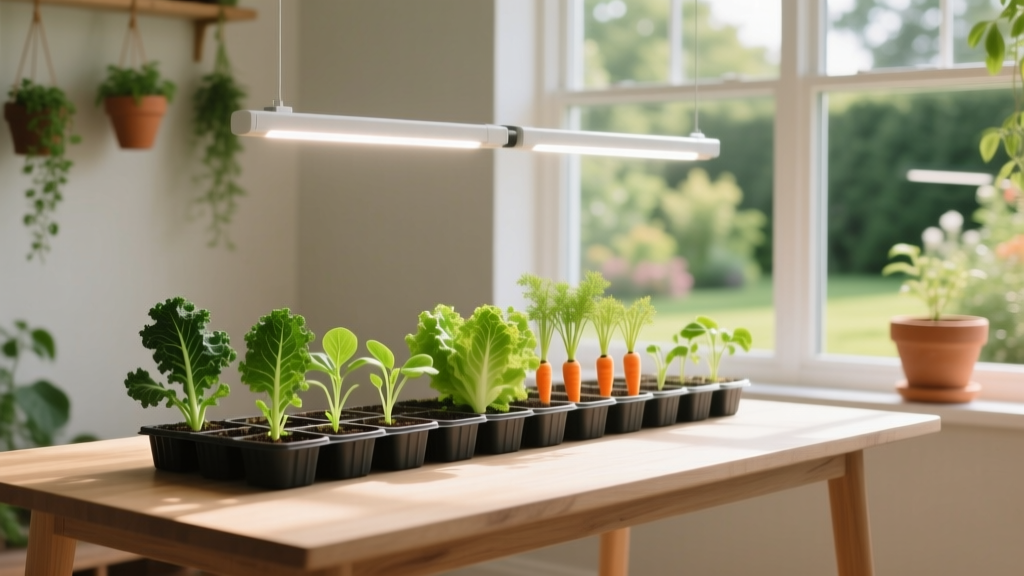
Summer Garden: Starting Fall Crop Seeds Indoors
By midsummer, the garden can look “done”—tomatoes are rolling in, squash vines are everywhere, and the heat makes any extra work feel optional. This is exactly when you win (or lose) your fall harvest. The clock is running: many fall crops need 6–10 weeks to size up, and they do best when established before late-summer stress and long before your first hard frost. Starting seeds indoors now turns August heat into October abundance—especially for broccoli, cabbage, kale, cauliflower, and a second round of lettuce.
The opportunity is simple: while your beds are still occupied, you can raise sturdy transplants under shade or lights, then slide them into space the moment garlic, onions, early potatoes, or spent beans come out. Indoors, you control moisture and temperature, dodge flea beetles, and get uniform stands when outdoor soil is too hot for reliable germination.
Priority 1: What to plant (start indoors now for fall)
Start with your first frost date (average) and count backward using “weeks to transplant + weeks to harvest.” Many brassicas want to be transplanted when they’re 4–6 weeks old. Lettuce and some Asian greens can be ready in 3–4 weeks. Aim to set transplants out while daytime highs are still warm but nights begin to cool—often when nights dip into the 55–65°F range.
Quick timing math you can do today
- Find your first frost date: Use local extension resources or NOAA normals; write down an average date (example: Oct 15).
- Pick your crop and days to maturity: Use the seed packet, then add 10–14 days as a buffer for fall’s slower growth.
- Back up 4–6 weeks from your target transplant date to choose your indoor sowing date.
Fall crops that love an indoor start
Brassicas (priority if you want big heads): broccoli, cauliflower, cabbage, Brussels sprouts, kohlrabi. These are easiest as transplants, and indoor starts help them avoid early flea beetle pressure.
Leafy greens: lettuce, spinach (often better direct-sown later when soil cools), mustard greens, bok choy, tatsoi, mizuna, arugula. Starting lettuce indoors can bridge the “too-hot-to-germinate” window.
Alliums for fall bunching: scallions and bunching onions can be started in cells and transplanted in clumps.
Herbs for cool-weather growth: cilantro and dill can be started indoors if your outdoor soil is crusting or you’re fighting heat and aphids.
Temperature thresholds that matter (don’t guess)
- Many lettuce varieties germinate best around 60–70°F; germination can drop sharply when soil temps push 80°F+.
- Brassica seeds germinate reliably around 65–75°F; too hot and seedlings stretch or stall.
- Plan to transplant brassicas when daytime highs are consistently under about 90°F (use shade cloth if hotter).
- Spinach germination often improves once soil cools closer to 70°F (and can be erratic in hot soil).
- Row cover is most comfortable to install when midday winds calm and temps are under 85°F—you’ll actually do it.
Indoor sowing targets by region (three real-world scenarios)
Scenario A: Short-season / early frost (USDA Zones 3–4; first frost often Sep 15–Oct 1).
If your first frost is around Sep 20, start broccoli, cabbage, and kale indoors in late June through mid-July for fall harvest; you’re likely already at the edge. Use faster varieties (50–70 days) and plan on row cover for frost protection. Leafy greens can be succession-sown from early August under shade and then under cover.
Scenario B: Moderate fall (Zones 5–6; first frost often Oct 10–Oct 25).
This is the sweet spot for indoor starts. Sow brassicas indoors from mid-July through mid-August, transplant late August to mid-September, and expect strong fall heads with fewer pests than spring. Lettuce starts can begin every 2 weeks from late July into early September for steady salads.
Scenario C: Long fall / mild winters (Zones 7–9; first frost often Nov 1–Dec 15, or light frost only).
Heat is the main obstacle, not frost. Start indoors in August (sometimes even early September) and transplant under shade cloth. Focus on heat-tolerant lettuce, Asian greens, and brassicas timed to mature as nights cool. You can also plan a second sowing window for brassicas in early September for winter harvest where hard freezes are rare.
Monthly seed-starting schedule (adjust by frost date)
| Month | What to start indoors | Target transplant window | Notes for summer conditions |
|---|---|---|---|
| Late June–July | Broccoli, cabbage, cauliflower (early varieties), kale | Late July–August | Use shade (30–50%) outdoors for hardening off; watch for heat stress. |
| Late July–mid August | Broccoli, kale, collards, kohlrabi; lettuce (heat-tolerant) | Late August–mid September | Prime indoor window for Zones 5–6; plan insect netting at transplant. |
| Mid August–early September | Lettuce, Asian greens, scallions; second sowing of kale | September | Germinate lettuce in cool indoor temps; move trays out once sprouted. |
| September | Quick greens (arugula, mustard), cilantro | Late September–October | In many areas, direct sowing becomes easier as soil cools. |
One research-based reminder: fall crops don’t “stop” at first frost; they slow down as light drops. Cornell University notes that cooler temperatures can improve quality for many fall vegetables, but growth rates decline as day length shortens (Cornell Cooperative Extension, 2021).
“As day length and temperature decline, plant growth slows—plan extra time in the fall compared to spring.” — Cornell Cooperative Extension, 2021
Priority 2: What to prune (make space and manage late-summer growth)
Starting seeds indoors is only half the job. You also need a realistic plan for where these transplants will live. In summer, that means pruning and clearing strategically—without triggering new tender growth on perennials that should be hardening off later.
Vegetable garden pruning & removal (do this first)
- Pull spent plants aggressively: finished peas, bolted lettuce, declining cucumbers, and exhausted bush beans can come out now. Every week you wait is lost fall growing time.
- Tomato hygiene pruning: remove lower leaves touching soil to reduce splash-borne disease. Avoid heavy topping unless you’re intentionally ending the plant.
- Squash triage: if powdery mildew is rampant and vines are collapsing, remove the worst offenders to free sun and airflow for fall brassicas.
- Herb cutbacks: pinch basil flowers to keep leaves coming; take cilantro and dill out if they’re bolting and replace with indoor starts later.
What not to prune hard right now
Avoid heavy pruning of woody perennials and shrubs in late summer in cold-winter regions (Zones 3–6). Late pruning can push tender growth that’s more likely to be winter-killed. If you must tidy, keep it light and focus on removing dead, diseased, or broken stems.
Priority 3: What to protect (seedlings, beds, and your fall investment)
Late summer is prime time for pests that love tender brassica leaves and stressed plants. The advantage of indoor-started seedlings is uniformity—but that uniformity also makes them a buffet if you skip protection.
Protect seedlings during indoor growth
- Light: provide strong light immediately after germination (grow lights 2–4 inches above seedlings, adjusted daily). Weak light = leggy plants that struggle at transplant.
- Air movement: use a small fan for 30–60 minutes daily to reduce damping-off risk and strengthen stems.
- Watering discipline: keep media evenly moist, never soggy. Bottom-water when possible.
- Sanitation: clean trays and tools. Damping-off organisms thrive in warm, wet, still air.
For damping-off prevention, university IPM guidance consistently emphasizes clean materials, well-drained media, and avoiding overwatering. The University of Minnesota Extension highlights sanitation and moisture management as key steps to reduce seedling diseases (University of Minnesota Extension, 2019).
Protect transplants at and after planting (the critical week)
The first 7–10 days after transplanting determines whether fall crops take off or sulk. Your job is to reduce stress and block pests until roots grab.
- Shade cloth (30–50%): install for the first week if highs are above 88–90°F or if seedlings were grown under lights and are tender.
- Insect netting or row cover: cover brassicas immediately to block cabbage moths and flea beetles. Seal edges with soil or boards.
- Deep watering: water in thoroughly at planting, then keep moisture consistent. Drought stress makes brassicas bitter and more pest-prone.
- Slug defense: if you water heavily in late summer, monitor for slugs under covers and boards; use iron phosphate bait as needed.
Season-specific pest and disease watchlist
Flea beetles: tiny shot holes on arugula, kale, mustard, and broccoli seedlings. They’re often worst in hot, dry weather. Use insect netting, keep soil evenly moist, and avoid transplant shock.
Cabbage worms (imported cabbageworm/cabbage looper): moths and butterflies are active now. If you don’t use netting, scout twice weekly. Bt (Bacillus thuringiensis var. kurstaki) works best on small larvae—spray in the evening and reapply after heavy rain.
Aphids: common on kale and cabbage in warm spells. Blast off with water early in the day; encourage beneficials by avoiding broad-spectrum insecticides. Check the growing tips and leaf undersides.
Powdery mildew: peaks on cucurbits in late summer; remove heavily infected leaves, improve airflow, and avoid overhead watering at night. Keep it from spreading to nearby susceptible plants.
Downy mildew risk on greens: if nights are cool and leaves stay wet, downy mildew can show up on lettuce/spinach. Water early, increase spacing, and use resistant varieties when available.
Priority 4: What to prepare (indoor setup, soil readiness, and a smooth swap)
Your fall crop plan works best when seed-starting and bed prep run in parallel. While seedlings grow for 4–6 weeks, prepare the bed they’ll occupy. This is the difference between “I have seedlings” and “I have a fall harvest.”
Indoor seed-starting setup checklist (do this today)
- Cell trays (72-cell for brassicas; 128-cell for lettuce if you like smaller plugs)
- Fresh seed-starting mix (not garden soil)
- Labels (crop + variety + sowing date)
- Grow lights or a bright, protected spot outdoors (once germinated)
- Fan for airflow
- Watering tray for bottom watering
- Optional: heat mat for germination if your indoor space is below 65°F
Seed-starting method that holds up in summer heat
Step 1: Pre-moisten mix. Mix water into your medium until it holds together when squeezed but doesn’t drip.
Step 2: Sow at proper depth. Most brassicas: about 1/4 inch. Lettuce: barely cover or just press in, depending on variety and light requirements on the packet.
Step 3: Germinate cool, then move to brighter light. If your house runs warm (common in July), place trays in the coolest indoor room for germination. Once sprouted, get them under strong light immediately to prevent stretching.
Step 4: Pot up only if needed. Brassicas can stay in cells until transplant if you keep them moving (light + steady moisture). If they stall or get root-bound before the bed opens, pot up to 3–4 inch pots.
Hardening off timeline (don’t skip; do it like a pro)
Hardening off takes 7 days for most seedlings grown indoors. In summer, sun and wind are harsher than cool spring days—go slower if needed.
- Day 1–2: 1–2 hours outdoors in bright shade, protected from wind.
- Day 3–4: half-day outdoors; introduce morning sun only.
- Day 5–6: most of the day outdoors; brief midday sun if temperatures are under 85°F.
- Day 7: full day; transplant in late afternoon or on an overcast day.
Bed preparation for fall crops (while seedlings are growing)
Clear and reset fast. Summer beds often have dense roots, drip lines, and compacted paths. Clear crop residues, then loosen the top 6–8 inches without pulverizing soil structure.
- Add compost: 1–2 inches of finished compost is a practical reset for leafy crops and brassicas.
- Check fertility for brassicas: they’re heavy feeders. If you don’t have a soil test, plan a balanced organic fertilizer at label rates at planting and again 3–4 weeks later.
- Mulch strategy: use a thin mulch after transplants establish (often after 7–10 days). Too much mulch immediately can keep soil too cool/wet under covers and encourage slugs.
- Irrigation: drip lines or soaker hoses are ideal now; wet foliage plus cool nights is a disease recipe.
Succession planting timeline (simple and effective)
If you want steady harvest instead of a single glut, run two or three waves. Here’s a workable pattern for Zones 5–7—adjust earlier for Zones 3–4 and later for Zones 8–9.
- Wave 1 (mid–late July): broccoli, cabbage, kale indoors.
- Wave 2 (early–mid August): lettuce and Asian greens indoors; second sowing of kale.
- Wave 3 (late August–early September): more lettuce indoors or direct sow as soil cools; cilantro/dill for fall.
Right-now action plan (7-day sprint)
If it’s hot and you’re busy, use this one-week push to get everything moving. You can refine later; you can’t get back lost weeks.
Day 1: Decide and sow
- Write down your first frost date (example: Oct 15).
- Sow broccoli/kale/cabbage (and lettuce if you have space).
- Label everything with date and variety.
Day 2–3: Prep the bed you’ll need first
- Identify the next bed to open (peas, garlic space, early potatoes, declining cucumbers).
- Pull spent crops; compost only healthy material.