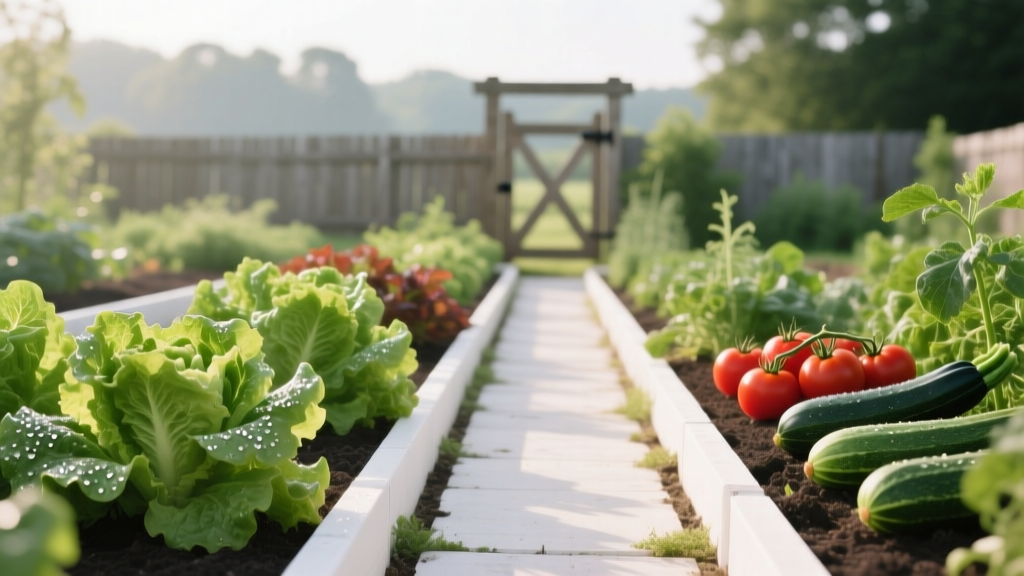
Summer Vegetable Garden Maintenance Tips
Summer doesn’t wait. A few hot, dry days can turn crisp lettuce bitter, split your tomatoes, and invite pests to move in fast—while the same window can also deliver the biggest harvests of the year if you stay ahead of water, weeds, and timing. The goal right now is simple: keep plants actively growing through heat stress, keep fruits clean and crack-free, and keep succession crops coming so beds don’t stall out after early harvests.
Use this guide like an in-season checklist. You’ll see what to do first (today), what to schedule weekly, and what to prep for late summer and early fall planting—based on temperature thresholds, your frost date, and your USDA hardiness zone.
Priority 1: Do these maintenance tasks first (today and this week)
Water for yield: deep, consistent, and timed to heat
In summer, “maintenance” is mostly water management. Most vegetable crops perform best with steady soil moisture; swings from dry-to-soaked are what drive blossom-end rot, bitter greens, and split fruit.
- Water early (before 10 a.m.) to reduce evaporation and keep foliage dry overnight.
- Target 1–1.5 inches of water per week (rain + irrigation) for many vegetables, increasing during heat waves and in sandy soils.
- Water deeply: aim to moisten the root zone 6–8 inches down for most annual vegetables; shallow sprinkles encourage shallow roots.
- Heat threshold action: when daytime highs run 90°F+ for several days, increase frequency (not necessarily duration) and check containers daily—pots can go dry in a single afternoon.
“Drip irrigation and soaker hoses deliver water directly to the soil, reducing evaporation and keeping foliage dry, which helps reduce disease.” — University of Minnesota Extension (2020)
Practical test: Push a trowel into the soil 4–6 inches deep. If it’s dry and crumbly below the surface, irrigate. If it’s cool and slightly moist, wait and keep your schedule steady.
Mulch now, not later: temperature buffering and weed suppression
Mulch is a summer cheat code: it reduces evaporation, keeps soil cooler, and prevents weeds from stealing water and nutrients. Apply once soils are warm and plants are established.
- Apply 2–3 inches of straw (seed-free), shredded leaves, or untreated grass clippings (thin layers) around tomatoes, peppers, cucumbers, squash, beans, and brassicas.
- Keep mulch 2 inches away from stems to reduce rot and vole hiding spots.
- If you’re using compost as mulch, apply a 1-inch topdressing and reapply mid-season.
Weed while small (10-minute rule)
Summer weeds are not just cosmetic; they are water thieves. Pull weeds when they’re under 3 inches tall. A quick pass 2–3 times per week beats a “Saturday slog” that damages roots of nearby crops.
- Hoe on hot, dry days so uprooted weeds desiccate.
- Avoid deep cultivation within 4–6 inches of crop stems—many vegetables have shallow feeder roots.
Scout twice a week for pests and disease (and act early)
Most summer garden failures aren’t mysterious. They’re missed early warning signs. Set a recurring schedule: every 3–4 days, inspect the underside of leaves, new growth, and developing fruit.
- Tomatoes: check lower leaves for early blight spots (brown lesions with concentric rings), and remove affected foliage promptly.
- Cucurbits (squash/cucumber/melon): look for powdery mildew haze and cucumber beetles; address before vines are covered.
- Brassicas: watch for cabbage worm eggs/larvae on leaf undersides; hand-pick early.
- Beans: inspect for aphids and leafhoppers, especially during hot, dry spells.
Research-backed sanitation: Remove diseased leaves (don’t compost) and avoid overhead irrigation late in the day. Cornell University’s Integrated Pest Management guidelines emphasize reducing leaf wetness duration as a key lever to suppress foliar diseases (Cornell IPM, 2023).
What to plant right now (succession sowing and heat-smart choices)
Summer maintenance includes replanting. Empty space is lost time. The rule: re-seed short crops every 10–14 days while conditions allow, and switch to heat-tolerant varieties as temperatures rise.
Fast crops for continuous harvest (most regions)
- Bush beans: sow through mid-summer; many varieties produce in 50–60 days.
- Summer squash: quick, but avoid overplanting—one or two plants per household can be plenty.
- Cucumbers: direct sow for a late summer flush; trellis to improve airflow.
- Basil and dill: re-sow to replace bolted plants.
Heat management for cool-season crops (only with protection)
If your daytime highs are consistently above 85°F, lettuce and spinach often struggle. In USDA zones 7–10, don’t fight the weather—use shade.
- Use 30–40% shade cloth over greens.
- Choose heat-tolerant greens (Malabar spinach, New Zealand spinach, amaranth).
- Sow in the evening and keep seedbeds evenly moist until germination.
Timing fall crops: count backward from frost
Late summer is when you “buy” your fall harvest. Find your average first fall frost date (often between Sept 15 and Nov 15 depending on region), then count backward using days-to-maturity plus a buffer.
- Add a 10–14 day buffer for slower growth as day length shortens.
- Start brassicas (broccoli, cabbage, kale) indoors or in a shaded nursery bed to transplant later.
- Direct sow carrots and beets when soil temps moderate—ideally below 85°F for reliable germination.
Zone-based cue: In USDA zone 5, many gardeners begin sowing fall carrots in late July to early August. In zone 8, that window may shift to late August or September.
What to prune and train (to prevent disease and improve fruit quality)
Tomatoes: prune for airflow, not perfection
In humid summers, foliage dries slowly and disease pressure climbs. Focus on simple, high-impact pruning:
- Remove lower leaves that touch the soil or sit within 8–12 inches of the ground, especially after plants set their first fruit cluster.
- Stake or trellis indeterminate tomatoes; keep vines off the ground to reduce soil splash.
- Pinch suckers selectively only if plants are unmanageable—over-pruning can sunscald fruit during 90°F+ heat.
Blossom-end rot note: It’s often triggered by uneven moisture, not a simple calcium shortage. Fix watering consistency first; then consider a soil test before adding amendments. University of California Agriculture and Natural Resources notes that irregular watering is a major factor in blossom-end rot development (UC ANR, 2019).
Peppers and eggplant: support heavy branches
These crops don’t need heavy pruning, but they do benefit from structure.
- Add cages or stakes before branches snap under fruit load.
- Remove a few inner leaves if the canopy is extremely dense and humidity is high, but keep enough foliage to prevent sunscald.
Cucumbers and pole beans: train weekly
Vines grow fast in summer. A 5-minute weekly training session prevents tangles and improves harvest access.
- Guide cucumber vines onto trellis and remove yellowing leaves.
- Wrap pole beans gently onto supports; they naturally climb counterclockwise on most trellises.
What to protect (heat, storms, pests, and summer diseases)
Heat waves: protect blossoms and prevent bolting
When nights stay above 75°F and days run 90–95°F, tomatoes and peppers may drop blossoms. Your job is to reduce stress, not force growth.
- Shade cloth (30–40%) over tomatoes/peppers during peak afternoon heat can reduce blossom drop in exposed sites.
- Water consistently and mulch; avoid heavy nitrogen fertilization during extreme heat (it pushes leafy growth that wilts).
- Harvest early: pick tomatoes at the breaker stage (first blush of color) to reduce cracking and pest damage, then ripen indoors.
Summer storms: prevent breakage and soil splash
- Secure tall plants before storms; add an extra tie to tomatoes and tomatillos.
- After heavy rain, check mulch coverage and re-cover exposed soil to reduce disease splash.
- Inspect for standing water; most vegetables suffer if roots sit wet for more than 24–48 hours.
Pest prevention by crop (do this before damage is severe)
Squash vine borer and squash bugs (common in many regions)
- Use row cover early in the season; in summer, shift to hand removal of eggs (bronze clusters on leaf undersides) and adults.
- Keep plants vigorous with steady water; stressed squash succumbs faster.
- Remove spent vines promptly to reduce overwintering habitat.
Tomato hornworm
- Check plants at dusk; look for stripped stems and black droppings.
- Hand-pick; if you find hornworms with white rice-like cocoons, leave them—those are parasitic wasps at work.
Aphids and mites (flare in hot, dry conditions)
- Blast aphids off with a firm stream of water in the morning.
- Encourage beneficials by letting small patches of dill/cilantro flower (where appropriate).
- For mites: increase humidity around plants with proper irrigation and reduce dust; mites love drought-stressed plants.
Disease prevention: summer is about airflow and dry leaves
Most foliar diseases accelerate with warm temperatures and prolonged leaf wetness. Build these habits:
- Space plants for airflow; thin overcrowded seedlings rather than “hoping they’ll fit.”
- Water at soil level; if you must overhead water, do it early so leaves dry quickly.
- Remove diseased leaves immediately and sanitize pruners between plants when disease is present.
Fungicide note: If you use labeled organic options (like copper or sulfur), apply preventatively and follow label directions exactly—coverage timing matters more than product choice. For many gardeners, sanitation + mulching + drip irrigation delivers the biggest improvement with the least complexity.
What to prepare (late-summer fertility, fall planting, and next year’s soil)
Feed strategically: side-dress heavy feeders
Summer harvest is when plants burn through nutrients. Instead of random fertilizer, use targeted side-dressing:
- Tomatoes, peppers, corn, squash: side-dress when first fruits set and again 3–4 weeks later if growth slows.
- Use compost, worm castings, or a balanced granular fertilizer; water in after application.
- Avoid heavy nitrogen after mid-summer in areas with short seasons (zones 3–5), or you’ll get foliage at the expense of ripening.
Start a fall crop nursery bed
In hot regions, starting brassicas in full sun can be frustrating. Create a small shaded “nursery” zone:
- Sow kale, broccoli, cabbage, and collards in a bed with 30–40% shade cloth.
- Keep evenly moist until germination; transplant when seedlings have 3–4 true leaves.
Plan cover crops or quick soil protection
If a bed finishes early (garlic, onions, early potatoes), protect the soil:
- Topdress with compost and mulch, or sow a cover crop suited to your window (buckwheat for short summer windows; oats/peas as temperatures cool).
- Don’t leave bare soil baking in the sun—organic matter loss accelerates in heat.
Monthly summer maintenance schedule (adjust to your frost date and zone)
| Timing | Top priorities | Planting & succession | Watch-outs |
|---|---|---|---|
| Early Summer (June) | Mulch beds; set up drip/soaker; stake tomatoes | Sow beans every 10–14 days; plant basil; re-sow cucumbers | Cutworm damage on new transplants; early blight begins in humid areas |
| Mid-Summer (July) | Deep water; prune lower tomato leaves; harvest often | Start fall brassicas in shade; sow more beans; sow carrots where soil temps allow | Heat stress at 90°F+; spider mites in drought; squash vine borer damage |
| Late Summer (August) | Maintain moisture; remove diseased foliage; prep fall beds | Direct sow beets, carrots, turnips; transplant brassicas; sow quick greens under shade | Powdery mildew peak; blossom drop during hot nights (75°F+) |
Regional and real-world scenarios (how to adjust fast)
Scenario 1: Hot-humid summers (Southeast, Mid-Atlantic, parts of Midwest; many USDA zones 7–9)
Main risks: fungal diseases, rapid weed growth, and pest pressure that doesn’t quit.
- Prioritize airflow: wider spacing, trellising, and pruning lower tomato leaves.
- Use mulch + drip to reduce soil splash (a major disease pathway).
- Expect powdery mildew by mid-to-late summer; start removing heavily infected leaves early so plants keep producing.
- Timing tip: start fall brassicas in a shaded nursery bed in late July to mid-August for many locations, then transplant once nights begin to cool.
Scenario 2: Hot-dry summers (Southwest, Intermountain West; zones 6–10 depending on elevation)
Main risks: sunscald, water stress, salts building up, and mites.
- Add extra mulch (3 inches) and check irrigation output—drip lines can clog in hard water.
- Provide afternoon shade for peppers and young transplants during weeks above 95°F.
- Water deeply but avoid daily shallow watering; it encourages surface rooting and heat stress.
- Flush salts occasionally in containers: water until 10–20% drains out the bottom, then discard runoff.
Scenario 3: Short-season gardens (Northern tier; many USDA zones 3–5)
Main risks: running out of time for ripening and fall crops, plus big swings in rainfall.
- Prune and trellis tomatoes to keep fruit exposed enough to ripen, but don’t over-prune in heat.
- Stop heavy nitrogen fertilization by mid-July in many zone 3–5 gardens so plants shift energy to fruit.
- Count back from first frost (often Sept 15–Oct 15 depending on location) and choose fall crops with reliable days-to-maturity.
- Use floating row cover in late summer to speed growth of fall brassicas and protect from early cold snaps.
Scenario 4: Coastal fog or cool-summer climates (Pacific Northwest coast, coastal Northern California)
Main risks: slower ripening, slug/snail pressure, and late blight risk in some years.
- Prioritize varieties bred for cool summers (early tomatoes, fast peppers, quick squash).
- Keep lower tomato leaves pruned and avoid overhead watering; cool, damp foliage stays wet longer.
- Slug control: remove hiding boards, water in the morning, and use iron phosphate bait if needed (follow label directions).
Summer checklists and timelines (printable-style)
This week checklist (30–60 minutes total for most small gardens)
- Check irrigation coverage; confirm soil moisture 6 inches down
- Mulch any bare soil (2–3 inches), leaving space at stems
- Tie up tomatoes/peppers; repair trellises
- Remove tomato leaves touching soil; discard diseased foliage
- Scout undersides of leaves for eggs/larvae; hand-pick early infestations
- Harvest zucchini, cucumbers, beans, and ripe tomatoes frequently to keep plants producing
Every 3–4 days (set it on your calendar)
- Quick pest scan: cucurbits, brassicas, tomatoes
- Pick overripe fruit and remove cracked/damaged produce
- Check containers—water needs can double during heat waves
Every 10–14 days (succession rhythm)
- Sow another short row/block of bush beans (as season allows)
- Re-sow herbs that bolt (cilantro/dill) in partial shade
- Start or refresh a tray/bed of fall brassica seedlings
Late-summer timeline (counting back from frost)
- 10–12 weeks before first frost: start broccoli/cabbage/kale seedlings (or buy transplants)
- 8–10 weeks before first frost: transplant brassicas; direct sow beets and carrots where soil temps are moderating
- 6–8 weeks before first frost: sow fast greens (with shade if still hot); keep soil consistently moist for germination
Summer garden maintenance is a series of small, timely moves: keep moisture steady, keep leaves dry and airflow moving, harvest often, and replant before beds go idle. If you do nothing else this week, focus on mulch + deep watering + scouting—those three actions prevent the most common midsummer setbacks and keep your vegetables producing while the season is still giving.
Sources: University of Minnesota Extension (2020), irrigation and disease prevention principles; UC Agriculture and Natural Resources (2019), blossom-end rot factors and irrigation consistency; Cornell Integrated Pest Management (2023), emphasis on reducing leaf wetness and sanitation to suppress foliar disease.