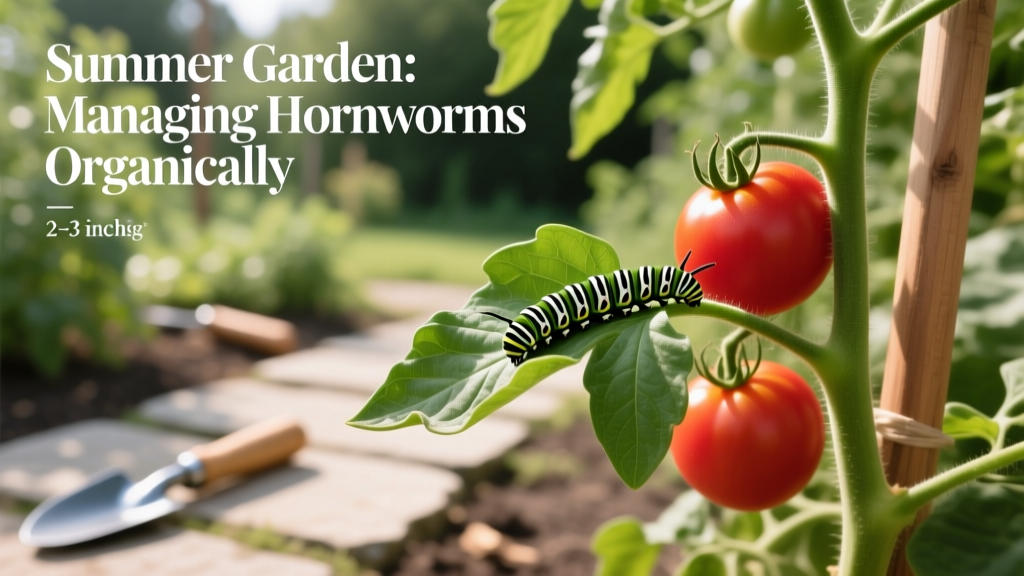
Summer Garden: Managing Tomato Hornworms Organically
One morning your tomatoes look lush; the next, whole stems are stripped bare and green “pellets” dot the soil like someone shook out a pepper grinder. That’s your summer warning bell: tomato hornworms can defoliate plants fast enough to stall fruit ripening right when the first big flush should be sizing up. The opportunity is just as real as the threat—if you act this week, you can stop the damage, keep beneficial insects working for you, and still harvest heavily through the hottest stretch.
Use this as a practical summer playbook: prioritize the fastest actions first (scouting and removal), then move to targeted organic controls, then prevention and fall prep. Timing matters. Hornworm pressure often spikes when nights stay above 60°F and tomatoes are actively pushing new growth. In many gardens, that’s late June through August, with a second wave in late summer.
Top priority (do today): Find them before they find your fruit
What to protect right now: daily scouting and fast removal
Hornworms (Manduca spp.) are masters of camouflage. The damage gives them away: missing leaves at the top of the plant, bare stems, and dark green frass (droppings) on leaves or the ground. The fastest organic control is still the simplest: hand-pick.
- Scout at dawn or dusk when caterpillars are feeding and easier to spot.
- Check the top 12–24 inches of growth first; hornworms often start high and work down.
- Look for frass trails: follow the pellets upward to the culprit.
- Use a blacklight (UV flashlight) after dark—hornworms fluoresce, making them much easier to locate.
Drop picked worms into a container of soapy water, or relocate them far from tomatoes if you choose (but relocation often just moves the problem). If you raise chickens, hornworms can be a high-protein treat—just avoid feeding any that may have been sprayed.
Immediate “triage” checklist (first 48 hours)
- Walk the tomato row two evenings in a row with a headlamp or UV light.
- Remove any hornworm you find; re-check the same plant the next day.
- Flag heavily hit plants with tape so you remember to revisit them.
- Inspect nearby peppers, eggplants, and potatoes (same plant family) within 20 feet.
- Photograph damage patterns; it helps you spot new feeding faster.
High priority (this week): Choose the right organic control for the size of the problem
What to protect: preserve beneficials while stopping feeding
The best organic strategy is selective: control the hornworms without flattening the beneficial insects that help you all season. Two organic tools do this well when timed correctly: Bacillus thuringiensis var. kurstaki (Bt-k) and spinosad.
Bt-k works best on small caterpillars. It must be eaten, so thorough leaf coverage matters. Apply in the evening (UV light breaks it down), and reapply after rain or overhead watering.
Spinosad can work on larger larvae too, but it can harm pollinators if applied to open blooms. Keep it off flowers and apply at dusk when bees aren’t foraging.
“Bacillus thuringiensis is most effective on small larvae; thorough coverage is important because it must be ingested to work.” — University of Minnesota Extension (2020)
For research-backed organic recommendations, see:
- University of Minnesota Extension, “Tomato hornworms” (2020), guidance on handpicking and Bt timing.
- University of California Agriculture and Natural Resources (UC ANR), Integrated Pest Management for tomato/tobacco hornworms (2019), notes on natural enemies and selective insecticides.
Decision guide: which control fits your situation?
| Situation in your garden | Best organic action | Timing notes | Risk to beneficials |
|---|---|---|---|
| 1–5 worms total, light defoliation | Hand-pick + nightly re-scouting | Repeat checks for 7 days | Very low |
| Small worms (under ~1 inch), multiple plants affected | Bt-k spray on foliage | Apply at dusk; reapply after rain or in 5–7 days | Low |
| Large worms (2–4 inches), rapid defoliation | Hand-pick + targeted spinosad (avoid blooms) | Dusk application; keep off flowers for 24–48 hours | Moderate if misapplied |
| Worms with white “rice” on their backs | Leave them (parasitized) + remove non-parasitized worms | Those cocoons are beneficial wasps; let them finish | Very low |
Important ID tip: The “white rice” are cocoons of braconid wasps (beneficial parasitoids). A hornworm carrying them is already neutralized; leaving it can increase natural control in your garden over the next few weeks.
Medium priority (next 7–14 days): Strengthen plants and reduce future infestations
What to prune: focus on airflow, access, and scouting visibility
Hornworms are easier to spot on a well-managed plant. Summer pruning isn’t about stripping tomatoes; it’s about visibility and airflow to reduce disease pressure while keeping enough leaf cover to prevent sunscald.
- Remove lower leaves up to 8–12 inches from soil once plants are established and setting fruit, especially after rain or irrigation splashes.
- Pinch suckers selectively on indeterminate tomatoes: keep 1–2 main leaders if you stake or trellis. This opens the canopy so you can see frass and feeding earlier.
- Do not over-prune during heat waves. If daytime highs are consistently above 95°F, keep more leaf cover to shade fruit.
Plan pruning for a dry morning so cuts dry quickly. Sanitize pruners between plants if you’ve had disease issues (early blight, septoria, bacterial speck).
What to prepare: build a “hornworm-proof” weekly rhythm
Hornworm management is less about one big spray and more about a tight weekly loop. Put these on your calendar for the rest of summer:
- Twice-weekly scouting (more often during outbreaks): Monday/Thursday works well.
- One weekly deep check: lift foliage, inspect stems near the top, check the undersides of leaves.
- Record pressure: note how many worms you removed and from which varieties.
Seasonal opportunities (now through late summer): plant and plan to outmaneuver hornworms
What to plant: companions and succession crops that support beneficials
Hornworms are part of a bigger summer ecosystem. You can increase your odds by feeding and sheltering the beneficial insects that parasitize caterpillars.
- Sweet alyssum at bed edges: quick blooms that support tiny parasitoid wasps. In many areas, sow through mid-summer if kept moist.
- Dill, cilantro, and parsley (let some flower): umbel blooms are parasitoid magnets.
- Basil between tomatoes: doesn’t “repel hornworms” reliably, but it uses space efficiently and keeps you harvesting.
Also consider summer succession planting away from tomatoes so you’re not pushing lush, tender tomato regrowth during peak hornworm season. For many USDA zones, the next “what to plant” opportunities are heat-tolerant beans, basil, cucumbers (if disease pressure is manageable), and fall brassica starts in trays.
Monthly schedule (adjust for your USDA zone)
| Month | What to do this month | Timing triggers (numbers you can use) |
|---|---|---|
| June | Start dusk scouting; hand-pick; prune lightly for visibility; stake/trellis securely | Nights consistently above 60°F; first defoliation signs |
| July | Bt-k for small larvae; protect blooms when using any spray; maintain mulch and even watering | Reapply Bt-k in 5–7 days or after rain; avoid heavy pruning if highs exceed 95°F |
| August | Watch for late-summer generation; remove damaged foliage; keep fruit shaded; start fall crop seedlings | Plan fall transplants 6–8 weeks before your first frost date |
| September | Continue scouting; remove hornworm habitat weeds; consider row cover on late plantings if moth pressure persists | As nights cool toward 55–60°F, pressure may ease, but keep checking |
Regional realities: three common summer scenarios (and what to do)
Scenario 1: Hot, humid summers (Southeast, Gulf Coast; many USDA Zones 8–10)
In long, humid summers, tomatoes often face hornworms plus fungal leaf diseases. Your goal is to keep enough foliage for fruit protection while preventing the “jungle canopy” that hides caterpillars and holds moisture.
- Scout every 2–3 days during peak humidity weeks.
- Prune for airflow but keep fruit shaded; sunscald risk rises when highs exceed 95°F.
- Mulch 2–3 inches to reduce soil splash and disease spread (keep mulch a few inches away from stems).
- Avoid overhead watering late in the day; wet foliage overnight invites disease.
If you’re battling both hornworms and leaf spot diseases, prioritize hand-picking and Bt-k over broad-spectrum products to keep predators and parasitoids active.
Scenario 2: Arid heat and intense sun (Southwest, inland West; Zones 7–10, high solar exposure)
In dry climates, hornworm damage can be deceptively severe because plants already run close to stress thresholds. Over-pruning is a common mistake here—removing too many leaves exposes fruit to sunscald within a week.
- Keep more canopy; prune only to remove soil-touching leaves and improve access.
- Water deeply on a consistent schedule; avoid “feast or famine” moisture swings that crack fruit and slow recovery.
- Apply Bt-k at dusk and consider a light rinse of dust before spraying so it sticks to leaves.
Use shade cloth (30–40%) during heat spikes, especially if your forecast shows multiple days above 100°F. Shaded plants tolerate minor defoliation better and keep fruit quality higher.
Scenario 3: Shorter summers and cool nights (Upper Midwest, Northeast; Zones 3–6)
In shorter seasons, you can’t afford major defoliation in July because it delays ripening before fall. Here, acting early matters more than acting hard.
- When you see the first frass, treat it like an emergency—hand-pick that day.
- Bt-k is especially valuable because populations can rise quickly during warm spells.
- Plan your fall finish: if your average first frost is around September 15 (example for many Zone 4/5 gardens), count back 4–6 weeks for your last major fruit set efforts (pruning, fertilizing).
As nights dip below 55°F, growth slows. Keep foliage healthy and focus on ripening: steady moisture, good potassium availability, and minimal stress.
Organic prevention that pays off next month (and next year)
What to prepare: disrupt the hornworm life cycle
Hornworms become sphinx moths. They pupate in soil, which gives you a leverage point.
- End-of-season bed cleanup: remove tomato debris promptly; don’t leave stems and fallen fruit to host pests and disease.
- Light soil disturbance in fall or early spring can expose pupae to predators. In no-till gardens, focus on cleanup and encourage ground beetles and birds instead.
- Crop rotation: avoid planting tomatoes (or other nightshades) in the same bed next year if hornworms were heavy. A 3-year rotation is ideal where space allows.
What to protect: beneficial insects and birds
Natural enemies often do more work than we notice—until we accidentally wipe them out. UC ANR’s IPM guidance emphasizes conserving natural enemies and using selective controls when needed (UC ANR IPM, 2019). Help them help you:
- Avoid broad-spectrum insecticides, even organic ones, when you can solve the problem by hand-picking.
- Leave some flowering herbs to bloom (dill, cilantro, fennel—where appropriate).
- Provide shallow water (a dish with stones) and avoid pesticide drift onto blooms.
Summer pest and disease prevention around hornworm damage
Secondary issues to watch after defoliation
Hornworm feeding opens the canopy and creates plant stress. After you remove the worms, watch for the follow-on problems that often hit in midsummer:
- Sunscald: pale, papery patches on fruit after sudden leaf loss. Leave remaining leaves; don’t “clean up” too much.
- Blossom-end rot: worsens with uneven watering. Keep soil moisture steady; mulch and water deeply.
- Early blight/septoria: remove the worst spotted leaves (don’t strip the plant bare), keep leaves dry, and improve airflow.
If you must remove a lot of foliage, consider temporary shade cloth for 7–10 days to protect exposed fruit while the plant regrows.
Timelines you can follow without guessing
7-day hornworm knockdown plan
- Day 1: Dusk scouting + hand-pick. Mark plants with damage.
- Day 2: Repeat scouting. If you find multiple small larvae, plan a Bt-k application that evening.
- Day 3: Light prune for access (remove soil-touching leaves, tidy the interior).
- Day 4: Check flagged plants. If new frass appears, repeat hand-picking.
- Day 5–7: Reassess. If feeding continues and larvae sizes vary, combine hand-picking with a second Bt-k application at 5–7 days after the first (especially after rain).
30-minute quick check routine (twice weekly)
- Scan the top growth of each tomato plant for missing leaves.
- Look down for frass on lower leaves and soil.
- Inspect 3 random stems per plant (rotate which stems each week).
- Check for parasitized hornworms (white cocoons) and leave them in place.
- Note where pressure is highest—often one variety or one end of the bed is the hotspot.
Hornworms feel like a sudden crisis, but they’re manageable with consistent summer attention. Stay on the scouting rhythm, use Bt-k when larvae are small, protect pollinators by spraying only at dusk and off blooms, and keep plants balanced—open enough to see problems, leafy enough to shade fruit. Do that through the next few warm weeks, and your tomatoes can keep setting and ripening right up to the countdown to your first frost date—whether that’s October 15 in a milder Zone 7 garden or September 15 in a cooler Zone 4/5 yard.