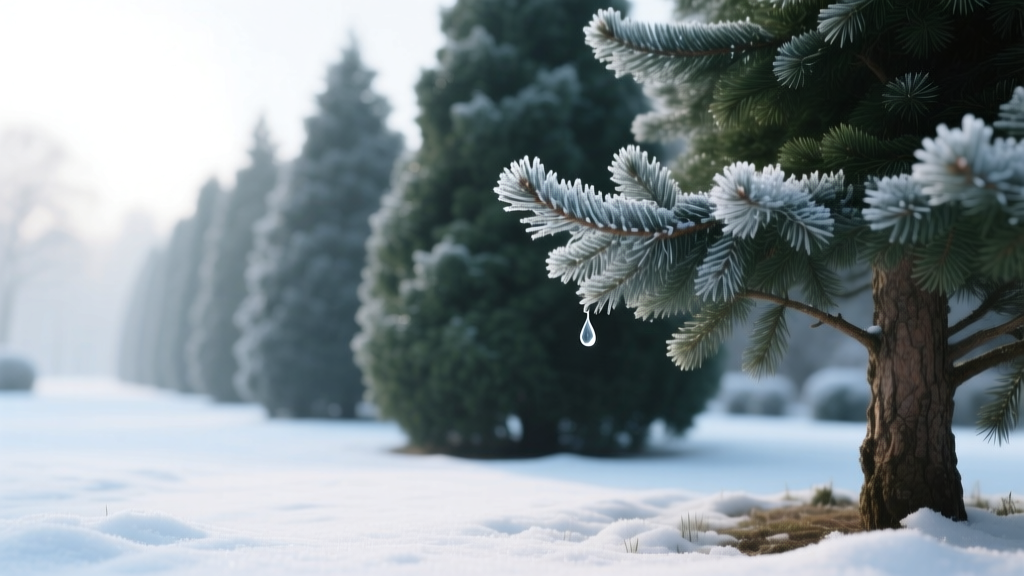
Winter Watering: Preventing Desiccation in Evergreens
The fastest way to lose an evergreen in winter isn’t cold—it’s dryness. When the ground freezes, roots can’t replace water lost through needles and leaves, especially during wind, bright sun, and sudden warm spells. If your evergreens went into winter under-watered, or if fall rains were spotty, you can still prevent winter burn (desiccation) by watering strategically during brief thaws and protecting foliage from the elements.
This is a “do it now” season: one well-timed deep watering at the right temperature can matter more than weeks of worry. Use the priorities below to decide what to water, what to protect, what to prune (very little), and what to prepare for late winter.
Priority 1: What to Protect (and water) right now
Understand the desiccation risk window (the numbers that matter)
Winter desiccation is most common when these conditions line up:
- Air temperatures above 40°F (4°C) for a few hours (foliage loses moisture), while soil is frozen or too cold for uptake.
- Windy days over 15–20 mph (wind strips moisture from needles).
- Full sun on cold days (especially south/west exposures; needles warm and transpire, then refreeze).
- Extended dry spells: 14+ days without meaningful precipitation (rain/snowmelt) in midwinter.
- New plantings in the last 12 months (smaller root systems; higher risk).
If your soil is workable and not frozen, winter watering can be done safely. As a practical threshold: water when daytime highs reach 40–45°F and you expect 24–48 hours before temperatures plunge back below freezing, so water can soak in rather than sheet-freeze at the surface.
“Winter injury to broadleaf and needled evergreens is often due to desiccation… plants lose water through their leaves when roots cannot replace it because the soil is frozen.” — University of Minnesota Extension (2020)
Who needs winter watering first (triage list)
Start with the plants most likely to burn:
- Broadleaf evergreens: rhododendron, boxwood, holly, laurel, camellia (Zones vary).
- Needled evergreens: arborvitae, hemlock, yew, spruce, pine, fir—especially new installs.
- Evergreens on exposed sites: hilltops, corners, wind tunnels between buildings, south/west walls.
- Plants under eaves: “dry shade” zones that miss precipitation all winter.
- Containers: evergreen shrubs and small conifers in pots (freeze-dry quickly).
How to water evergreens in winter (method that works)
Winter watering isn’t frequent light sprinkling. It’s slow, deep soaking when conditions allow.
- Choose a thaw window: aim for a day that reaches 40°F+ and stays above freezing for several hours.
- Target the root zone: water the soil under the dripline (outer edge of branches) where feeder roots are densest.
- Go slow: use a hose on a trickle, a soaker hose, or a watering wand at low flow for 30–90 minutes, depending on plant size and soil type.
- Depth goal: wet the top 6–12 inches of soil. Sandy soils need shorter, repeated soaks; clay needs slower application to prevent runoff.
- Stop if water pools: pooling means frozen soil or compaction. Try again on the next mild day.
Practical volume targets: For an established shrub, plan roughly 5–10 gallons per watering; for a newly planted evergreen (last year), 10–15 gallons per watering is often more appropriate—applied slowly so it infiltrates. If you’re in doubt, water half the amount, wait 30 minutes, then water the other half.
Mulch check: Maintain 2–4 inches of mulch over the root zone (but keep it pulled back 2–3 inches from the trunk). Mulch moderates soil temperature and reduces moisture loss during windy thaws.
Wind and sun protection: when watering isn’t enough
If you have a history of winter burn, add physical protection—especially for broadleaf evergreens and arborvitae.
- Burlap screens: Install on the windward side, leaving space so foliage doesn’t rub. Place stakes 6–12 inches away from the plant and wrap burlap around stakes (not tightly around foliage).
- Anti-desiccant sprays: These can reduce moisture loss on broadleaf evergreens. Apply on a dry day above 40°F when no rain is expected for 24 hours. Reapply per label, typically every 4–6 weeks during open winter weather. They are less reliable on needled conifers and can interfere with gas exchange if overapplied.
- Snow management: Brush heavy snow off gently with a broom (upward strokes). Do not knock or shake frozen branches.
Extension guidance consistently emphasizes fall moisture going into winter. Colorado State University Extension notes that watering during winter warm periods is important for trees and shrubs, especially in dry winters (CSU Extension, 2023). The same logic applies across cold regions: hydrate whenever the soil can accept it.
Priority 2: What to Prepare (so you’re ready for the next thaw)
Set up a winter watering kit
Make winter watering easy so you’ll do it during a short warm spell:
- Expandable hose or lightweight hose that won’t crack in cold
- Shutoff valve or watering wand (better control at low flow)
- Soaker hose for hedges (boxwood, arborvitae rows)
- Moisture probe or a long screwdriver (to test soil softness after watering)
- Mulch and burlap supplies staged in the shed
Use a simple monitoring routine
Instead of guessing, check moisture during thaws:
- On a mild day, scrape mulch aside and test soil with your finger or a screwdriver.
- If the top 2–3 inches are powder-dry and the ground isn’t frozen hard, plan a deep soak.
- If soil is frozen, don’t force it—wait for the next thaw window.
Monthly schedule: what to do, when
Use this schedule as a template; shift dates earlier or later depending on your USDA zone and local weather. (Example assumes a typical cold-winter climate where hard freezes begin by mid-December.)
| Month | Trigger conditions | Watering action | Protection action |
|---|---|---|---|
| November | Before ground freezes; after leaf drop; daytime highs 45–60°F | Deep water evergreens weekly if rainfall is <1 inch/week | Mulch 2–4 inches; install burlap screens by late month in windy sites |
| December | Soil begins freezing; cold fronts | Water once during a thaw when highs reach 40–45°F | Check ties/wraps; remove snow loads gently |
| January | Dry stretch 14+ days; wind events; sunny cold snaps | Water during any thaw window above 40°F (aim for 1–2 times this month if dry) | Reapply anti-desiccant if using (label timing); repair windbreaks |
| February | Freeze/thaw cycles; sun intensity rising | Water during thaws; prioritize south/west exposures | Watch for salt spray damage; rinse on mild days if needed |
| March | Late winter winds; partial soil thaw; frost nights | Resume regular deep watering when soil is workable; don’t let plants go dry | Plan pruning after worst cold passes; remove wraps gradually |
Priority 3: What to Plant (and what not to) during winter watering season
Planting outdoors: limited, but there are smart exceptions
In most cold-winter climates, winter is not the time to plant new evergreens into frozen ground. If you’re in milder regions (or during an unusual warm stretch), planting can work—but only if the root ball can be watered in consistently until establishment.
Best candidates when conditions allow:
- Zones 8–10: Many evergreens can be planted through winter if soil is workable and you can irrigate. Avoid planting right before a predicted cold snap below 28°F.
- Zones 6–7: Plant only during extended mild spells when soil is not frozen, and water deeply immediately after planting. Monitor closely for dry wind events.
- Zones 3–5: Generally postpone planting until spring. If you must plant (construction deadlines), prioritize wind protection and a strict watering plan during every thaw.
What to plant now instead: Focus on indoor sowing plans and ordering. Outdoors, you can set up infrastructure—windbreak stakes, irrigation repairs, and mulch rings—so you can plant quickly once soil temperatures rise.
Priority 4: What to Prune (minimal now; do the safe work)
Avoid pruning evergreens in midwinter
Pruning stimulates growth that’s vulnerable to cold and can increase moisture stress. For most needled evergreens and broadleaf evergreens, hold off on shaping until spring.
What you can do now:
- Remove broken branches from storm damage (clean cuts back to a lateral branch or branch collar).
- Correct hazards: branches blocking walkways or rubbing structures.
- Skip shearing hedges until the plant is actively growing again.
Timing target: In many regions, wait until after the coldest period has passed—often late March to April in Zones 5–7, and April to May in Zones 3–5—then prune lightly. If you know your average last spring frost date (for example, April 15 in some Zone 7 areas or May 15 in many Zone 5 locations), aim to do major shaping after that window.
Seasonal pest and disease prevention tied to winter watering
Winter burn vs. disease: how to tell the difference quickly
Desiccation damage often shows up as bronzing, yellowing, or browning on the windward or sun-exposed side, with tips and outer foliage affected first. Disease problems can look similar, but patterns differ:
- Winter desiccation: one-sided damage (south/west), more severe on exposed plants; buds may still be alive.
- Salt injury: browning along road-facing side or lower foliage; often worse after slushy road spray.
- Needle cast/canker issues: banding, spotting, dieback from specific points; may show fruiting bodies; often repeats yearly in the same pattern.
Salt spray prevention (a hidden desiccation accelerator)
De-icing salts pull moisture from tissues and can mimic or worsen winter burn.
- Barrier: burlap on the road-facing side from December through March.
- Rinse: on a mild day above 40°F, gently rinse foliage and nearby soil if salt spray is visible (avoid saturating frozen ground).
- Switch products: use calcium magnesium acetate or sand where feasible; avoid piling salty snow into beds.
Mite flare-ups on stressed evergreens
Winter drought stress can set evergreens up for spider mites later (especially spruce spider mite on conifers in cool seasons). Start prevention now by reducing stress:
- Keep plants hydrated during thaws.
- Avoid excess nitrogen fertilizer in late winter; it can push tender growth.
- Plan a scouting date: begin checking for mite stippling and fine webbing when daytime highs consistently reach 50–60°F in spring.
University of Illinois Extension highlights that evergreens continue to lose water in winter and benefit from adequate soil moisture going into and through winter thaws (UI Extension, 2019). Stress reduction is your most reliable pest-prevention tool right now.
Regional scenarios: adjust your winter watering strategy
Scenario 1: Cold continental winters (USDA Zones 3–5; Upper Midwest, interior Northeast, mountain valleys)
What’s typical: long frozen soil periods, bright winter sun, and drying winds. Evergreens may be planted near buildings where snow melt creates uneven moisture.
- Best tactic: Late fall deep watering before the ground freezes, then “opportunity watering” during thaws in January–March.
- Timing rule: Water when temperatures reach 40°F and the soil surface can absorb water (no standing puddles after 10 minutes).
- Protection: Burlap screens for rhododendrons, boxwoods, and arborvitae in exposed locations; maintain mulch depth at 3–4 inches.
Scenario 2: High plains / Intermountain West (USDA Zones 4–7; low humidity, frequent winter sun)
What’s typical: low snowfall some years, dry winds, and rapid freeze/thaw. Winter watering is often essential.
- Best tactic: Water every 3–4 weeks during winter if precipitation is low, using warm spells as access points.
- Temperature threshold: Preferably water when it’s 45–50°F midday so infiltration improves.
- Extra step: Check irrigation systems for winter leaks and ensure hoses are drained after use to prevent freeze damage.
Scenario 3: Maritime / Pacific Northwest and mild-winter regions (USDA Zones 7–9; wet winters, occasional cold snaps)
What’s typical: abundant winter rain, but short cold events can freeze the top layer of soil while winds dry foliage. In these areas, the main risk is not chronic drought but cold wind plus a brief frozen root zone.
- Best tactic: Watch the forecast before and after a freeze. If a cold snap is predicted and soil is currently workable, water 24–72 hours before temperatures drop below 28°F.
- Protection: Wind screens can matter more than watering in a wet winter.
- Disease note: Avoid overhead watering late in the day—wet foliage plus cool conditions can favor fungal issues on some shrubs.
Scenario 4: Evergreen containers on patios (any zone)
Containers are a special case: they freeze faster, dry faster, and can kill roots even when the top looks fine.
- Placement: Move pots to a sheltered north/east wall or unheated garage with light (for broadleaf evergreens, ensure some light).
- Insulate: Wrap pots with burlap and bubble wrap, or sink them into mulch.
- Watering timing: Check moisture every 7–10 days during dry weather; water when the top 1–2 inches are dry and temps are above 40°F.
Action checklists: what to do in the next 7 days and next thaw
Next 7 days (regardless of weather)
- Walk your property and flag evergreens on south/west exposures, windy corners, and under eaves.
- Check mulch depth; restore to 2–4 inches.
- Inspect for salt spray zones along roads/driveways; plan burlap barriers.
- Stage hose/soaker supplies so you can water quickly during a thaw.
- Brush off heavy snow loads carefully (no shaking frozen branches).
During the next thaw window (highs 40–45°F)
- Test soil infiltration: if it accepts water, deep soak priority plants first (newly planted, broadleaf evergreens, exposed conifers).
- Water slowly to avoid runoff; aim to wet 6–12 inches deep.
- After watering, re-check soil moisture under mulch later the same day.
- If using anti-desiccant, apply only when foliage is dry and temps are above 40°F with 24 hours dry weather ahead.
Timing notes that keep you from watering at the wrong moment
A few tight rules prevent most winter watering mishaps:
- Don’t water onto ice: if surfaces are icy or temps will drop rapidly within hours, delay to avoid hazardous refreeze.
- Midday is best: water between roughly 11 a.m. and 3 p.m. when infiltration is highest.
- Avoid waterlogging: if the soil is saturated from rain, skip watering even if foliage looks dull—roots need oxygen.
- New plantings need more: evergreens planted in late summer/fall are the first to burn; prioritize them all winter.
If you only do one thing this week, do this: identify the most exposed evergreen (often an arborvitae, boxwood, or rhododendron on the south/west side) and be ready to deep-water it the very next time you hit 40°F on a calm day. Pair that with a simple burlap wind screen, and you’ll prevent the classic late-winter browning that shows up just when you’re hungry for spring color.
Sources: University of Minnesota Extension (2020), “Winter injury to trees and shrubs”; University of Illinois Extension (2019), evergreen winter water loss guidance; Colorado State University Extension (2023), winter watering recommendations for trees and shrubs.