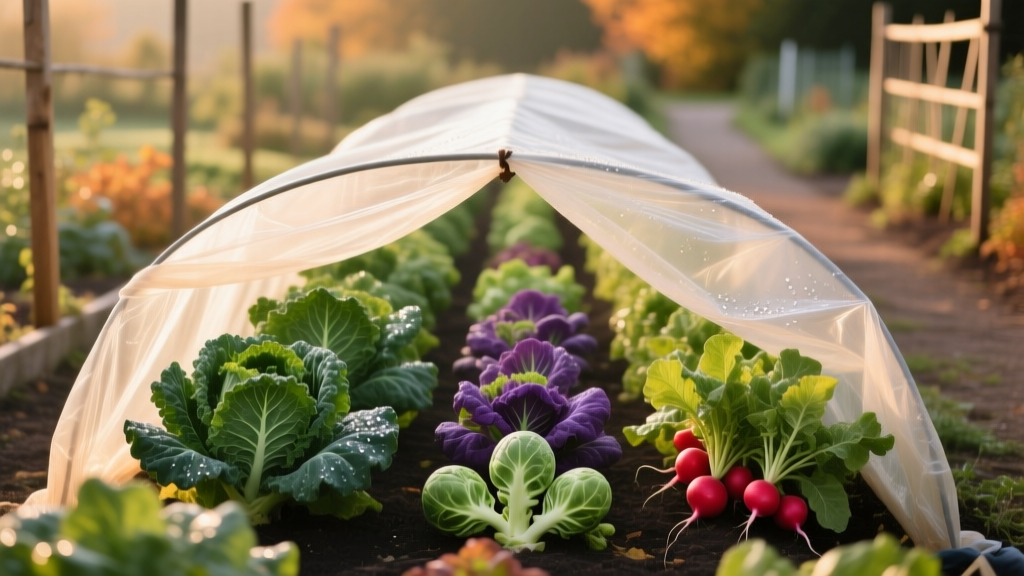
Fall Vegetable Garden: Extending with Row Covers
The clock is ticking on warmth, but fall is not a slow fade—it's a second growing season if you act now. When nighttime lows start dipping toward 40°F, leafy crops surge, brassicas sweeten, and pests shift behavior. The difference between a quick shutdown and weeks (sometimes months) of extra harvest often comes down to one thing: getting row covers on at the right time, with the right crops, anchored correctly before the first windy cold front.
Use this guide like an almanac: start with the highest-priority tasks this week, then work down the list. You’ll see specific temperature thresholds (32°F, 28°F, 26°F, 40°F), timing windows (2–3 weeks, 4–6 weeks), and frost-date planning rules you can apply in any USDA hardiness zone.
Priority 1: What to plant right now (and what’s too late)
Fall planting is a math problem: count back from your average first frost date, then add a buffer because growth slows as daylength drops. A widely used rule is to add about 14 days to the crop’s days-to-maturity for fall (sometimes more in northern areas). University guidance supports this slowdown effect; for example, University of Minnesota Extension notes that cooler temperatures and shorter days slow growth and affect fall timing (University of Minnesota Extension, 2020).
Fast wins for the next 2–3 weeks (most zones)
If you’re within 2–3 weeks of first frost, focus on crops that size up quickly or can be harvested as baby greens.
- Arugula (baby leaf in ~21–30 days)
- Spinach (baby leaf in ~25–35 days; hardier than it looks under cover)
- Radishes (often ~22–35 days)
- Mustard greens (baby leaf in ~21–30 days)
- Turnip greens (harvest greens early; roots need longer)
- Cilantro (bolts less in fall; protect from hard freezes)
Timing trigger: Seed these as soon as you see your 10-day forecast showing overnight lows trending toward 40°F. That’s your sign the soil will hold moisture and germination will be steadier—provided you keep the seedbed evenly damp.
Still possible if you have 4–6 weeks before first frost
If you have 4–6 weeks before average first frost (common in USDA Zones 7–9 in September, or Zones 5–6 in late August), you can still plant:
- Baby carrots (choose quick varieties; thin early)
- Beets (for greens and small roots)
- Asian greens (bok choy types can be quick but bolt if stressed)
- Green onions/scallions (especially from sets)
- Transplants: kale, collards, broccoli (small heads), cabbage (small/early types)
Tip: If you’re transplanting brassicas, do it on a cloudy day or late afternoon and water deeply. Fall sun can still be intense, and dry stress invites aphids.
What’s usually too late (unless you’re in a warm zone or using heavier protection)
Once you’re inside 2 weeks of first frost in Zones 3–6, it’s usually too late for:
- Tomatoes, peppers, cucumbers, beans (they stall below 50°F nights and are frost-killed at 32°F)
- Big storage carrots/beets from seed
- Cauliflower (needs steady growth and time)
In warm-winter regions (Zones 9–10), “too late” shifts dramatically—you may be entering your prime cool-season planting window instead.
Priority 2: What to protect first (row covers that actually add harvest weeks)
Row covers work best when you install them before plants are stressed—ideally when nights first start flirting with the low 40s°F, not after a freeze warning. The goal is to trap a small layer of warmer air and reduce windchill and radiational heat loss.
Match the cover to the temperature drop
Not all “frost cloth” is equal. Weight matters.
| Cover type | Typical weight | Best use | Common temperature protection range | Notes |
|---|---|---|---|---|
| Light row cover (spunbond) | ~0.5–0.6 oz/yd² | Insect barrier + mild chill | ~2–4°F buffer | Great for brassicas early; high light transmission |
| Medium row cover | ~0.8–1.0 oz/yd² | Frost protection | ~4–6°F buffer | Good general fall cover for greens |
| Heavy frost blanket | ~1.25–1.5+ oz/yd² | Hard freezes | ~6–10°F buffer | Lower light; vent on warm days to prevent overheating |
| Plastic (poly) over hoops | Varies | Season extension like a low tunnel | Can exceed 10°F buffer in sun | Must vent; condensation can worsen foliar disease |
Realistic thresholds: Tender crops die at 32°F. Many cool-season crops handle light frost (28–32°F) and can keep producing under cover. Some (spinach, kale) tolerate colder, especially once established and acclimated.
Install row covers the right way (so wind doesn’t undo your work)
If your cover is not sealed, cold air pours in and heat escapes. Set it up like you expect a windy front—because you should.
- Use hoops (wire, PVC, or fiberglass) to keep fabric off foliage, especially for tender greens (less abrasion and less freeze-burn).
- Seal edges with soil, sandbags, boards, or landscape staples every 3–4 feet.
- Leave slack so the cover can expand with plant growth and not tear.
- Water earlier in the day before a freeze night; moist soil holds more heat than dry soil.
Research and extension recommendations consistently emphasize that row covers are most effective when edges are well sealed and the cover is supported to prevent direct contact and heat loss—small air leaks can greatly reduce protection (Penn State Extension, 2019).
What to cover first: a quick triage list
When you only have time to cover a few beds before a cold snap, prioritize by “value + vulnerability.”
- New seedlings and fresh transplants (they have less stored energy and less cold resilience).
- Tender herbs (basil is done at 32°F; cilantro/parsley tolerate more but benefit from protection).
- Greens you’re actively harvesting (keeps leaves cleaner, less wind-tattered, less pest pressure).
- Brassicas (not because they can’t take cold—because covers double as an insect barrier).
Priority 3: What to prune (and what NOT to prune) in the fall vegetable garden
Fall pruning is not a cleanup spree. The goal is to reduce disease pressure and salvage ripening—not push tender regrowth that will be hit by frost.
Do: strategic pruning for ripening and airflow
- Tomatoes: If frost is expected within 7–10 days, pinch off new flowers and tiny fruit so plants focus on sizing what’s already set. Remove lower leaves touching soil to reduce splash-borne disease.
- Indeterminate tomatoes under cover: Prune lightly for airflow; crowded foliage under a cover holds humidity and invites blight and mold.
- Winter squash vines: Clip excessive new growth if fruit is set and frost is approaching; it helps direct energy to ripening.
Don’t: hard prune perennials or cut back everything “just because”
Avoid heavy pruning of perennial herbs (like sage, thyme) right before hard freezes; it can stimulate tender new growth. Also avoid stripping pepper plants or eggplants bare in hopes they’ll “push”—they won’t when nights are below 50°F, and exposed fruit sunscalds on warm fall afternoons.
Priority 4: What to prepare (soil, hoops, watering, and harvest logistics)
Preparation is what turns row covers from a last-minute scramble into a reliable system you can deploy in 10 minutes when a frost advisory pops up.
Build a “cold-night kit” this week
- Row cover fabric labeled by weight (light/medium/heavy)
- Hoops cut to bed width
- Clamps or clips (or clothespins for small hoops)
- Sandbags/boards/staples for sealing edges
- Minimum-maximum thermometer (or at least a reliable outdoor sensor at bed height)
- Frost alerts set on your phone for 36°F (gives you a buffer night)
Soil and fertility: feed lightly, then focus on moisture
Fall crops need steady growth, but heavy nitrogen late can make tissues more frost-sensitive and more attractive to aphids. Use compost and a modest nitrogen source early, then maintain even moisture.
- Top-dress with 1–2 inches finished compost around brassicas and greens.
- Water deeply when the top 1 inch of soil dries; shallow watering leads to shallow roots and stress.
- Mulch root crops (carrots, beets) with straw or shredded leaves once seedlings are established—mulch stabilizes soil temperature.
Monthly action schedule (adjust by your frost date and USDA zone)
Use this as a template. Slide it earlier in Zones 3–5 and later in Zones 8–10. If your average first frost is October 10, treat “late September” actions as urgent; if it’s November 15, you have more runway.
| Time window | Plant | Protect | Prep | Watch for |
|---|---|---|---|---|
| Late Aug–Early Sep | Transplant kale/cabbage/broccoli; seed beets, carrots (quick types) | Light cover as insect barrier on brassicas | Set hoops now; label covers; refresh mulch | Cabbage worms, aphids, heat stress |
| Mid–Late Sep | Seed spinach, arugula, radish; succession sow every 7–14 days | Have medium cover ready when nights hit 40°F | Clean up diseased leaves; tighten irrigation schedule | Powdery mildew, flea beetles lingering |
| Early Oct (or 2–3 weeks pre-frost) | Final sowing of baby greens; plant scallion sets | Cover on frost-watch nights (36°F alerts); seal edges | Harvest and cure winter squash before 32°F | Slugs under damp covers; rodents as temps drop |
| After first frost | Focus on harvest, not new planting (except warm zones) | Upgrade to heavier cover for <28°F nights; vent on sunny days | Pull spent summer crops; solarize/compost only healthy residues | Botrytis (gray mold) under humid covers |
Regional scenarios: how row-cover strategy changes where you live
Row covers don’t perform the same everywhere. Wind, humidity, daylength, and freeze patterns change the playbook.
Scenario 1: Upper Midwest / Northern New England (USDA Zones 3–5)
Your window is shorter and your cold snaps are sharper. If your first frost is commonly in late September or early October, plan on covers by mid-September and prioritize fast crops.
- Timing: Aim to have seedlings established 4 weeks before first frost for best performance.
- Cover choice: Medium-weight fabric early; keep heavy fabric ready for nights forecast below 28°F.
- Best bets: Spinach, kale, tatsoi, radishes, turnip greens.
- Extra move: Use a double layer (light + medium) on severe nights, but vent if daytime exceeds 65–70°F under the cover.
Scenario 2: Mid-Atlantic / Ohio Valley (USDA Zones 6–7)
You often get a long, productive fall with a first frost somewhere around mid-October to early November, plus warm spells that can cause overheating under covers.
- Timing: Keep sowing greens through October, especially if your first frost is after Oct 20.
- Cover strategy: Treat row cover as removable—on/off with forecasts. Venting is not optional during sunny stretches.
- Best bets: Lettuce mixes (under cover for rain/frost), beets, carrots (mulch for late digging), broccoli side shoots.
- Extra move: Keep brassicas covered early to block moth flights and reduce caterpillars.
Scenario 3: Pacific Northwest / Maritime (USDA Zones 7–9 coastal)
Your challenge is less about deep freezes and more about persistent moisture, slug pressure, and gray mold under covers. You may only get brief dips near freezing, but long wet periods can rot leaves fast.
- Timing: Planting can run later because freezes are later, but growth slows with low light.
- Cover choice: Use hoops and keep fabric off foliage; prioritize airflow and remove covers during long mild wet spells.
- Best bets: Mustards, chicories, kale, scallions, garlic starts (if you plant garlic in fall).
- Extra move: Use iron phosphate bait for slugs and keep mulch pulled slightly back from crowns.
Scenario 4: Warm-winter South (USDA Zones 8–10)
Fall is your prime time. Row covers are still useful—more for insect control and surprise cold snaps than for routine frost protection.
- Timing: Start cool-season crops as soon as daytime highs settle below 85°F for better germination and less bolting.
- Cover strategy: Light covers can reduce pest pressure (cabbage loopers, aphids) and shield seedlings from intense sun and wind.
- Cold events: Keep heavier cover or plastic available for rare nights below 32°F.
- Best bets: Broccoli, cabbage, carrots, lettuce (with shade/cover), sugar snap peas in late fall where winters are mild.
Pest and disease prevention under row covers (fall-specific)
Row covers can lower pest damage, but they can also trap humidity. Manage them like a tool, not a set-it-and-forget-it blanket.
Cabbage worms and caterpillars (brassicas)
Fall brassicas often look perfect until you find frass in the crown. Excluding moths is easier than spraying.
- Put covers on immediately after transplanting and seal edges.
- Scout weekly; if caterpillars got in before covering, remove them by hand or use Bt (Bacillus thuringiensis) in the evening, then re-cover.
Aphids surge in cool, calm weather
Aphids multiply fast when plants are lush and nights are cool. Under covers, natural predators may be excluded too.
- Check undersides of leaves every 3–4 days on kale, mustard, and spinach.
- If colonies start, use a firm water spray midday (so plants dry before night) and avoid over-fertilizing with nitrogen.
Powdery mildew and gray mold (Botrytis)
These are the classic fall problems when days are mild, nights are damp, and covers trap moisture.
- Vent covers whenever temperatures under them exceed 70°F or leaves are staying wet into late morning.
- Water at soil level early in the day; avoid overhead watering late afternoon.
- Remove infected leaves and do not compost heavily diseased foliage unless your compost gets hot.
Extension guidance routinely recommends sanitation and moisture management to reduce overwintering disease inoculum and fall outbreaks (Clemson Cooperative Extension, 2018).
Row cover timing: a simple frost-based playbook
Use these triggers to decide what to do tonight, not next week.
- Forecast low 36–40°F: Cover seedlings and tender transplants; leave hardy mature kale uncovered if you must triage.
- Forecast low 32°F (frost): Cover all greens you want to keep pristine; cover lettuce and spinach to prevent leaf burn; pick basil and any remaining tender herbs.
- Forecast low 28°F: Use medium/heavy cover, seal edges, and consider a second layer for exposed gardens; harvest remaining peppers and tomatoes unless you have a true low tunnel setup.
- Forecast low 26°F or colder: Expect damage without serious protection. Double layers and low tunnels help, but plan harvests first; bring in what you can and protect the rest as an experiment.
Checklists you can use today
This-week checklist (60–90 minutes total)
- Look up your average first frost date and count back 30–45 days for your last meaningful sowing window.
- Sow one bed of fast greens (arugula/spinach/mustards) and label with date.
- Set hoops on your highest-value bed and stage your cover nearby.
- Seal gaps in beds (add compost, re-firm loose soil) so edges can be buried or weighted down.
- Remove diseased leaves from summer crops; keep weeds down (weeds shelter pests and hold humidity).
Before the first freeze warning
- Test-fit every cover and count anchors (don’t wait for a windy night).
- Move irrigation hoses so you can water without removing covers entirely.
- Harvest vulnerable produce: basil, beans, cucumbers; pull any fruit that won’t make it.
- Set a thermometer at bed height to learn your garden’s real lows (cold sinks).
Timelines that keep you ahead of the weather
6 weeks before first frost: Transplant brassicas; seed beets/carrots (quick types); install hoops and insect barrier covers.
4 weeks before first frost: Start spinach, arugula, radishes; thin seedlings; top-dress compost; begin checking forecasts for 40°F nights.
2 weeks before first frost: Make final sowing of baby greens; stage heavier covers; prune tomatoes for ripening; harvest and cure winter squash before 32°F.
First frost week: Cover on frost nights; vent on sunny days; keep harvesting greens regularly (harvest encourages tender regrowth in mild spells).
After first frost: Shift to maintenance—cover management, slug/rodent watch, and opportunistic harvest during warm afternoons.
Fall gardening rewards speed and follow-through. If you seed fast greens now, seal row covers before the first real cold front, and vent them like a greenhouse on sunny days, you can keep harvesting well past the date your neighbors consider the season “over”—and your leaves will look better doing it.