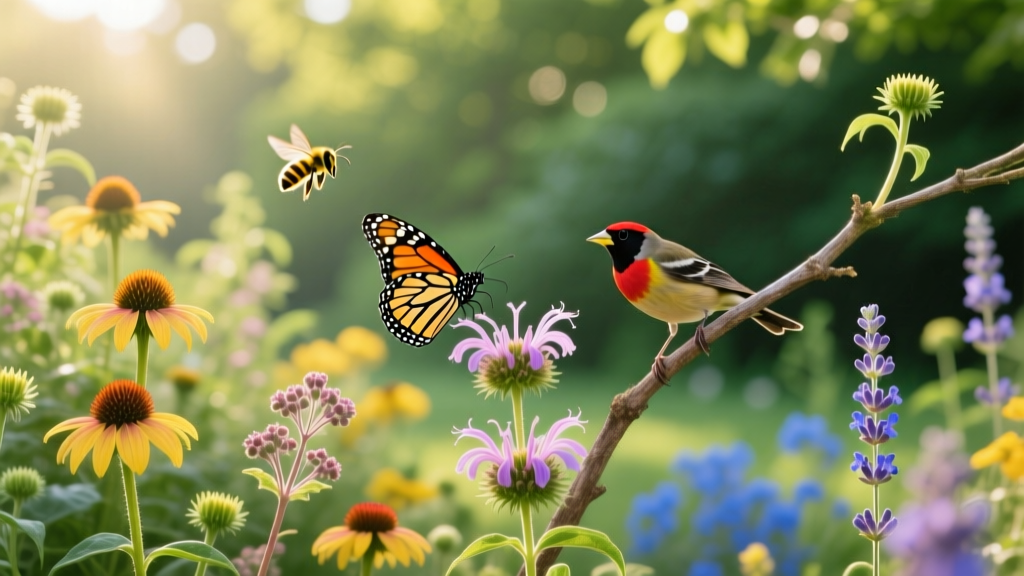
Summer Wildlife Garden: Create Habitat for Birds, Bees, and Butterflies This Season
Why Wildlife Gardens Matter
North America has lost 3 billion birds since 1970 — nearly 30% of all birds. Monarch butterfly populations have declined 80%. Native pollinators face habitat loss on every front. Your garden can be a critical refuge. A single well-designed wildlife garden supports 100+ species of birds, butterflies, bees, and beneficial insects.
The 4 Layers of Wildlife Habitat
Wildlife needs vertical structure — different species occupy different heights.
| Layer | Height | Function | Example Plants |
|---|---|---|---|
| Canopy | 30+ ft | Nesting, food, shade | Oak, maple, cherry |
| Understory | 10-30 ft | Cover, nesting, berries | Dogwood, serviceberry, viburnum |
| Shrub | 3-10 ft | Cover, nesting, nectar | Blueberry, elderberry, ninebark |
| Ground | 0-3 ft | Nesting, foraging, nectar | Wildflowers, grasses, ferns |
Top 25 Native Plants for Wildlife (by function)
For Birds (food + nesting):
- Oak trees — support 534 species of caterpillars (bird food)
- Serviceberry — early summer berries loved by robins, cardinals
- Sunflower — seeds feed goldfinches, chickadees, nuthatches
- Elderberry — late summer berries for 40+ bird species
- Dogwood — high-fat berries for fall migration fuel
For Butterflies (host + nectar):
- Milkweed — ONLY monarch host plant
- Passionflower — Gulf fritillary host
- Parsley/dill/fennel — black swallowtail host
- Butterfly weed (Asclepias) — nectar for all butterflies
- Joe-Pye weed — late summer nectar source
For Native Bees:
- Bee balm (Monarda) — bumblebee magnet
- Wild indigo — early season pollen
- Coneflower (Echinacea) — long bloom season
- Goldenrod — critical fall food source
- Asters — last blooms before winter
For Beneficial Insects:
- Yarrow — attracts ladybugs and parasitic wasps
- Dill (let it flower) — hoverflies eat aphids
- Sweet alyssum — tiny flowers for tiny predators
- Cosmos — general beneficial insect attractor
- Buckwheat — cover crop that feeds everything
Water Features
- Birdbath: Shallow (2 inches deep max), rough bottom for grip. Add a dripper or mister — moving water attracts 5x more birds.
- Puddling area: Bare soil + flat stones in sun. Butterflies need to puddle (drink mineral-rich water).
- Pond: Even a half-barrel pond with native plants supports frogs, dragonflies, and damselflies.
Nesting Sites
- Birdhouses: Mount at species-appropriate heights (bluebirds: 5-6 ft, wrens: 3-5 ft, owls: 15-20 ft)
- Brush pile: Stack fallen branches in a corner — provides cover for wrens, towhees, and small mammals
- Bee hotels: Bundles of hollow reeds or drilled wood blocks for solitary bees (mason bees, leafcutter bees)
- Leave dead trees: If safe, standing dead trees (snags) are used by woodpeckers, nuthatches, and chickadees for nesting
What to STOP Doing
- Stop using pesticides (even "organic" ones kill beneficial insects)
- Stop cleaning up in fall — leave seed heads standing for winter bird food
- Stop removing all dead leaves — they shelter overwintering butterflies and moths
- Stop planting non-native ornamentals — they support 35x fewer insect species than natives
Final Thoughts
Start with 5 native plants and a birdbath. Within one season, you'll see butterflies, bees, and birds you've never noticed before. A wildlife garden doesn't need to be messy — it can be beautifully designed while supporting incredible biodiversity. Every native plant you add makes a difference.