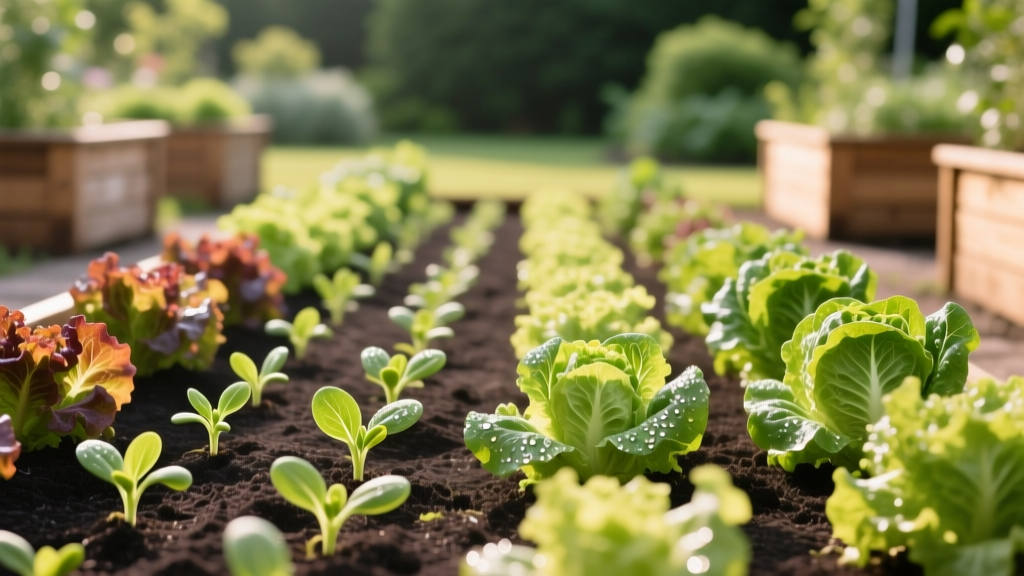
Succession Planting Lettuce: Get 5 Harvests from One Bed This Season
Why Succession Planting Lettuce Changes Everything
Most gardeners plant lettuce once in spring, harvest for a few weeks, then watch it bolt when summer heat arrives. With succession planting, you can harvest fresh lettuce for 8+ months from the same garden bed by timing plantings and choosing heat- and cold-tolerant varieties strategically.
Lettuce is one of the easiest crops for succession planting because it germinates quickly (7-14 days), matures fast (30-60 days), and tolerates partial shade. A single 4×8 bed can produce over 50 pounds of lettuce across a full season.
The 5-Harvest Succession Schedule
Harvest 1: Early Spring (March-April)
Start seeds indoors 6 weeks before last frost. Transplant hardened-off seedlings into the bed as soon as soil can be worked. Cold-tolerant varieties: Winter Density, Arctic King, Marvel of Four Seasons. Cover with row cover if frost threatens.
Harvest window: Begin cutting outer leaves at 4-5 inches tall, about 30-40 days after transplant.
Harvest 2: Late Spring (April-May)
Direct-sow seeds every 10 days starting 2 weeks before last frost. Use fast-maturing varieties: Black Seeded Simpson, Red Sails, Salad Bowl. These produce harvestable leaves in just 28-35 days.
Harvest window: Cut-and-come-again method — snip leaves 1 inch above the crown and they'll regrow in 2-3 weeks.
Harvest 3: Early Summer (June-July)
Switch to heat-tolerant varieties: Jericho (romaine), Nevada (batavian), Concept (butterhead). Plant in partial shade or use 40% shade cloth. Mulch heavily to keep roots cool.
Harvest window: Harvest earlier in the day when leaves are crisp and full of moisture. Plants last 3-4 weeks before bolting.
Harvest 4: Late Summer (August-September)
As temperatures begin dropping, sow heat-tolerant varieties again. Start seeds in a cool location (refrigerate seeds for 48 hours before planting to break heat dormancy). Transplant into the bed once seedlings have 3 true leaves.
Harvest window: Late summer plantings mature slower as days shorten, giving you a longer harvest window of 4-6 weeks.
Harvest 5: Fall (September-November)
Plant cold-hardy varieties for fall and winter harvest: Winter Density, Rouge d'Hiver, North Pole, Tango. These tolerate frost and can be harvested well into November (or all winter with a cold frame).
Harvest window: Fall lettuce grows slowly but tastes sweeter after light frost. Harvest through Thanksgiving in zones 5-7, all winter in zones 8+.
Cut-and-Come-Again Technique
Rather than harvesting entire heads, use the cut-and-come-again method: grasp outer leaves and cut with scissors 1 inch above the crown. The plant continues producing new inner leaves. Each planting yields 3-4 cuttings over 6-8 weeks.
Soil Preparation Between Plantings
Between each succession, top-dress the bed with 1 inch of compost and a light application of balanced organic fertilizer (5-5-5). Lettuce is a heavy nitrogen feeder — blood meal or fish emulsion side-dressing every 3 weeks keeps growth vigorous.
Best Varieties by Season
| Season | Variety | Type | Days to Harvest |
|---|---|---|---|
| Early Spring | Winter Density | Romaine | 55 |
| Late Spring | Black Seeded Simpson | Leaf | 28 |
| Summer | Jericho | Romaine | 50 |
| Late Summer | Nevada | Batavian | 48 |
| Fall | Rouge d'Hiver | Romaine | 55 |
Common Problems and Solutions
- Bolting: Prevent with shade cloth, mulch, and heat-tolerant varieties. Once a plant sends up a flower stalk, harvest immediately.
- Bitter taste: Usually caused by heat stress or inconsistent watering. Keep soil evenly moist and harvest in the morning.
- Slugs: Use diatomaceous earth, copper tape, or beer traps. Remove debris where slugs hide during the day.
- Tip burn: Calcium deficiency caused by irregular watering. Maintain consistent moisture and add gypsum to soil.