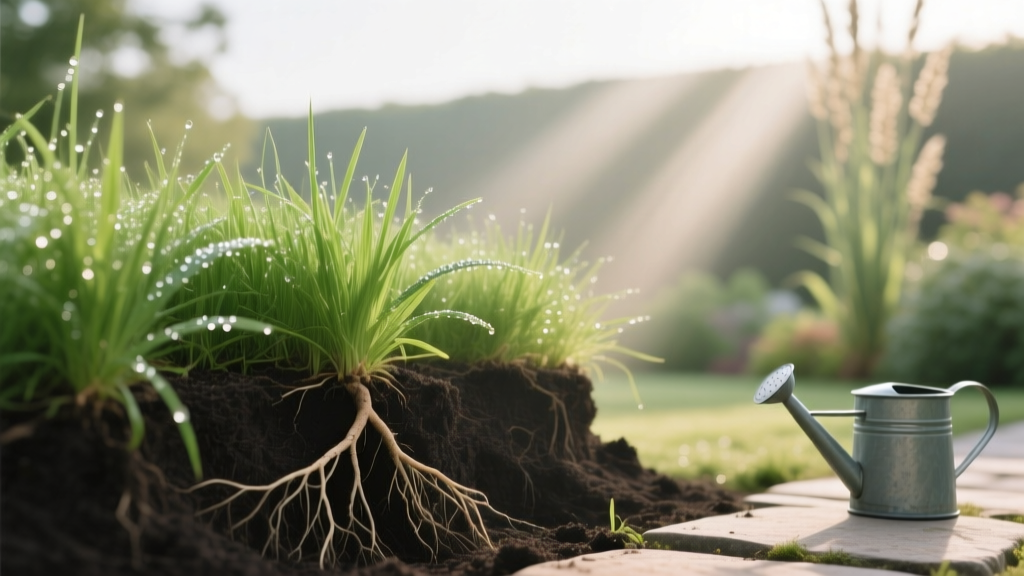
Summer Watering Schedule for Deep Root Growth
Summer is when shallow roots show up as scorched leaves, stalled growth, bitter cucumbers, split tomatoes, and turf that turns crisp after a single hot week. The opportunity right now: train your plants to root deeper by watering less often, but more thoroughly—on a schedule that matches heat, soil type, and plant stage. If you start this week, you can shift roots downward within 2–4 weeks and dramatically improve drought tolerance for the rest of the season.
Use this guide as a working plan you can follow today: what to plant, what to prune, what to protect, and what to prepare—organized by priority, with specific timing, temperature thresholds, and regional adjustments. Keep a notebook (or a note on your phone) for rainfall totals and irrigation minutes; that’s how you turn “watering” into a repeatable system.
Priority #1: Water for deep roots (not daily relief)
Set your trigger points (numbers you can act on)
Deep-root watering starts with clear triggers instead of guesswork. Use these thresholds as your go/no-go signals:
- Heat threshold: When highs are consistently 90°F+ for 3 days, increase total weekly water by ~25% for vegetables and new plantings (not necessarily frequency).
- Soil moisture trigger: If the top 2 inches are dry and plants wilt before 10 a.m., it’s time for a deep soak that day.
- Lawns: Apply 1.0–1.5 inches/week total (rain + irrigation) in 1–2 deep waterings for cool-season turf; warm-season turf often needs less once established.
- Container plants: When temps hit 85–95°F, many containers need daily watering; deep roots are limited by pot size, so your goal is consistent moisture and avoiding heat stress rather than deep rooting.
- Time-of-day: Water between 4 a.m. and 9 a.m. to reduce evaporation and leaf wetness duration that fuels disease.
Extension guidance consistently supports deep, infrequent irrigation for root development and stress tolerance. Colorado State University Extension notes that deep, less frequent watering encourages deeper root systems compared with light, frequent irrigation (CSU Extension, 2020). Turf research and extension recommendations also commonly target 1–1.5 inches/week for cool-season lawns during active growth (e.g., University of Minnesota Extension, 2022).
Research-backed principle: Deep, infrequent irrigation promotes deeper rooting and better drought resilience than frequent, shallow watering. (Summarized across multiple extension publications, including CSU Extension 2020.)
Do a 30-minute irrigation audit this week
Before you change your schedule, measure what your system actually applies. This prevents the most common summer mistake: watering “often” but not “enough” to reach the root zone.
- Place 6–10 straight-sided cans (tuna cans work) across a sprinkler zone or along a drip line area.
- Run irrigation for 15 minutes.
- Measure water depth in each can; average the results.
- Calculate runtime needed to deliver your target depth (for beds, often 0.5–1.0 inch per event; for lawns, often 0.5–0.75 inch per event).
If your soil is clay and water puddles or runs off before you hit your target, switch to “cycle-and-soak”: run 2–3 cycles with 20–60 minutes between cycles so water can infiltrate.
Summer deep-root watering schedule (by month)
Use this schedule as a baseline, then adjust with rainfall and temperature. The goal is to wet the soil to the active root depth: about 6–12 inches for many vegetables, 12–18 inches for shrubs, and deeper for trees (after establishment).
| Month | Veggie beds (in-ground) | New shrubs/trees (first year) | Established shrubs/trees | Lawns (cool-season) |
|---|---|---|---|---|
| June | Deep water every 3–5 days (more often in sandy soil) | 2–3x/week deep soak; keep root ball evenly moist | Deep water every 10–14 days if dry | 1.0–1.5 in/week in 1–2 waterings |
| July | Deep water every 2–4 days during 90°F+ spells | 3x/week during heat; consider temporary shade | Deep water every 7–14 days depending on heat/soil | 1.0–1.5 in/week; use cycle-and-soak on slopes/clay |
| August | Deep water every 3–5 days; taper slightly if nights cool | 2–3x/week (don’t let root ball dry out) | Deep water every 10–21 days if rainfall is scarce | 1.0–1.25 in/week if growth slows; avoid daily sprinkles |
Rule of thumb: If you can push a screwdriver easily down 6 inches the day after watering, you reached a meaningful depth. If it stops at 2–3 inches, you didn’t water deeply enough (or the soil is extremely compacted and needs remediation).
Quick checklist: deep-root watering habits that matter
- Mulch beds to 2–3 inches (keep mulch a few inches away from stems/trunks).
- Water to depth, then wait until the top couple inches dry before watering again (except new transplants and containers).
- Prefer drip/soaker hoses for vegetables to reduce foliar disease pressure.
- Track rainfall: 0.5 inch of rain can replace one irrigation for many beds (if it soaks in, not runs off).
- Adjust by soil: sandy = more frequent; clay = less frequent but slower delivery.
Priority #2: What to plant now (and how watering changes for new roots)
Summer planting can work if you treat water as a rooting tool. In USDA Zones 3–7, mid-to-late summer planting often aims at fall harvest or fall establishment. In Zones 8–10, you may be planting for a fall garden while protecting seedlings from intense heat.
Plant now for late summer and fall harvest
- Succession beans: sow every 2 weeks through mid-summer; keep evenly moist until germination, then shift to deep watering.
- Carrots and beets: keep seedbed consistently damp for 7–14 days to germinate; shade cloth can prevent crusting.
- Summer squash/cucumbers: in shorter-season areas, plant only if you have 50–70 days before your average first frost.
- Warm-season herbs: basil thrives with consistent moisture; deep watering reduces midday wilt and bolting stress.
Timing with frost dates: Count backward from your average first fall frost. For example, if your first frost is October 15, then a 60-day crop should be seeded by about August 15. If your first frost is September 20, that same crop needs to be in by July 20.
How to water new transplants (the first 21 days)
Deep roots don’t appear if the root ball dries out. For newly planted vegetables, perennials, shrubs, and trees, use a staged approach:
- Days 1–7: Check daily. Water when the top 1 inch is dry; aim to wet the entire root ball and a small ring beyond it.
- Days 8–14: Water every 2–3 days (more often in sandy soil or 90°F+ heat).
- Days 15–21: Shift toward deeper, less frequent watering—every 3–5 days—so roots explore outward.
For first-year trees and shrubs, many extension programs emphasize regular watering through the establishment period, especially through the first summer. Avoid a “set it and forget it” timer—heat waves can double water demand.
Priority #3: What to prune (to reduce water stress without inviting disease)
Summer pruning is about restraint. Your goal is to reduce water demand and improve airflow, not trigger a flush of tender growth that burns or attracts pests.
Prune tomatoes, cucumbers, and vining crops with a water-first mindset
- Tomatoes: Remove lower leaves touching soil to reduce splash-borne disease. In humid regions, prune lightly for airflow; in arid regions, keep more leaf cover to shade fruit and reduce sunscald.
- Cucumbers/squash: Remove only damaged or heavily diseased leaves. Over-pruning exposes fruit and increases water loss.
- Peppers/eggplant: Minimal pruning; stake instead. Leaf cover helps prevent sunscald when temps exceed 95°F.
Hold off on major pruning of trees and shrubs during extreme heat
If your area is in a heat wave (highs 95–105°F) or drought restrictions are in place, avoid heavy pruning that forces regrowth. Limit yourself to:
- Removing dead, broken, or diseased branches
- Cutting out rubbing limbs
- Lightly thinning water sprouts only if necessary
Timing tip: Prune early morning on a cooler day, then water deeply the day before—not immediately after—so cuts dry quickly and you reduce stress.
Priority #4: What to protect (heat, pests, and disease that spike with summer watering)
Summer watering decisions directly affect pest and disease pressure. Too little water invites spider mites and blossom end rot; too much (or late-day overhead watering) fuels fungal disease.
Protect soil moisture first: mulch and shade strategies
- Mulch: Maintain 2–3 inches of straw, shredded leaves, or bark fines on beds. Refill when you can see soil through the mulch.
- Temporary shade: Use 30–40% shade cloth when highs exceed 95°F for tender greens, new transplants, and cool-season herbs.
- Wind protection: In hot, dry wind regions, a windbreak can reduce water demand more than extra irrigation.
Pest prevention tied to watering habits
Dry, dusty, stressed plants attract and amplify specific pests. Adjust water and scouting together:
- Spider mites: Peak in hot, dry conditions. Prevent plant stress with deep watering and mulch; hose off undersides of leaves in early morning if populations start.
- Aphids: Flush off with water early in the day; avoid excess nitrogen fertilizer during heat (lush growth attracts aphids and increases water demand).
- Squash bugs: Keep plants vigorous with consistent deep watering; check undersides of leaves for bronze egg clusters weekly and remove.
- Fungus gnats (containers): Avoid constantly wet potting mix; let the top 1 inch dry between waterings, and improve drainage.
Disease prevention: water timing and leaf dryness
Many summer diseases become a problem because leaves stay wet overnight.
- Powdery mildew: Common on squash, cucumbers, zinnias. Improve airflow, avoid overhead watering late day, and remove severely infected leaves. Choose resistant varieties when possible.
- Early blight / Septoria (tomatoes): Mulch to prevent soil splash; water at the base; remove lower leaves; sanitize tools.
- Root rots: Watch for wilting that doesn’t recover after watering. Overwatering in heavy soils suffocates roots—fix drainage and reduce frequency.
Water management and plant pathology are linked. University of California Agriculture and Natural Resources emphasizes that irrigation method and timing influence foliar disease by affecting leaf wetness duration (UC ANR, 2019). Use that principle: keep foliage dry and water early.
What to prepare next (so deep-root watering works through late summer)
Build a two-week “heat wave plan” before you need it
Heat waves aren’t the time to improvise. Prepare now:
- Stock extra mulch and set aside drip repair parts (emitters, couplers, goof plugs).
- Install a simple rain gauge and record totals weekly.
- Set up shade cloth supports you can deploy in 10 minutes.
- Group pots by water needs; move thirstiest containers to afternoon shade when highs exceed 95°F.
Improve infiltration for deeper rooting (especially clay and compacted soil)
If water runs off, your schedule won’t matter. This is the week to fix infiltration:
- Top-dress beds: Add 0.5–1 inch compost around plants (not buried against stems), then re-mulch.
- Core-aerate lawns: Best done when turf is actively growing; follow with deep watering to encourage roots to chase moisture down.
- Create basins: For trees, make a shallow watering ring at the dripline so water soaks where feeder roots live.
Regional scenarios: adjust the schedule to your summer reality
One watering schedule doesn’t fit every garden. Use these real-world scenarios to tune your plan.
Scenario 1: Hot, arid West (USDA Zones 5–9, low humidity, big day-night swings)
In arid climates, evaporation is the main enemy. You can often water less frequently than you think—if you water deeply and mulch aggressively.
- Shift to early-morning irrigation only; avoid evening overhead watering that can still leave leaves wet in cooler nights.
- Use cycle-and-soak for lawns and slopes to prevent runoff.
- Keep more leaf canopy on tomatoes/peppers to prevent sunscald when highs exceed 95–100°F.
Scenario 2: Humid Midwest/Southeast (USDA Zones 6–9, frequent storms, fungal pressure)
Here the risk is “too wet in the wrong way”: frequent light watering plus humidity creates constant leaf wetness and shallow roots.
- Favor drip and soaker hoses; keep water off leaves.
- After heavy rain (e.g., 1 inch in a day), delay irrigation until the top 2 inches dry—especially in clay.
- Prune for airflow strategically (tomatoes, cucurbits), but don’t strip plants bare.
Scenario 3: Coastal/marine influence (USDA Zones 8–10 coastal, cool mornings, summer fog)
Cooler mornings and fog can trick you into overwatering. Roots can stay shallow if the soil surface stays constantly damp.
- Check soil moisture at 4–6 inches depth before watering; the surface may look dry while deeper soil is still moist.
- Water less often, but ensure you wet deeply enough to support fruiting crops.
- Watch for powdery mildew and botrytis—prioritize airflow and morning watering.
Scenario 4: Short-season North (USDA Zones 3–5, hot bursts, cool nights)
In short-season regions, summer heat can arrive suddenly and stress shallow roots fast, especially in raised beds.
- During a 90°F spike, don’t switch to daily shallow watering. Increase depth per event and add mulch.
- Use row cover or shade cloth for cool-season greens to prevent bolting and reduce water stress.
- Plan fall crops based on frost: if your first frost averages September 15, seed 60-day crops by July 15.
Timelines you can follow this week (and repeat)
This week (next 7 days)
- Do the 15-minute irrigation audit and calculate runtimes.
- Mulch any bare soil to 2–3 inches.
- Switch to morning watering (4–9 a.m.).
- Scout for spider mites (stippling), squash bug eggs, and early blight on lower tomato leaves.
- Deep water one zone/bed at a time, then check moisture depth the next day with a screwdriver test.
Next 2 weeks
- Adjust frequency so plants dry slightly between deep waterings (aim for deeper roots within 2–4 weeks).
- Succession sow beans or quick greens if you have 45–70 days before frost.
- Install shade cloth supports if your forecast includes highs above 95°F.
By mid-to-late summer (weeks 3–6 from now)
- Taper watering frequency for established trees/shrubs to encourage deeper rooting (don’t taper first-year plants too aggressively).
- Prepare for fall planting by keeping soil covered and adding compost where summer crops will finish.
- Keep a weekly log: rainfall, irrigation minutes, and any midday wilting notes.
Common summer watering mistakes that block deep roots
Mistake: “A little every day.”
Fix: Convert to fewer, deeper waterings that reach at least 6 inches in beds and deeper for woody plants.
Mistake: Watering at dusk to “save evaporation.”
Fix: Water early morning so foliage dries; this reduces disease risk in humid weather (UC ANR, 2019).
Mistake: Ignoring soil type.
Fix: Sandy soils need more frequent deep watering; clay soils need slower delivery and longer intervals.
Mistake: Treating containers like in-ground beds.
Fix: Containers have limited root volume and heat up fast; water more often, use larger pots, and add afternoon shade during 90°F+ periods.
Print-and-go checklist: deep root growth actions
- Measure irrigation output (cans + 15 minutes)
- Water early morning (4–9 a.m.)
- Mulch 2–3 inches on all bare soil
- Use cycle-and-soak on clay/slope (2–3 cycles; 20–60 min soak between)
- Deep water to at least 6–12 inches for vegetables
- New plantings: staged watering for 21 days
- Scout weekly for mites, aphids, squash bugs; remove diseased lower leaves
- Log rainfall weekly; skip irrigation after meaningful soaking rain (often 0.5–1.0 inch)
Once your schedule is dialed in, summer watering becomes predictable: you water with purpose, roots follow moisture downward, and plants stop panicking at the first hot afternoon. Start with the audit, mulch immediately, and let your next two weeks of deep soak cycles do the training—your late-summer garden will be sturdier, less disease-prone, and far more resilient when the inevitable heat stretch arrives.
Citations: Colorado State University Extension (CSU Extension), 2020, guidance on deep, infrequent irrigation encouraging deeper roots; University of California Agriculture and Natural Resources (UC ANR), 2019, irrigation timing/method effects on leaf wetness and disease; University of Minnesota Extension, 2022, cool-season lawn watering recommendations (~1–1.5 inches/week).