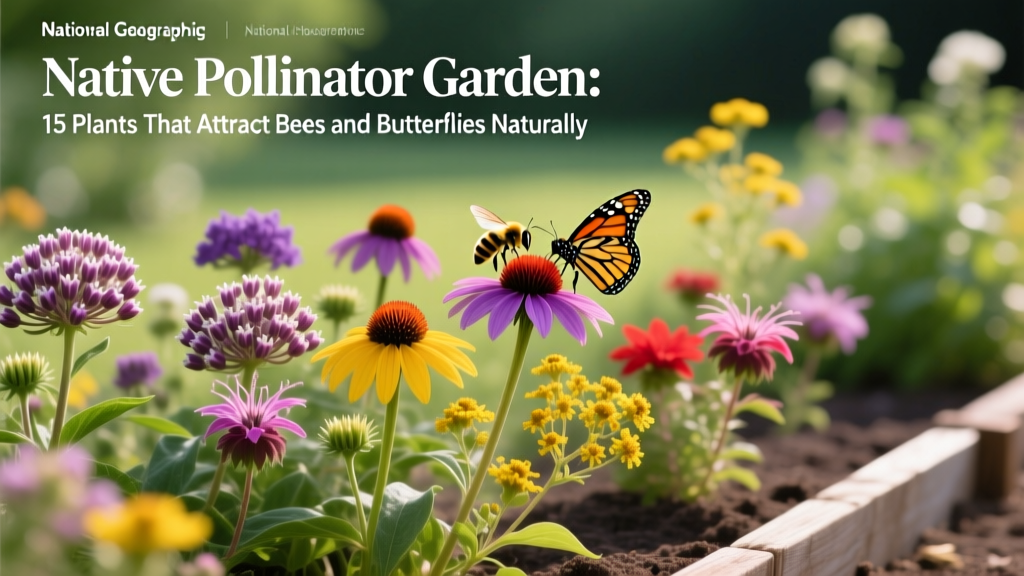
Native Pollinator Garden: 15 Plants That Attract Bees and Butterflies Naturally
Why Native Plants Are the Key to Pollinator Gardens
Native pollinators co-evolved with native plants over thousands of years. This means native bees, butterflies, and other pollinators are specifically adapted to feed on and pollinate the flowers in their region. A garden planted with native species supports 4x more pollinator species than one planted with exotic ornamentals, according to research by Dr. Doug Tallamy at the University of Delaware.
The 15 Best Native Pollinator Plants
Spring Bloomers
1. Wild Columbine (Aquilegia canadensis)
Zones 3-9. Partial shade. Red and yellow nodding flowers attract hummingbirds and long-tongued bees. Self-seeds gently. Deer-resistant.
2. Wild Geranium (Geranium maculatum)
Zones 3-8. Part shade. Pink-lavender flowers April-June. Host plant for several moth species. Excellent ground cover in woodland edges.
3. Wild Lupine (Lupinus perennis)
Zones 3-8. Full sun. Blue-purple flower spikes. The ONLY host plant for the endangered Karner Blue butterfly. Deep taproot makes it drought-tolerant once established.
Summer Bloomers
4. Purple Coneflower (Echinacea purpurea)
Zones 3-8. Full sun. June-September. Visited by 20+ bee species. Leave seed heads for goldfinches in fall. Self-seeds to form colonies.
5. Bee Balm (Monarda didyma)
Zones 3-9. Full sun to part shade. Scarlet tubular flowers are hummingbird magnets. Also attracts swallowtail butterflies. Aromatic foliage can be used for tea.
6. Black-eyed Susan (Rudbeckia hirta)
Zones 3-7. Full sun. Golden-yellow flowers June-October. One of the easiest native plants to grow. Supports silvery checkerspot butterfly caterpillars.
7. Butterfly Weed (Asclepias tuberosa)
Zones 3-9. Full sun. Bright orange flowers. Essential host plant for Monarch butterfly caterpillars. Deep taproot means it's drought-tolerant but slow to transplant. Plant from seed or small container.
8. Joe-Pye Weed (Eutrochium purpureum)
Zones 4-8. Full sun to part shade. Tall (4-6 ft) with vanilla-scented pink-purple flower clusters. Butterflies and bees swarm this plant in late summer. Excellent back-of-border plant.
9. Swamp Milkweed (Asclepias incarnata)
Zones 3-6. Full sun. Pink flowers, tolerates wet soil. Another essential Monarch host plant. Unlike butterfly weed, this species handles clay and moisture well.
10. Blazing Star (Liatris spicata)
Zones 3-9. Full sun. Purple flower spikes bloom top-to-bottom (unusual!). Monarchs and painted ladies love them during fall migration. Excellent cut flower.
Fall Bloomers
11. New England Aster (Symphyotrichum novae-angliae)
Zones 4-8. Full sun. Deep purple flowers September-October. Critical late-season nectar source for migrating Monarchs and preparing bees for winter.
12. Goldenrod (Solidago rugosa 'Fireworks')
Zones 4-8. Full sun. Arching sprays of golden flowers in September. Contrary to myth, goldenrod does NOT cause allergies (ragweed does). Supports 100+ insect species.
13. Ironweed (Vernonia noveboracensis)
Zones 5-9. Full sun. Intense purple flower clusters August-October. Grows 4-6 feet tall. Pairs beautifully with goldenrod for late-season color.
Year-Round Support
14. Switchgrass (Panicum virgatum)
Zones 4-9. Full sun. Warm-season grass that provides overwintering habitat for skipper butterflies and nesting sites for native bees. Beautiful golden fall color and architectural winter presence.
15. Wild Indigo (Baptisia australis)
Zones 3-9. Full sun. Blue-purple lupine-like flowers in May-June. Host plant for several butterfly species. Long-lived perennial (20+ years) with deep root system.
Designing Your Pollinator Garden
- Plant in drifts: Group 3-5 of the same species together — pollinators find mass plantings easier to locate
- Bloom succession: Ensure something is blooming from early spring through late fall
- Sun exposure: Most pollinator plants need 6+ hours of sun
- Avoid pesticides: Even organic pesticides like neem oil harm pollinators
- Provide water: A shallow dish with stones gives butterflies and bees a safe drinking spot
Beyond Plants: Habitat Features
- Bare ground patches: 70% of native bees nest underground — leave some mulch-free areas
- Brush piles: Overwintering habitat for butterflies and beneficial insects
- Bee hotels: Bundles of hollow stems for mason bees and leafcutter bees
- Leave leaves: Many butterfly species overwinter as caterpillars in fallen leaves