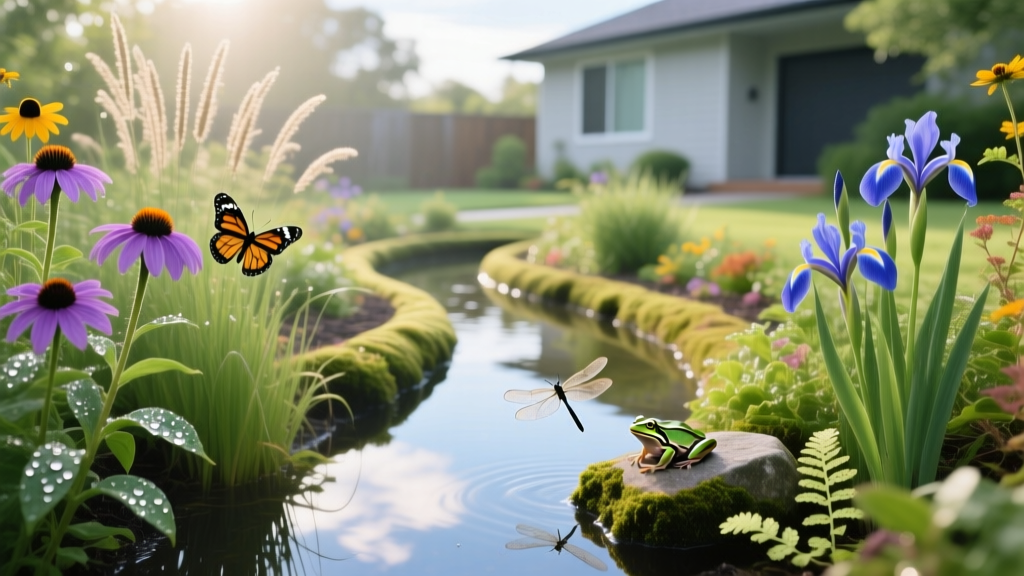
Native Plant Rain Garden: Manage Stormwater While Supporting Wildlife in 2026
What Is a Rain Garden?
A rain garden is a shallow depression planted with native species that captures and filters stormwater runoff from roofs, driveways, and lawns. It holds water for 24-48 hours after a rain event, allowing it to infiltrate the soil naturally rather than flowing into storm drains carrying pollutants.
Why Build One?
- Reduces flooding: Absorbs 30-40% more runoff than a conventional lawn
- Filters pollutants: Plants and soil remove 80-90% of heavy metals, nutrients, and sediment
- Recharges groundwater: Water soaks in rather than running off
- Creates habitat: Native plants support 4x more wildlife species than non-natives
- Saves money: Some municipalities offer $500-2,000 rebates for rain gardens
Step 1: Choose the Location
- At least 10 feet from building foundations
- In the natural path of runoff (downhill from a downspout or driveway)
- Full sun to partial shade (6+ hours preferred)
- Well-draining soil (perform percolation test: dig a hole, fill with water, it should drain within 24 hours)
- Avoid areas over septic systems or utility lines
Step 2: Size Your Rain Garden
Rule of thumb: 1 square foot of rain garden per 10 square feet of impervious surface draining into it.
Example: A 1,200 sq ft roof with one downspout directing to your garden = 120 sq ft rain garden (10x12 or 8x15 feet).
Step 3: Build the Depression
- Mark the outline with a garden hose (kidney or oval shapes look most natural)
- Dig 6-8 inches deep, creating a flat bottom with slightly bermed edges
- Use excavated soil to build up the downhill berm
- Create an overflow outlet at the lowest point of the berm (for heavy storms)
- Amend soil with compost if drainage is slow (add 2-3 inches, mix into top 6 inches)
Step 4: Direct Water In
- Extend downspout to discharge into the garden
- Create a shallow swale (channel) from driveway or patio
- Add a splash pad of river rocks where water enters (prevents erosion)
Step 5: Plant with Natives
Center (Wettest Zone — tolerates standing water):
| Region | Recommended Plants |
|---|---|
| Northeast | Blue flag iris, Joe-Pye weed, cardinal flower, swamp milkweed |
| Southeast | Swamp sunflower, pickerel rush, blue lobelia, sweet flag |
| Midwest | Prairie blazing star, marsh marigold, boneset, turtlehead |
| West Coast | Pacific rush, Douglas meadowsweet, Oregon iris, western goldenrod |
Edges (Moist Zone — occasionally wet):
- Black-eyed Susan, purple coneflower, wild bergamot, New England aster
Berm (Dry Zone — well-drained):
- Little bluestem, butterfly weed, purple prairie clover, yarrow
Maintenance Calendar
| Season | Tasks |
|---|---|
| Spring | Cut back dead stems, add 1 inch compost top-dressing, replant any winter losses |
| Summer | Water during establishment year only, remove invasive weeds |
| Fall | Leave seed heads for birds, clean overflow outlet before leaf drop |
| Winter | Leave standing stems for overwintering insects, avoid salt runoff |
Final Thoughts
A rain garden is one of the highest-impact projects a homeowner can undertake. You'll manage stormwater, support wildlife, reduce your water bill, and create a beautiful garden feature — all from a weekend of work. Start small (50-80 sq ft) and expand as you learn which native plants thrive in your conditions.