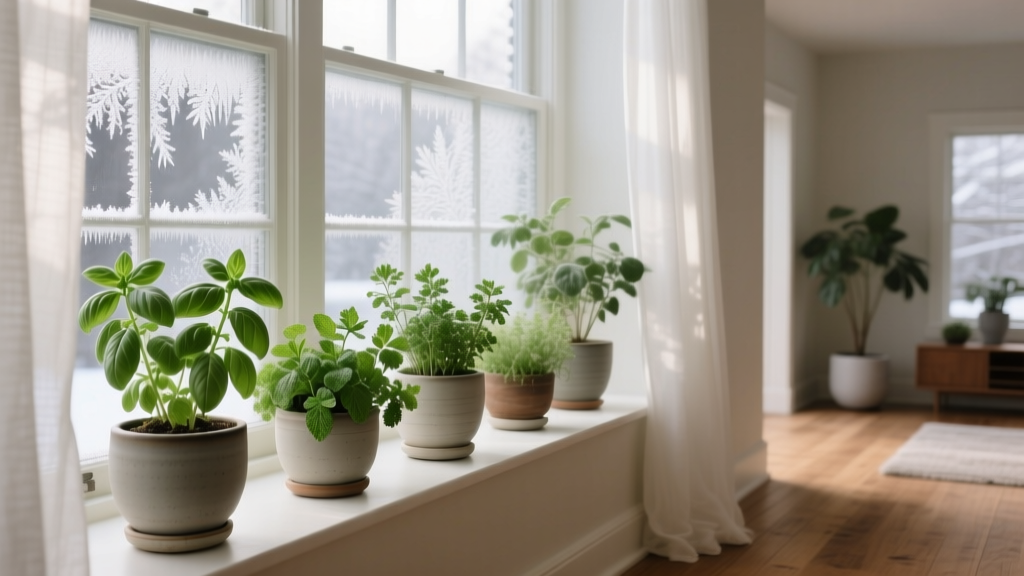
Winter Indoor Gardening Projects for Year-Round Freshness
When outdoor beds freeze and daylight shrinks, the window for fresh harvests doesn’t have to close—it just moves indoors. The next 8–12 weeks are the sweet spot for setting up compact, high-yield indoor projects that pay you back weekly: salads you can cut again and again, herbs you can pinch for soups, and microgreens that go from seed to plate in under two weeks. If you start now, you can be harvesting by Day 10–14, and you’ll also be lining up transplants and supplies for your spring frost-date countdown.
This is a priority-ordered, “do-it-this-week” plan. Use it like a seasonal almanac: start with the fastest food, stabilize your indoor environment, then prepare for the spring pivot. Timing assumes typical Northern Hemisphere winter conditions; adjust using your local average last frost date (many Zone 5–6 gardens land around May 1–15, while Zone 8 may be March 1–20). Keep a thermometer near your plants—temperature is the winter driver.
Priority 1: What to plant right now (fast harvests first)
If your goal is year-round freshness, plant in layers: microgreens for quick wins, baby greens for weekly bowls, then herbs for steady cooking. Most indoor winter failures come from starting slow crops too early (tomatoes in January) instead of stacking short-cycle projects.
Week 1–2: Microgreens (10–14 days to harvest)
Microgreens are the quickest winter project with the biggest flavor payoff. Aim for a room temperature of 65–75°F and keep germinating trays slightly warmer if possible. Harvest when the first true leaves show—often Day 10–14 for brassicas.
- Best winter microgreens: radish, broccoli, mustard, kale, pea shoots, sunflower (note: sunflower needs careful rinsing to prevent mold).
- Light: bright window plus a small LED bar works, but for reliable winter results target 12–16 hours/day under lights.
- Food safety: sanitize trays between runs; don’t mist constantly—water from below to reduce damping-off and mold.
Microgreens checklist (start today):
- Two shallow trays (one with drainage, one solid as a catch tray)
- Seed-starting mix or coconut coir; pre-moistened to “wrung sponge”
- Label with sow date; plan to re-seed every 7 days for a continuous supply
- Small fan set on low for air movement (prevents fungal issues)
“Good air circulation and avoiding overwatering are key steps to reduce damping-off and other seedling diseases indoors.” — Extension guidance commonly emphasizes airflow and moisture management for indoor seed-starting (University of Minnesota Extension, 2020).
Week 1–3: Cut-and-come-again salad greens (21–35 days to first cut)
For steady salads, sow leaf lettuce, spinach, arugula, and Asian greens in shallow boxes or 4–6 inch pots. You’re not aiming for full heads—winter light is limited—so focus on baby leaves.
- Temperature thresholds: spinach performs best around 50–65°F; lettuce is happy around 60–70°F. If your house runs warm (>72°F), prioritize arugula and mustard greens.
- Harvest timing: first baby-leaf cut typically at 21–35 days; then cut again every 7–14 days depending on regrowth.
- Planting density: thick sowing is fine for baby leaves, but keep airflow; thin if leaves stay wet overnight.
Week 2–6: Culinary herbs (30–60 days to steady picking)
In winter, herbs are about matching the plant to your indoor light and your heat. Start with the forgiving ones and add the finicky ones once you’ve stabilized light and watering.
- Easiest in winter: chives, parsley, cilantro (succession sow every 2–3 weeks), mint (keep contained), thyme, oregano.
- More light-hungry: basil (needs warm nights, ideally 65°F+; under lights it’s fine, on a cold windowsill it sulks).
- Best practice: pot herbs individually so you can water by need—rosemary wants it drier than parsley.
Herb timing note: If you want indoor basil for late winter, start seed 6–8 weeks before you expect to use it heavily (for many households, that’s “start now” for February cooking).
Week 4–10: Indoor scallions, garlic greens, and “kitchen scrap” regrowth
These aren’t full replacements for garden harvests, but they’re reliable winter bonuses.
- Scallions: re-root store-bought bunches in water for 3–5 days, then pot into soil for stronger regrowth.
- Garlic greens: plant cloves in a pot; harvest greens when 6–10 inches tall, usually within 2–4 weeks.
- Keep it sanitary: change water daily if rooting in water; stagnant water invites fungus gnats and odor.
Priority 2: What to prune (and when to leave it alone)
Winter indoor gardening often includes overwintered plants and houseplants pulled into service. Pruning now is about health, not heavy shaping. Your goal is to reduce pests, improve airflow, and encourage fresh, compact growth under lower light.
Herbs brought indoors: “reset pruning” in the first 7 days
If you brought rosemary, sage, or geraniums inside before frost, prune lightly within the first week indoors. Remove dead tips, thin crowded stems, and strip leaves that touch the soil surface. This reduces botrytis (gray mold) risk under indoor humidity.
- Remove no more than 20–30% of total growth at a time in low light.
- Prune on a dry morning, then run a fan for a few hours to dry cuts quickly.
Houseplants used as “herb companions”: clean-up pruning monthly
Many gardeners tuck herbs near houseplants under lights. Once a month (pick the first weekend), remove yellowing leaves and any leaf litter on the soil surface. Winter pests breed in the quiet corners.
What not to prune hard in winter
Avoid hard pruning of citrus, bay laurel, rosemary, and other woody container plants in midwinter unless you’re correcting damage or pests. In low light, they may not rebound quickly. Save shaping for late winter when daylength improves—often around mid-to-late February in many regions.
Priority 3: What to protect (light, temperature, humidity, and pests)
Indoors, “winter protection” isn’t about frost blankets—it’s about preventing slow decline from low light, overwatering, dry air, and pest flare-ups. Fix these early and your winter harvest becomes routine.
Light: set a measurable target (and avoid the cold window trap)
In winter, a bright windowsill can still be too dim for productive greens, and the glass can chill leaves at night. If nighttime window temperatures drop below 55°F, move plants back 6–12 inches or use lights.
- Practical target: provide 12–16 hours/day of LED light for greens and herbs.
- Distance: many LED shop lights do well at 4–10 inches above seedlings; adjust to prevent stretching or leaf bleaching.
- Weekly check: if seedlings lean, stretch, or develop large gaps between leaves, increase light intensity or duration.
Temperature: stabilize nights to prevent stalls and disease
Winter homes often swing: warm days, cold nights. Most salad greens tolerate cool nights, but repeated dips slow growth and encourage mildew if the soil stays wet.
- Greens baseline: keep between 60–70°F for reliable growth; spinach can run cooler (50–65°F).
- Microgreens baseline: germinate at 65–75°F for uniform stands.
- Avoid heat blasts: don’t place trays over radiators or heat vents; dry air plus heat spikes invite spider mites.
Humidity and airflow: prevent mildew, damping-off, and fungus gnats
Dry forced-air heat dries leaves, while overwatering keeps the soil surface wet—winter often creates both problems at once. Solve with airflow and bottom watering.
- Run a small fan on low for several hours daily; aim for gentle leaf movement.
- Water from below, then drain excess after 20 minutes.
- Top-dress with a thin layer of coarse sand or use yellow sticky cards if fungus gnats appear.
Extension resources consistently recommend sanitation and moisture control for indoor seed-starting and disease prevention. The University of Maryland Extension’s indoor seed-starting guidance emphasizes clean containers and avoiding overly wet media to reduce disease pressure (University of Maryland Extension, 2019).
Pest prevention: winter’s usual suspects (and what to do this week)
Indoors, pests don’t get knocked back by weather. They build slowly, then suddenly. Inspect weekly—set a calendar reminder.
- Fungus gnats: let the top 1 inch of soil dry, bottom-water, use sticky traps, and consider a biological drench (Bti) if persistent.
- Aphids: pinch off infested tips; rinse plants in the sink; follow with insecticidal soap if needed (test first on tender greens).
- Spider mites: common in hot, dry rooms; increase humidity near plants and rinse undersides of leaves. Keep plants away from heat vents.
- Powdery mildew: improve airflow, avoid wetting leaves late day, and thin dense seedlings.
Priority 4: What to prepare (seed-starting pipeline and spring readiness)
Your winter indoor garden is also your spring launchpad. The key is timing: start only what you can grow well indoors, and schedule seed-starting based on your last frost date rather than the calendar alone.
Build a winter sowing pipeline (simple succession schedule)
Instead of starting everything at once, stagger. This prevents feast-or-famine harvests and spreads out care.
| Month | Indoor projects to start | Expected harvest window | Key watch-outs |
|---|---|---|---|
| December | Microgreens weekly; lettuce mixes; parsley/chives | Microgreens in 10–14 days; baby greens in 3–5 weeks | Low light—use 12–16 hrs/day; avoid cold windows (<55°F) |
| January | Succession cilantro every 2–3 weeks; spinach; scallions | Weekly cuts by late Jan/Feb | Overwatering + cold nights = slow growth and mildew |
| February | Start slower herbs under lights; prep seed-starting gear | Heavier herb picking by March | Pest checks—aphids/mites can spike as days lengthen |
| March | Seed-start cool-season transplants 6–8 weeks before last frost | Transplants ready near last frost window | Harden off gradually; avoid leggy starts |
Seed-start timing anchored to frost dates (use these numbers)
Use your USDA zone and local last frost date as your anchor. Here are actionable benchmarks:
- 6–8 weeks before last frost: start broccoli, cabbage, and lettuce transplants indoors.
- 4–6 weeks before last frost: start onions from seed (if you do seed-grown onions) and early herbs.
- At soil temps ~45–50°F outdoors: many cool-season crops can be direct-sown outside (check local guidance), but keep indoor greens going until outdoor beds reliably thaw.
- When indoor night temps stay above 65°F: basil and warm herbs perform much better.
- Hard stop: don’t start tomatoes/peppers more than 8–10 weeks before planting out, or they’ll outgrow your lights.
If you’re in a typical USDA Zone 5 location with an average last frost around May 10, that puts your brassica seed-start around March 15–April 1. In Zone 8 with a last frost near March 15, brassica starts are closer to January 15–February 1. Coastal climates with mild winters may skip heavy indoor seed-starting and focus on indoor greens for convenience rather than necessity.
Regional realities: three common winter indoor gardening scenarios
Indoor gardening isn’t one-size-fits-all. Your winter success depends on how cold your nights get, how dry your indoor air is, and how much daylight your windows actually deliver.
Scenario 1: Cold-northern homes (USDA Zones 3–5) with very short days
In Zones 3–5, winter window light is weak and nights near glass can be cold enough to stall growth. Prioritize lights and compact crops.
- Best projects: microgreens, baby greens, chives, parsley.
- Keep trays away from windows if leaf temps dip below 55°F.
- Run lights 14–16 hours for steady growth from December through February.
Timing tip: Start a new microgreen tray every 7 days from now until your outdoor daylength improves (often late February). That alone can cover winter freshness.
Scenario 2: Dry, heated interiors (common anywhere with forced-air heat)
If your indoor humidity crashes in winter, spider mites become the seasonal pest to beat, and tender greens can get crispy edges.
- Move plants away from heating vents; heat blasts create mite-friendly hotspots.
- Use a humidity tray (pebbles + water) under pots, without letting pots sit in water.
- Rinse plant undersides weekly as a preventive measure if mites are common in your home.
Scenario 3: Mild-winter regions (USDA Zones 8–10) where outdoors is still producing
In Zones 8–10, you may already have outdoor greens. Indoor projects still make sense if you want clean, fast harvests without rain splash, slug pressure, or temperature swings.
- Use indoor microgreens and herbs to supplement outdoor beds during wet spells.
- Focus on sanitation and airflow indoors—mildew can still be an issue in humid coastal winters.
- Plan spring transitions earlier; your seed-start calendar may begin in January.
Practical winter timelines (do this in order)
This timeline keeps you harvesting while you build a stable indoor system.
Today (Day 0–1)
- Set up one microgreens tray and one baby-greens container.
- Place a thermometer near plants; note night lows for 3 nights.
- Add a small fan for airflow.
- Sanitize trays/pots (hot soapy water; dry completely).
This weekend (Day 2–3)
- Install or adjust grow lights to reach 12–16 hours/day.
- Label everything with sow date; plan the next sowing for Day 7.
- Inspect houseplants nearby for aphids/mites—treat early to protect edibles.
Next week (Day 7)
- Sow a second microgreens tray (continuous harvest system).
- Thin baby greens if leaves are overlapping and staying wet.
- Bottom-water once, then let surfaces dry slightly to deter fungus gnats.
Week 2 (Day 10–14)
- Harvest first microgreens flush (cut cleanly; refrigerate dry).
- Re-seed the tray the same day to keep the cycle going.
- Check for mold; if you see it, reduce seeding density and increase airflow.
Week 3–5
- First baby-greens cut at 21–35 days; cut high enough to regrow.
- Start cilantro succession sowing every 2–3 weeks.
- Do a pest audit: sticky cards, leaf undersides, soil surface.
Winter disease-proofing: small moves that prevent big setbacks
Indoor winter crops fail from preventable issues: stagnant air, constantly wet media, and dirty trays. Build routines that make disease unlikely.
- Damping-off defense: start with fresh mix, avoid over-misting, and keep airflow moving across the soil surface.
- Botrytis (gray mold): remove dead leaves promptly; don’t crowd pots; water early in the day so surfaces dry.
- Sanitation rhythm: wash and dry trays between plantings; keep potting mix bags sealed to deter fungus gnats.
For more formal best practices, extension seed-starting resources consistently stress clean containers, sterile or fresh media, and careful watering to prevent seedling losses (University of Minnesota Extension, 2020; University of Maryland Extension, 2019).
Quick project chooser: match your goal to your setup
If you’re unsure what to do first, pick based on your available light and your patience.
- Low light / no grow lights: try scallions, garlic greens, and microgreens near the brightest window (but keep off cold glass). Expect slower greens.
- Basic grow light (shop light): microgreens weekly + baby salad boxes + parsley/chives.
- Warm room + strong light: add basil and faster herb production; consider dwarf cherry tomatoes only if you can provide high light and space (many winter setups can’t).
Indoor winter harvest rules (so plants keep producing)
Harvesting is a form of pruning. Done right, it increases yield; done wrong, it ends the plant.
- Microgreens: cut once at the base; compost the roots and media if mold risk is high, or re-use only if you can sanitize safely.
- Baby greens: “cut high” (leave at least 1 inch of growth) and rotate containers so regrowth stays even.
- Herbs: pinch tips regularly; avoid stripping a plant bare. Keep at least 2/3 of foliage intact for steady recovery in winter light.
By the time you’ve cycled three microgreen trays (about a month if you seed weekly), you’ll have a stable winter rhythm—and your spring prep will be underway without cluttering the house with overgrown seedlings. Keep it tight, keep it clean, and keep planting on a schedule: winter freshness is less about having the perfect setup and more about repeating the right small tasks every 7 days.
Sources: University of Maryland Extension (2019), indoor seed-starting and sanitation guidance; University of Minnesota Extension (2020), seedling disease prevention emphasizing airflow and moisture management.