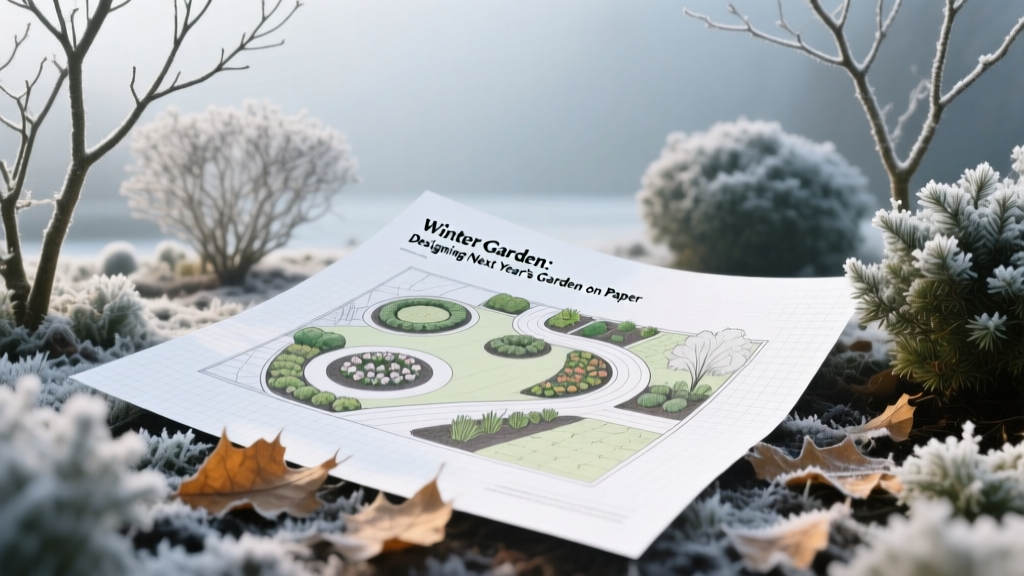
Winter Garden: Designing Next Year Garden on Paper
Winter is the one season that gives you something the growing months rarely do: time to think. If you wait until spring thaw to make decisions, you’ll default to last year’s layout, repeat the same pest hotspots, and scramble for seeds after the best varieties sell out. Right now—when the beds are quiet and your notes are fresh—is when you can design a garden that produces more, wastes less water, and avoids the disease cycles that built up over the past season.
This guide is organized by priority: what to plant now, what to prune, what to protect, and what to prepare on paper so your spring work is faster and smarter. Pull your last frost date, grab your seed catalogs, and start with the tasks that can’t wait.
Priority 1: What to Plant (and Order) Right Now
Planting windows that still matter in winter
Even in winter, there are time-sensitive planting opportunities—especially for bare-root stock and for gardeners in mild climates. Use temperature and frost-date cues, not just the calendar.
- Bare-root trees and shrubs: Plant while dormant when soil is workable and not waterlogged. Many nurseries ship bare-root from late January through March. Aim to plant when daytime highs are consistently above 40°F and the ground is not frozen.
- Garlic (if you missed fall): In milder zones (often USDA Zones 7–9), you may still plant in January for a smaller but worthwhile crop. If your soil temps are below 32°F for long stretches, hold bulbs for spring planting (expect reduced bulb size).
- Cover crops in mild winters: In coastal and southern regions where soil doesn’t freeze, quick cover crops can still establish if you can give them 4–6 weeks before hard freezes. If you’re already below 28°F nights, switch to mulch + compost instead.
- Indoor starts for long-season crops: Use your average last frost date to count backwards. Examples: start onions from seed 10–12 weeks before last frost; start peppers 8–10 weeks before last frost; start tomatoes 6–8 weeks before last frost.
Seed ordering by week (so you don’t get stuck with substitutes)
Plan your buying in two passes: first for must-have varieties and disease-resistant cultivars, then for experiments. A simple winter schedule:
- Weeks 1–2 of January: Order onions, leeks, celery, and slow germinators; reserve seed potatoes if you grow them.
- By January 31: Order tomatoes and peppers (popular varieties can sell out early).
- By February 15: Order direct-sow crops (peas, greens, carrots) and succession sowing varieties.
Regional timing snapshots:
- Upper Midwest / Northern New England (Zones 3–5): Last frost often falls around May 15–June 5. That means pepper starts may begin late March, onions early March.
- Mid-Atlantic (Zones 6–7): Last frost often lands near April 10–25. Onion starts may begin late January–early February, tomatoes late February–early March.
- Coastal Pacific Northwest (Zones 8–9): Last frost commonly March 15–April 1 (variable by microclimate). Many gardeners can direct-sow peas in late February when soil is workable.
Priority 2: What to Prune (and What to Leave Alone)
Winter pruning rules that prevent disease
Pruning is easiest when you can see the structure—and safest when you avoid spreading disease. Work on a dry day when temperatures are above 35°F so cuts don’t shatter brittle wood. Disinfect tools when moving between diseased plants.
Extension guidance emphasizes correct timing to reduce infection and stress. For example, many fruit trees are pruned during dormancy to shape structure and manage vigor.
- Apple and pear: Dormant prune in late winter, often February to early March in colder zones, after the coldest snaps but before bud break.
- Grapes: Prune in late winter; delay until later in winter in very cold areas to reduce cold injury.
- Summer-flowering shrubs (on new wood): Many can be pruned in late winter.
- Spring-flowering shrubs (on old wood) like lilac, forsythia: Do not winter prune unless you’re willing to sacrifice spring bloom—wait until right after flowering.
“Dormant pruning is generally recommended for many fruit trees because it minimizes disease spread and allows growers to see the branch framework clearly.” (University extension recommendations summarized; see citations below.)
High-risk pruning: avoid these winter mistakes
- Do not prune oaks during active beetle periods in regions with oak wilt; timing guidance varies by state, but many recommend avoiding pruning in spring and early summer. If you must prune after storm damage, seal fresh cuts immediately where recommended locally.
- Avoid heavy pruning of stressed evergreens during severe cold. Wait until late winter when the worst freezes are past.
- Don’t “lion-tail” shade trees: Removing interior branches increases sunscald and wind damage.
Citation: University of Minnesota Extension notes that pruning timing can influence disease risk and winter injury, and emphasizes using proper technique and timing for tree health (University of Minnesota Extension, 2020).
Priority 3: What to Protect (So Your Plans Survive Winter)
Cold thresholds and practical protection
Your garden design is only as good as what makes it through winter. Use clear thresholds to decide when protection matters.
- Cover tender greens and overwintering beds when nights drop below 28°F. A low tunnel with fabric can add several degrees of protection.
- Mulch root zones once the ground begins to freeze and thaw repeatedly; aim for 2–4 inches of straw or shredded leaves around perennials (keep mulch pulled back from crowns to prevent rot).
- Protect young fruit trees from sunscald on bright winter days, especially in Zones 3–6. Use tree wrap or white guards on the south/southwest side.
- Water on mild days: If there’s no snow cover and soil is dry, water evergreen shrubs when temperatures are above 40°F and the ground is not frozen. Winter desiccation is a common killer.
Rodents, deer, and winter trunk damage
Winter is prime time for bark chewing. Damage is often discovered too late—after the cambium is girdled.
- Install hardware cloth guards (1/4-inch mesh) around young tree trunks, extending 18–24 inches above expected snow line.
- Keep mulch off trunks to reduce vole habitat.
- Use repellents strategically for deer, reapplying after thaw/rain and whenever temperatures rise above freezing.
Seasonal pest and disease prevention you can do now
Winter sanitation reduces next year’s pressure dramatically, especially for fungal diseases and overwintering insect eggs.
- Remove mummified fruit from trees and ground to reduce brown rot and other fruit diseases.
- Clean up diseased leaves (apple scab, rose black spot) and dispose—don’t compost if you don’t hot-compost reliably.
- Apply dormant oil only when temperatures are safely above freezing for a full day. Many labels and extension recommendations align around applying when temps are above 40°F and no freeze is expected for 24 hours. Target scale insects and mite eggs on fruit trees and ornamentals as appropriate.
Citation: Washington State University Extension provides guidance on dormant oil timing and temperature considerations to reduce plant injury and improve efficacy (WSU Extension, 2019).
Priority 4: What to Prepare on Paper (The Winter Design Work That Pays Off)
Start with last year’s evidence (not your memory)
Before you draw next year’s plan, do a quick winter audit. Walk your beds with a notebook and mark the problems you want to eliminate.
- Where did you see powdery mildew or persistent leaf spot?
- Which beds dried out fastest in July (potential irrigation upgrade)?
- Where did pests concentrate—aphids on brassicas, squash vine borer on zucchinis, tomato blight in dense plantings?
- Which crops underperformed due to shade, crowding, or timing?
Then use that evidence to make your plan measurable: fewer disease-prone plantings in low airflow areas, more spacing, and rotations that break pest cycles.
Draw your garden to scale (simple method)
You don’t need landscape software. A ruler, graph paper, and consistent scale is enough.
- Measure beds and paths. Include fixed features (fences, trees, spigots).
- Pick a scale (example: 1 square = 1 foot).
- Sketch the sun pattern: note where snow melts first, and where shade lingers in late afternoon.
- Label irrigation reach: hose length, drip zones, and areas that need mulch basins.
Design rule that prevents headaches: Put the crops you harvest most often (salad greens, herbs) within 20–30 feet of the door or path you actually use. Convenience is productivity.
Rotation planning that actually breaks disease cycles
Crop rotation works best when you rotate by plant family, not by crop name. Aim for a 3–4 year rotation for disease-prone families if space allows.
- Nightshades: tomato, pepper, eggplant, potato
- Brassicas: cabbage, kale, broccoli, radish
- Cucurbits: cucumber, squash, melon
- Alliums: onion, garlic, leek
- Legumes: peas, beans
If you have a small garden and can’t rotate perfectly, use winter planning to reduce risk: choose resistant varieties, improve airflow, mulch to reduce splash, and plan earlier/later plantings to dodge peak pressure.
Variety selection: choose resistance now, not after a problem
Use winter to pick varieties with built-in resistance—especially for crops that repeatedly fail in your region.
- Tomatoes: Look for resistance codes like V (verticillium), F (fusarium), N (nematodes), or tolerance for early blight where it’s common.
- Cucurbits: Consider powdery mildew resistant cucumbers/squash if you typically see white coating by midsummer.
- Apples: If apple scab is chronic, plan for scab-resistant cultivars and prune for airflow.
Monthly Schedule: Winter-to-Spring Planning Timeline
| Time Window | Priority Tasks | Temperature / Date Triggers | Deliverable (What You Should Have Done) |
|---|---|---|---|
| Dec 15–Jan 15 | Garden audit, measure beds, review notes/photos, map sun/shade | After first hard freeze; when beds are visible and dormant | Scaled base map + problem list (pests, diseases, weak areas) |
| Jan 1–Jan 31 | Order seeds for slow starters; plan rotations; order bare-root (if planting) | Seed catalogs released; plant bare-root when soil workable > 40°F days | Seed order placed + rotation draft by bed |
| Feb 1–Feb 28 | Finalize bed plan; schedule indoor sowing dates; tool tune-up | Count back from last frost (example: 8–10 weeks for peppers) | Week-by-week sowing calendar + supply list (lights, trays, mix) |
| 2–4 weeks before last frost | Prep cold frames/row cover; direct sow hardy crops in mild regions | Soil workable; nights mostly above 25–28°F for uncovered hardy starts | Protection gear ready; first outdoor sowings planned |
| Last frost week (example Apr 15 / May 15) | Harden off seedlings; transplant according to crop tolerance | After last frost; soil temps rising (varies by crop) | Transplant map executed with spacing and supports installed |
Checklists You Can Use This Week
Winter garden paper-planning checklist (60–90 minutes)
- Find your average last frost date and write it at the top of your notes.
- Sketch beds to scale and label sun/shade zones.
- List top 5 crops you actually want to eat (not just what’s fun to grow).
- Assign each bed a crop family for rotation.
- Mark spots for trellises and tall crops so they don’t shade shorter ones.
- Note where you’ll add compost and where you’ll avoid excess nitrogen (root crops).
- Circle 1–2 problem areas to fix: drainage, airflow, irrigation reach, or soil compaction.
Winter protection checklist (30 minutes on the next mild day)
- Install trunk guards for young trees (vole/rabbit protection).
- Check mulch depth (target 2–4 inches over roots; keep crowns open).
- Remove diseased leaves and mummified fruit from beds and orchard areas.
- Inspect stored produce (onions, squash, potatoes) and remove soft/rotting items to prevent spread.
Three Real-World Winter Planning Scenarios (Adjust Your Paper Plan)
Scenario 1: Cold-climate gardener (Zones 3–5) with a short growing season
Your biggest win comes from planning around time, not space. Choose faster-maturing varieties and build your calendar backward from a real frost date. If your last frost is around May 20 and your first fall frost is around September 20, you have roughly 120 frost-free days—less in practice.
- Plan for indoor starts for peppers, tomatoes, brassicas, and onions.
- Allocate a bed for low tunnels to gain 2–4 weeks on each end of the season.
- On paper, place windbreaks (fences, shrubs, temporary barriers) on the prevailing wind side to reduce desiccation and seedling stress.
Scenario 2: Mild-winter gardener (Zones 8–10) with active winter growth
You’re not “waiting for spring”—you’re managing a cool season while planning the warm season. Winter planning should include succession sowing and pest anticipation, because aphids, slugs, and fungal issues can persist through winter rains.
- Plan a January–March sequence for greens and brassicas; leave space for spring transitions.
- Design drainage solutions on paper (berms, raised rows, gravel paths) if winter rain causes puddling.
- Schedule preventative sanitation and airflow improvements to reduce downy mildew and leaf spot during wet spells.
Scenario 3: Urban/small-lot gardener with limited rotation space
If you garden in a few raised beds, true rotation is hard. Your paper plan should lean on spacing, soil health, and targeted variety choice.
- Plan one bed per season for heavy compost additions, and one bed for lighter feeding crops (herbs, some roots) to avoid over-fertility.
- Use trellises and vertical supports to increase airflow (key for tomatoes and cucurbits).
- On your drawing, mark “sanitize zones” where you’ll remove and discard diseased foliage promptly instead of letting it build up.
Turn Your Paper Plan Into a Week-by-Week Sowing Calendar
Once your bed map is sketched, translate it into dates you can follow. Use your last frost date as the anchor. Here’s a fill-in template approach:
- Write: Last frost date = ________ (example: April 15 or May 15).
- Count back:
- Onions/leeks: 10–12 weeks before last frost
- Peppers: 8–10 weeks before last frost
- Tomatoes: 6–8 weeks before last frost
- Brassicas (spring transplant): 4–6 weeks before last frost
- Count forward:
- Warm-season transplants go out after danger of frost passes and nights are reliably above 50°F for heat-lovers like peppers.
- Plan 2–3 succession sowings for salad greens at 10–14 day intervals in spring.
If you prefer concrete milestones: mark three planning dates on your calendar now—January 15 (finalize bed map), February 1 (finalize seed order and sowing calendar), and March 1 (start first indoor sowings for many regions).
Winter Tool, Soil, and Infrastructure Prep (The Unsexy Work That Prevents Spring Delays)
Winter planning fails when you ignore the physical bottlenecks. Add these to your paper plan as “project blocks” so they actually happen.
- Tool tune-up: Sharpen pruners and loppers; oil hinges; replace cracked handles. Clean soil off shovels to prevent rust.
- Seed-starting station: Confirm you have lights, timers, trays, and fresh mix before sowing week arrives. Replace weak shop lights now, not after seedlings stretch.
- Irrigation plan: On your drawing, mark drip lines, timers, and hose routes. Plan upgrades before spring rush.
- Soil test scheduling: If your region allows sampling, plan to test before major amendments. Many extension services recommend soil testing every few years to guide lime and fertilizer decisions (common extension guidance; check your state’s lab procedures).
Citation: Soil testing and nutrient management are widely recommended by extension programs to avoid over-fertilization and correct pH issues; for example, Penn State Extension discusses soil testing as the basis for fertilizer and lime recommendations (Penn State Extension, 2023).
Design Notes That Prevent Pest and Disease Problems Next Year
Add these specific prevention moves to your garden map and calendar—winter is when you can design them in rather than trying to patch problems later.
- Airflow lanes: Draw at least one 18–24 inch access path or open strip that improves airflow through dense plantings (tomatoes, squash). Better airflow reduces leaf wetness duration, which reduces fungal pressure.
- Mulch strategy: Plan where to use straw/leaf mulch to reduce soil splash (early blight and other soil-borne issues often worsen with splash).
- Trellis placement: Place trellises on the north side of beds (in the Northern Hemisphere) to prevent shading smaller crops.
- Trap crops and flowers: If aphids are chronic, plan early-season flowers that support beneficials. Keep this realistic—one dedicated strip is more useful than scattering single plants.
- Sanitation routine: Put reminders in your calendar for midseason cleanup and end-of-season removal of diseased plant material.
The best winter garden design isn’t the prettiest drawing—it’s the one that makes spring obvious. If you finish winter with a scaled map, a rotation plan, a sowing calendar tied to your frost date, and a short list of protection upgrades, you’ll hit the first warm week ready to plant instead of still deciding where things go.