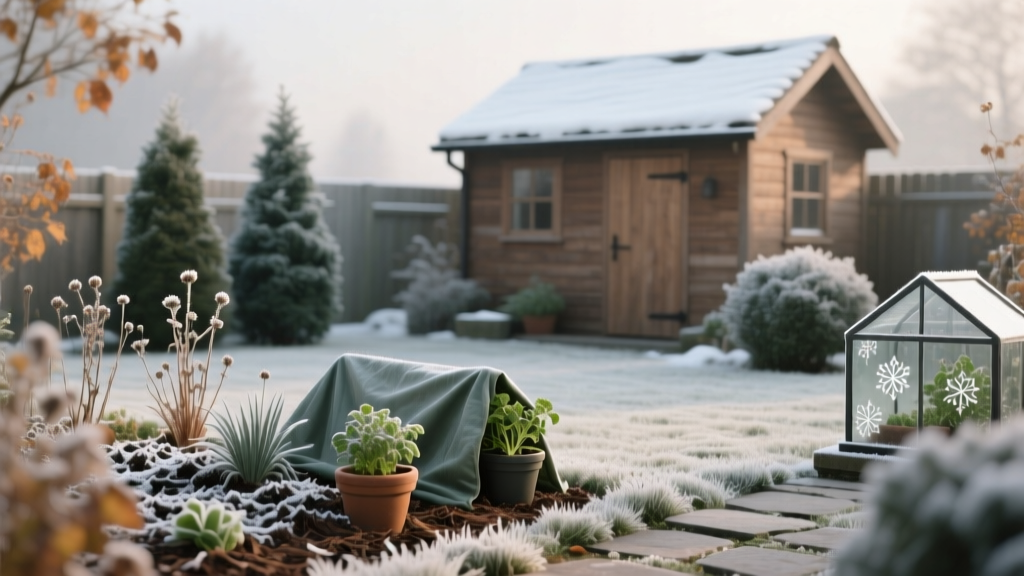
How to Protect Your Garden from Winter Freeze
The next hard freeze can arrive with only a few days’ notice, and the difference between “fine” and “fried” is often one afternoon of prep. If your overnight lows are flirting with 32°F, treat that as your trigger: water, harvest, cover, and insulate now—before soil heat bleeds away and plant cells freeze. Use this guide as a right-now checklist with timing cues, temperature thresholds, and regional adjustments so you’re protecting the plants you have, while setting up next season’s success.
First, anchor your plan to numbers that matter in real gardens: your area’s average first fall frost date (often between Sept 15–Nov 30 in the U.S.), the forecast low temperature, and how long the cold lasts. A brief dip to 30–32°F is different from a hard freeze at 28°F for 4+ hours, which is when many tender crops and newly planted ornamentals take a serious hit.
Priority 1 (Today–48 Hours Before a Freeze): What to Protect First
If a freeze warning is posted, don’t start with tidy chores—start with triage. Your goal is to preserve living tissue above ground and protect roots from temperature swings. Focus on: tender annuals, subtropicals in pots, fall vegetables still producing, and newly planted perennials/shrubs (especially anything planted in the last 6–8 weeks).
Freeze triage checklist (do this first)
- Bring containers under cover (garage, porch, shed) before sunset; pots freeze faster than ground soil.
- Cover tender plants when temps will hit 32°F or lower; add a second layer if forecast is 28°F or lower.
- Water the soil (not the foliage) earlier in the day if the ground isn’t frozen; moist soil holds more heat overnight than dry soil.
- Harvest tomatoes, peppers, basil, and squash before the freeze; pick even “breaker-stage” fruit.
- Protect irrigation and hoses if lows will be 28°F or less; drain hoses and cover exposed backflow preventers.
University extension guidance consistently emphasizes that covers work by trapping heat from the soil. That means your best “heater” is the ground itself: cover plants to the ground and secure edges to reduce heat loss on windy nights. The University of California Agriculture and Natural Resources notes that frost protection is most effective when covers extend to the ground to conserve soil warmth (UC ANR, 2010).
“Row covers and other plant covers provide protection by reducing radiant heat loss from the soil and plants to the night sky.” — UC Agriculture and Natural Resources frost protection guidance (UC ANR, 2010)
What to cover (and with what)
Best materials: frost cloth/row cover, old sheets, moving blankets, burlap, or even cardboard for short events. Avoid plastic touching leaves—if plastic contacts foliage, it can transmit cold and cause tissue damage. If you must use plastic, tent it over stakes and remove it in the morning once temps rise above 34–36°F.
Targets:
- Warm-season vegetables: tomatoes, peppers, eggplant, basil (damage often begins at 32–35°F).
- Young transplants: fall brassicas and lettuce seedlings benefit from a cover when nights dip below 32°F.
- Fruit blossoms: if you get a freak late frost in early spring, blossoms can be killed around 28°F depending on species and stage—but for winter prep, focus on wood and roots.
- New plantings: anything installed in the last 6–8 weeks needs root-zone insulation and steady moisture.
How to cover correctly (the details that prevent failure)
- Cover before sunset to trap daytime warmth; don’t wait until midnight.
- Anchor edges with boards, bricks, soil, or landscape staples; wind leaks heat fast.
- Use a simple frame (tomato cage, hoops, stakes) to keep fabric from crushing plants and to maintain an insulating air layer.
- Remove or vent covers the next day if sun pushes temperatures inside above 50–60°F (common under clear plastic).
Priority 2 (This Week): What to Plant (Only If It Can Root In Time)
Planting right before deep winter is a gamble unless you’re choosing cold-hardy plants or focusing on root establishment rather than top growth. Your rule: plant when soil is workable and you can water, and aim to get roots growing for 4–6 weeks before the ground freezes solid.
Cold-hardy vegetables to plant now (zone and timing aware)
If you’re in USDA Zones 7–10 and still have 4–8 weeks before regular hard freezes, you can still direct sow or transplant:
- Garlic: plant cloves 2–3 inches deep when soil temps are roughly 50°F and falling (often mid-Oct to mid-Nov depending on region).
- Spinach: sow for overwintering where winters are moderate; protect with low tunnels when nights drop below 25–28°F.
- Fava beans (mild-winter regions): sow in late fall for spring harvest.
If you’re in Zones 3–6 and hard freezes are imminent, shift from planting to protection. Your “planting” may be limited to setting garlic or spring bulbs if the soil is still workable and daytime temps are consistently above 40°F.
Bulbs and perennials: plant with insulation in mind
Spring-blooming bulbs can often be planted until the ground freezes. Mulch after the soil begins to cool (not while it’s still warm), usually when nighttime lows are regularly below 40°F. Plant bulbs at a depth about 2–3 times their height, then mulch 2–4 inches to moderate temperature swings.
For woody plants (trees/shrubs), fall planting can be excellent where soil stays workable. Iowa State University Extension notes that fall is a suitable planting time for many trees and shrubs, with emphasis on watering until the ground freezes to reduce winter desiccation (Iowa State University Extension, 2016).
Priority 3 (This Week–Next 2 Weeks): What to Prune (and What Not to Touch)
Winter freeze protection is as much about what you don’t do as what you do. Poor-timed pruning can stimulate tender new growth that gets killed at 28–32°F, or remove branches that would have sheltered buds.
Do prune now (selectively)
- Remove dead, diseased, or broken wood anytime you can clearly identify it.
- Cut back perennials after hard frost if disease pressure was high (powdery mildew, blight); bag or remove debris rather than composting if it was infected.
- Prune away damaged stems on tender plants after they blacken from frost—wait 48–72 hours so damage lines are obvious.
Do NOT prune now (common freeze-loss mistake)
- Roses in cold zones (Zones 3–6): avoid hard pruning in fall; instead mound soil/compost and mulch. Save major pruning for late winter/early spring.
- Spring-blooming shrubs (lilac, forsythia, many hydrangeas): fall pruning can remove flower buds and expose stems to freeze damage.
- Evergreens: avoid heavy pruning late in the season; new growth won’t harden off before freeze.
Instead of pruning tender shrubs to “tidy them,” focus on stabilizing them against wind: use soft ties, stakes where necessary, and windbreak cloth if your site is exposed.
Priority 4 (Now Through First Hard Freeze): What to Protect (Plants, Roots, Soil, and Structures)
Think in layers: roots first (mulch and moisture), then crowns and stems (wraps and shields), then buds (covers during events). Different plants fail in different ways—evergreens often suffer from winter burn, while perennials heave out of the ground during freeze-thaw cycles.
Root-zone protection: mulch timing and thickness
Mulch is your thermostat. Apply after the soil cools but before deep freeze. In many regions, that’s when night temperatures are consistently below 40°F and you’ve had a light frost or two. Typical depths:
- 2–3 inches for perennial beds (shredded leaves, pine needles, straw)
- 3–6 inches for strawberries and borderline-hardy perennials in colder zones
- 1–2 inches around woody plant root zones, kept a few inches away from trunks to reduce rot and rodent damage
In Zones 3–5, freeze-thaw cycles can lift shallow-rooted plants (“heaving”). Mulch reduces temperature swings that cause this. If heaving happens midwinter during a thaw, gently press crowns back into place and re-mulch on the next workable day.
Evergreen winter burn prevention (wind + sun + frozen soil)
Evergreens lose moisture through needles on sunny/windy days, but if the ground is frozen they can’t replace it. That’s why they brown in late winter even when temperatures aren’t extreme.
- Water deeply before the ground freezes—especially for evergreens planted this year.
- Add 2–3 inches of mulch over the root zone (not against the trunk).
- Use burlap windbreaks on the windward side for exposed sites; install stakes and burlap before consistent freezes set in.
- Anti-desiccant sprays can help in some conditions, but they’re not a substitute for watering and wind protection; reapplication may be needed after rain or warm spells.
Protecting tender perennials and borderline plants by zone
Use USDA zones as your risk meter. A plant rated to Zone 7 is “borderline” in Zone 6 and a long shot in Zone 5 unless it’s in a protected microclimate (south wall, wind-sheltered courtyard).
- Zone 8–10: freezes are often short. Keep frost cloth handy for nights forecast at 32°F and protect citrus, bougainvillea, hibiscus, and succulents at 35°F or below.
- Zone 6–7: repeated hard freezes. Prioritize root insulation and wind protection; plan to overwinter tender plants indoors or in a cold frame.
- Zone 3–5: deep freezes. Focus on mulching, preventing heaving, and protecting young woody plants from sunscald and rodents.
Container plant strategy (containers freeze like little iceboxes)
Container soil can reach damaging temperatures even when in-ground plants are fine. If you can’t bring pots inside, do one of these:
- Group pots tightly against a house wall (ideally south or east), then wrap the group with burlap and stuff leaves/straw between pots.
- Bury pots (nursery pots) up to the rim in soil or mulch in a sheltered bed.
- Upgrade insulation: wrap pots with bubble wrap under burlap (UV light destroys exposed bubble wrap).
Monthly Freeze-Protection Schedule (Adjust by Zone)
Use this as a quick planning calendar. Slide the dates earlier for northern zones (3–5) and later for southern zones (8–10). Your local forecast always overrides the calendar.
| Time Window | What to Do | Temperature/Timing Trigger | Highest Payoff |
|---|---|---|---|
| Sept 15–Oct 15 | Order frost cloth; clean beds; start bringing tropicals in at night | Night lows approaching 45°F | Prevents last-minute scramble; reduces pest hitchhikers indoors |
| Oct 1–Nov 15 | Plant garlic and spring bulbs; water evergreens weekly if dry | Soil near 50°F and cooling; before ground freezes | Root establishment and spring yield |
| 1–7 days before first frost | Harvest tender crops; protect hoses; cover sensitive beds at night | Forecast low 32°F | Saves late harvest and avoids pipe damage |
| After 1–2 light frosts | Mulch perennials; protect strawberries; install windbreaks | Night lows consistently <40°F | Reduces heaving and winter burn |
| When hard freeze is imminent | Double-cover tender plants; move containers inside; drain irrigation | 28°F forecast or 4+ hours below freezing | Prevents tissue death and root loss |
Real-World Scenarios: Adjusting Freeze Protection to Your Region
Winter freeze isn’t one thing. It’s dry wind, ice storms, sudden Arctic drops, or mild winters with surprise cold snaps. Match your actions to your most likely threat.
Scenario 1: Pacific Northwest (Zones 7–9) — Wet winters, occasional hard snaps
Your risk is often a sudden cold event after weeks of mild weather. Plants may not be hardened off, and wet soil can limit access to beds.
- Keep row cover accessible for sudden 28–32°F nights.
- Focus on airflow: remove diseased leaves, avoid piling soggy mulch against crowns (rot risk).
- Slug and snail reduction: clear boards/pots where they hide; hand-pick on mild evenings.
Scenario 2: Upper Midwest/Northern Plains (Zones 3–5) — Deep freezes and wind
Your best protection is insulation and wind control. A single warm day doesn’t mean spring; freeze-thaw cycles are brutal on crowns and roots.
- Mulch after soil cools, not early—early mulch can shelter rodents and keep soil warm too long.
- Wrap young tree trunks (especially thin-barked species) to reduce sunscald; put guards on after leaf drop and remove in spring.
- Prevent salt damage: if de-icing salt is used nearby, install burlap barriers and rinse soil during thaws when feasible.
Scenario 3: Southeast (Zones 7–9) — Warm spells, then sharp freezes
Warm winters can push early growth that’s easily zapped by a sudden freeze. Your strategy is to avoid stimulating growth and be ready to cover on short notice.
- Go easy on late nitrogen: don’t push tender growth after late summer.
- Protect citrus and subtropicals when forecasts dip to 32–35°F (varies by plant); water soil the day before cold hits if dry.
- Watch fungal pressure on cool, damp plants; remove infected debris to reduce overwintering spores.
Pest and Disease Prevention That Matters Before Winter
Cold slows many pests, but it doesn’t erase next year’s problems. Winter prep is when you cut off life cycles—especially for fungi, overwintering insects, and rodents.
Sanitation that reduces spring outbreaks
- Remove diseased foliage (tomato blight, powdery mildew leaves, rusted hollyhocks). Don’t compost heavily infected material unless your compost reliably heats.
- Clean stakes, cages, and pruners with a disinfectant solution before storing.
- Pick up mummified fruit and fallen fruit under trees to reduce fungal inoculum and insect carryover.
Cornell University’s Integrated Pest Management guidance emphasizes sanitation—removing infected plant debris—to reduce disease pressure in subsequent seasons (Cornell IPM, 2021).
Rodent and rabbit protection (often overlooked until damage appears)
- Install trunk guards (hardware cloth cylinders) around young fruit trees and thin-barked ornamentals; keep guards a couple inches away from bark.
- Keep mulch back from trunks by 3–6 inches to reduce vole habitat.
- Remove tall weeds and dense groundcover near vulnerable plants where rodents hide under snow.
Overwintering pests in containers and house-bound plants
If you bring plants inside, you can also bring in aphids, whiteflies, spider mites, and fungus gnats.
- Quarantine incoming plants for 7–10 days.
- Rinse foliage and inspect leaf undersides; treat early with insecticidal soap if needed.
- Let potting mix dry slightly between waterings indoors to reduce fungus gnat breeding.
Freeze Event Playbook: A Simple Timeline You Can Repeat
When a freeze is forecast, repeat this sequence. It’s faster than re-thinking your plan each time.
72–48 hours before
- Check the lowest forecast temperature and wind; plan for the worst night.
- Stage covers, clips, hoops, and weights.
- Harvest anything that won’t tolerate 32°F.
24 hours before
- Water garden beds if dry (morning/early afternoon).
- Move containers into shelter or group and insulate them.
- Set up windbreaks on exposed beds.
At sunset
- Cover plants to the ground; seal edges.
- Add a second layer or blanket if 28°F or lower is expected.
Next morning
- Uncover once temps rise above 34–36°F and frost has melted; re-cover at night if another freeze is coming.
- Wait 48–72 hours to assess damage before pruning.
What to Prepare for the Rest of Winter (So Each Cold Snap Is Easier)
Good winter protection is mostly decided before the worst weather arrives. Set yourself up so you can respond in minutes, not hours.
Build a freeze kit (store it where you can reach it fast)
- Frost cloth in at least two sizes
- Old sheets/blankets for emergency double-layer nights
- Hoops or stakes (PVC, wire hoops, tomato cages)
- Landscape pins, clips, or binder clamps
- Thermometer (one at bed level is more useful than a porch reading)
- Mulch materials (bagged leaves, straw, shredded bark)
Microclimates: use what your property already gives you
A south-facing wall can be 5–10°F warmer on a clear night than an exposed low spot. Move pots and protect borderline plants where they get reflected heat and wind shelter. Avoid low pockets where cold air settles—those can freeze even when the forecast says “patchy frost.”
Keep watering in the plan until the ground freezes
Drought heading into winter increases winter burn and dieback. If rainfall is scarce, water deeply once a week until soil begins to freeze. This is especially important for evergreens and anything planted in the last 6–12 months.
If you handle the urgent work before the first hard freeze, winter becomes maintenance: cover on the worst nights, check mulch after windstorms, and watch for animal damage. The payoff shows up in spring as fewer dead crowns, less dieback, and a garden that wakes up ready instead of limping back.
Sources: UC Agriculture and Natural Resources frost protection guidance (UC ANR, 2010); Iowa State University Extension fall planting and winter injury prevention guidance (2016); Cornell Integrated Pest Management sanitation guidance (Cornell IPM, 2021).