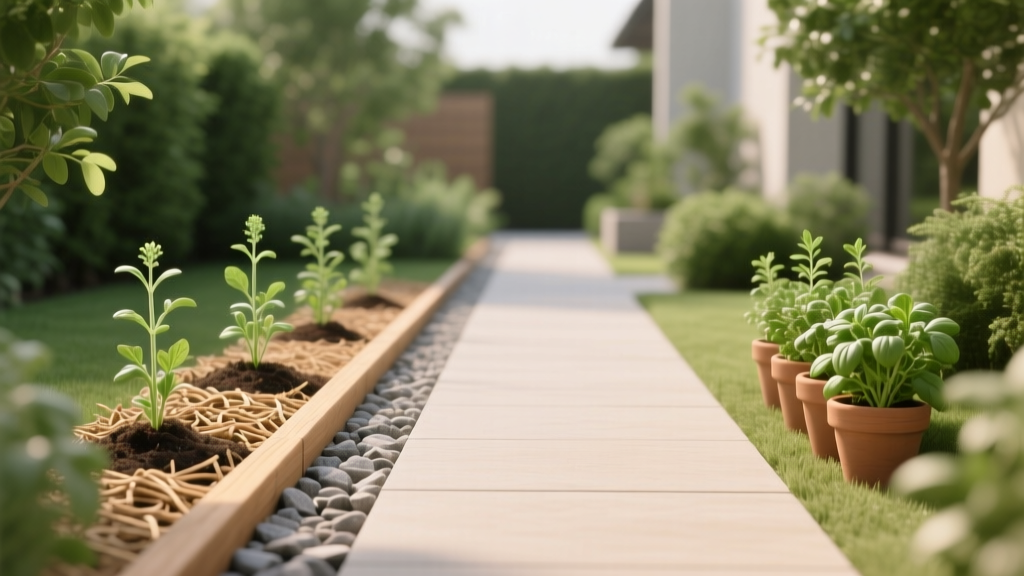
5 Garden Hacks for Garden Path Weed Control
The most common mistake with garden path weeds isn’t “not weeding enough.” It’s building (or maintaining) a path with tiny gaps and light exposure, then feeding those gaps with windblown soil and compost crumbs. Give weeds a pinch of dirt, a splash of water, and a sliver of sun, and they’ll colonize your path faster than your flowerbeds.
The good news: you don’t need to spend your weekends on hands-and-knees patrol. The best path weed control is a combo of starving weeds (light + soil + moisture), sealing the cracks they love, and spot-treating anything that sneaks through. Below are five hacks I’ve used (and seen clients use) to keep gravel, pavers, brick, and flagstone paths looking clean with a fraction of the effort.
Group 1: Fix the path so weeds can’t get a foothold
Hack #1: Reset the “weed sandwich” with the right layers (and the right thickness)
Headline: Rebuild the base once, then let the path do the weed control for you.
Most path weeds don’t grow up from the underworld—they sprout in the top 1 inch of gritty dust that accumulates between stones. The hack is to rebuild or top-correct the layers so you’re not constantly fighting a self-refilling seedbed: a firm base, a true separator, and a top layer deep enough to block light. For gravel paths, aim for 3–4 inches of compacted base (like 3/4" minus) plus 1–2 inches of fresh gravel; for pavers, a stable compacted base plus tight joints is the main event.
Real-world example: A 20-foot gravel path at a rental property kept turning green every spring. We removed just the top 1 inch of “dirty gravel,” laid a fresh woven geotextile, then added 1.5 inches of clean 3/8" gravel. Weed pressure dropped dramatically—now it needs a 10-minute spot check every couple of weeks instead of a full re-rake.
Money saver: Don’t buy the flimsy black “weed barrier” sold in small rolls unless you like replacing it. A woven geotextile fabric often costs roughly $0.30–$0.60 per sq ft in larger rolls, but it lasts longer and separates soil from stone much better.
Hack #2: Lock paver joints with polymeric sand (and mist it right)
Headline: Polymeric sand turns “weed nurseries” into sealed joints—if you activate it properly.
If you have pavers, bricks, or flagstone with joints, loose sand is basically a seed-starting mix. Polymeric sand hardens when activated, reducing gaps where seeds lodge and discouraging ants from excavating (which creates perfect weed pockets). Sweep it in on a dry day, compact it into joints, then mist lightly in multiple passes—typically 3–4 light mist cycles over 10–15 minutes rather than one heavy soak that can wash it out.
Real-world example: On a patio path with 1/4" joints, switching from play sand to polymeric sand cut the “crack grass” problem by most of the season. The homeowner still got a few weeds at edges where soil splashed in, but the center joints stayed clean.
Cost note: A 40–50 lb bag often covers about 60–90 sq ft (varies by joint width and depth). That can be a cheaper long-term play than buying spray weed killer three times per summer.
Group 2: Remove weeds fast (without turning it into a weekend project)
Hack #3: Do a “two-pass” kill: knock down with heat, then block regrowth for 2 weeks
Headline: Heat kills the top; your follow-up stops the comeback.
Boiling water, steam, or a weed torch can be shockingly effective on young weeds because it ruptures plant cells—no chemicals required. The trick is timing: do your heat pass when weeds are small (under 3 inches tall), then follow up by keeping the surface dry and shaded (more on that below) for about 14 days so seeds don’t immediately re-sprout into open real estate.
Real-world example: A flagstone path with moss and baby spurge was treated with two kettles of boiling water (about 1.5–2 gallons) on a cool morning. Three days later, the weeds were toast—but a second flush popped up after a rain. After a quick second boil and a joint top-up, the path stayed clean for the rest of the month.
Safety + surface tip: Torches can damage some sealants and scorch nearby plants; boiling water is gentler around ornamentals but can still cook shallow roots if you pour right at the base of your favorite thyme. Either way, aim for targeted treatment, not a broad “carpet bomb.”
“Repeated thermal treatments are generally more effective than a single application, particularly on perennial weeds that can regrow from roots or crowns.” — University extension guidance on non-chemical weed control (thermal methods), 2019
Hack #4: Make a “crack-cleaning kit” and use it in 7 minutes, not 70
Headline: Standardize your path routine with tools that match the job.
Weed control fails when it’s annoying. Put together a small kit you can grab in one trip: a stiff crack brush, a narrow weeding knife, a hand broom, and a small bucket of joint material (polymeric sand for pavers or clean gravel for gravel paths). Set a timer for 7 minutes, walk the path, and only address what you see—then stop. This keeps tiny weeds from becoming rooted nightmares.
Real-world example: A client with a 60-foot brick path kept postponing weeding until it became a Saturday ordeal. After switching to a “timer walk” twice a week (Tuesday + Friday), the path never got ahead of her again—and she stopped buying weed killer entirely.
DIY alternative: A flathead screwdriver can work as a crack tool in a pinch. Just be careful: it can chip softer brick edges if you pry aggressively.
Group 3: Stop new weeds from sprouting (the part most people skip)
Hack #5: Treat the edges like a border crossing—install a hard barrier and a “no-soil splash” zone
Headline: Most path weeds start at the edges; control the edges and you control the path.
Weeds love edges because that’s where soil and mulch wash onto your path. The hack is two-part: install edging that’s tall enough to block soil creep, and create a narrow strip that doesn’t hold organic debris. Aim for edging that sits 1–2 inches above the path surface and goes at least 3–4 inches into the ground, then maintain a 2–3 inch “clean margin” of gravel (or tightly packed polymeric joints) along the border.
Real-world example: A sloped garden path kept getting “weed freckles” after every rain. Adding steel edging and a 3-inch gravel margin stopped mulch wash-over, which was the real source of the problem. Weed seed had been hitchhiking in the mulch and compost bits.
To help you decide what to use on your own path, here’s a quick comparison of popular methods by path type and effort level.
| Method | Best for | Upfront cost | Time per month (typical) | What it prevents | Common failure point |
|---|---|---|---|---|---|
| Woven geotextile + fresh gravel (1–2") | Gravel paths | Medium (fabric + gravel) | 20–40 min | Soil mixing + many seedlings | Organic debris accumulates on top |
| Polymeric sand in joints | Pavers/brick/flagstone | Medium | 10–30 min | Seed lodging + ant tunneling | Improper misting washes it out |
| Boiling water / steam | Spot treatment on any path | Low | 10–25 min | Existing small weeds | Doesn’t stop new seeds from sprouting |
| Weed torch | Gravel/stone (open areas) | Low–Medium | 10–25 min | Existing small weeds | Fire risk; repeat treatments needed |
| Edge barrier + 2–3" clean margin | Any path with garden beds nearby | Medium | 10–20 min | Soil/mulch creep + edge germination | Edging not tall enough or gaps at seams |
Quick “when to use what” playbook (based on real scenarios)
Because path weeds don’t show up the same way everywhere, here are three common scenarios and the fastest fix for each.
Scenario 1: Gravel path that turns green after every rain
What’s happening: Organic fines (soil, mulch dust, decomposed leaves) have accumulated on top of the gravel, creating a germination layer. Moisture sticks around longer than you think, especially in shaded spots.
Fastest fix: Rake off the top 1 inch of dirty gravel in the worst sections, add fresh gravel (1 inch top-up), and commit to a 5-minute leaf-blow or broom pass weekly during heavy leaf drop. If the issue returns quickly, it’s time for the geotextile reset described in Hack #1.
Scenario 2: Paver path with weeds only in the cracks
What’s happening: Loose joint sand plus windblown dust equals seed-starting media. The pavers themselves are fine; your joints are the weak link.
Fastest fix: Pull or torch the visible weeds, wait 48 hours for everything to dry, then sweep in polymeric sand and mist in light cycles. For stubborn perennial weeds, do a second spot-kill 7–10 days later before they rebuild root reserves.
Scenario 3: Flagstone path in shade with moss + slippery green film
What’s happening: This is more about moisture and low light than “weeds.” Organic film builds up, holds water, and makes the surface slick.
Fastest fix: Use a stiff brush and plain water first (skip pressure washing unless you want to blast out your joints). Then improve drying: thin nearby groundcovers, prune back overhangs, and keep joints topped so water doesn’t sit in depressions. In many regions, extension services recommend improving drainage and sunlight for moss management rather than relying only on treatments (see citations below).
Insider details that make these hacks work better
These are the small adjustments that make the difference between “nice for a week” and “stays clean for months.”
Choose the right gravel size for fewer weeds
Headline: Bigger isn’t always better; choose gravel that doesn’t turn into dust.
Very fine gravel compacts into a surface that traps organic debris; very large rock leaves big air gaps that catch leaves and soil. For many home paths, 3/8 inch gravel strikes a good balance because it knits together while still draining. If you’re constantly seeing seedlings, you may be using a mix with too many fines—switching to a cleaner, washed gravel can cut germination.
Use the “dry-day rule” for joint work
Headline: If joints are damp, you’re wasting effort (and materials).
Polymeric sand and many crack fillers fail when applied to damp joints; moisture prevents proper settling and can cause haze or washout. Give yourself 24–48 hours after rain (longer in shade) before you sweep in material. This one timing detail prevents that annoying cycle where joints erode and weeds return in the same spots.
Don’t feed the cracks with compost or mulch crumbs
Headline: The path isn’t a flowerbed—keep organic matter off it.
Compost is great, but not between pavers. When you top-dress beds next to paths, lay down a sheet of cardboard or a tarp as a “catcher” so crumbs don’t scatter into joints. You’ll be shocked how much less weeding you do when you stop accidentally planting weeds via nutrient-rich spillover.
Notes on herbicides (because people ask)
If you’re considering herbicides for path weeds, use them strategically, not as a default. Many extension services emphasize reading labels carefully and using the least amount necessary to solve the specific problem, especially near desirable plants and waterways. Non-selective herbicides can drift or track onto lawns and beds, and they don’t address the underlying issue of joint material and soil buildup.
For research-backed context: The University of California Agriculture and Natural Resources (UC ANR) notes that mulches and physical barriers are core weed prevention tools and highlights the importance of excluding light and reducing germination sites (UC ANR, 2017). And Washington State University Extension discusses how thermal methods (like flaming) can control small annual weeds but often require repeat treatments, especially for perennials (WSU Extension, 2019).
Keep it clean with a 3-step micro routine (the lazy way)
If you want the lowest-effort maintenance plan, this is the one that sticks for real people with real schedules.
Step 1 (weekly, 3 minutes): Blow or broom the path
Headline: Removing debris removes the seedbed.
Leaves and soil dust are what turn a path into potting mix. A quick pass once a week—especially in fall—prevents that top layer from forming. It’s boring, but it saves you from bigger work later.
Step 2 (every 2 weeks, 7 minutes): Timer walk + spot kill
Headline: Tiny weeds are a gift—don’t let them grow up.
Use your crack-cleaning kit and handle only what you can in 7 minutes. If you spot a cluster, hit it with boiling water or a quick torch pass. The goal is to interrupt the life cycle before seeds set (some weeds can set seed fast in warm weather).
Step 3 (2–3 times per season): Top up joints or gravel where you see dips
Headline: Dips hold water; water grows weeds.
Any depression becomes a little germination bowl. Keep a spare bucket of your joint material and patch low spots when you notice them. This is also when you check edging seams and re-seat anything that’s shifted.
If you do just one thing from this whole article, do the edge control (Hack #5). It’s the sneaky source of most “mystery weeds,” and it’s the fix that keeps paying you back every time it rains.
Citations: University of California Agriculture and Natural Resources (UC ANR), Integrated Weed Management resources, 2017. Washington State University (WSU) Extension, non-chemical/thermal weed control guidance, 2019.