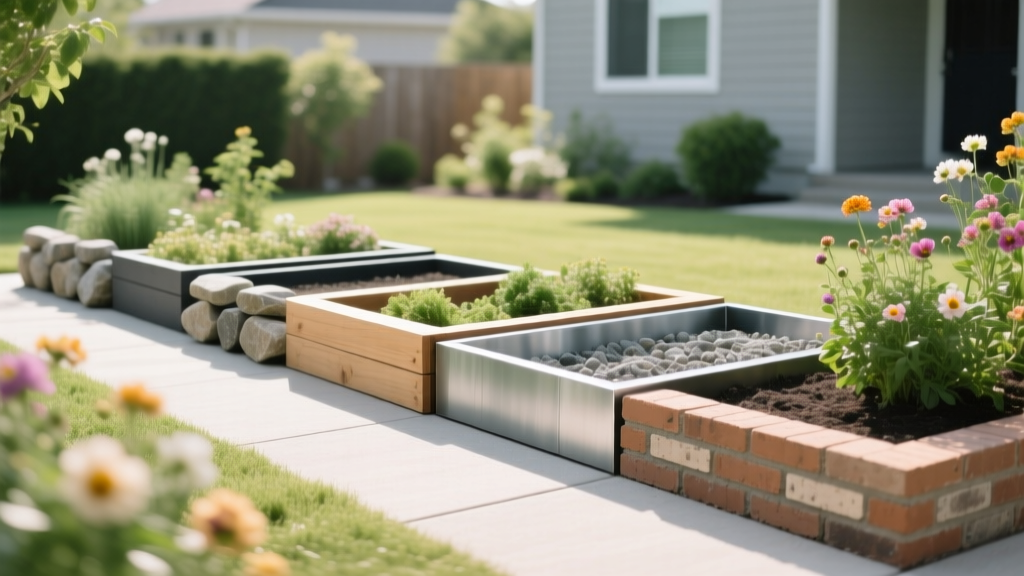
15 Garden Hacks for Garden Bed Edging
The most common edging mistake isn’t picking the “wrong” material—it’s installing it too shallow. A crisp edge that looks perfect in April can be swallowed by soil creep and lawn runners by July if you don’t give it enough depth and a proper trench. The good news: you can get cleaner lines, fewer weeds, and less trimming with a handful of practical hacks (most of them cheap).
Edging is really about control: controlling grass spread, controlling mulch drift, controlling where your mower wheels can go, and controlling how water moves during a storm. The tips below are grouped by what you’re trying to accomplish, so you can mix-and-match without overbuilding your beds.
Set the edge like a pro (before you buy anything)
1) Use the “2-inch reveal, 4-inch underground” rule
For most edging (metal, plastic, pavers), aim to leave about 2 inches above soil and bury at least 4 inches below so it doesn’t heave or disappear after a few rains. That extra depth also blocks grass rhizomes and reduces soil spillover when you mulch. Example: when installing steel edging, I’ll trench 6 inches, set the strip with a 2-inch reveal, then backfill and tamp hard along both sides.
2) Paint your line with a garden hose, then lock it with flour
A hose gives you a natural curve without guesswork; once it looks right, sprinkle a thin line of flour (or sand) right along the hose so the shape stays visible when you move it. This is faster than string for curves and avoids the “lumpy snake” look you get when you eyeball it. Example: for a kidney-shaped bed, I’ll adjust the hose until the curve reads smooth from the street, then mark with flour and cut.
3) Cut a “V-trench” to slow soil creep
Instead of a straight down trench, angle your spade to create a V shape: one side vertical (toward lawn), one side sloped (toward bed). That shape helps mulch and soil settle back into the bed instead of sliding onto the grass. Real-world: in rainy climates, this simple trench can reduce the “muddy lip” that forms on the lawn edge after storms.
4) Set a grade reference with a 4-foot level (yes, even for small beds)
Edging that waves up and down looks messy and can trap water where you don’t want it. Use a 4-foot level (or a straight 2x4 with a small level) to keep the top consistent, especially along walks and patios. Example: when you’re bordering a path, keep the edging top about 1/2 inch above the path surface so mulch doesn’t wash onto the pavers.
Fast, clean edges without fancy materials
5) The “spade-cut edge” that costs $0 and looks sharp for weeks
If you want instant definition, cut a clean edge with a sharp spade and remove a thin strip of turf from the bed side. Recut every 3–6 weeks in peak growing season for a manicured look without buying edging at all. Case example: a renter with a front-yard bed can keep it crisp all summer with nothing but a spade and 10 minutes every other Saturday.
6) Flip your sod as a temporary edging berm
When you cut turf out to make a new bed, flip those sod strips upside down along the edge to form a small berm that holds mulch in place. It’s not permanent, but it buys you time while the bed settles and you decide on a lasting edge. Example: for a new 4 ft x 12 ft bed, the flipped sod perimeter helps contain the first mulch load and reduces washout during the first month.
7) Cardboard “root barrier” tuck-in for weedy borders
If your edge is constantly invaded by grass, tuck a vertical strip of cardboard into the trench before backfilling—aim for 6–8 inches deep. It decomposes over time, but it often lasts long enough to interrupt runners and give your plants a head start. Research-backed note: sheet mulching with cardboard can suppress weeds when overlapped and covered properly, a technique commonly recommended by extension educators (e.g., University of Minnesota Extension, 2020).
Material hacks that save money (and look intentional)
8) Metal edging: stake it twice as much as the package suggests
Those kits often include too few stakes for real life. Put stakes at every 18–24 inches on curves and every 24–36 inches on straight runs to prevent buckling after freeze-thaw. Example: a 20-foot curve might need 10–12 stakes for a smooth line, even if the kit only includes 6.
9) DIY “hidden” edging using pressure-treated 2x4s (the right way)
For a low-profile edge that disappears under mulch, set a pressure-treated 2x4 on edge in a shallow trench and anchor it with 12-inch galvanized spikes every 3 feet. Keep the top of the board 1 inch below soil level so your mower doesn’t hit it. Scenario: this works great along a fence line where you want a straight, clean border but don’t care about seeing a decorative edge.
10) Brick-on-edge hack: set them in sand, not soil
Bricks wobble when they’re bedded in soil because soil compresses unevenly after rain. Instead, dig a trench and lay a 1-inch layer of compacted sand, then set bricks on edge and tap level with a rubber mallet. Example: a small front bed with 40 bricks can be edged in an afternoon, and resetting one brick later is painless.
11) Paver soldier course: add a “toe” to stop tipping
If you’re setting pavers upright (“soldier course”), give them a stabilizing toe: extend the base (gravel or compacted road base) at least 3 inches into the bed side. Without that toe, they lean inward over time as the bed settles. Real-world: this is especially important in beds you top up with compost each spring—added soil pressure pushes pavers.
12) Recycled edging that doesn’t scream “recycled”: use uniform cuts
Salvaged materials look intentional when the heights match. If you’re using reclaimed bricks, roof tiles, or stones, take 15 minutes to sort by thickness and keep the top line consistent within 1/2 inch. Example: mismatched brick can still look high-end if you commit to a consistent top reveal and bury the oddballs deeper.
Keep grass and weeds from wrecking your edge
13) Make a “mow strip” to eliminate string trimming
A mow strip is a 6–12 inch band of pavers, brick, or compacted gravel that lets mower wheels ride next to the bed without scalping plants. It’s a huge labor-saver if you edge long borders. Case example: a corner lot with 60 feet of bed edge can easily save 20–30 minutes per mow by swapping string trimming for a mow strip.
14) Install edging with a grass-side “lip” to block runners
Grass spreads sideways; give it a physical stop. When using metal or plastic edging, angle it so the top edge slightly overhangs the lawn side by about 1/4 inch—this creates a tiny lip that makes it harder for stolons to climb over. Example: along aggressive bermudagrass, that small overhang can noticeably reduce weekly edging touch-ups.
15) Use mulch depth strategically: 2–3 inches in the bed, thinner at the edge
Too much mulch at the edge makes a ramp for grass to creep in and for mulch to spill out. Keep mulch 2–3 inches deep in the bed interior, but taper to about 1 inch right at the border so the edge stays visible and stable. Extension guidance commonly recommends moderate mulch depths for weed suppression without causing issues for plants; for example, Washington State University Extension advises avoiding overly thick mulch layers that can restrict air and water movement (WSU Extension, 2019).
Pick the right edging for your situation (quick comparisons)
If you’re torn between options, this table is the cheat sheet I wish more gardeners had before they bought something heavy (or flimsy) on impulse.
| Edging option | Typical installed look | DIY difficulty | Longevity | Ballpark cost (materials only) | Best for |
|---|---|---|---|---|---|
| Spade-cut edge | Clean, invisible | Easy | Needs recut every 3–6 weeks | $0 | Fast results, renters, large curves |
| Steel/aluminum edging | Modern, crisp line | Medium | 10–20+ years | $2–$6 per linear foot | Curves, clean separation, long borders |
| Plastic edging | Often disappears or waves | Easy | 2–7 years | $0.50–$2 per linear foot | Temporary borders, tight budgets |
| Brick/paver edge | Classic, decorative | Medium–Hard | 10–30+ years | $3–$10 per linear foot | Front yards, paths, mow strips |
| Gravel mow strip | Casual, cottage | Medium | 5–15 years (top-ups) | $1–$4 per linear foot | Reducing trimming, drainage areas |
Real-world edging fixes (three scenarios I see all the time)
Scenario A: The suburban front bed that keeps “melting” into the lawn
If your bed line looks great after edging day and then disappears, your soil is creeping outward and your mulch is acting like a slow landslide. Use Tip #3 (V-trench) plus Tip #15 (taper mulch to 1 inch at the edge), and consider adding a simple metal edge with the 2-inch reveal rule. One homeowner I helped went from edging weekly to touching it up once a month, mostly because the edge stopped being a mulch ramp.
Scenario B: The veggie garden where string trimmer damage is killing plants
Vegetable beds often sit tight against paths, and trimmer “oops” happens fast. Install a 6–8 inch mow strip of pavers or compacted gravel (Tip #13), then keep the edging height low so harvest baskets don’t catch. This is the kind of change that pays back immediately: fewer broken stems, faster mowing, and paths that stay cleaner after rain.
Scenario C: The sloped bed where mulch washes onto the sidewalk every storm
On a slope, edging has to do real engineering: slow water and hold material. Go with bricks/pavers set on compacted sand (Tip #10) or a soldier course with a toe (Tip #11), and keep the top of the edging slightly higher on the downhill side to catch runoff. I’ve seen a single 20-foot run of properly set pavers stop the repeated “mulch avalanche” that was clogging a driveway drain.
A few insider notes that make edging last longer
“Mulches are most effective when used in conjunction with other weed management practices and when maintained at an appropriate depth.” — University/Extension weed management guidance (paraphrased from common extension recommendations; see University of Minnesota Extension, 2020; WSU Extension, 2019)
That quote is the quiet truth behind most edging frustration: edging isn’t a one-and-done fix if the bed keeps getting piled higher every season. If you add compost annually, plan to reset the edge every 2–3 years—even premium materials can look sloppy if they’re slowly buried.
Also, don’t underestimate tamping. After you set any edging, compact the backfill in two passes (halfway, then full), especially in sandy soils that settle. It takes an extra 5 minutes and saves you from seeing gaps and wobble later.
Finally, buy less edging than you think—at least at first. Make a 10-foot “test run” in a visible spot before committing to 100 feet of the same material. You’ll learn quickly whether you love the look, whether your mower can handle it, and whether it behaves in your soil.
If you want the biggest shortcut of all: pick one edge style for the entire yard and repeat it. Consistency hides imperfections, speeds installation (because you get into a rhythm), and makes even budget materials look deliberate. When your edges look intentional, the whole garden looks more “designed,” even if the plants are doing their usual chaotic plant thing.
Sources: University of Minnesota Extension (2020) guidance on sheet mulching and weed suppression; Washington State University Extension (2019) recommendations on mulch depth and avoiding excessive mulching.