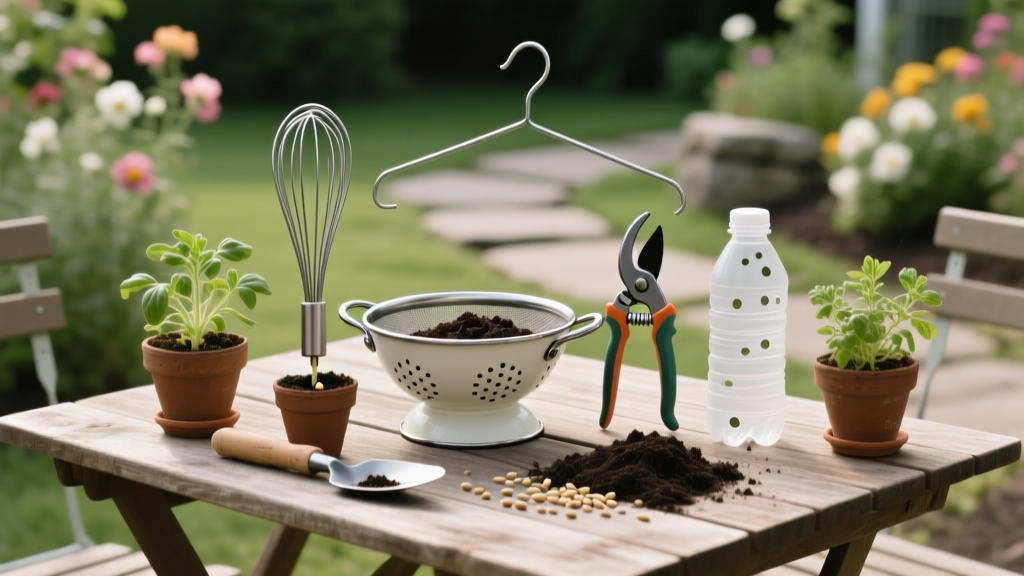
Everyday Items That Make Great Garden Tools
The fastest way to waste money in the garden isn’t buying the “wrong” fertilizer—it’s buying tools you already own in a different shape. I’ve watched gardeners drop $25 on a “soil scoop” while a retired kitchen measuring cup was sitting in the drawer, perfectly sized and easier to clean. The trick is knowing which household items actually hold up outdoors (and which ones turn into sharp, rusty regrets).
Below are my favorite everyday stand-ins, grouped by what you’re trying to accomplish—dig, measure, water, protect, label, and manage pests—so you can grab the right “tool” in 30 seconds and get back to planting.
Digging, planting & soil work (without buying more hand tools)
Use an old kitchen spoon as a precision transplant trowel
A sturdy metal tablespoon is perfect for scooping small planting holes and popping out weeds with shallow roots. It’s especially handy for seedlings because the bowl shape makes a neat, consistent cavity without collapsing the sides. If you’re planting plugs, aim for a hole about 2–3 inches deep, then firm soil back with the back of the spoon.
Real-world example: When I’m setting lettuce starts in a crowded bed, a spoon lets me tuck them between drip lines without nicking the hose like a pointed trowel can.
Turn a broken rake handle into a dibber (and never guess hole depth again)
If you’ve got a snapped wooden handle, cut a 10–12 inch section and sharpen one end with a knife or sandpaper. Mark depth lines at 1 inch, 2 inches, and 3 inches with a permanent marker or a shallow saw kerf—now you’ve got a dibber for uniform seed planting. That’s especially useful for peas (about 1 inch deep) and beans (about 1–1.5 inches deep) so you don’t end up with patchy germination.
DIY upgrade: Rub the wood with a little mineral oil so it sheds moisture and lasts longer in damp soil.
Make a soil block “tamper” from a spice jar
A squat glass spice jar (think 2–3 inch diameter) works as a tamper to firm soil in pots or press seed into good contact. Flip it upside down and press gently—don’t compact hard; you’re aiming for a stable surface, not brick. This is a quick fix when you’re potting up dozens of seedlings and your fingers get tired.
Case example: One spring I potted 48 tomato starts; using a jar sped up filling and firming each 4-inch pot and kept the soil line even for consistent watering.
Use a paint scraper or old butter knife to slice through tough roots
When you’re dividing perennials or cutting root-bound nursery plants, a rigid flat blade beats a bendy hand trowel. A paint scraper is ideal: push down and rock slightly to separate clumps without tearing everything. For smaller jobs, a butter knife works in a pinch—especially for loosening roots circling inside 1-gallon pots.
Safety note: Clean the blade with soap and water, then wipe with rubbing alcohol between plants if you suspect disease spread.
Measuring, mixing & getting the “math” right
Keep a dedicated measuring cup for fertilizer and compost
A retired 1-cup or 2-cup kitchen measuring cup makes top-dressing and mixing far more consistent than “handfuls.” For example, if you top-dress a 5-gallon container with 1/2 cup of worm castings every 3–4 weeks during peak growth, you’ll get steady nutrition without overdoing it. Label the handle “GARDEN ONLY” with a permanent marker so it never wanders back into the kitchen.
Cost compare: A branded garden scoop can run $10–$20; a spare measuring cup is often free.
Turn a yogurt container into a “batch mixer” for potting blends
A 32 oz (1 quart) yogurt tub is perfect for repeating a potting recipe without rethinking it each time. A simple, reliable blend for containers is 2 parts potting mix : 1 part compost (by volume), mixed in a tote or wheelbarrow. Use the tub as your “1 part” measure so you can scale up fast—8 tubs of potting mix + 4 tubs of compost makes a consistent batch.
Source note: Compost quality matters; the USDA notes compost improves soil structure and nutrient-holding capacity when properly finished (USDA NRCS, 2020).
Repurpose a postage scale or kitchen scale to prevent fertilizer over-application
If you’re using dry organic fertilizers, weighing beats guessing—especially with concentrated products. A small scale lets you measure 1–2 oz precisely for a batch of container mix or a narrow bed. This saves money and reduces runoff risk; applying “a little extra” can backfire by pushing leafy growth at the expense of flowers or stressing seedlings.
Real-world example: For my patio peppers, I measure a small 0.5 oz dose of a balanced organic fertilizer per container instead of free-pouring, and it keeps growth steady without sudden burn.
Watering hacks (and fewer dead plants)
Poke bottle-cap holes for a slow-drip “nurse bottle”
Take a clean 1-liter soda bottle, poke 6–10 small holes in the cap with a nail, and bury the bottle neck-down near the root zone. Fill it, screw on the cap, and it becomes a slow-release watering tool for hot spells. Refill every 1–2 days during heat waves, and you’ll keep moisture closer to roots instead of losing it to surface evaporation.
Case example: During a 90°F week, I kept a newly planted hydrangea alive with a nurse bottle while I waited to install drip—one bottle per plant, refilled nightly.
Use a 5-gallon bucket as a measured deep-watering gauge
A standard bucket helps you quantify water instead of guessing with a hose. Many garden beds benefit from roughly 1 inch of water per week; in practical terms, a 5-gallon bucket equals about 0.67 cubic feet of water—handy for consistent container irrigation. If you’re rehabilitating a thirsty shrub, two buckets (10 gallons) slowly applied around the drip line can be a good deep soak instead of frequent sprinkles.
Source note: Deep, infrequent watering encourages deeper root systems compared to frequent shallow watering (University of California Agriculture and Natural Resources, 2017).
Clip a binder clip to a hose as a “quick shutoff” for hand watering
If your hose nozzle is finicky, a large binder clip can pinch the hose lightly as a temporary “pause” while you move pots or reposition. It’s not a permanent shutoff, but it stops that annoying spray while you adjust something. Keep it in your pocket while watering hanging baskets or moving sprinklers.
DIY alternative: A $3 hose shutoff valve is sturdier—binder clip is the “I need this now” fix.
Protecting plants & managing temperature swings
Use clear storage bins as instant cloches
Clear plastic storage totes (the kind that slide under beds) make excellent frost shields for seedlings. Flip one over plants before a cold night, and remove or vent it the next morning to prevent overheating. Even a 2–4°F buffer can make the difference for tender starts in early spring, but ventilation matters fast once the sun hits.
Case example: I once saved a flat of basil transplants with upside-down totes when a surprise late frost hit—vented at 9 a.m. to avoid cooking them.
“Row covers and simple plant-protection structures can provide several degrees of frost protection, but the key is removing or venting them promptly to avoid heat buildup on sunny days.” — University of Minnesota Extension (2019)
Turn old bedsheets into breathable row cover (better than plastic for many nights)
Lightweight sheets draped over hoops protect tender plants from cold and wind without trapping as much condensation as plastic. Anchor edges with bricks or boards so cold air doesn’t sneak in. For a quick setup, use 1/2-inch PVC hoops spaced about 3–4 feet apart and clip the sheet with clothespins.
Money saver: A thrift-store sheet can cost $3–$8; branded frost cloth is often $15–$40 depending on size.
Use paper lunch bags to shade new transplants for 48 hours
Bright sun right after transplanting can stress plants more than people expect, even if soil is moist. Slip a paper lunch bag over the plant (not touching leaves if possible) for the first day or two, especially for lettuce and young brassicas. Cut a couple small slits for airflow and remove once the plant perks up.
Real-world example: After moving seedlings from a shaded porch to a sunny bed, I bagged them for two afternoons and avoided that “bleached leaf” look.
Labeling, tying & organizing (so your garden doesn’t turn into a mystery)
Cut mini blinds into long-lasting plant labels
Old vinyl mini blinds are one of the best label materials because they don’t rot like wood sticks. Cut into 1-inch-wide strips, write with a paint pen or pencil, and push 2–3 inches into the soil. They last multiple seasons and stay readable far longer than marker on plastic stakes.
Tip: Write the plant + date (e.g., “Zinnia 4/12”) so you can track timing next year.
Use a wine cork as a thumb-friendly twine holder
Stick a short skewer or small nail through a cork, then wind garden twine around it. It becomes a pocketable twine dispenser that won’t tangle, and the cork gives you something easy to grip with dirty hands. This is great when you’re tying tomatoes and don’t want to wrestle a ball of twine every 2 minutes.
Real-world example: I keep one cork dispenser in the greenhouse and another in the tool bucket for trellising cucumbers.
Repurpose clothespins as gentle plant clips
Wooden clothespins work as quick clips for training peas, beans, and young tomato stems to a stake—without the “wire bite” that can cut into growth. Clip loosely so there’s wiggle room as stems expand. When plants get thicker, switch to soft ties (old T-shirts cut into strips work perfectly).
Cost: A bag of clothespins is often under $5, and they’re reusable for years if stored dry.
Pest & disease management with household basics
Use a spray bottle for targeted soap sprays (instead of soaking everything)
A clean household spray bottle is ideal for spot-treating aphids and mites where they cluster—undersides of leaves and new growth. Mix 1 teaspoon mild liquid soap per 1 quart water, shake gently, and spray in the evening to reduce leaf burn. Always test on a small section first and re-check plants in 24 hours.
Source note: Extension services commonly recommend insecticidal soap as a low-toxicity option when used correctly and applied to the pest (Iowa State University Extension, 2021).
Make a slug trap with a shallow jar lid (and check at sunrise)
Slugs are most active at night, so traps work best when set in the evening and checked early. Set a shallow lid (like a peanut butter jar lid) level with the soil and add a splash of beer or yeast water. Empty and refresh daily for a week when damage is fresh—consistency beats one heroic night of trapping.
Real-world example: In a damp spring, I reduced lettuce damage by placing 6 lids around the bed and checking them each morning for 10 days.
Use a lint roller to remove small pests fast
This sounds goofy until you try it: a sticky lint roller can physically remove aphids from sturdy stems and leaves in seconds. It’s not for delicate seedlings, but it’s surprisingly effective on kale, peppers, and ornamentals when infestations are localized. Roll, peel off the sheet, and toss—no spray drift, no residue.
When it shines: If you notice aphids on one pepper plant in a cluster of ten, this lets you knock them back immediately before they spread.
Cleanup, harvesting & keeping tools sharp (with what you already have)
Use an old toothbrush for tight-space cleaning
Soil and sap buildup shorten tool life and can spread disease. A stiff toothbrush scrubs pruner springs, serrations, and the crevice where shovel meets handle—places a sponge won’t reach. Keep one in the shed with a small cup of soapy water for quick post-garden cleanups.
Timing tip: A 60-second scrub right after use is easier than a 10-minute scrape once mud dries.
Sharpen pruners with a nail file (in a pinch)
A metal nail file or emery board can touch up pruner blades when you notice tearing instead of clean cuts. Follow the existing bevel angle and make 6–10 strokes, then wipe clean. It won’t replace a proper sharpening stone, but it’s a handy “back pocket” fix during a big pruning day.
Real-world example: Midway through deadheading roses, I used a nail file to restore clean snips and stopped crushing stems.
Turn a colander into a harvest-and-rinse station
A metal or sturdy plastic colander is perfect for harvesting cherry tomatoes, beans, and salad greens—then rinsing immediately. The holes let dirt fall out while you pick, and you can dunk it in a bucket to wash fast. If you’re harvesting greens, line it with a thin cloth first so small leaves don’t escape.
Money saver: A “garden harvest basket” is often $15–$30; an old colander is usually already in the kitchen.
Which swap is worth it? A quick comparison
| Garden task | Everyday item tool | Store-bought alternative | Best for | Typical cost |
|---|---|---|---|---|
| Measuring amendments | 1–2 cup measuring cup | Garden scoop | Repeatable top-dressing and mixing | $0 vs $10–$20 |
| Frost protection | Clear storage tote | Commercial cloche | Quick overnight protection for clusters of seedlings | $0–$8 vs $15–$40 |
| Hand transplanting | Metal spoon | Hand trowel | Tight spaces, small plugs | $0 vs $8–$25 |
| Training plants | Clothespins + T-shirt strips | Plant clips + soft ties | Quick, gentle support on a budget | $5 vs $10–$25 |
Three real-life “save the day” scenarios (so you can picture it)
Scenario 1: Surprise cold snap after you planted tomatoes
If the forecast suddenly dips, flip clear totes over each tomato and weigh edges with bricks—done in 5 minutes. Vent the next morning once temps rise; if it’s sunny, crack one side open by 1–2 inches. This is the exact kind of moment when having a few bins in the garage beats a last-minute garden-center run.
Scenario 2: You’re potting up a lot of seedlings and everything looks uneven
Use a yogurt tub as your measuring “part,” then tamp lightly with a spice jar so soil level stays consistent across pots. Consistent fill height makes watering more predictable—no more half the pots drying out faster because they’re underfilled. If you’re doing 24+ pots, this small change saves real time and reduces losses.
Scenario 3: Aphids show up on one plant and you want them gone today
Skip the big sprayer: use a spray bottle for a targeted soap mix (1 tsp per quart) or physically remove with a lint roller if the plant can handle it. Check again in 48 hours and repeat if needed—most pest control is follow-up, not a single dramatic application. This keeps you from blasting beneficial insects in the process.
Small cautions that save you headaches
Don’t reuse food containers for edibles unless they’re truly clean and stable
Stick to food-grade plastics and wash thoroughly; avoid containers that held chemicals, and don’t use brittle plastic that cracks into soil. If a container gets chalky, warped, or starts shedding fragments, retire it. The goal is “reuse,” not “mystery plastic confetti in the basil bed.”
Label “garden-only” items so they don’t drift back indoors
One permanent marker note—“GARDEN”—prevents the measuring cup or spray bottle from ending up in the kitchen again. It’s also safer if you’ve used soap sprays or alcohol wipes on them. A strip of bright tape works if markers rub off.
Once you start looking at household odds-and-ends as single-purpose garden helpers, you’ll stop buying tools you don’t need—and you’ll improvise faster when the garden throws a curveball. The next time you’re about to click “add to cart,” walk through your kitchen, laundry room, and recycling bin first; you might already own the best tool for the job.
Sources: USDA Natural Resources Conservation Service (2020); University of California Agriculture and Natural Resources (2017); University of Minnesota Extension (2019); Iowa State University Extension (2021).