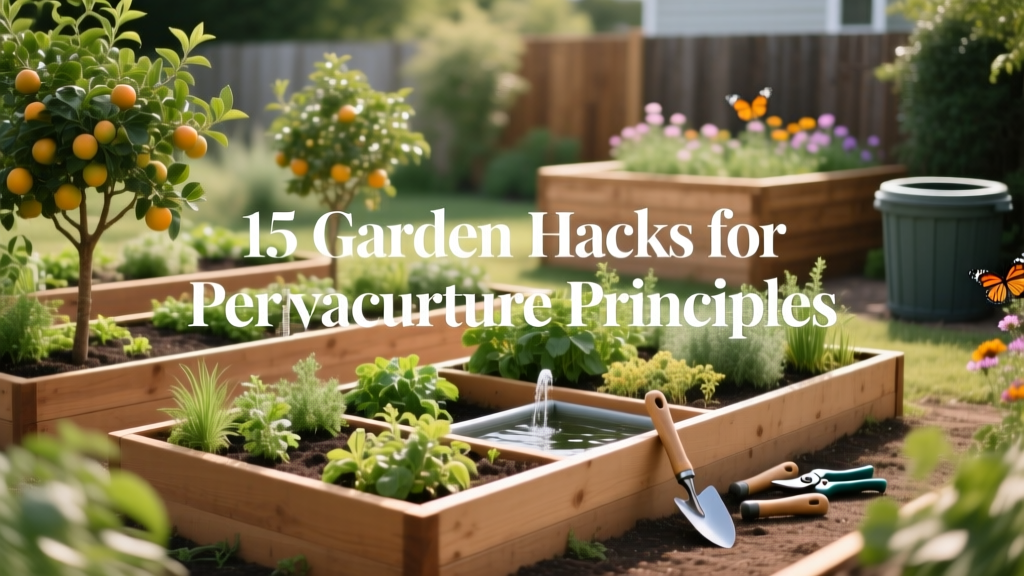
15 Garden Hacks for Permaculture Principles
Most gardens fail permaculture’s “work with nature” test for one simple reason: we accidentally design them like indoor houseplants—needy, isolated, and dependent on constant inputs. Then we wonder why the hose is always in our hand and the soil never seems to improve. The permaculture trick isn’t doing more; it’s stacking small, smart systems so the garden does the heavy lifting for you.
Below are 15 field-tested hacks that line up with permaculture principles (observe, catch and store energy, obtain a yield, use small and slow solutions, integrate rather than segregate). They’re written for real life: small yards, tight budgets, and the kind of “I have 20 minutes before dinner” gardening schedule.
Design & Layout Hacks (Get the pattern right first)
1) Paint-Water Test: Find Your Natural Drainage Lines in 10 Minutes
Before you dig anything, learn where water already wants to go. On a dry day, spray a thin line of watered-down, washable paint (or flour) across the slope and hit the area with a hose for 3–5 minutes; the line will bend where runoff channels form. Those curves are your best spots for swales, mulch berms, or thirsty plantings.
Example: On a slight 2–5% backyard slope, a homeowner in Portland used this trick and discovered two natural “micro-valleys.” Placing wood-chip basins there cut their summer watering frequency from daily to every 3rd day.
2) Micro-Swale Hack: A Shallow Trench That Beats a Fancy Irrigation System
You don’t need a backhoe to “slow, spread, and sink” water. Dig a micro-swale just 6–8 inches deep and 8–12 inches wide along contour, and pile the soil on the downhill side as a berm. Line the trench with leaves or wood chips to reduce erosion and increase infiltration.
Specifics: Space micro-swales 6–10 feet apart on modest slopes. A bag of wood chips is often free from arborists; compare that to $30–$60 for a basic soaker hose that still needs pressure and attention.
3) Edges on Purpose: Turn One Bed Into Three Growing Zones
Permaculture loves “edge” because edges are productive. Instead of a straight bed, give it a gentle wavy outline (even a simple scallop pattern) to increase planting area and create dry/wet microclimates. Use the high points for Mediterranean herbs and the low points for greens that like consistent moisture.
Example: A 4x12-foot bed reshaped into a mild wave can add roughly 10–20% more edge length. That’s extra spots for strawberries, scallions, alyssum, or pollinator plants without expanding the footprint.
4) The 3-Foot Rule: Paths That Save Your Back (and Your Soil)
If you step on beds, you compact them; if you avoid stepping, you need access. Keep paths about 18–24 inches for single-person access, and beds no wider than 3 feet if you can only reach from one side (or 4 feet if you can reach from both). This simple layout reduces compaction and makes no-dig methods work dramatically better.
Case: In a community garden scenario, switching from 5-foot beds to 3-foot beds reduced accidental bed-stepping and improved infiltration—water stopped puddling in the same spots after rain.
Soil-Building Shortcuts (Feed the soil, not the drama)
5) Lasagna Bed in One Afternoon (No Tiller, No Regret)
If you’re starting a new bed, don’t dig—smother. Lay overlapping cardboard (6-inch overlaps), soak it, add 2–3 inches of compost, then top with 4–6 inches of straw or shredded leaves. Plant into the compost layer right away for transplants; for seeds, open narrow furrows down to compost.
Numbers that matter: Aim for about 1 wheelbarrow of compost per 25 square feet (roughly a 1-inch layer). Cardboard is free; compare that to renting a rototiller at $50–$90/day plus the future headache of weed seeds brought to the surface.
6) “Compost Tea” Alternative: Use a 1:10 Compost Extract for Targeted Boosts
Skip the bubbling setup unless you truly enjoy it. For a simple compost extract, mix 1 part finished compost with 10 parts water, stir hard, let settle 20–30 minutes, and water the root zone the same day. It’s not magic, but it can help jump-start biology in tired soil and reduce transplant shock.
Example: After planting tomatoes, drench each hole with about 2 cups of the extract. It’s a low-cost nudge that uses what you already have.
7) The “Chop-and-Drop” Mulch Rule: Never Leave Bare Soil After You Weed
Weeding is only half the job; covering the exposed soil is what prevents the next wave. Keep a pair of snips in your pocket and cut weeds at the base, leaving roots in place, then drop the tops as mulch (avoid weeds that have gone to seed). This protects soil structure and keeps carbon in the ground.
Real-world scenario: In a 10x10 urban plot with constant wind, chop-and-drop plus a thin leaf layer reduced summer soil crusting and made watering soak in instead of running off.
8) DIY Biochar “Charge” Hack: Soak Char in Urine-Water Before Adding to Beds
Biochar can hold nutrients and water, but fresh char can temporarily tie up nutrients if it’s not “charged.” A simple DIY charge is soaking char in diluted urine (1:10 urine to water) for 1–2 weeks, then mixing it into compost or soil. Use it sparingly: think 5–10% by volume in a potting mix or top few inches of a bed.
Source: Research reviews have found biochar can improve soil properties and yields depending on soil type and char source (Jeffery et al., 2011). Charging helps prevent the “why did my plants stall?” moment.
Water & Microclimate Tricks (Catch it, slow it, shade it)
9) Bottle Drip Hack for New Transplants (Under $1 Each)
New transplants fail from inconsistent moisture, not “bad luck.” Poke 2–3 tiny holes in the bottom of a plastic bottle, bury it next to the root zone with the cap end up, and fill it every 2–3 days for the first two weeks. It delivers water slowly where roots are forming.
Cost comparison: A DIY bottle drip system is basically free; a basic drip irrigation kit often runs $25–$60 before fittings and replacements.
10) Shade Cloth Timing: Add 30% Shade During Heat Spikes to Prevent Bolting
When temperatures jump, lettuce and cilantro panic and bolt. Keep a 30% shade cloth (or an old sheer curtain) ready and clip it over hoops during heat waves, especially between 11 a.m. and 4 p.m. You’re not babying plants—you’re stabilizing their microclimate.
Data point: A 30% cloth can drop leaf-surface temperatures noticeably on hot days, often enough to keep greens producing for an extra 1–3 weeks.
11) Mulch Math: 3 Inches Beats “A Little Sprinkle” Every Time
Mulch only works when it’s thick enough to block sun and wind. Aim for 3 inches of shredded leaves or wood chips around established plants (keep it 2–3 inches away from stems). This reduces evaporation and helps maintain consistent soil moisture.
Source: The University of California Agriculture and Natural Resources notes mulches reduce evaporation and moderate soil temperature (UC ANR, 2020). It’s one of the cheapest ways to “store water” in place.
12) Windbreak Hack: Plant a Living Fence 18 Inches Apart for Fast Results
Wind is a stealth dehydrator, snapping seedlings and drying soil faster than heat alone. For a quick seasonal windbreak, plant sunflowers, sorghum, or pigeon pea in a single or double row, spacing plants about 12–18 inches apart. Place it on the windward side and watch delicate crops immediately look less stressed.
Example: In a coastal garden case, a double row of sunflowers reduced wind damage to basil and peppers enough to avoid replanting—saving both time and the cost of extra starts.
Planting & Polyculture Hacks (Integrate instead of isolate)
13) The “Guild Starter Pack”: One Tree, Three Helpers, Zero Guesswork
If you want permaculture-style planting without a design degree, start with a mini-guild: one fruit tree (or berry shrub), one nitrogen helper, one dynamic accumulator, and one groundcover. Think: apple + clover + comfrey + strawberries. Plant clover as a living mulch, tuck comfrey at the dripline, and let strawberries cover bare soil.
Case example: A small backyard in Denver used a pear tree guild with white clover and strawberries; the clover reduced weeding time, and the strawberries shaded the soil so irrigation needs dropped after the first season.
14) Succession Planting on a Calendar Reminder (Not “When You Remember”)
Permaculture is about steady yields, not one huge harvest and then empty beds. Set a recurring reminder every 14 days to sow quick crops (radishes, salad mix, cilantro) in small strips. The hack is consistency: little and often beats big and sporadic.
Numbers: Sow radishes every 2 weeks; many varieties are ready in about 25–35 days. That rhythm keeps space productive and reduces pest pressure from one big synchronized planting.
15) Interplanting Table: Pair Crops by Root Depth to Avoid Competition
The simplest polyculture win is pairing plants that don’t fight for the same underground real estate. Combine shallow-rooted greens with deeper-rooted crops, and you’ll get more yield per square foot without extra fertilizer. Here’s a quick cheat sheet you can actually use while holding seed packets.
| Goal | Method A: Monocrop Row | Method B: Root-Depth Interplant | What You’ll Notice |
|---|---|---|---|
| Maximize space | Carrots in a full bed | Carrots + lettuce between rows | Lettuce harvest finishes before carrots need full space |
| Reduce weeds | Tomatoes with bare soil | Tomatoes + basil + low clover | Soil stays shaded; fewer weed flushes |
| Stabilize moisture | Peppers with exposed paths | Peppers + scallions + straw mulch | Less evaporation; scallions deter some pests anecdotally |
| Extend harvest | Single sowing of beans | Beans + successive radish sowings | Radishes fill gaps early; beans take over later |
Pest & Maintenance Hacks (Lower the workload, keep the yield)
16) Soap-and-Water Isn’t the First Move: Blast Aphids Off with a Hard Spray
The fastest, least disruptive aphid control is mechanical. Use a firm jet of water in the morning to knock aphids off stems and undersides of leaves; repeat every 2–3 days for a week. This avoids harming beneficial insects the way broad sprays can.
Source: Many extension IPM guides recommend water sprays and other non-chemical tactics as first-line controls for soft-bodied pests (e.g., UC IPM, 2023).
17) Beer Trap Upgrade for Slugs: Use Yeast-Sugar Water (Cheaper, Works Overnight)
Beer traps work, but it’s painful to pour good beer into the ground. Mix 1 teaspoon yeast + 1 tablespoon sugar in 2 cups warm water, pour into a shallow container, and bury it so the rim is level with the soil. Refresh every 2–3 days during peak slug season.
Example: In a rainy spring garden bed, placing 2 traps per 20 square feet near hostas and lettuce can noticeably reduce night damage within a week.
18) The “One Tool” Habit: Keep Pruners at the Back Door for Weekly Chop-and-Drop
The best maintenance schedule is the one you’ll actually do. Store pruners where you naturally pass (back door, shed latch) and set a once-a-week 5-minute loop: clip leggy herbs, cut cover crop tops, drop them as mulch. This keeps biomass cycling without needing a dedicated “garden day.”
Real-world scenario: A busy parent with a small side yard used the 5-minute loop to keep pathways clear and beds mulched; they stopped buying bagged mulch entirely by midseason.
19) Cheap Soil Test Shortcut: Use One Lab Test Every 2–3 Years, Not Guesswork
If you’re spending money on amendments without a soil test, you’re basically shopping blindfolded. Do a lab soil test every 2–3 years (often $15–$30 through local services) and adjust only what’s needed—especially phosphorus, which is commonly overapplied. This aligns with “produce no waste” and prevents nutrient runoff.
Example: A gardener adding bone meal annually discovered phosphorus was already high; they redirected that budget to compost and a mulch delivery instead.
Three Quick Case Plays (So you can picture this working)
Scenario 1: Hot, dry summer with watering restrictions. Combine Tip #2 (micro-swales), Tip #11 (3-inch mulch), and Tip #10 (30% shade cloth during heat spikes). This trio often cuts visible stress fast—plants stay perky longer, and you water deeper but less often.
Scenario 2: New build with ugly, compacted soil. Start with Tip #5 (lasagna bed) and Tip #4 (3-foot bed access) so you stop compacting the same ground you’re trying to improve. Add Tip #7 (chop-and-drop) and you’ll see soil soften over a season without a tiller rental.
Scenario 3: Tiny yard, big appetite. Use Tip #3 (edge design) and Tip #15 (root-depth interplanting) to get more food from the same square footage. Add Tip #14 (every-14-days sowing reminders) and you’ll have a steady stream of salads instead of a single overwhelming harvest week.
“Mulches can help conserve water by reducing evaporation from the soil surface and by suppressing weeds that compete for water.” — University of California Agriculture and Natural Resources (UC ANR, 2020)
If you try only one hack this week, make it the mulch math: get a real 3-inch layer down and keep soil covered after every weeding session. Then, when you’re ready, add one water-capturing feature (a micro-swale or a simple basin) and one polyculture upgrade (an easy guild or interplant pairing). That’s how permaculture stops being a philosophy and starts feeling like a shortcut.
Sources: Jeffery, S. et al. (2011) biochar meta-analysis findings on soil and yield responses; University of California Agriculture and Natural Resources (UC ANR, 2020) guidance on mulch benefits; University of California Integrated Pest Management (UC IPM, 2023) integrated approaches for managing soft-bodied pests.