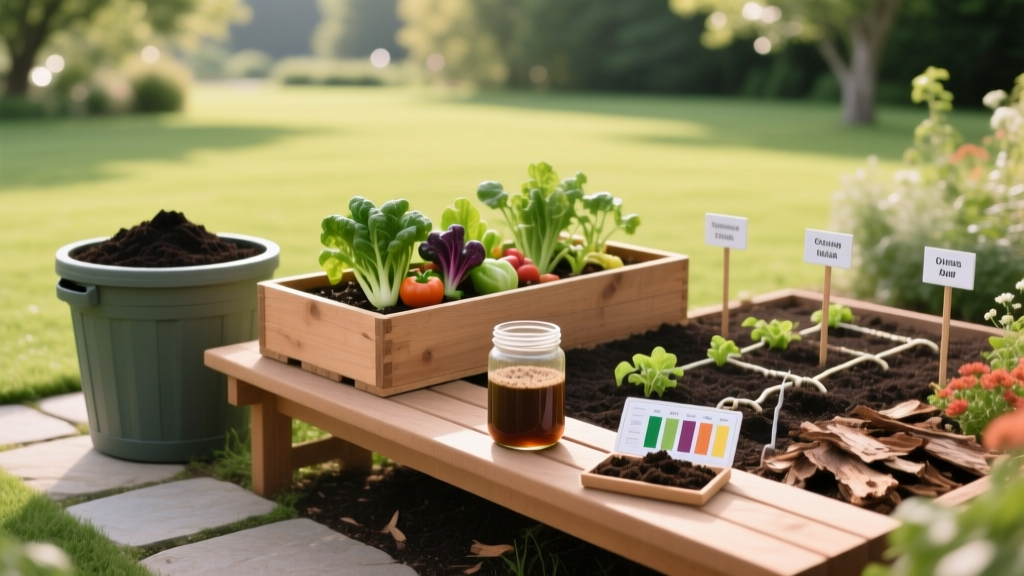
7 Garden Hacks for Better Soil
The fastest way to “ruin” soil isn’t skipping fertilizer—it’s loving it too hard. Every time you rototill, stomp a bed when it’s wet, or dump in the wrong amendment because a bag said “garden soil,” you’re collapsing pore space (the air pockets roots actually need) and starving soil life. The good news: you can fix a lot of that with a handful of shortcuts that work in real gardens, not lab-perfect plots.
Below are seven soil hacks I use (and see pros use) to get looser texture, better drainage, stronger roots, and fewer nutrient headaches—without turning your weekends into a never-ending compost opera.
Quick wins you can do this weekend
1) The “2-Inch Rule”: Top-dress, don’t till
Hack: Add compost as a surface layer instead of mixing it in. Spread 1–2 inches of finished compost on top of beds once in spring (and again in fall if your soil is sandy or heavily cropped), then let worms and water do the mixing for you.
This avoids shredding fungal networks and preserves soil aggregates that create drainage and air space. It’s also faster: a wheelbarrow, rake, and 20 minutes beats wrestling a tiller for an hour.
Real-world example: A 4'×8' bed is 32 sq ft. At 2 inches deep, you’ll need about 5.3 cubic feet of compost (32 × 2/12). That’s roughly one heaping 6 cu ft wheelbarrow load, or a couple of 2 cu ft bags.
2) The screwdriver test (and the one-time “rescue” broadfork)
Hack: Before adding anything, check compaction in 10 seconds. Push a long screwdriver into the soil after normal watering; if you can’t get it down 6 inches with steady pressure, your soil is compacted.
If it fails the test, do a one-time loosening with a broadfork (or garden fork) when the soil is moist like a wrung-out sponge—not wet. Rock the tines back to lift and crack the soil without flipping layers.
Scenario: New-build clay yard where the builder drove equipment over everything. A broadfork pass in spring plus a 2-inch compost top-dress often changes the whole season: water infiltrates instead of puddling, and tomatoes stop acting “thirsty” an hour after irrigation.
3) The $15 soil test that prevents $150 of wrong amendments
Hack: Test first, then amend. A basic lab soil test usually costs around $15–$30, and it’s the cheapest way to avoid dumping phosphorus or lime where you don’t need it.
Send a sample every 2–3 years, or yearly if you’re intensively growing vegetables. Many extension services recommend soil testing as the foundation for nutrient decisions; for example, University of Minnesota Extension emphasizes testing to guide fertilizer and amendment choices (University of Minnesota Extension, 2020).
Case example: A gardener with stunted peppers kept adding “bloom booster” (high P). Soil test came back already high in phosphorus; the real issue was pH at 5.2. A targeted lime application corrected pH, and the peppers finally took off—no extra fertilizer needed.
Structure + organic matter (the stuff that makes soil feel “alive”)
4) Mulch like a pro: 3-inch “armor” with a 2-inch gap
Hack: Use mulch to protect soil biology and prevent crusting and compaction. Aim for 3 inches of straw, shredded leaves, or wood chips on beds and around plantings, but keep a 2-inch bare ring around stems to prevent rot and slug hotels.
Mulch is also a water hack: it reduces evaporation and slows temperature swings that stress roots. Washington State University Extension notes organic mulches can conserve moisture and moderate soil temperatures (WSU Extension, 2017).
Scenario: Community garden plot that dries out fast and bakes in summer. Switching from bare soil to 3 inches of leaf mulch reduced watering from daily to every 2–3 days during hot weeks (same irrigation method, same crops).
5) Use “functional compost” instead of mystery bags: the 3-ingredient blend
Hack: For raised beds and new garden areas, mix a simple, repeatable blend rather than buying random “garden soil.” A reliable DIY base is:
Blend ratio (by volume): 2 parts screened compost : 1 part topsoil : 1 part aeration material (pumice, perlite, or pine fines).
This combo holds water but still drains, which is the sweet spot for vegetables. If you’re filling a 4'×8'×12" raised bed, you need about 32 cubic feet total; that’s 16 cu ft compost, 8 cu ft topsoil, and 8 cu ft aeration.
Money saver: Bagged “raised bed mix” can run $8–$12 per 2 cu ft bag (that’s $128–$192 to fill one bed). Buying compost/topsoil in bulk often lands closer to $40–$90 total per bed depending on local prices and delivery.
| Approach | What you get | Typical cost to fill 4'×8'×12" (32 cu ft) | Common pitfall |
|---|---|---|---|
| Bagged “raised bed soil” only | Convenient, consistent bags | $128–$192 (16 bags at $8–$12) | Can be too woody; shrinks fast |
| Bulk compost + topsoil + pumice/perlite (2:1:1) | Balanced structure + nutrients | $40–$90 (varies by region/delivery) | Need a tarp + mixing time |
| “Free” fill dirt + a little compost | Cheap volume | $0–$30 | Often compacted, low organic matter; poor drainage |
6) Grow roots to fix soil: cover crops in micro-doses
Hack: You don’t need a farm-sized field to use cover crops. “Micro-cover-cropping” means sowing fast growers in empty bed windows—4–6 weeks is enough to get benefits.
For quick soil improvement, try oats (cool season, winter-kills), buckwheat (summer, fast biomass), or crimson clover (adds nitrogen when grown longer). Mow or cut at ground level before seed set, and leave the roots in place.
Example: After garlic harvest in July, sow buckwheat at about 2–3 tablespoons per 100 sq ft. In 30–35 days, you’ll have a thick stand you can chop and drop, leaving a mulch layer and a root network that loosens the topsoil.
“Soil structure is improved most by living roots and minimal disturbance—roots feed microbes, and microbes build aggregates.” — USDA Natural Resources Conservation Service (NRCS), Soil Health principles (USDA NRCS, 2019)
Nutrient and pH hacks (targeted fixes that actually stick)
7) Calibrate pH and calcium with gypsum or lime—only when the soil test says so
Hack: Stop guessing with lime “just because.” Use your soil test to decide: if pH is low, you may need lime; if pH is fine but clay is tight and you need calcium without raising pH, gypsum can help in certain soils.
Timing: Apply lime in fall or early spring because it can take 2–6 months to noticeably shift pH. Gypsum is typically faster acting, but it’s not a magic fix for every clay soil—use it when tests or local extension guidance suggest calcium is limiting.
Case example: A gardener with blossom end rot on tomatoes assumed “more calcium” and added crushed eggshells all season (slow to break down). Soil test showed pH 5.5 and low calcium—so they applied the recommended lime rate and mulched to stabilize moisture. Next crop cycle, the issue dropped dramatically.
Three scenario playbooks (because real gardens aren’t average)
Scenario A: Sticky clay that cracks in summer
Do this: Broadfork once when moisture is right, then top-dress 2 inches compost and keep it covered with 3 inches mulch. Skip sand additions—small amounts can make clay more concrete-like if the ratios aren’t engineered.
Shortcut: Focus on organic matter plus roots (buckwheat in summer gaps, oats in fall). In 8–12 months, clay often goes from “brick” to “crumbly when moist,” which is what you’re after.
Scenario B: Sandy soil that won’t hold water or nutrients
Do this: Top-dress compost twice per year at 1 inch each time, and mulch heavily. Sandy soils benefit from steady organic inputs because organic matter is what holds onto moisture and nutrients.
Money-saving trick: Shredded fall leaves are basically free organic matter. Run them over with a mower and apply a 2–4 inch layer as mulch; by spring, much of it will be partially broken down and feeding your beds.
Scenario C: Raised beds that “sink” and turn hydrophobic
Do this: If your raised bed mix is mostly wood products, it can shrink fast and sometimes repel water when dry. Rehydrate by watering slowly (a drip line for 60–90 minutes beats a quick spray), then top-dress with 1–2 inches compost and add a finer mulch like shredded leaves.
DIY fix: Mix in an aeration component next time you refresh—1 part pumice/perlite to 3 parts existing mix helps water move evenly. If the bed is already planted, poke vertical holes with a dibber and sprinkle compost into them as “mini infiltration wells.”
A few extra insider moves (tiny changes, big payoff)
Keep foot traffic off beds with a “never step” rule
Hack: If you do nothing else, stop stepping in your growing space. Create beds no wider than 4 feet so you can reach the center from the sides; compaction from footsteps undoes a lot of compost and mulching work.
Example: Converting a trampled 5' bed to a 4' bed with a dedicated path immediately improves root growth—especially for carrots, beets, and potatoes that hate dense soil.
Use a “compost ring” around hungry plants instead of mixing fertilizer everywhere
Hack: For tomatoes, squash, and corn, make a ring of compost 3–4 inches wide and about 1 inch thick around the plant drip line (not touching the stem). Water it in and let nutrients move down slowly with irrigation.
This feeds where roots are active and cuts down on wasted amendments. It’s also a great way to use small amounts of homemade compost efficiently.
Pre-wet peat/coir-based mixes to avoid dry pockets
Hack: If you use coir or peat-based amendments, pre-moisten them in a tub first. A common mistake is tossing dry coir into a bed and assuming it will hydrate evenly—often it doesn’t, leading to dry pockets where seedlings struggle.
Specifics: For a standard coir brick, add water gradually until it’s evenly damp (not dripping). Then mix into the top few inches or use as part of your 2:1:1 blend for new beds.
Better soil isn’t about buying the fanciest bag or chasing a perfect recipe—it’s about stacking small, repeatable moves: keep soil covered, keep roots growing, disturb it less, and only “correct” chemistry when you’ve measured it. Pick two hacks to start (my vote: the 2-inch compost top-dress and the 3-inch mulch armor), and you’ll feel the difference the next time you sink a trowel into your bed.
Sources: University of Minnesota Extension (2020), soil testing guidance; Washington State University Extension (2017), mulching benefits; USDA NRCS Soil Health principles (2019).