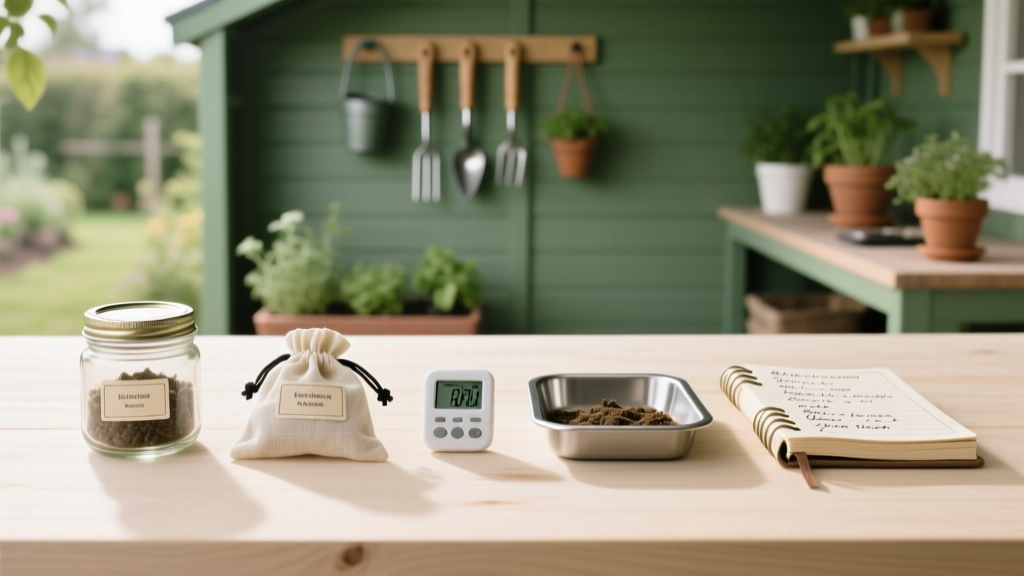
5 Garden Hacks for Garden Seed Storage
Most seeds don’t “die” because they’re old—they die because they were stored like spices: warm, humid, and opened a dozen times a week. One common mistake I see (even from experienced gardeners) is keeping seed packets in the shed or garage “so they’re close to the tools.” That’s usually the worst place in the house for seed life, because temps swing hard and humidity creeps in.
Seed storage isn’t about fancy gadgets. It’s about controlling two enemies: moisture and heat. A simple rule of thumb shared across extension services is that cooler and drier conditions significantly extend viability; Oregon State University Extension notes that seeds keep best when stored cool and dry, and many garden seeds can remain viable for years under proper storage (OSU Extension, 2010).
Below are five storage hacks I use myself and recommend to friends who want fewer germination surprises and less money wasted on re-buying seed every spring.
Group 1: Lock Down Moisture (the real seed killer)
Hack #1: Make a “dry vault” with a jar + desiccant (and use the right amount)
Grab a wide-mouth glass jar (mason jar or recycled pickle jar) and make it your seed vault. Add a desiccant so humidity stays low even after you open the lid—aim for 10–20 grams of silica gel per 1 quart (about 1 liter) jar for typical home seed collections. Keep seed packets inside (paper is fine) and close the lid tight after every use.
Real-world example: If you’ve got 25–40 packets in a 1-quart jar, toss in two 10 g silica gel packs (often free in shoe boxes) or buy a reusable canister for about $6–$12. I’ve seen this alone turn “spotty” germination into reliably even trays when gardeners were storing in kitchen drawers before.
Hack #2: DIY rice desiccant—only if you do this one extra step
If you don’t have silica gel, you can use rice as a backup desiccant, but don’t just dump dry rice in the jar and call it good. Spread rice on a baking sheet and dry it at 200°F (93°C) for 1 hour, then cool completely before sealing it into a breathable pouch (coffee filter + rubber band works). Replace every 2–3 months if you open the jar often.
Real-world example: A balcony gardener I know stores half-used packets in a cookie tin with a homemade rice pouch. It’s not as strong as silica gel, but it stopped her “packet clumping” issue (seeds sticking to damp paper) after she started pre-drying the rice and swapping it on schedule.
Moisture management isn’t optional: the University of California Agriculture and Natural Resources emphasizes cool, dry storage as a major factor in maintaining seed viability (UC ANR, 2014). If you’re only going to do one thing from this article, do the jar + desiccant.
Group 2: Control Temperature Without Buying a Special Fridge
Hack #3: Use the “stable-temperature zone” in your house (and stop using the garage)
Seeds last longer when temperatures are steady—not just “cool.” The best no-cost spot is usually an interior closet on a lower floor, away from ovens, water heaters, and sunny windows. Aim for a consistent 40–60°F (4–16°C) if possible; even a stable 65°F (18°C) closet can outperform a garage that swings from 35°F to 90°F.
Real-world example: A community garden volunteer stored seeds in a metal toolbox in an unheated shed. In spring, his spinach and onion seed came up patchy. The next season he moved the same brands/packets into a hall closet in a sealed jar. Germination was noticeably more uniform, especially for the cool-season stuff.
“Store seeds in a cool, dry location. Warm temperatures and moisture are the biggest causes of loss of seed viability during storage.” — Oregon State University Extension (2010)
Hack #4: Fridge storage that doesn’t create condensation (the paper-towel trick you actually want)
Refrigerators can be great for seed storage, but only if you prevent condensation when packets go in and out. Put your seed packets inside a sealed container (jar, gasket box, or zipper bag) with desiccant, then let the container sit unopened at room temperature for 30–60 minutes before opening. That warm-up time keeps humid kitchen air from condensing directly onto cold packets.
Real-world example: If you’re doing weekly succession sowings (lettuce every 7–10 days), keep one “working packet” in a small jar in your closet and the bulk seed in the fridge. You’ll open the fridge container less, which is where most moisture accidents happen.
Group 3: Prevent Mix-Ups, Lost Viability, and Re-Buying Seeds You Already Own
Hack #5: Label like a seed librarian—use “packed for” + a germ test date
The fastest way to waste money is to forget what’s old and buy it again. On every packet (even store-bought), write two things in permanent marker: (1) year purchased and (2) “test by” date (I like mid-winter, like January 15, before seed-starting season). Then, once a year, do a quick germination test on anything you’re unsure about.
Real-world example: A gardener who grows lots of herbs had five different basils with similar names and no dates. She started adding purchase year + “test by Jan 15” and stopped buying duplicates—saving about $18–$30 each spring just by shopping her own stash first.
A simple comparison: which storage method fits your space?
| Storage method | Approx. cost | Moisture protection | Temperature stability | Best for |
|---|---|---|---|---|
| Paper packets in a kitchen drawer | $0 | Low (humidity swings when cooking) | Medium (often warmer) | Very short-term (weeks) |
| Sealed jar + 10–20 g silica gel (closet) | $2–$12 | High | Medium–High (depends on closet) | Most home seed collections |
| Sealed jar + desiccant (refrigerator) | $2–$12 | High (if unopened often) | High | Longer storage; heat-sensitive seed |
| Toolbox/tin in garage or shed | $0–$20 | Low–Medium | Low (big temp swings) | Only if you accept frequent re-buying |
Quick mini-playbooks for real-world scenarios
Different gardeners mess up storage for different reasons. Here are a few “if this is you…” setups that solve common problems without adding complexity.
Scenario 1: You seed-start indoors and open packets constantly
Make a two-tier system. Keep a small “active” jar in an interior closet with the packets you’re sowing this month, and store everything else sealed with desiccant in a larger jar (closet or fridge). This reduces how often your main stash sees humid air and cuts the chance of packets softening or sticking shut.
Scenario 2: You garden in a humid climate (or your house runs damp)
Go heavier on moisture control: choose gasketed containers or jars and use 20 g silica gel per quart instead of 10 g. Add a cheap humidity indicator card (often $5–$8 for a pack) so you can see if your container is creeping above roughly 40–50% RH. If the indicator shifts, “recharge” reusable silica gel according to the label (many are refreshed in a warm oven for 1–2 hours).
Scenario 3: You save your own seed (tomatoes, beans, flowers)
Home-saved seed usually varies more in dryness than commercial seed, so don’t rush storage. After cleaning, let seed air-dry on a plate or screen in a low-humidity room for 7–14 days (longer for bigger seed), then pack into labeled paper envelopes before moving into your sealed jar. This is where the jar + desiccant combo really shines, because it prevents “almost dry” seed from slowly absorbing humidity and going downhill.
Bonus: a 3-minute germ test that prevents wasted tray space
This isn’t a separate hack, but it’s the habit that makes storage pay off. Once a year (or anytime you’re unsure), test germination before you commit a whole flat of soil and grow lights.
Place 10 seeds on a damp paper towel, fold it, slide it into a zipper bag, and leave it somewhere warm-ish like the top of a fridge. Check in 3–10 days depending on the crop; if 7 out of 10 sprout, call it about 70% and sow thicker to compensate. If you get 2 out of 10, it’s usually not worth prime bed space unless it’s a rare variety—then you baby what you’ve got.
Real-world example: A gardener with older carrot seed kept blaming “bad soil.” A simple 10-seed test showed only 30% germination, so she bought fresh seed for $3 and saved herself a month of frustration and a bare row.
Small tweaks that make the 5 hacks work even better
Keep seeds in paper inside the jar, not loose. Paper packets buffer tiny moisture shifts and keep small seed from disappearing into container corners. If a packet is torn, dump seed into a labeled coin envelope—those cost about $2–$4 for a big pack and they’re surprisingly durable.
Don’t store seeds with produce. Some fruits and veggies release moisture and ethylene, and refrigerators are messy ecosystems. Give seeds their own sealed container so they’re not sharing air with yesterday’s lettuce drawer cleanup.
Use a “first-in, first-out” rhythm. New packets go behind older ones in your jar or file box. It sounds obvious, but it’s the easiest way to stop the slow build-up of 3-year-old half packets you forget to use.
Write planting notes where you’ll actually see them. If you discovered last year that your parsley takes 21 days to sprout, write it on the packet. Storage and success go together: when you remember germ times and sowing windows, you open and handle packets less, and the stash stays drier.
Skip “pretty” storage that isn’t airtight. Decorative tins and cardboard photo boxes look nice but usually leak humidity. If you love the look, keep packets organized in the tin—but put the whole tin inside a large zipper bag with a desiccant pack so you get function and aesthetics.
Sources you can trust (and worth bookmarking)
Seed storage advice is one of those gardening topics where university recommendations line up nicely with what actually works in real homes. Two solid references: Oregon State University Extension (2010) on storing seeds cool and dry for best viability, and University of California Agriculture and Natural Resources (UC ANR, 2014) on proper seed storage conditions and handling to maintain germination.
Do the jar + desiccant setup this week, move seeds out of the garage, and add the two-date label system. Next spring, you’ll feel the difference the first time you sow a tray and it comes up evenly—no replanting, no second-guessing, no “why did nothing germinate?” panic.