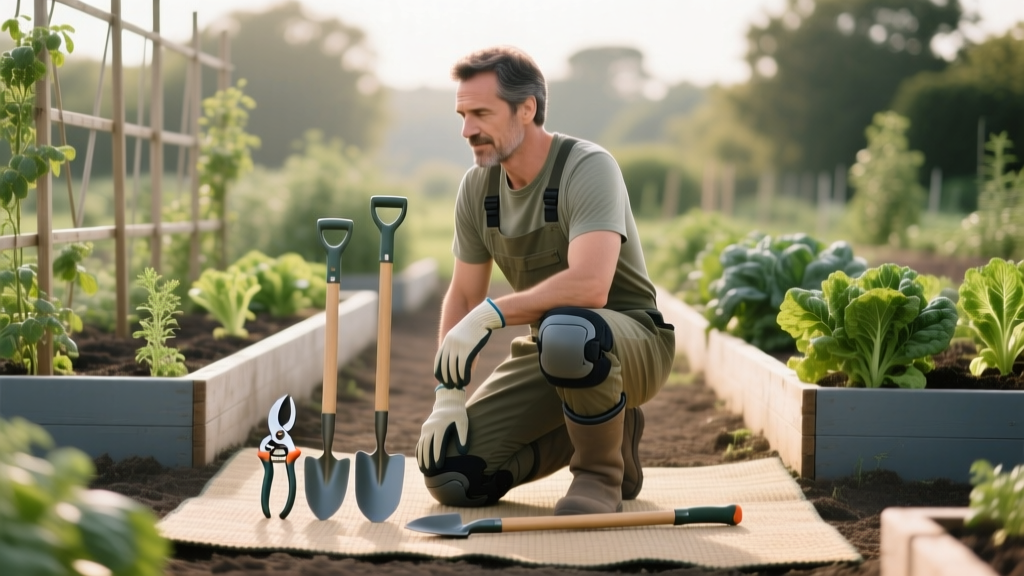
How to Make Garden Work Easier on Your Back
The most common back-killer in the garden isn’t lifting heavy stuff—it’s staying bent just a little bit for way too long. Ten minutes of “just weeding this quick patch” with a rounded spine can be tougher on your back than one clean, well-planned lift. The good news: a few smart changes in setup, tools, and timing can cut the strain fast—often without spending much money.
If your lower back flares up after planting, weeding, mulching, or hauling bags, you don’t need to quit gardening. You need to change the way the work meets your body—bring the garden up, bring the load closer, and stop doing “small strain” for big stretches.
Set Up the Garden So You Don’t Have to Fold Yourself in Half
Build raised beds tall enough to work from your hips, not your knees
A 10–12 inch raised bed looks nice, but it still forces you to bend for planting and weeding. For real back relief, aim for 24–30 inches tall if you’ll stand while working, or about 18–24 inches if you’ll sit on a low stool beside it. Example: a 4x8 bed at 30 inches tall lets most people reach the center without hinging at the waist—especially if you keep it no wider than 4 feet.
Go narrower before you go bigger
Wide beds cause the sneaky strain: repeated reaching. Keep beds 3–4 feet wide if you can access both sides; if it’s against a fence, cap it at 2 feet so you don’t twist while leaning. A real-world win: converting a 5-foot-wide bed to two 30-inch beds with a 16-inch path often feels like “more space,” because everything becomes reachable without body contortions.
Put paths where your feet actually want to go
Back pain loves awkward steps—especially when you’re carrying something. Make main paths at least 36 inches wide (wheelbarrow-friendly) and secondary paths 18–24 inches. If you’ve been stepping over hoses and edging, spend one hour rerouting: it can eliminate dozens of little twists per session.
Swap digging for sheet mulching (cardboard + compost) in new areas
Double-digging is famous for a reason: it’s exhausting, and it’s hard on the spine. Instead, lay plain cardboard, overlap seams by 6 inches, wet it, then add 3–4 inches of compost and 2–3 inches of mulch on top; plant through it as it softens. Example: starting a 50 sq ft bed this way can take 30–45 minutes instead of an afternoon of digging—and your back doesn’t pay interest the next day.
Citation: Washington State University Extension (2020) promotes sheet mulching/lasagna methods as a low-disturbance way to establish beds and suppress weeds, reducing the need for intensive soil turning.
Use Body-Smart Technique (So the Same Job Costs Less Pain)
Work in “hinge mode,” not “round-back mode”
When you must bend, bend at the hips like closing a car door with your butt, keeping your back long and your load close. Put one hand on your thigh for support when you’re low, and switch sides every couple minutes. Example: when planting plugs, kneel on a pad and hinge forward rather than crouching with your spine rounded—your lower back stays quieter even after 20–30 plants.
Set a timer for micro-breaks before your back complains
Most people break after pain starts, which is late. Use a 20-minute timer: stand tall, walk 30 seconds, and do 3 gentle back extensions (hands on hips, lean back slightly). It’s annoyingly effective—especially during weeding sessions where you’d otherwise lock into one posture for an hour.
Lift less by lifting smaller (and it’s faster than you think)
A 40-lb bag of soil isn’t just heavy—it’s awkward and far from your body. Buy 20-lb bags, or split bulk material into two buckets so each trip is 15–25 lb. Example: two 5-gallon buckets filled halfway with compost move the same volume as wrestling one big bag, but they keep the load close and balanced.
Carry in front, not off to one side
One-sided loads (like a single bucket) make your spine fight rotation with every step. If you must carry a bucket, carry two smaller ones—one in each hand—or use a shoulder-yoke style carrier to center the load. A cheap DIY version: run a sturdy broom handle through two bucket handles so the weight hangs centered and your hands steady the pole.
Citation: The National Institute for Occupational Safety and Health (NIOSH, 1994) lifting guidance emphasizes keeping loads close to the body and minimizing twisting to reduce low-back stress.
Tools That Save Your Back (And What to Buy vs DIY)
Use a long-handled stirrup hoe for weeding—standing up
A stirrup (hula) hoe slices weeds at the soil surface with a back-and-forth motion, so you’re not hand-pulling hunched over. Look for a handle that reaches your sternum; for many adults that’s 54–60 inches. Example: in a 10x10 bed, 5 minutes with a stirrup hoe after watering can replace 30 minutes of hand weeding later.
Choose a digging fork over a shovel for most soil work
Shovels tempt you to pry and lift, which is hard on the back. A digging fork loosens soil with less lifting—step in, rock back, move on. If you’re amending a bed, fork-loosening plus topdressing compost (instead of turning everything) is a classic back-saver.
Put your pruners on a retractable lanyard
It sounds small, but bending 30 times to pick up pruners adds up. Clip pruners to a retractable tool tether on your belt (often $10–$15) so they’re always at hand. Real-world example: when deadheading roses or harvesting peppers, you keep your hands free without the “where did I set them?” crouch.
Get a kneeler/bench combo—or make one from scrap
A flip-over kneeler/bench keeps you from kneeling directly on hard ground and gives you handles to stand without pushing off your low back. Store-bought versions often run $35–$60; DIY option: build a simple 18-inch-tall bench from 2x4s with a screwed-on plywood top and add a $10 foam pad. Example: using it for planting 3-inch pots lets you work at a steady height and stand up smoothly every time.
Upgrade your hose setup so you stop dragging and yanking
Hose wrestling is sneaky back strain: twisting, pulling, and sudden jerks. A lightweight 5/8-inch hose is easier than a stiff 3/4-inch contractor hose for most gardens, and a swivel connector reduces torque at your wrist and back. If you’re on a budget, add just a $12 quick-connect set and keep the hose ends from whipping you into weird positions.
Work Smarter With Water, Mulch, and Materials
Mulch to reduce the most back-breaking job: weeding
Weeding is repetitive bending, so reduce the need. Apply 2–3 inches of mulch (wood chips, shredded leaves, or straw) and keep it 2 inches away from plant stems. Example: one $6 bale of straw can cover roughly 40–60 sq ft at about 2 inches deep—often cutting hand weeding by half in that patch.
Use “small-batch mixing” instead of one giant wheelbarrow load
Overfilled wheelbarrows tip and force you to brace with your back. Mix soil or compost in smaller loads you can control—aim for a wheelbarrow that feels “light enough to steer with one hand” on flat ground. Example: when topdressing a bed, three manageable trips beat one overloaded trip that leaves you sore and annoyed.
Topdress compost yearly instead of turning beds every season
Turning soil feels productive, but it’s optional in many gardens—and it’s hard on backs. Spread 1 inch of compost over your beds in spring (or fall) and let worms and water do the mixing. For a 4x8 bed (32 sq ft), 1 inch is about 2.7 cubic feet—roughly one big bag or a couple of small ones.
Citation: University of Minnesota Extension (2019) notes that adding compost as a topdressing improves soil over time and can reduce the need for intensive digging, especially in established beds.
Quick Comparison: Back-Friendly Ways to Move Stuff Around
| Method | Best for | Back strain risk | Typical cost | Insider tip |
|---|---|---|---|---|
| Wheelbarrow (single wheel) | Narrow paths, maneuvering | Medium (tips if overloaded) | $80–$200 | Keep loads under ~60 lb and low in the tray. |
| Garden cart (4 wheels) | Heavy loads on flat ground | Low–Medium (less balancing) | $120–$300 | Pulling can twist you—push when possible. |
| Two 5-gallon buckets (half-full) | Short trips, tight spaces | Low (balanced) | $10–$20 total | Half-full buckets = ~15–25 lb each depending on material. |
| Tarp drag | Leaves, mulch, brush | Low (no lifting) | $8–$25 | Fold corners into handles; drag, don’t hoist. |
Three Real-World Scenarios (What to Do When Life Isn’t a Perfect Garden)
Scenario 1: “I only have 30 minutes after work, and I overdo it”
Short sessions are where people go hardest—and then pay for it. Set a 25-minute cap with a 5-minute “reset” at the end: coil the hose, put tools away, and do one gentle stretch sequence. Example plan: 10 minutes standing weed slicing with a stirrup hoe, 10 minutes mulching one small strip, 5 minutes watering with a wand—done before your form gets sloppy.
Scenario 2: “My garden is in-ground and I can’t rebuild it into raised beds”
You can still raise the work without major construction. Create “mounded rows” by adding 3–6 inches of compost and topsoil mix to planting zones, then mulch pathways; the plants sit higher, and you bend less. A DIY shortcut: edge rows with logs or bricks you already have so the mound doesn’t wash out in heavy rain.
Scenario 3: “I have recurring low back pain, but I don’t want to stop gardening”
Prioritize tasks that remove future bending: mulching, drip irrigation setup, and bed narrowing pay you back every week. Do the hard setup in two 45-minute chunks on different days, not one marathon. Example: install a simple drip line kit (often $30–$60 for a small garden) so you stop lugging watering cans and leaning into beds to hand-water.
Little “Insider” Moves That Add Up Fast
Put a 5-gallon bucket seat wherever you weed
Standing is great until you start bending repeatedly; sitting low is great until standing back up is a struggle. A bucket seat splits the difference: flip a bucket, add a $10 snap-on lid seat (or a folded towel), and keep it within arm’s reach. Example: you can sit to hand-weed around seedlings, then stand for hoeing—without dropping to your knees every time.
Harvest with a waist-level basket, not a hand-held bowl
Carrying a bowl in one hand makes you twist and reach weirdly with the other. Use a harvest apron or a basket that hangs at waist height so both hands work symmetrically. If you’re picking beans for 20 minutes, this is the difference between “pleasant” and “why does my back hurt from harvesting?”
Stage materials at bed height before you start
The setup matters as much as the task. Put pots, compost, and tools on an upturned crate or small table so you’re not bending 50 times to grab items from the ground. Example: when transplanting, set a tray of seedlings on a 24-inch-tall stool next to the bed—your spine stays neutral and your speed improves.
Do the “two-pass prune” to avoid awkward reaches
First pass: remove only the easy, waist-to-shoulder-height cuts while standing tall. Second pass: sit on your kneeler/bench for low cuts, or use long-handled loppers for the lowest branches so you don’t hunch. Example: with shrubs like hydrangea, this keeps you from squatting and twisting around the plant for every single stem.
“Keeping the load close, avoiding twisting, and changing posture frequently are some of the simplest ways to reduce strain during manual tasks.” — NIOSH lifting guidance (1994)
Money-Saving Upgrades That Feel Like Cheating
Replace one pricey tool with one cheap system: quick-connects + tool holster
You don’t need a shed full of gadgets to save your back—you need less bending and fewer trips. A $12–$25 quick-connect hose set plus a $10 tool holster can cut the constant crouching and walking back and forth that sneaks in strain. Example: keeping pruners, twine, and a small trowel on your hip saves you 20+ “where did I put that?” bends in a session.
DIY a rolling garden seat before buying a fancy one
Rolling garden scooters can cost $80–$150, but you can DIY something similar if you already have a sturdy shop stool or an old rolling mechanic’s seat. Add a shallow crate for tools and keep your knees and hips happier while you move along a row. Example: for strawberry beds, rolling instead of squatting every 18 inches is a back-saver.
Buy compost in bulk once, then move it with tarp drags
Bagged compost adds up fast—often $5–$8 per 1–2 cu ft bag—plus you lift every bag. If you can get bulk delivered (sometimes $35–$60 per cubic yard, plus delivery), you save money and reduce repetitive lifting. Example: spread bulk compost by loading a tarp, dragging it to the bed, and flipping it where needed—less hoisting, less twisting.
Back-friendly gardening isn’t about being “careful” all the time—it’s about building a garden that forgives you when you get absorbed in the work. Start with one change that removes a whole category of bending (mulch, raised planting zones, better paths), then add one tool or habit that keeps you moving well (timer breaks, balanced carries, staging materials). Your back will notice the difference long before your garden does—and you’ll still have energy left to enjoy the part you actually came outside for.