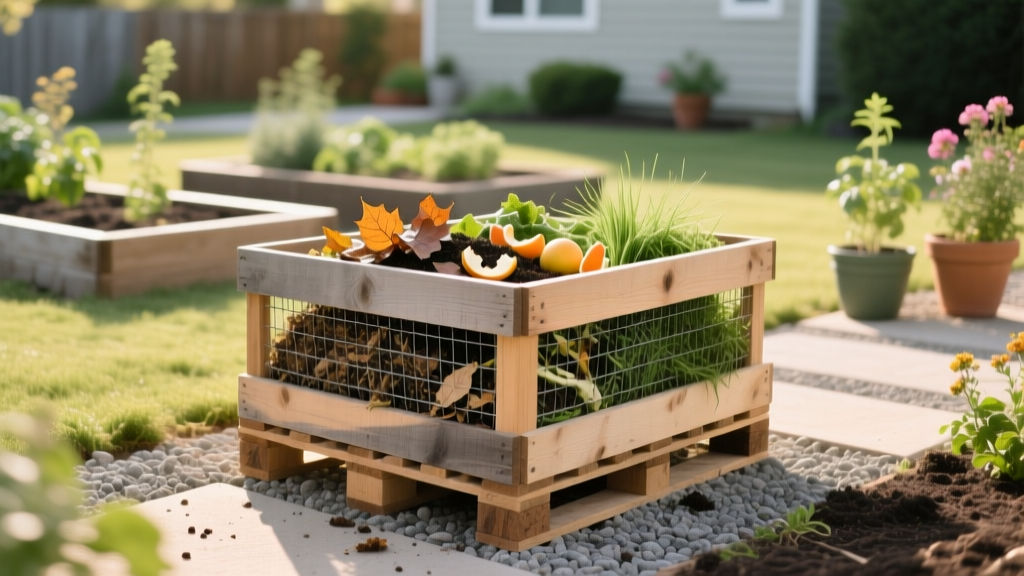
DIY Compost Bin on a Budget
The most expensive compost bin is the one that “works” for two weeks… then turns into a smelly, soggy trash can. The common mistake isn’t using the wrong gadget—it’s building a bin with no airflow and no plan for mixing, so the pile goes anaerobic and everyone in the house votes composting off the island.
You can make a bin that heats up, stays tidy, and costs under $30 (sometimes under $10) if you focus on three things: air, access, and the right mix of browns to greens. Below are my favorite shortcuts and proven hacks—stuff you can actually do this weekend with a drill, some zip ties, and whatever’s already leaning against your garage wall.
Group 1: Choose a bin style that matches your space (and your laziness level)
Tip: The 3-foot rule—build for heat, not for looks
A compost pile needs enough mass to hold heat, which is why a bin around 3 ft x 3 ft x 3 ft (about 27 cubic feet) is a sweet spot for many home gardens. Smaller piles can compost, but they cool off fast and take longer unless you manage them like a hobby. If you’re tight on space, go smaller—but plan to chop materials smaller and mix more often.
Example: In a townhouse patio setup, a 18–24 inch diameter bin still works if you shred cardboard and turn weekly; a full 3-foot cube can go 2–3 weeks between turns and still stay active.
Tip: Wire-mesh “leaf corral” = fastest, cheapest bin you’ll actually use
Grab a roll of hardware cloth or welded wire (typical cost: $15–$35 depending on height and gauge), cut a 10–12 ft length, and form a cylinder about 3–4 ft wide. Secure with zip ties or scrap wire. This style breathes naturally, which means fewer stink issues and less fussing with vents.
Example: A neighbor uses a 36-inch-tall wire ring behind the shed—leaves in fall, kitchen scraps all year—then opens one side and forks out finished compost in spring.
Tip: Two-bin system beats one fancy bin (and often costs less)
If you can make two simple bins, you’ll compost faster and cleaner: one bin is “active” (new additions), the other is “resting” (finishing). You can build two wire rings for under $40, which is often cheaper than a single store-bought plastic bin that still needs careful management. The resting bin is your odor insurance because you stop feeding it and let microbes stabilize.
Example: A family of four fills an active bin in about 6–8 weeks, then switches to the second bin and leaves the first to cure for 4–8 weeks.
Tip: When tumblers are worth it (and when they’re not)
Tumblers shine when you have raccoons, dogs, or strict HOA rules, but they’re usually pricier and smaller than ideal. A common budget tumbler is $80–$150 and may only hold 37–60 gallons, which fills quickly and cools off. If you go tumbler, plan on shredding inputs small and keeping a bag of dry browns right next to it.
Example: For an apartment community garden, a tumbler kept pests out—but compost only finished reliably when members added 2 buckets of shredded cardboard for every 1 bucket of food scraps.
| Bin style | Typical DIY cost | Best for | Trade-offs |
|---|---|---|---|
| Wire mesh ring | $15–$35 | Fast composting, good airflow, low effort | Open to critters unless you manage food scraps carefully |
| Wood pallet bin (3-sided or 4-sided) | $0–$25 | Big volume, tidy look, easy to turn with fork | Needs basic tools; can rot over time |
| Trash can compost bin (drilled holes) | $10–$30 | Small spaces, contained look | Easy to go anaerobic; harder to turn |
| Tumbler | $80–$150 | HOA/pest pressure, easy turning | Small volume; can dry out or cool down |
Group 2: Build it cheap—but build it so you can actually manage the pile
Tip: If you can’t open it easily, you won’t turn it (so design for access)
A bin that requires untying knots or removing screws every time is a bin that won’t get turned. Add one “gate” side: for pallets, hinge one pallet with two cheap hinges; for wire mesh, clip one vertical seam with 4–6 carabiners or reusable cable ties so it opens like a door. Turning becomes a 5-minute job instead of a 30-minute hassle.
Example: A pallet bin with a simple latch let one gardener flip a pile every 10–14 days without dreading it—finished compost dropped from ~6 months to ~10–12 weeks in warm weather.
Tip: Drill holes like you mean it (trash can bin hack)
If you’re using a plastic trash can, “a few holes” isn’t enough. Drill 1/2-inch holes every 4–6 inches around the sides, plus 8–12 holes in the lid, and elevate the can on bricks so air can move under it. This simple pattern dramatically reduces the swampy, rotten-egg smell that comes from trapped moisture.
Example: A balcony composter used a 32-gallon can; after adding ~40 side holes and lifting it 2 inches off the ground, fruit fly issues dropped and the pile stopped matting.
Tip: Line the bottom with sticks to prevent the “pancake layer”
Before you add any kitchen scraps, toss in a 4–6 inch layer of small sticks or coarse wood chips. That creates air channels and drainage so the first wet layer doesn’t become a slimy seal. It’s basically free, and it makes turning easier because the bottom doesn’t fuse into a compost brick.
Example: In a rainy climate, this one step kept a wire-ring pile from turning into a soggy mess after a week of storms.
Tip: Skip expensive “compost activators”—use smart inoculants you already have
Most compost starters are just nitrogen plus microbes you already have in soil. A shovel of finished compost, garden soil, or leaf mold sprinkled every 6–8 inches of new material does the same job for free. You’re seeding decomposers and buffering odor without buying a bag of mystery pellets.
Example: A new pile built from fall leaves and coffee grounds got a 2-inch dusting of old compost; within 7 days it warmed noticeably compared to the uninoculated pile next door.
Group 3: The mix that prevents stink, slime, and slow piles
Tip: Use a browns-to-greens “bucket ratio” you can remember
Instead of guessing, use an easy visual: 2–3 buckets of browns (dry leaves, shredded cardboard) for every 1 bucket of greens (food scraps, fresh grass). This lines up with the general goal of a higher carbon mix and helps avoid odor. North Carolina State Extension notes composting works best when carbon and nitrogen inputs are balanced, often described as roughly a 25–30:1 carbon-to-nitrogen ratio (NCSU Extension, 2020).
Example: If you add one 1-gallon ice-cream pail of veggie scraps, immediately cover with 2–3 gallons of shredded leaves or torn egg cartons.
Tip: Chop or rip to 1–2 inches when you’re working with a small bin
Surface area is compost’s cheat code. If your bin is under 30 gallons, aim to tear cardboard into 1–2 inch pieces and chop kitchen scraps roughly (no need to mince—just don’t toss in whole corn cobs and expect miracles). Smaller pieces heat faster and break down more evenly, especially in bins that cool quickly.
Example: One gardener switched from whole pizza boxes to shredded cardboard strips and cut compost time by about 3–4 weeks in a small tumbler.
Tip: Always “cap” food scraps with a 2–4 inch brown blanket
A brown cap is the cheapest odor control and pest control you’ll ever buy. After each food scrap dump, cover it with 2–4 inches of leaves, shredded paper, or wood shavings so smells don’t broadcast. It also helps keep fruit flies from finding fresh material near the surface.
Example: In a raccoon-heavy neighborhood, a consistent leaf cap stopped nighttime bin raids—no new hardware needed.
Tip: Know your no-go items (for budget bins, some “compostable” things aren’t worth it)
Meat, grease, and dairy are technically compostable, but in simple DIY bins they’re a magnet for pests and stink. Also skip “compostable” bioplastics unless your municipality confirms they break down in home piles—many require high, consistent heat that home systems don’t hold long. Keep it boring and you’ll get finished compost faster.
Example: A backyard pile that kept attracting rats stopped immediately once the household moved bones and fatty leftovers into a sealed trash system instead.
Group 4: Heat, moisture, and airflow—what actually moves the needle
Tip: Moisture target = wrung-out sponge (but here’s the real test)
Forget “water regularly.” Grab a fistful from the center and squeeze: you want 1–2 drops at most—more means too wet, none and it crumbles means too dry. If it’s soggy, mix in a dry brown like shredded cardboard; if it’s dusty, add water in 1–2 gallon increments while turning so moisture spreads evenly.
Example: After a week of rain, mixing in one full contractor bag of dry leaves brought a soupy pile back into balance in a single turn.
Tip: Turn on a schedule you can stick to (and it doesn’t have to be constant)
For faster compost, turn the pile every 10–14 days during warm months; in cool weather, every 3–4 weeks is fine. Turning adds oxygen and mixes fresh material into hot zones. The U.S. EPA notes that managing moisture and aeration are key factors that influence composting speed and odor control (U.S. EPA, 2023).
Example: A busy gardener set a phone reminder every other Saturday—compost stayed sweet-smelling and finished before fall planting.
Tip: Use a $10 compost thermometer only if you’ll act on the reading
A long probe thermometer (often $10–$20) is useful if you’re troubleshooting: 130–160°F is a solid hot-compost range, while “stuck” piles often sit near ambient temperature. If it’s cool and wet, add browns and turn; if it’s hot but dry, add water while mixing. If you won’t change anything based on the number, skip the gadget.
Example: A pile reading 95°F in July wasn’t “broken”—it was nitrogen-poor; adding one bag of fresh grass clippings plus a turn bumped it back over 130°F in two days.
“Composting is an oxygen-driven process—when you limit airflow, you invite odors and slow breakdown.”
—Washington State University Extension (WSU Extension, 2019)
Tip: Build a “chimney” for passive aeration (no turning required)
If turning is your personal compost kryptonite, add a simple air chimney: stand a perforated pipe (or a bundle of sticks) upright in the center as you build the pile. Use a 2–3 inch diameter pipe and drill 1/2-inch holes every 3–4 inches. This pulls air into the core and helps prevent the dead, sour center that kills momentum.
Example: A gardener with back pain used the chimney method in a pallet bin and only turned twice over a season—still got usable compost by planting time.
Group 5: Feedstock hacks—free inputs that outperform pricey bags
Tip: Stockpile browns like they’re gold (because they are)
The #1 budget composting problem is running out of browns, then trying to compost pure kitchen scraps. Keep a dedicated browns stash: a 32–55 gallon trash can of dry leaves, shredded paper, or cardboard right next to the bin. When the weather is gross and you’re in a hurry, that stash keeps your pile balanced in 30 seconds.
Example: One household taped a sign to the browns can—“Add 2 scoops after scraps”—and odor complaints dropped to zero.
Tip: Coffee grounds are powerful—treat them like “greens”
Free coffee grounds from a café are a composting jackpot, but they’re nitrogen-rich and can mat when added thickly. Mix them in layers no thicker than 1 inch at a time, and always pair with a fluffy brown like shredded leaves. Many coffee shops will give away 5–10 lb bags if you ask nicely and show up consistently.
Example: A community gardener grabbed a 10 lb bag weekly; by layering grounds with torn cardboard, their pile stayed hot without turning into a dense sludge.
Tip: Shred cardboard fast with a “soak and rip” method (no shredder needed)
If you don’t own a shredder, soak cardboard in a tote for 10–20 minutes, then rip by hand into strips. Wet cardboard tears cleanly and mixes better, especially in small bins where dry sheets form waterproof mats. Drain it well before adding so you don’t flood the pile.
Example: After moving houses, a gardener composted moving boxes by soaking and ripping them—turned a disposal problem into two wheelbarrows of compost.
Tip: Leaves compost faster when you “mow-and-bag” once
Whole leaves can take ages, especially thick ones like oak. Run them over with a mower and collect in the bag—instant leaf confetti that breaks down dramatically faster and mixes evenly. One pass is enough; you’re aiming for pieces roughly 1/2–1 inch.
Example: A suburban yard turned 12 bags of fall leaves into a reliable browns stockpile that lasted until midsummer.
Group 6: Real-world setups (steal these and adjust)
Scenario: Small backyard + lots of lawn clippings (the “too much green” problem)
Grass clippings heat fast but go slimy if added in thick layers. Add clippings in layers no thicker than 2 inches, then add an equal or larger layer of shredded leaves or torn cardboard. If you only have grass and no browns, you’re better off leaving clippings on the lawn (mulch mowing) and composting kitchen scraps with paper until fall leaves arrive.
Real example: A homeowner with weekly mowing added clippings in thin layers plus cardboard from deliveries; the pile stayed fluffy and finished in about 8–10 weeks during summer.
Scenario: Apartment patio + kitchen scraps (tight space, neighbor-sensitive)
Use a 32-gallon lidded can with aggressive vent holes and a strict brown-cap habit. Freeze scraps until you’re ready to add them (freezing reduces smell and fruit flies), then bury them in the center and cap with 3 inches of dry browns. If you can’t store browns, use shredded junk mail (remove plastic windows) or paper bags ripped up.
Real example: A patio composter kept a 5-gallon bucket of shredded paper indoors; every scrap addition got two handfuls of paper and a quick stir with a garden claw.
Scenario: Rural property + wildlife pressure (raccoons, dogs, bears)
Go with a fully enclosed system: a tumbler, a latched trash can bin, or a pallet bin wrapped in 1/2-inch hardware cloth including the top. Keep all food scraps buried and capped, and favor yard waste composting if wildlife is intense. Spending $25 on hardware cloth is cheaper than cleaning up a scattered compost buffet every morning.
Real example: A gardener near woods wrapped a pallet bin with hardware cloth and used a simple bungee-latched lid; raids stopped immediately, and they kept composting year-round.
Scenario: New build neighborhood with almost no leaves (the browns shortage)
If leaves are scarce, your budget browns are cardboard, paper, and wood shavings. Ask local stores for clean cardboard, and check with a nearby sawmill or woodshop for a bag of untreated shavings (confirm it’s not pressure-treated or painted). Aim to store at least 30 gallons of browns so you’re never forced to dump scraps “naked” into the bin.
Real example: One gardener set up a weekly cardboard run: 10 minutes behind a grocery store collected enough boxes to balance a week of kitchen scraps for a family of three.
Group 7: Troubleshooting that saves a pile (and your patience)
Tip: If it smells like ammonia, you’re nitrogen-heavy—fix it in one turn
Ammonia smell means too many greens (often grass or coffee grounds) and not enough carbon. Add a thick dose of browns—think one full trash bag of dry leaves or shredded cardboard for a medium bin—then turn until the smell is gone. If you still smell it, add another brown layer and mix again.
Example: A pile loaded with fresh grass reeked after 48 hours; two contractor bags of shredded leaves plus a turn neutralized it the same afternoon.
Tip: If it’s wet and sour, stop adding scraps for a week
When a pile goes anaerobic, adding more food makes it worse. Pause inputs for 7 days, add dry browns, and fluff with a fork to reopen air spaces. If you can, pull the pile out and rebuild it in layers—yes, it’s annoying, but it’s faster than waiting months for a swampy pile to “maybe” recover.
Example: A trash can bin turned into a sludge cylinder; rebuilding with alternating 3-inch brown layers and thin green layers brought it back to a clean earthy smell within a week.
Tip: If nothing is happening, check the “triangle”: size, moisture, and nitrogen
Cold, inactive compost is usually one of three issues: the pile is too small (under 2 ft in each direction), too dry (crumbly, no clumping), or too carbon-heavy (all leaves, no greens). Fix one variable at a time so you know what worked: add water, add greens (like 1–2 gallons of fresh clippings), or consolidate into a smaller footprint to hold heat.
Example: A leaf-only pile sat unchanged for months; adding a bucket of kitchen scraps plus moisture and turning kicked it into gear in 5 days.
Group 8: Cheap finishing moves—how to get compost you’ll actually want to use
Tip: Let it cure for 2–4 weeks before you put it on plants you care about
Even when the pile looks “done,” fresh compost can be biologically hot and still breaking down. Give it a curing period of 2–4 weeks in a resting bin or a covered heap so it stabilizes and smells earthy. You’ll get a more consistent soil amendment and fewer surprise nitrogen tie-ups in beds.
Example: A gardener who cured compost for a month stopped seeing seedlings stall after transplanting.
Tip: Sift only what you need (and use a $0 screen)
You don’t need to sift everything—just the portion going into seed-starting mix or topdressing. A scrap piece of 1/2-inch hardware cloth stapled to a simple wood frame works, or you can zip-tie it to a milk crate for a no-build option. Oversized bits go right back into the active bin as “compost starters.”
Example: One gardener keeps a milk crate screen next to the bin and sifts a 5-gallon bucket at a time for potting up tomatoes.
Tip: Track one simple metric: how many browns bags you’ve banked
If you want composting to stay budget-friendly, measure your browns inventory, not your compost output. Try to keep at least 2–3 full bags (or one 55-gallon can) of dry browns on hand at all times. When you hit your last bag, it’s “browns hunting” time—because a compost pile without browns turns into a problem you’ll pay to fix.
Example: A gardener who always kept three leaf bags in reserve never had to buy peat moss or compost starter again for routine balancing.
If you build for airflow, keep a steady stash of browns, and make turning easy enough that you’ll actually do it, your budget bin won’t just “compost eventually”—it’ll produce the good stuff reliably. Start with one bin you can manage in under 10 minutes, then add a second when you’re ready to level up without spending more than a couple of takeout meals.
Sources: North Carolina State University Extension (2020); Washington State University Extension (2019); U.S. Environmental Protection Agency (2023).