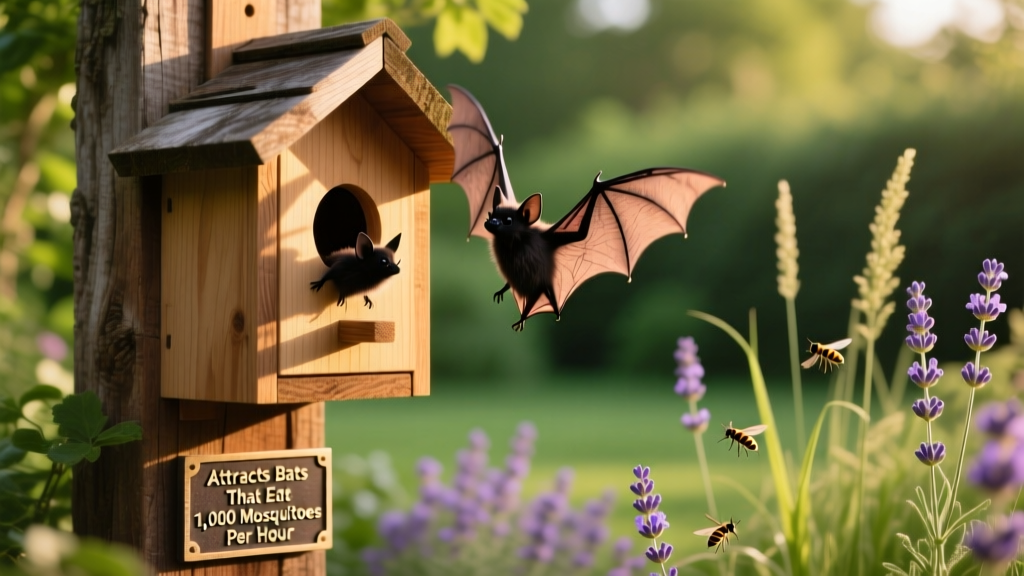
Bat House for Garden Pest Control: Attract Bats That Eat 1000 Mosquitoes Per Hour
Bats: The Ultimate Garden Allies
A single little brown bat eats 600-1,000 mosquitoes per hour. A colony of 150 bats in your bat house consumes 33 million insects per summer. Bats are the most effective natural pest control available — and they're free. All you need is a properly designed bat house and the patience to attract them.
What Bats Eat in Your Garden
- Mosquitoes (primary food source)
- Moths (including corn earworm, cutworm, and armyworm moths)
- Cucumber beetles, stink bugs, leafhoppers
- Japanese beetles, June bugs
- Fruit flies, fungus gnats
Bat House Design Specifications
Multi-Chamber Design (Most Effective)
| Feature | Specification |
|---|---|
| Height | 24-36 inches |
| Width | 14-24 inches |
| Depth | 3-6 inches |
| Chambers | 2-4 (3/4 inch spacing between partitions) |
| Roosting surface | Rough-cut wood or grooved (1/2 inch spacing) |
| Landing plate | 3-6 inches extending below entrance |
| Roof overhang | 2-4 inches (rain protection) |
Placement (Critical for Success)
- Height: 12-20 feet above ground (minimum 10 feet)
- Sun exposure: South or southeast facing (6-8 hours morning sun)
- Near water: Within 1/4 mile of a stream, pond, or wetland
- Clear flight path: No branches or wires within 10 feet of entrance
- Mount on: Pole or building (trees are less successful — predators)
- Temperature: Interior must reach 80-100F in summer
Painting for Temperature
Paint the exterior (not interior roosting surfaces) based on your climate:
- Zones 3-5: Black or dark brown (maximize heat absorption)
- Zones 6-7: Medium brown or gray
- Zones 8-10: Light gray or tan (prevent overheating)
Common Bat Species (North America)
- Little brown bat (Myotis lucifugus) — most common, eats mosquitoes
- Big brown bat (Eptesicus fuscus) — larger, eats agricultural pests
- Mexican free-tailed bat (Tadarida brasiliensis) — fastest, southern states
Timeline and Patience
- Install bat house in early spring (before bats return from migration)
- First occupancy: 1-3 years (sometimes immediate, sometimes never)
- Peak colonization: Years 2-3
- If no bats after 3 years: relocate the house
Safety Considerations
- Never handle bats with bare hands
- Bat guano under the house is excellent fertilizer (collect and use)
- Bats are not aggressive — they avoid humans
- White-nose syndrome: don't disturb hibernating bats
Final Thoughts
A $50 bat house provides more pest control than $500 in pesticides. Install it in spring, be patient, and within 1-3 years you'll have a colony devouring thousands of insects every night. It's the single best investment for a chemical-free garden.