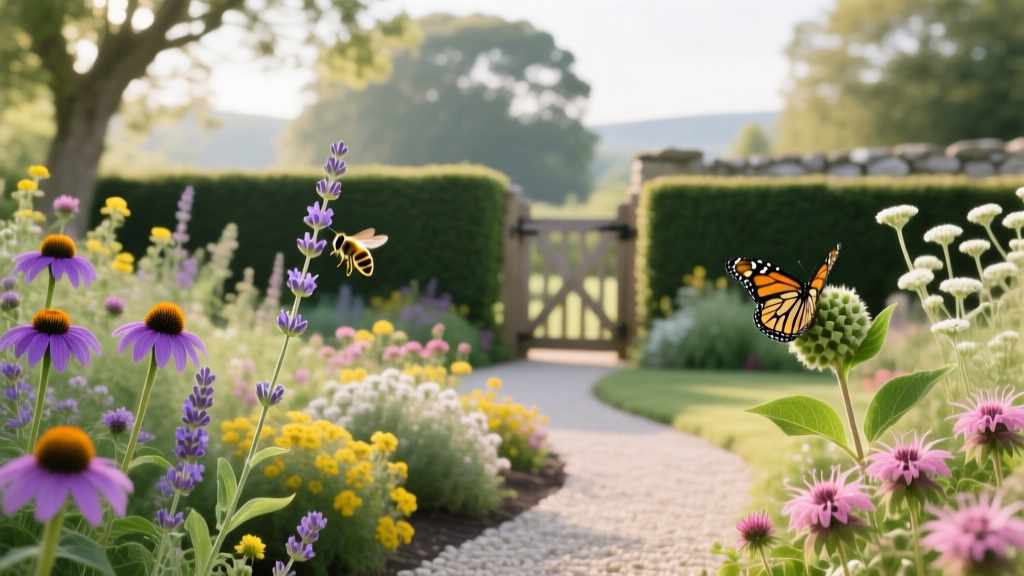
12 Garden Hacks for Pollinator Garden Design
The most common pollinator-garden mistake isn’t “not planting enough flowers”—it’s planting a gorgeous buffet that’s open for only 3–4 weeks. Pollinators don’t need a single big bloom moment; they need reliable meals from early spring through frost, plus a few safe places to nest and drink. The good news: you can design for that with a handful of shortcut-style tweaks that don’t require a landscape architect or a huge budget.
Below are 12 practical hacks I’ve used (and seen work in real gardens) to get more bees, butterflies, and beneficial insects with less fuss, fewer do-overs, and smarter spending.
Fast design wins (big impact, low effort)
1) Build a “3-Season Bloom Map” in 10 minutes
Grab a sticky note and split your season into three windows: early (spring), mid (summer), late (fall). Aim for at least 3 plant species blooming in each window—that’s your minimum viable pollinator garden. This avoids the classic gap where everything peaks in June and nothing feeds insects in September.
Example: Early: creeping phlox + native columbine + willow catkins. Mid: bee balm + coneflower + borage. Late: asters + goldenrod + sedum. If you can’t name three fall bloomers, that’s your first fix.
2) Plant in clumps, not confetti (the “3x3 rule”)
Pollinators forage more efficiently when the same flower is repeated in a block instead of scattered singles. A simple hack is planting groups of 3, 5, or 7 of the same species—or use the “3x3 rule”: three clumps, each roughly 3 feet by 3 feet, rather than nine lone plants. Larger visual targets = fewer wasted flights.
Real-world scenario: A front-yard bed looked “busy” but got few bees. After reorganizing into three 3’x3’ blocks (purple coneflower, salvia, and mountain mint), the bed started humming within two weeks because the nectar sources were easier to spot.
3) Use the “edge-to-center” layout for nonstop traffic
Place low, early bloomers at the edge (where they warm up first), medium plants mid-bed, and tall late bloomers toward the back/center. This creates a sun-trap and also makes the garden readable to insects and humans. Think: edge = spring appetizers, middle = summer main course, back = fall dessert.
Example layout: Edge: alyssum and wild strawberry; middle: coreopsis and catmint; back: Joe-Pye weed and asters. You’ll also reduce shading that can delay blooms by 1–2 weeks.
Planting hacks that keep pollinators fed longer
4) Cheat the calendar with “succession bloom” pairs
Instead of hunting for one plant that blooms forever, pair plants that hand off nectar duty. Aim for overlapping bloom times by about 2 weeks so there’s no gap. This is the lazy gardener’s way to create season-long forage without obsessing over bloom charts.
Example pairs: Spring to summer: penstemon → bee balm. Summer to fall: coneflower → asters. Another easy one: alliums (late spring) → lavender (summer).
5) Go heavy on native keystone plants (they pull more weight)
If you want the biggest payoff per square foot, prioritize a few native “workhorses” that support lots of pollinators. Research from the University of Delaware shows that a small number of native genera provide outsized benefits to caterpillars and the birds that feed on them (Tallamy & Shropshire, 2009). You don’t need a 100% native garden—just anchor it with a handful of native powerhouses.
Example keystones (many regions): goldenrod (Solidago), asters (Symphyotrichum), willows (Salix), sunflowers (Helianthus), and native oaks (Quercus) if you have room.
6) Add one “tiny flower” plant per bed (the beneficial insect magnet)
Big showy blooms attract big showy pollinators. But the small, flat flower clusters (think dill, yarrow, alyssum) are what bring in hoverflies, parasitic wasps, and other beneficials that also pollinate while helping with pests. The hack: dedicate at least 1 square foot in each bed to one of these tiny-flower plants.
Example: Tuck sweet alyssum along a veggie bed edge; it’s cheap (often $3–$5 per 6-pack) and can noticeably increase hoverfly activity around aphids.
7) Skip double flowers—choose “open-faced” blooms for easy access
Many double-flowered ornamentals look lush but can hide or reduce nectar/pollen access. When you’re shopping, look for flowers where you can clearly see the center (stamens/nectar area). This is especially important for bees with shorter tongues that can’t navigate densely packed petals.
Example: Choose single zinnias instead of double pompom types; you’ll typically see more bee visits within days during peak summer bloom.
Habitat hacks (because flowers aren’t the whole story)
8) Make a bee water station that doesn’t become a mosquito factory
Pollinators need shallow water, but birdbaths often drown insects or breed mosquitoes. Use a 12–16 inch wide saucer (or an old plant drip tray), add pebbles so the tops sit above water, and refill every 2–3 days. Keep the water depth around 1/2 inch—enough to drink, not enough to stagnate.
DIY cost: $0 if you already have a tray; typically $6–$12 at a garden center. Add a pinch of sand for traction if you don’t have pebbles.
9) Leave “messy” nesting strips on purpose (small space, big payoff)
About 70% of native bees nest in the ground, often in sunny, well-drained soil (Xerces Society, 2023). The hack is to leave a 2-foot by 3-foot patch of bare or lightly mulched soil near blooms—no landscape fabric, no thick mulch. Think of it as an insect driveway: simple, open, and accessible.
Real-world scenario: In a tidy suburban yard, a single 2’x3’ sandy patch near lavender led to visible ground bee activity by the next spring. The homeowner stopped “fixing” the tiny holes—and the bees kept returning.
10) Build a stem bundle “bee hotel” that actually works
Many store-bought bee hotels use the wrong hole sizes, get moldy, or become pest condos. Make your own with paper tubes or reed sections in the 3–8 mm diameter range, cut to about 6 inches deep, packed tightly in a weather-protected container. Replace liners yearly to reduce parasites and disease buildup.
DIY alternative: Save hollow stems from raspberries or teasel, let them dry, and bundle them under an eave facing morning sun. Materials can be essentially free, and you’ll often see leafcutter bees seal tubes with neat little green circles.
“Nesting habitat is as important as flowers—many native bees are limited by suitable places to raise young, not just by nectar availability.” — Xerces Society guidance on native bee conservation (Xerces Society, 2023)
Maintenance hacks that keep blooms coming (without babysitting)
11) Deadhead with a timer: 7 minutes twice a week
Deadheading doesn’t need to be a full weekend project. Set a timer for 7 minutes, twice a week, and focus only on your top three repeat bloomers (often zinnias, cosmos, salvia, coreopsis). This keeps nectar coming and prevents the garden from “going to seed” all at once.
Example: In a 10’x12’ bed, quick deadheading of salvia and coreopsis can extend bloom by 3–6 weeks, which directly extends forage availability.
12) Mulch smarter: keep it thin near pollinator plants
Mulch is great for weeds, but thick mulch can suppress ground-nesting bees and cool the soil enough to delay blooms. Keep mulch around pollinator-heavy perennials at about 1 inch, and skip mulch entirely in your designated nesting strip. If you need weed control, use chopped leaves (“leaf mold”) which tends to be lighter and friendlier than thick wood chips.
Cost hack: Bagged mulch can run $4–$7 per bag; shredded leaves are free and improve soil over time. Use wood chips only where you truly need them (paths, not every inch of bed).
Quick comparison: high-impact choices vs common defaults
| Design choice | Method A (pollinator-optimized) | Method B (common default) | What you’ll notice |
|---|---|---|---|
| Planting pattern | Clumps of 3–7 plants, 3’x3’ blocks | Single plants scattered evenly | More repeat visits; easier for pollinators to “work” the bed |
| Bloom coverage | 3-season bloom map (3+ species per season) | Mostly summer bloomers | Pollinators show up earlier and stay later into fall |
| Nesting habitat | 2’x3’ bare soil strip + thin mulch elsewhere | Thick mulch everywhere + landscape fabric | More ground bee activity; fewer “mystery holes” you feel pressured to fill |
| Water source | 12–16” shallow dish with pebbles, refreshed every 2–3 days | Deep birdbath changed occasionally | Less drowning, fewer mosquitoes, more frequent insect use |
Three real-life garden setups (and the hacks that fix them)
Scenario 1: The tiny patio garden (containers only). Use the 3-season bloom map, but in pots: one early bloomer (viola), one mid-season magnet (salvia or basil allowed to flower), and one fall bloomer (sedum or small aster). Add a shallow saucer water station with pebbles; it’s one of the few “habitat” features that translates perfectly to balconies.
Scenario 2: The neat-and-tidy suburban front yard. Keep the curb appeal, but hide the habitat: a 2’x3’ nesting strip behind a low boxwood or along the side of the house, plus clumped perennials in clean shapes. Choose open-faced flowers so you get visible pollinator activity without the “wild” look people worry about.
Scenario 3: The veggie gardener who wants fewer pests. Add one tiny-flower plant per bed (alyssum, dill, cilantro left to bolt) and keep it blooming with quick deadheading. You’re not just feeding pollinators—you’re recruiting beneficial insects that help with aphids and caterpillar pressure, often reducing the need for sprays.
A few extra insider notes (so the hacks actually stick)
If you’re starting from scratch, spend your money on perennials and “keystone” natives first, then fill gaps with cheap annuals. A $30 set of mixed annuals can cover a lot of visual space while your perennials settle in, but perennials are what compound year after year.
Also: don’t panic if you don’t see butterflies right away. Bees often respond within days if blooms are accessible and clumped, while butterflies may take longer because they’re also looking for host plants (like milkweed for monarchs). If you can only add one host plant this season, pick a native milkweed suited to your region and give it a dedicated spot.
Finally, resist the urge to “clean everything up” in fall. Leaving stems and seedheads standing until spring (even just until nighttime temps are consistently above 50°F) protects overwintering insects and gives birds something to eat. You can still keep the garden tidy by cutting stems to 12–18 inches instead of scalping everything to the ground.
Pollinator garden design doesn’t have to be a sprawling meadow project. A few repeatable moves—clumps, seasonal coverage, a water dish, a nesting strip, and smarter flower choices—create a garden that’s not just pretty, but visibly alive from spring through frost.
Sources: Tallamy, D.W. & Shropshire, K.J. (2009). “Ranking Lepidopteran Use of Native Versus Introduced Plants.” Conservation Biology. Xerces Society for Invertebrate Conservation (2023). Native bee conservation and habitat guidance.