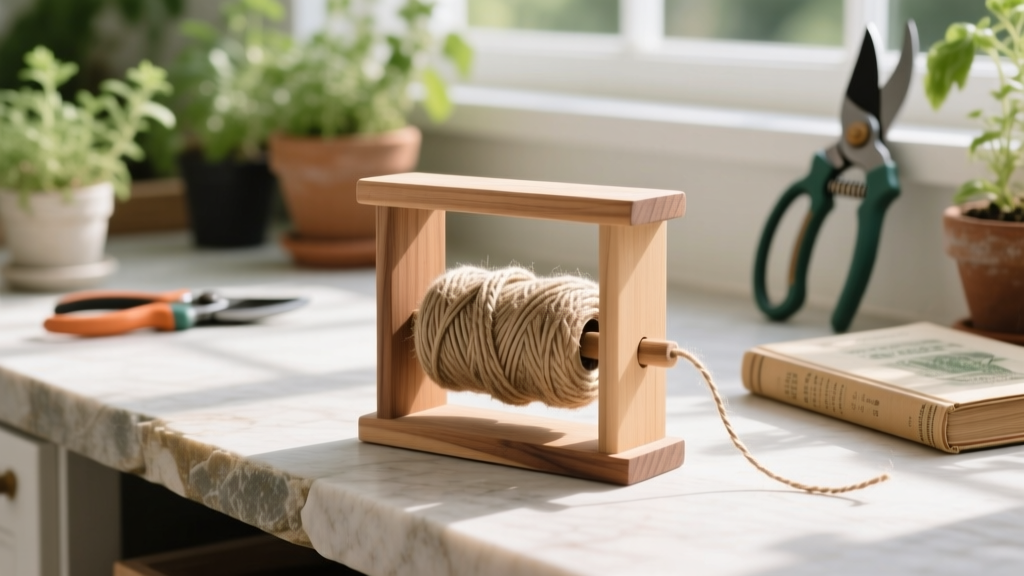
Making Your Own Garden Twine Dispenser
The fastest way to waste garden twine isn’t buying the wrong kind—it’s letting the spool free-roll. One tug turns into a yard of extra string, you snip it off, and suddenly that “500 ft roll” feels like it only lasted two weekends. A simple dispenser fixes that mess and makes tying tomatoes, training beans, and bundling prunings feel like a one-hand operation instead of a small wrestling match.
Below are the dispenser builds and little upgrades that make them work like something you’d actually keep using—clean pulls, no tangles, no wet twine, and no searching for scissors.
Start with the Twine (Because the Dispenser Can’t Fix Bad Fiber)
Pick the right twine material for the job, not the label
Jute and cotton are easy to tie and compostable, but they weaken when wet and can rot mid-season if they stay damp against soil. Polypropylene holds up in rain and sun, but it can become litter if it’s not collected at season’s end. For most trellising, a 2–3 mm natural jute twine is plenty; for heavy tomatoes or cucumbers, step up to a stronger synthetic or a thicker natural cord.
Example: If you’re tying indeterminate tomatoes every 7–10 days, a 2 mm jute may snap when soaked after repeated watering; a 3 mm jute or a thin poly twine will hold better through late summer.
Know when biodegradation is a feature—and when it’s a failure
Natural fibers breaking down is great in compost, but it’s not great on a trellis mid-season. University of Florida IFAS notes that organic mulches and plant-based materials decompose faster in warm, wet conditions, meaning strength loss can happen sooner than you expect in humid climates (UF/IFAS Extension, 2022). If you garden in a rainy area, keep natural twine in a dispenser that stays dry and plan to replace ties more often.
Example: In coastal gardens with frequent fog, jute ties on stakes can soften in 3–4 weeks; switching to poly for the wettest month prevents a mid-season “tomato lean” disaster.
Core Dispenser Designs That Actually Work
The “Jar + Lid Grommet” dispenser (fastest build, best for small spools)
Use a wide-mouth jar (a 32 oz mason jar is ideal) and drill a 3/8-inch hole in the lid. Install a rubber grommet or a short piece of vinyl tubing as a bushing so the twine doesn’t fray on metal edges. Drop the spool inside, feed the end through the grommet, and you’ve got a sealed dispenser that keeps twine clean and dry.
Cost reality: If you already have a jar, you can build this for about $1–$3 (grommet + washer). Comparable store-bought twine holders often start around $12–$20.
The “Paint Can with Center Rod” dispenser (best for big rolls and outdoor use)
A clean 1-gallon paint can with a tight lid makes a rugged dispenser for large spools. Run a 1/4-inch bolt through the center (with washers) to act as an axle so the spool spins smoothly instead of bouncing. Drill a 5/16-inch exit hole near the top rim and add a grommet; the slight angle helps prevent the twine from slipping back inside.
Example: If you buy twine in 1,000 ft contractor rolls, the paint-can version is steadier and won’t tip when you pull hard.
The “PVC Pipe + End Caps” dispenser (best for mounting on a fence or cart)
Cut a piece of PVC pipe to match your spool width plus wiggle room—usually 6–8 inches for common garden twine balls, 10–12 inches for larger rolls. Cap both ends, drill an exit hole, and add a short eye bolt or grommet to guide the twine. Strap it to a garden cart with two hose clamps so it’s always where you are.
Example: On a rolling garden seat, a PVC dispenser mounted to the side means you can tie along a row without getting up every plant.
Make the Pull Smooth (No Snags, No Bird Nests)
Add a “friction brake” so the spool can’t free-run
The best dispensers don’t just store twine—they control it. Add a felt washer, a rubber washer, or a strip of leather pressing lightly against the spool or axle so the roll doesn’t spin wildly after you stop pulling. Aim for enough resistance that the spool stops within 1–2 inches after you release tension.
Example: If you’ve ever pulled twine while walking and ended up with a pile of loops at your feet, a simple rubber washer on the center bolt fixes it.
Use a proper exit bushing to prevent fraying
Twine cutting on sharp edges is a slow failure: it still “works,” but it keeps breaking at the worst time. A 3/8-inch rubber grommet, a short length of 1/2-inch vinyl tubing, or a screw-in cable gland will protect fibers and reduce drag. This matters most with jute, which abrades easily when pulled through metal.
Example: If you’re tying 50+ plants in one session, reduced friction is the difference between a smooth workflow and a hand-cramping tug-of-war.
Keep the twine end parked where you can find it
Add a small binder clip, spring clamp, or a bent wire “parking hook” near the exit hole. Clip the twine end after each use so it can’t retract into the container or get wrapped around the dispenser. This one tiny habit can save 2–3 minutes every time you garden—more if you’re wearing gloves.
Example: On a busy weekend, that’s easily 15 minutes back if you tie plants in five separate bursts.
Cutting and Measuring Without the Scissors Hunt
Attach a built-in cutter (and choose the safe version)
A serrated blade from an old foil box works great as a twine cutter; screw or rivet it to the dispenser so the cutting edge faces down. If you want fewer accidental nicks, mount a utility-knife blade behind a narrow slot so only a tiny edge is exposed. Place the cutter within 2 inches of the exit point so you can pull, press, and cut in one motion.
Example: When you’re tying up dahlias, being able to cut with one hand keeps the other hand steadying stems so you don’t snap them.
Mark “common lengths” right on the dispenser
Most garden ties are repeat lengths: 8 inches for quick bundles, 12–18 inches for staking, and 24 inches for trellis work. Stick a measuring tape strip on the lid or side and add marks at those common lengths. After a few sessions, you’ll pull to the mark without thinking and waste less twine.
Example: If you tie 100 tomato clips and each tie is accidentally 6 inches longer than needed, you’ve burned 50 feet of twine for no benefit.
Weatherproofing and Cleanliness (Because Twine Loves to Get Gross)
Keep natural twine dry to prevent rot and mold
Natural twines absorb moisture, which encourages mildew and weakens fibers. Store dispensers under cover, and if you’re using the jar or paint can method, toss in a small desiccant packet or a tablespoon of dry rice in a breathable sachet. If twine smells musty, replace it—moldy fibers snap more easily under load.
Expert note: Plant-based materials break down faster under warm, wet conditions—great for compost, not great for long-lasting ties (UF/IFAS Extension, 2022).
Don’t store twine in direct sun if it’s synthetic
UV light degrades many plastics over time, including common polypropylene twine. Keep the dispenser in shade or inside a shed when you’re done, especially in summer. If you notice the twine feels brittle or “chalky,” it’s time to retire it before it starts snapping during training.
Example: A fence-mounted dispenser on the south side of a shed can cook in afternoon sun; move it to the north side and it’ll last noticeably longer.
Mounting Hacks: Put Twine Exactly Where You Use It
Make a belt or apron dispenser for constant tying
If you do lots of staking and training, a portable dispenser is a game-changer. Use a small jar dispenser or a purpose-built container and attach it to a belt with a carabiner; keep the cutter facing away from your body. This setup is ideal when you’re walking rows and need to tie every 2–3 plants.
Scenario: A community garden plot with narrow paths: carrying a dispenser prevents trips back to a tool bucket and keeps twine from dragging in soil.
Mount on a trellis post at “chest height” for speed
Pick one post per bed and mount a dispenser around 48–54 inches high—about chest level—so you can pull and cut without bending. Use two hose clamps for PVC or a sturdy L-bracket for a jar/paint can setup. If your beds are long, mount one at each end so you’re never more than 20–30 feet away.
Example: In a 4x12 raised bed, a dispenser on each short end covers the whole bed without walking back and forth mid-tying.
Build a “two-twine” station for different tasks
Most gardens need at least two twines: a soft tie for plants and a stronger one for bundles or temporary repairs. Mount two dispensers side by side and label them (masking tape works). Keeping them separate prevents you from accidentally using rough cord on tender stems.
Scenario: One dispenser with soft jute for peas and one with polypropylene for securing frost cloth when a cold snap hits.
Real-World Builds: Three Scenarios You’ll Recognize
Scenario 1: Tomato jungle in midsummer (fast, repetitive tying)
For indeterminate tomatoes, set up a fence-mounted PVC dispenser and mark 18-inch pulls for consistent ties. Pair it with a built-in cutter and a parking clip, and you can move down a row tying every 7 days without losing the twine end. If you use clips or figure-eight ties, the controlled pull keeps tension consistent so stems aren’t pinched.
Example: A gardener training 20 tomatoes can easily make 60–80 ties per month; a dispenser prevents the “twine spaghetti” that happens when you’re rushing before sunset.
Scenario 2: Rainy spring peas and beans (wet twine problems)
Use the jar dispenser so the twine stays sealed between uses, and choose a slightly thicker natural twine—3 mm instead of 2 mm—so it tolerates moisture better. Keep the dispenser under an eave and only pull what you need; damp twine left draped on a trellis can mildew quickly. This is the scenario where “dry storage” is the real upgrade, not fancy hardware.
Example: If your trellis is in open weather, the dispenser can live on a nearby post but inside a small plastic mailbox-style cover to block rain.
Scenario 3: Fall cleanup and bundling prunings (strength + speed)
For bundling canes, corn stalks, or pruning piles, go with the paint-can dispenser and a stronger twine. Add a friction brake so you can cinch tight bundles without the roll exploding into loops. Aim for consistent 36-inch pieces for bundles; it’s long enough to wrap twice and tie securely.
Example: When you’re bundling raspberry canes for disposal, you’ll appreciate a dispenser that can survive being dropped on gravel.
A Quick Comparison: Which Dispenser Fits Your Garden?
| Dispenser style | Best for | Typical build cost | Durability | Biggest downside |
|---|---|---|---|---|
| Wide-mouth jar + grommet | Small spools, keeping twine dry | $1–$5 | Medium (glass can break) | Limited capacity for large rolls |
| 1-gallon paint can + axle bolt | Large rolls, outdoor storage, bundling | $5–$12 | High | Heavier to carry around |
| PVC pipe + end caps (mountable) | Bed-side stations, carts, fences | $6–$15 | High | Needs basic cutting/drilling |
Small Upgrades That Make a DIY Dispenser Feel “Pro”
Use a swivel eye bolt to stop twisting
If your twine comes out twisted and wants to knot, add a small swivel (like a fishing swivel or a swivel eye bolt) at the exit point. Twine can spin freely as you pull, reducing kinks that turn into tangles. This is especially helpful with stiffer synthetic twines.
Example: When tying to a trellis net, a swivel reduces the “telephone cord” twist that makes every knot feel fussy.
Label twine type and date so you know what you’re grabbing
Write the twine type (jute/cotton/poly) and purchase month on the dispenser with a paint marker. Sun and moisture age twine in sneaky ways; a date helps you notice when a roll has been living in the shed for 2+ years. It also prevents you from accidentally using non-compostable twine in places you won’t retrieve later.
Example: If you’re tying up spent sunflower stalks for compost, you’ll want to grab the natural twine dispenser, not poly.
Build a “quiet pull” for early-morning gardening
If you garden while others are sleeping, metal-on-metal rattles are surprisingly loud. Add a thin rubber pad under the lid, and use nylon lock nuts on any bolts so nothing chatters. Your future self will love not waking the house while you do a quick 6:30 a.m. tie-up round.
Twine Use Tips That Save Real Money
Switch from long wrap ties to figure-eight ties on stakes
On single stakes, a figure-eight uses less twine and protects stems by separating plant and stake with a twist in the middle. Pull about 12 inches, loop around the stake, cross, then loop around the stem area and tie. You’ll often cut twine use by a noticeable margin compared to multiple wraps.
Example: For peppers, a single figure-eight every 8–10 inches of growth is usually enough, instead of spiraling twine up the entire stake.
Use retrieval habits for synthetic twine so it doesn’t become garden litter
If you choose polypropylene for strength, plan retrieval from the start: tie in ways that can be cut and removed in one motion. The Oregon State University Extension emphasizes preventing plastic contamination in garden and compost systems by keeping plastics out and removing them when used as temporary materials (OSU Extension, 2020). A dispenser helps by delivering consistent lengths that are easier to find and pull off later.
“Keep plastics out of compost and yard debris—remove synthetic strings and ties before composting to prevent contamination.” — Oregon State University Extension, 2020
DIY Alternatives When You’re Short on Tools
No drill? Use a punched lid + tubing insert
If you don’t have a drill, you can punch a hole in a metal jar lid with a nail and hammer, then widen it carefully with a screwdriver. Slip a short piece of tubing through as a liner and secure it with hot glue or a tight wrap of electrical tape. It’s not as clean as a grommet, but it prevents fraying and works in a pinch.
No grommet? Wrap the exit hole with heat-shrink or tape
For a quick fix, wrap the hole edge with several layers of electrical tape, then add a short loop of tape as a “lip” to reduce abrasion. Replace it when it wears through—usually after a few heavy work sessions. This is a good stopgap when the hardware store run isn’t happening today.
Keep It Working: A 2-Minute Maintenance Routine
Do a quick check every time you refill
When you drop in a new spool, run your finger around the exit hole and feel for burrs or sharp edges. Replace tape or grommets before they start shredding twine. If you use an axle bolt, give it a quarter-turn check so it stays snug but still spins freely.
Clean out dirt and plant bits once a month
Twine dispensers end up sitting on soil, getting splashed, and collecting leaf fragments. Dump out debris monthly so the spool doesn’t grind against grit (which increases drag and fraying). If it’s a jar or paint can, a quick wipe and fully dry restart keeps twine in better shape.
A twine dispenser isn’t a fancy project—it’s one of those small garden builds that quietly changes your pace. Once you’ve pulled, tied, and cut with one hand a few times, you’ll start looking around the garden for other “why am I doing this the hard way?” moments. And the best part is you can build a dispenser tonight with what you already have, then upgrade it over time until it fits your exact style of gardening.
Sources: University of Florida IFAS Extension (2022); Oregon State University Extension (2020).