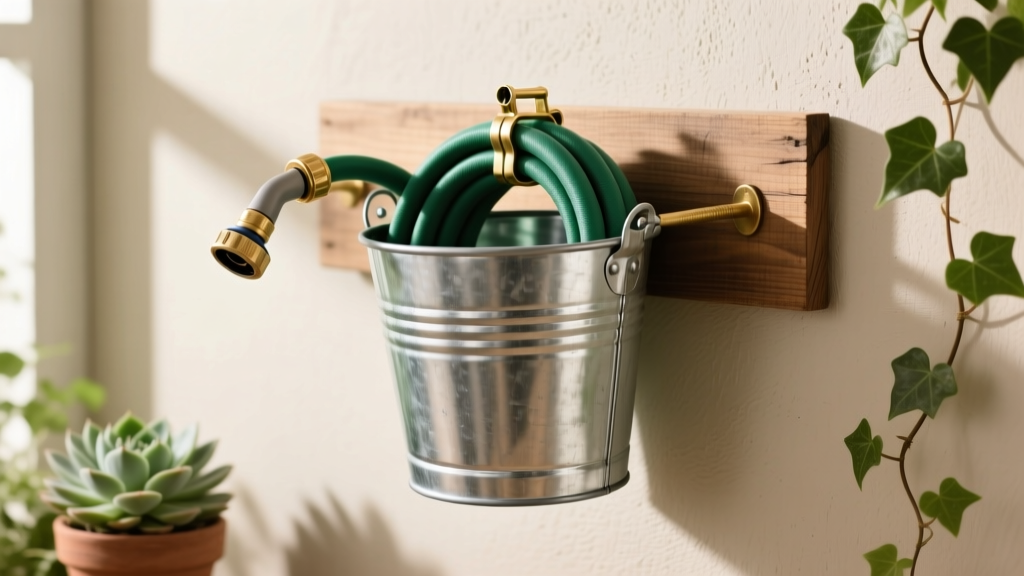
DIY Garden Hose Organizer from Bucket
Most hose “tangles” aren’t caused by the hose at all—they’re caused by how it’s stored. The common mistake is winding a hose into a tight coil on the ground (or on a tiny wall hook), which builds twist memory and kinks that later cut your water flow and crack the outer jacket. A bucket-based organizer fixes that by giving the hose a roomy, guided place to land—without buying a pricey reel.
If you’ve got a 5-gallon bucket, a drill, and 30–45 minutes, you can build a hose organizer that keeps your hose cleaner, reduces kinks, and makes cleanup faster after watering. Below are the insider tweaks that turn a “bucket with a hose in it” into something you’ll actually love using all season.
Start with the Right Bucket Setup (So It Doesn’t Become a Mess Again)
Tip: Choose the bucket size based on hose length, not guesswork
A 5-gallon bucket works well for most 25–50 ft hoses, but 75–100 ft hoses can feel cramped and kink-prone unless you step up to a 10–17 gallon tote or use a second bucket. As a rough rule, if your coiled hose stack rises above the bucket rim, it’ll snag when you pull it out. Real-world example: a stiff 5/8-inch, 50 ft contractor hose usually fits in a 5-gallon bucket, but a 100 ft hose often behaves better split into two 50 ft sections or stored in a larger container.
Tip: Drill a drain hole (or you’ll make a mosquito spa)
Standing water is the hidden downside of “hose in a bucket.” Drill 3–6 drainage holes in the bottom using a 3/8-inch bit so rain and drips don’t pool. If the bucket sits on soil, add a 1-inch layer of gravel in the bottom to keep holes from clogging and to help it dry faster after storms.
Tip: Add a rim “feed slot” to stop hose abrasion
Instead of dragging the hose over the bucket edge (which scuffs and eventually weakens the hose jacket), cut a smooth feed slot. Mark a 1.5-inch wide by 2-inch deep U-shape on the rim and cut it with a jigsaw or multi-tool, then sand it smooth. In use, the hose slides through the slot during pull-out and rewind, reducing wear and keeping the coil tidy.
Tip: Weight the bucket so it doesn’t tip during pull-out
A bucket organizer is only as good as its stability. If you’re pulling 30–50 ft of hose across a lawn, an empty bucket can tip and dump the coil. Add 5–10 lb of weight: a flat paver, a couple of bricks, or a bag of pea gravel sealed in a zip bag. Example: a single standard brick is around 4–5 lb; two bricks in the bottom usually keeps a 5-gallon bucket planted.
Build the “No-Kink” Hose Feed System
Tip: Install a center guide so the coil stacks neatly
The secret to smooth storage is controlling where the hose lands. Bolt a short vertical guide in the center—like a 12-inch piece of 1/2-inch PVC pipe—using a large washer and bolt through the bucket bottom. The hose naturally coils around it instead of making random loops that later snag.
Tip: Use a swivel connector to reduce twist memory
Twist is what makes hoses fight you. Add a swivel hose connector (often $8–$15) between the spigot and the hose, or between hose sections, to let the line rotate instead of winding up like a spring. This is especially helpful if you drag the hose around corners or frequently switch nozzles and sprinklers.
Tip: Make a “pull-out port” near the bottom for smoother payout
If you pull the hose from the top, it sometimes lifts the whole coil. Drill a 1-1/4 inch hole near the lower sidewall (about 3 inches up from the bottom), then install a rubber grommet or sand the edges very smooth. Feed the hose end through this port so it pulls out from the bottom like a mini dispenser—cleaner, steadier, and less likely to tangle.
Tip: Keep the hose end elevated so you don’t get a muddy nozzle
One small hook solves a constant annoyance. Screw a stainless or brass cup hook into the bucket rim area (or bolt on a small S-hook) to hang your nozzle 4–6 inches above the bucket lip. Real-world example: if your bucket sits near a bed that gets watered daily, the hook keeps the nozzle from landing in wet mulch where grit can grind up the trigger mechanism.
Weatherproofing and Placement Tricks That Make It Last
Tip: Park it in shade to protect the hose (and extend life)
UV exposure is a hose killer over time. Store your bucket organizer on the north side of a shed, behind a planter, or under an eave whenever possible. Research-backed note: UV and heat accelerate polymer degradation; storing hoses out of direct sun is a simple way to slow cracking and stiffness.
Tip: Raise it slightly off the ground for drainage and less rust
Even with drain holes, buckets sitting flat on soil stay damp. Set the bucket on two pressure-treated 2x4 scraps or a single paver so air can move under it. In real gardens, this also keeps the bucket from settling into mud after heavy rain and helps prevent moldy smells inside.
Tip: Winterize it like you mean it (especially in freeze zones)
Before your first hard freeze, drain the hose and store it empty; water trapped inside expands and can stress fittings. Many extension services recommend draining irrigation components before freezing weather; the same logic applies to hoses. A practical rhythm: on a dry afternoon when temps are above 45°F, disconnect, walk the hose out straight to drain, then coil into the bucket.
“Drain and disconnect hoses before freezing temperatures to prevent damage to faucets and hose components.” — University of Minnesota Extension (2019)
Smart Add-Ons (Optional, But These Make It Feel Like a Pro Tool)
Tip: Add a label system for quick swaps
If you run more than one hose (say a 25 ft for the patio and a 50 ft for the beds), label the bucket and the hose end. Use painter’s tape plus a Sharpie, or better, a $1–$3 metal tag with a zip tie. Example: label one “FRONT—DRIP” and another “BACK—SPRINKLER,” so you don’t drag the wrong hose across the yard.
Tip: Keep washers and quick-connects attached to the bucket
The fastest way to lose hose washers is to set them “somewhere safe.” Drill two tiny holes and zip-tie a small pill bottle or mint tin to the bucket handle; keep spare washers, a roll of thread tape, and one extra quick-connect inside. Real-world payoff: when a washer blows mid-watering, you fix it in 60 seconds instead of abandoning the job.
Tip: Use quick-connects to cut setup time in half
If you’re constantly switching between a nozzle, sprinkler, and soaker hose, quick-connects are a quality-of-life upgrade. A decent brass set costs around $12–$25 and turns tool changes into a 2-second click instead of wrestling threads. In a busy week, that adds up—and reduces cross-threading wear on your hose ends.
Tip: Make a “two-bucket system” for long runs
For a 100 ft hose, consider splitting storage into two buckets: one for the first 50 ft and one for the second 50 ft, connected with a quick-connect in between. This reduces coil tightness and makes hauling easier—each bucket weighs less and handles better. Scenario example: if your community garden plot is a long walk from the spigot, carrying two manageable buckets beats dragging a heavy, kinked 100 ft coil.
Cost and Convenience: Bucket Organizer vs Other Storage Options
Dollar for dollar, the bucket approach is hard to beat—especially if you already have a bucket lying around. Here’s how it stacks up against common alternatives.
| Storage Method | Typical Cost | Best For | Main Drawback | Real-World Note |
|---|---|---|---|---|
| DIY bucket organizer (5-gal) | $0–$25 | 25–50 ft hoses; quick cleanup | Can tip if unweighted | Add 5–10 lb weight for stability |
| Wall-mounted hose hanger | $8–$30 | Small spaces; short hoses | Hose drags on wall; kink-prone if overfilled | Works best for 25 ft or soft hoses |
| Hose reel (manual crank) | $40–$140 | Frequent use; tidy look | More parts to fail; winter storage needed | Cheaper reels often leak at the swivel |
| Hose pot/urn | $30–$120 | Decor-focused gardens | Heavy; drainage sometimes poor | Bucket is lighter and easier to modify |
3 Real-World Builds (Steal These Setups)
Scenario 1: The tiny patio garden with one spigot
If your spigot is on a balcony or near a patio, space is everything. Use a clean 5-gallon bucket, cut the rim feed slot, and add a nozzle hook so the sprayer doesn’t bang around. A 25 ft hose with quick-connects is usually plenty here; keep the bucket just inside a storage bench or behind a pot so it stays shaded and looks tidy.
Scenario 2: The messy side yard where everything gets muddy
Side yards collect runoff, and hoses tossed there get gritty fast. Drill drain holes, add gravel, and elevate the bucket on a paver so it doesn’t sink into mud. Also add the lower pull-out port—this keeps the nozzle end off the ground more often and reduces the amount of dirt dragged into the coil.
Scenario 3: The community garden plot with shared water and long walks
In community gardens, you’re often hauling gear from your car to your bed. Two-bucket storage (two 5-gallon buckets, each holding ~50 ft) makes transport realistic and prevents the “giant spaghetti coil” problem at the spigot. Use a label on each bucket (“Plot Hose A,” “Plot Hose B”) and keep spare washers in the attached tin because shared spigots and adapters love to chew them up.
Small Details That Prevent Big Annoyances
Tip: Coil using big loops, not tight wraps
Even in a bucket, you can sabotage yourself by forcing tight loops. Aim for loops roughly 12–18 inches in diameter—big, relaxed circles that match the hose’s natural bend. Example: if you feel the hose resisting, widen your loop until it lays down without fighting; that’s your hose telling you the minimum bend radius it likes.
Tip: Fix leaks at the connection before blaming the hose
Most “hose leaks” are actually worn washers or loose couplings. Swap the washer (usually $0.50–$2) and add 2–3 wraps of thread-sealing tape to stubborn threaded connections. Keeping these supplies attached to the bucket is the difference between a quick fix and watering with a dripping connector all season.
Tip: Don’t store the hose under pressure
After watering, shut off the spigot and squeeze the nozzle trigger to relieve pressure before coiling. This reduces stress on fittings and helps the hose drain down more completely. It’s a 10-second habit that can prevent those surprise bulges and weepy leaks near the coupling.
Tip: Add a simple “feet rinse” if you use the bucket near vegetable beds
If you’re dragging the hose through compost and soil, the outside gets dirty—and that dirt ends up in your bucket. Keep a small stiff brush and rinse the first 2–3 feet of hose before coiling if you work around edible beds where you want things cleaner. This also reduces grit that can grind against the hose surface over time.
DIY Alternatives When a Bucket Isn’t the Best Fit
Tip: Use a large plastic tote for extra-long hoses
If you’re dealing with 100 ft hoses or very stiff material, a tote is often better than forcing it into a 5-gallon bucket. Look for a 17-gallon tote (common big-box size, often $10–$20) and add the same ideas: drain holes, a smooth feed slot, and a center guide. You’ll get fewer kinks simply because the coil isn’t cramped.
Tip: Turn a bucket into a wall-mounted organizer (for zero floor clutter)
If you want the hose off the ground entirely, mount a bucket to a wall using a sturdy shelf bracket or a plywood backer screwed into studs. Keep the drain holes, but add a drip tray or mount it where water won’t stain siding. This setup shines in tight garages or sheds where you want a clean floor.
Tip: Repurpose a nursery pot for better drainage
Got a big black nursery pot (like a 10–15 gallon)? They already drain well and handle sun exposure decently. Add a center guide and a rim feed slot, and you’ve got a lighter, more breathable organizer than a bucket—often free if you ask at local landscapers or garden centers.
Sources Worth Listening To (Because Hoses and Water Systems Break the Same Way)
Bucket hacks are simple, but the physics behind them is the same stuff that protects faucets, fittings, and irrigation parts: reduce pressure stress, prevent freezing damage, and keep components drained.
University-backed reminders help here. The University of Minnesota Extension (2019) emphasizes draining and disconnecting hoses ahead of freezing temperatures to prevent damage, and the University of Illinois Extension (2020) similarly recommends disconnecting hoses before winter to protect outdoor plumbing. Those aren’t just “nice ideas”—they’re the difference between a spring start-up and a surprise repair bill.
“Disconnect garden hoses and drain them before winter to help prevent freezing damage to outdoor faucets and plumbing.” — University of Illinois Extension (2020)
Quick Shopping List (Keep It Cheap, Keep It Solid)
If you want the simplest build that still feels “finished,” here’s a practical set of parts with realistic costs:
Basic build: 5-gallon bucket ($0–$5), drill bit set ($5–$15 if you don’t have one), sandpaper ($2), two bricks (often free), and one hook ($2–$5). If you add a swivel connector ($8–$15) and quick-connects ($12–$25), you’ll still often land under $40, which undercuts many reels while being easier to repair.
Once you set this up, the daily win is simple: you finish watering, pull the hose back through the slot, drop it in relaxed loops, hang the nozzle, and walk away. No spaghetti pile. No mud-caked sprayer. No wrestling a kinked coil tomorrow.