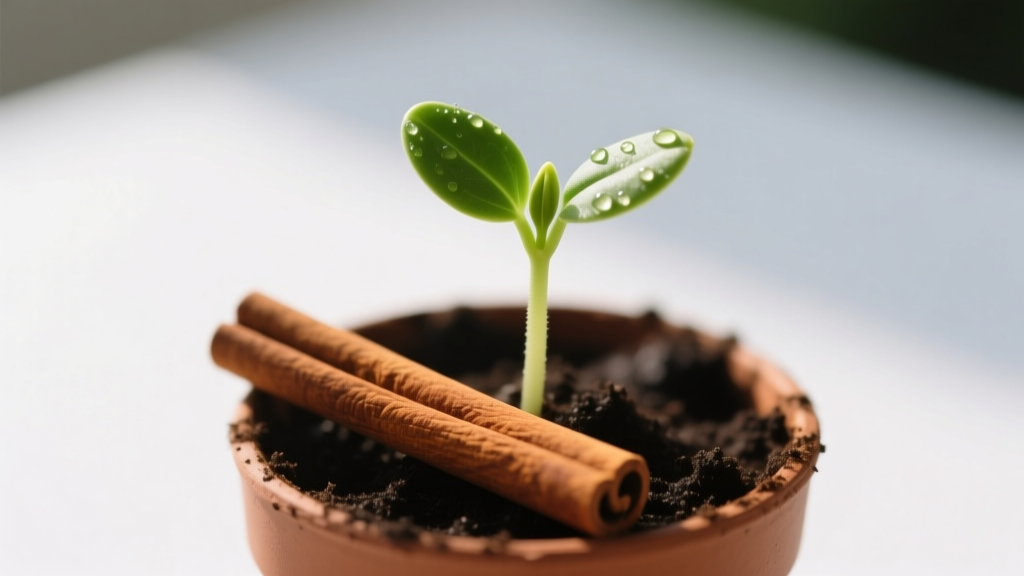
Cinnamon as a Natural Fungicide for Seedlings
If you’ve ever sprinkled cinnamon on a sad-looking seedling tray and still watched a fuzzy gray plague spread overnight, you’ve met the most common mistake: cinnamon isn’t magic dust—you have to use it at the right moment, in the right way, and for the right problem. Cinnamon can help with certain fungi and surface issues, but it won’t fix soggy soil, stale air, or a tray that never dries. Used smartly, though, it’s one of the cheapest little “insurance policies” you can keep next to your seed packets.
Cinnamon’s antifungal reputation mostly comes from its essential oils (especially cinnamaldehyde), which can inhibit some fungal growth. Research has documented antimicrobial activity in cinnamon compounds; for example, a review in Molecules discussed cinnamon’s antimicrobial effects and the role of cinnamaldehyde (2017). And while extension services usually push sanitation and airflow as the primary tools for damping-off, they also acknowledge that “home remedies” can sometimes help as a surface suppressant—just not as a replacement for good seed-starting hygiene (see University of Minnesota Extension materials on damping-off, 2019).
“Damping-off is primarily prevented—not cured—by using clean containers, sterile media, and careful watering. Once seedlings collapse, you can’t bring them back.”
—University of Minnesota Extension (2019)
Let’s use cinnamon the way it actually works: as a targeted surface treatment and a “friction reducer” in your seed-starting routine—especially for early-stage fungal pressure.
First, Know What Cinnamon Can (and Can’t) Do for Seedlings
Tip: Use cinnamon for surface fungus, not as a rescue for collapsed stems
Cinnamon can slow down surface fungi (think: white fuzz on soil or algae starting), but it won’t reverse true damping-off once stems have pinched and toppled. If seedlings are already falling over at the soil line, your best move is to start over with cleaner gear and drier cycles. Example: if you see fuzzy growth on the potting mix but seedlings still look upright, cinnamon can be worth trying that same day.
Tip: Treat cinnamon like a “top layer shield,” not a soil drench
Cinnamon works where it sits, so the most reliable method is dusting the soil surface or using it as a thin barrier layer. Stirring lots of cinnamon into the mix can clump, repel water unevenly, and create weird dry pockets. A real-world sign you used too much: water beads on the surface and runs down the sides of the cell pack instead of soaking in.
Tip: Still fix the root cause—wet + still air is the real villain
Cinnamon is a helper, not the foundation. Most seedling fungal problems explode when trays stay wet for 48+ hours and airflow is poor. If your humidity dome stays on after germination, you’re basically hosting a fungal spa—cinnamon or not.
Cinnamon Application Methods That Actually Work
Tip: Dust the surface lightly—think “salted,” not “breaded”
Use 1/8 to 1/4 teaspoon of ground cinnamon per standard 10" x 20" tray, sprinkled as evenly as you can. You’re aiming for a thin veil, not a thick brown crust. Example: if you can’t see any soil after dusting, you used too much—wipe back with a paper towel and reapply lighter.
Tip: Make a cinnamon “shaker” for even coverage
Dump cinnamon into an old spice jar or a clean Parmesan-style shaker so you don’t get clumps. Clumps create wet spots underneath, which is exactly what fungi love. This tiny hack saves cinnamon and gives you consistent coverage across 72-cell trays.
Tip: Use cinnamon after germination, right when the dome comes off
The best timing is when you remove the humidity dome—usually day 3 to day 10, depending on the crop. That transition is when the surface stays wet and fungi jump in. Example: after your basil and tomatoes sprout, remove the dome, bottom-water, then dust a very light cinnamon layer on the surface that same day.
Tip: Spot-treat fuzzy patches instead of coating everything
If only one corner of a tray has fungus (common near a cool window), don’t waste cinnamon on the whole tray. Pinch off any heavily contaminated surface bits with a spoon, then dust just the affected cells. This is especially useful when you’re growing slow starters like peppers and don’t want to disturb the whole tray.
Tip: Try a cinnamon “band” around stems for early protection
If you’ve had damping-off in the past, apply a narrow cinnamon ring around each stem—like a tiny moat—rather than covering the entire cell. This keeps the cinnamon concentrated where infection pressure often starts (soil line). Example: for 2" pots, a ring about 1/2 inch wide is plenty.
Watering & Airflow Tricks That Make Cinnamon Twice as Effective
Tip: Bottom-water for 10–20 minutes, then drain completely
Top-watering keeps the surface wet, which encourages fungus; bottom-watering keeps the top drier and makes cinnamon last longer. Set trays in water for 10–20 minutes, then remove and let them drain for 5 minutes so cells aren’t sitting in a puddle. Example: if you bottom-water in a boot tray, pour off leftover water right away—don’t “save it for later.”
Tip: Add a small fan and run it like a timer, not a windstorm
A gentle fan reduces fungal pressure more than any powder. Place a fan 3–6 feet away and run it 12–16 hours/day on low so seedlings barely wiggle. Example: if your seedlings look like they’re in a hurricane, back it off; the goal is air exchange, not stem abuse.
Tip: Let the surface dry slightly between waterings (yes, even for seedlings)
You don’t want bone-dry cells, but you also don’t want the surface to look glossy all day. A simple test: touch the surface; if it sticks to your fingertip, wait. Cinnamon performs better when it’s not immediately turned into wet paste.
Tip: Warmth matters—cool, wet trays invite damping-off
Many damping-off fungi thrive in cool conditions. If your seed-starting area is below 68°F, consider a heat mat set to 70–75°F for warm-season crops (tomatoes, peppers). Example: gardeners who start peppers in a cold basement often see more fungal losses—cinnamon helps, but heat plus airflow helps more.
Seed-Starting Sanitation: The Unsexy Shortcut That Saves the Most Seedlings
Tip: Disinfect trays with a 10% bleach solution (and rinse well)
Old trays carry spores year to year. Use a mix of 1 part household bleach to 9 parts water, soak for 10 minutes, then rinse and air-dry. Example: if you reuse 6-packs from last year’s petunias, this one step prevents the “mystery die-off” that cinnamon can’t fix.
Tip: Use fresh seed-starting mix, not last year’s open bag
Opened bags can pick up spores, fungus gnats, and moisture. Fresh mix is cheaper than losing a tray of rare seeds—especially if you’re starting pricey hybrids. If you must use old mix, bake it is risky (smells, uneven heating); instead, reserve old mix for outdoor pots and start seedlings in fresh media.
Tip: Sterilize your misting bottle and watering can monthly
This is the sneaky one. Biofilm builds up fast, and you end up spraying spores across every tray. Rinse with hot soapy water, then a quick swish of the same 10% bleach solution, rinse, and dry.
Three Real-World Scenarios (and Exactly What to Do)
Scenario 1: White fuzzy mold on the soil, seedlings still upright
Action plan: scrape off the worst fuzz with a spoon, increase airflow immediately, and dust cinnamon lightly over the affected cells (a pinch per 6-pack). Bottom-water only for the next week and shorten watering soak time to 10 minutes. Example: this often happens with basil under a dome—once the dome comes off and air moves, the problem usually stops spreading within 48 hours.
Scenario 2: Seedlings collapsing at the soil line (classic damping-off)
Action plan: don’t waste cinnamon—pull and discard collapsed seedlings and surrounding soil because the fungi can spread via splashes and tools. Disinfect the tray, start over with fresh mix, and add a fan from day one. Example: if 30% of a tray of zinnias collapses overnight, it’s usually faster (and cheaper) to restart than to nurse the survivors.
Scenario 3: Algae/green slime on the surface, fungus gnats showing up
Action plan: cinnamon can help dry the surface, but you also need longer dry cycles and bottom-watering. Dust a very thin layer, then top-dress with 1/4 inch of coarse sand or fine horticultural grit as a physical barrier (DIY alternative: rinsed play sand works in a pinch). Example: if you see green sheen in a 72-cell tray under bright LEDs, odds are your surface is staying wet too long.
Cinnamon vs Other Natural Options (and When to Switch)
Sometimes cinnamon is the right tool; sometimes you’re better off with a different low-tox approach—especially if you’re dealing with persistent damping-off pressure.
| Method | Best For | How to Use | Typical Cost | Notes |
|---|---|---|---|---|
| Cinnamon (ground) | Surface mold, mild fungal pressure | Dust 1/8–1/4 tsp per 10"x20" tray | $0.05–$0.20 per tray (depending on brand) | Works best with airflow + bottom-watering |
| Hydrogen peroxide (3%) | Surface sterilizing, algae reduction | Mix 1 part 3% H2O2 : 4 parts water, spot-apply | $0.10–$0.30 per tray | Can stress tender seedlings if overused |
| Chamomile tea (strong brew) | Mild antifungal rinse | Brew 2 bags in 2 cups hot water; cool, then mist lightly | $0.20–$0.60 per tray | Gentle, but less reliable than sanitation |
| Commercial biofungicide (e.g., Trichoderma-based) | Recurring damping-off issues | Apply per label to media before sowing | $1–$3 per tray (varies) | More consistent performance; label matters |
Tip: Use cinnamon for “light pressure,” switch to a biofungicide for repeat disasters
If you lose trays every season—especially in cool, low-light spaces—cinnamon alone is usually not enough. A Trichoderma-based biofungicide incorporated at sowing can be more consistent for damping-off prevention (follow the label exactly). Example: if you’re starting 200 onion seedlings in a basement and lost half last year, the extra $2 per tray can be cheaper than re-seeding and losing two weeks.
Insider Tricks: Make Cinnamon More Reliable (Without Making a Mess)
Tip: Use Ceylon cinnamon if you’re applying often
Most grocery-store cinnamon is cassia; Ceylon is typically finer and milder-smelling, and some gardeners find it less irritating to handle repeatedly. It’s pricier—often 2–4× the cost—so save it for frequent use or sensitive indoor setups. Example: if you’re dusting weekly in a small apartment grow rack, Ceylon can be more pleasant to work with.
Tip: Don’t mix cinnamon into the whole bag of seed-starting mix
It’s tempting to “pre-treat” everything, but cinnamon can create uneven wetting and doesn’t stay uniformly distributed. Treat the surface only, where the problem shows up. Example: if you’re filling 24 pots, dust after sowing instead of trying to blend cinnamon into 8 quarts of mix.
Tip: Reapply only after you’ve watered twice
If you reapply too often, you can build up a crust that sheds water. A good rhythm is: dust once, then wait through two bottom-water cycles before deciding if you need more. Example: if you watered Monday and Thursday, reassess on Friday—don’t keep dusting daily out of anxiety.
Tip: Pair cinnamon with a grit top-dress for a one-two punch
Cinnamon suppresses; grit changes the surface environment so it dries faster and discourages fungus gnats. Add 1/8–1/4 inch of horticultural grit or coarse sand after seedlings emerge, then dust cinnamon lightly on top. This combo is especially useful for slow growers like rosemary that sit in trays for weeks.
Money-Saving Notes (Because Seed-Starting Adds Up Fast)
Tip: Buy cinnamon in bulk for seed-starting season
Those tiny spice jars are convenient but expensive per ounce. A larger container (often 8–16 oz) can drop your cost per tray to pennies. Example: if a $4 jar treats roughly 20–60 trays (depending on how heavy-handed you are), that’s far cheaper than replacing a $3 seed packet or buying new starts.
Tip: Use cinnamon strategically on high-value trays
Reserve cinnamon for trays where losses sting: rare peppers, slow perennials, or anything you started 8–12 weeks before last frost. For fast, cheap seeds (like marigolds), better airflow and clean trays may be all you need. Example: saving one tray of specialty tomatoes can pay for your cinnamon for the entire season.
Citations You Can Trust (and How They Fit the Real World)
Cinnamon’s antifungal and antimicrobial activity is supported in lab contexts, largely tied to cinnamaldehyde and related compounds (see: 2017 review in Molecules on antimicrobial properties of cinnamon constituents). For damping-off specifically, extension guidance emphasizes prevention through sanitation, sterile media, and careful watering—because once infection hits stems, treatments are limited (University of Minnesota Extension, 2019, damping-off resources). Put together, the practical takeaway is simple: cinnamon is best used as a preventative surface measure alongside the boring fundamentals that actually control the disease cycle.
If you want cinnamon to feel like a “shortcut,” use it like one: dust lightly right when conditions favor fungus (post-germination, dome-off, surface still moist), then let airflow and smarter watering do the heavy lifting. When it works, it’s not dramatic—it’s quiet. You just notice that the tray stays cleaner, the soil surface doesn’t fuzz up, and your seedlings make it to transplant day without that heartbreaking overnight collapse.